


So it is under François Hollande’s presidency that, in an election by proportional representation, the far-right Front National has emerged as France’s leading party. It is also under the Hollande presidency that the entire Left has disintegrated with a historically low election score that totalled just one third of all votes cast. This was worse than in European elections in 1984 and in 1994 when, on both occasions, the Left took a severe beating but still obtained 39% of the vote.
This time, the Socialist Party, the Greens, the radical-left Front de Gauche and the Nouvelle Donne (New Deal) party altogether scored just 33% of votes cast. Never since the end of World War II has the Left – and all parties of the Left – been in such a weak position. The far-right, meanwhile, is riding high.
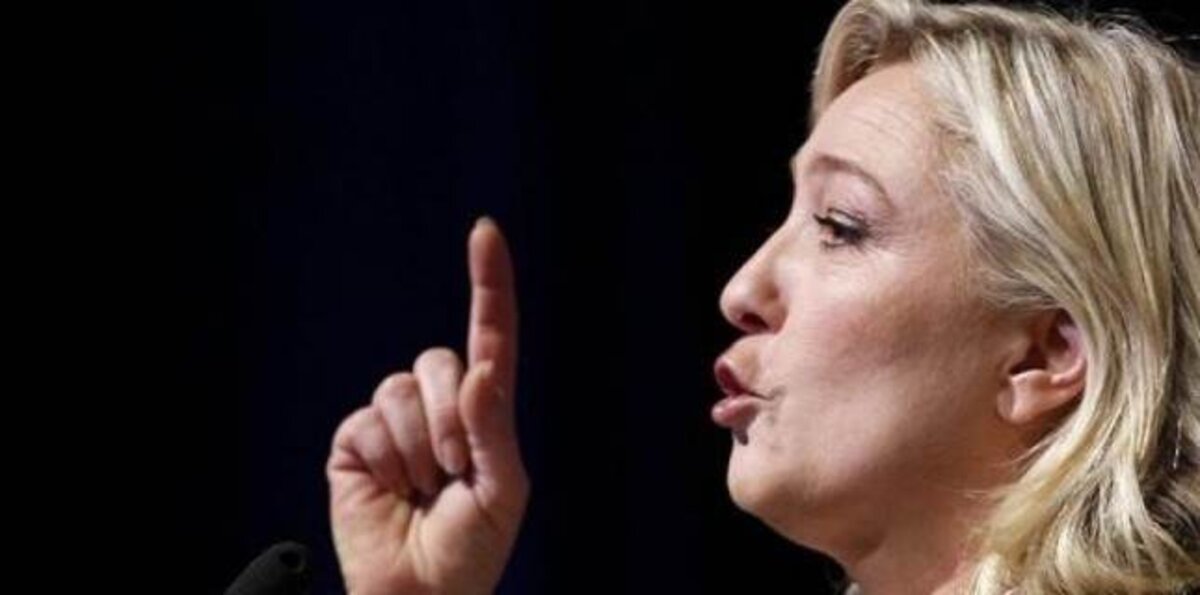
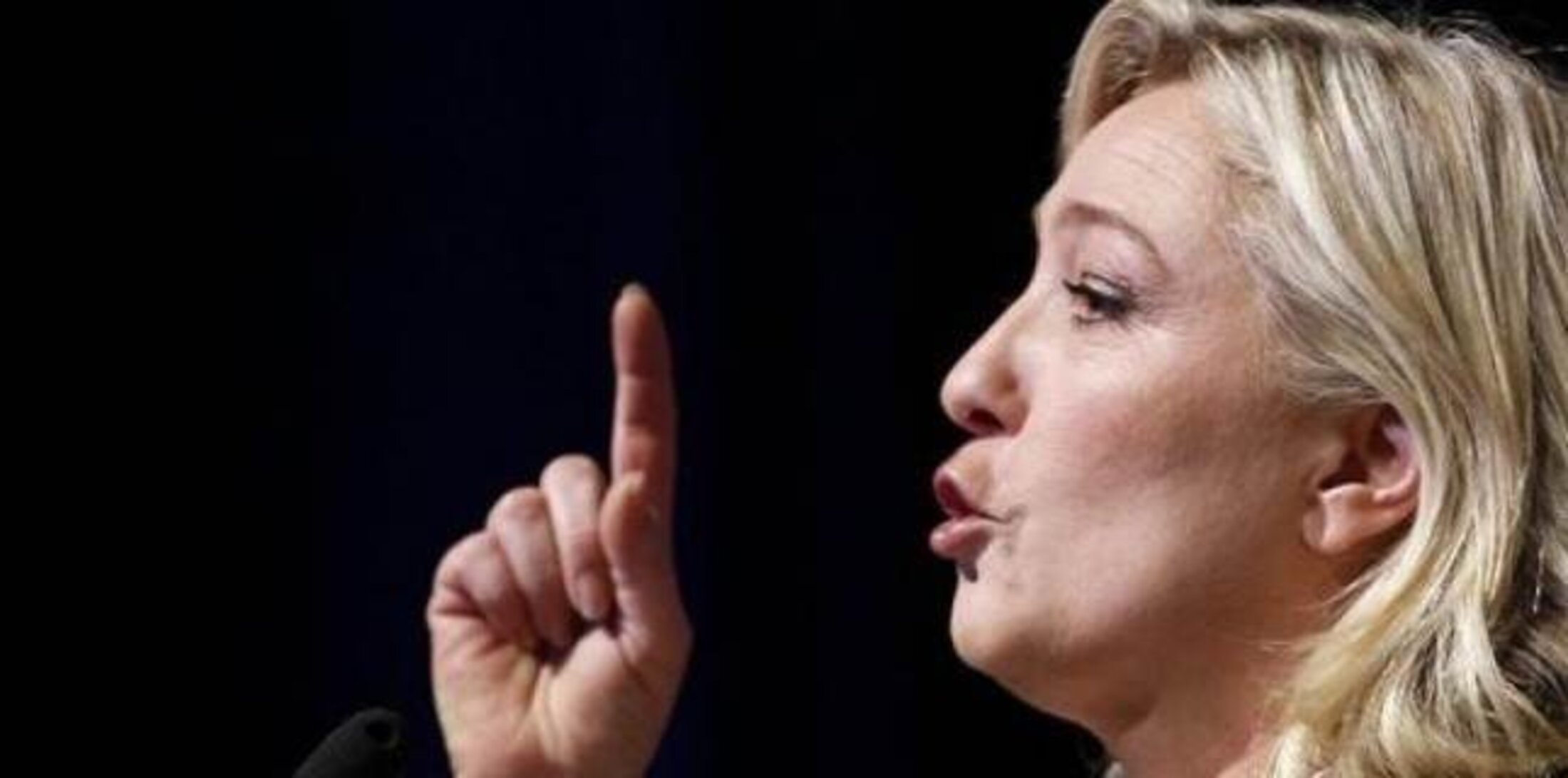
Enlargement : Illustration 1
Socialist leaders have spoken of Sunday’s results as a “a seism” and “a shock”, while radical-left leader Jean-Luc Mélenchon described them as “suffocating news”. Proper measure must be taken of this historic defeat, and the lethal dynamics of it must be well understood. In 1994, the Socialist Party’s European election campaign candidates were led by the party’s former prime minister Michel Rocard. His resounding defeat, garnering just 14% of the vote, saw his political career in ruins. He had paid dearly for the weariness of the previous 13 years of then socialist president François Mitterrand’s reign, although the scores of other left-wing movements in the election campaign (notably a list of candidates headed by maverick businessman Bernard Tapie) served to partly cushion the shock result.
There was nothing like that at the weekend. The Socialist Party’s score of less than 14% - adding an even greater defeat to the one it suffered in nationwide local elections in March – has come just two years after François Hollande’s election as president in May 2012.
In the space of two years, the French president has not only lost his electorate, he has also destroyed his party and with it dragged the whole of the Left to the bottom of the ravine.
Consequently, two major questions are to dominate the coming days. The first is that of how can Hollande now see his presidency through to the full five years of his mandate, and if he can succeed with this just what it is that he counts on doing over the long three years before him. The second is the definition of the new strategies that must be put in place to avoid what now appears to be a credible scenario – the election as president of Front National leader Marine Le Pen in 2017.
Numerous opinion articles published these last few years on Mediapart have regularly sounded the alarm over the rise in strength of the far-right, a rise driven by the successive dishonest practices, the abnegations and the ideological defeats of the traditional Right and also of a large part of the Left.
On Sunday, the Front National came in first position in 71 out of France’s 101 départements (broadly equivalent to counties). The far-right party’s electoral showing is no longer a manifestation of the uncoordinated eruption of various enraged opinions. It has established itself as an alternative party at a national level.
The results of the May 25th elections confirm the worst – that no-one can today judge it to be inconceivable that the Front National candidate could win a presidential election. Quite the opposite, for the crises that grip the whole of the Left today, the profound de-structuring of the mainstream Right (part of which, driven by the approach of former conservative president Nicolas Sarkozy, now set up camp alongside the far-right), leave Marine Le Pen with a clear road ahead. If things continue the same way, with just a bit of marginal tinkering, the catastrophe for democracy could well come about in 2017.
A few socialists tried using the old practice aimed at minimizing the scope of the consequences of Sunday’s vote. Government spokesman and agriculture minister Stéphane Le Foll described the results as “an alert” and “an expression of anger”. It is true that the results in France, one of 28 European Union countries to have voted in the elections, come within the context of a conservative wave that has submerged Europe and alongside particularly high scores reached by Eurosceptic parties in a number of countries. It is certainly the European bureaucratic machinery that since 2008 has imposed austerity measures and punishment upon citizens which has been strongly punished in turn. But the stupefaction expressed among most European countries at the surge of the French far-right and the collapse of François Hollande’s Socialist Party illustrates how France has now become a case apart on the continent.
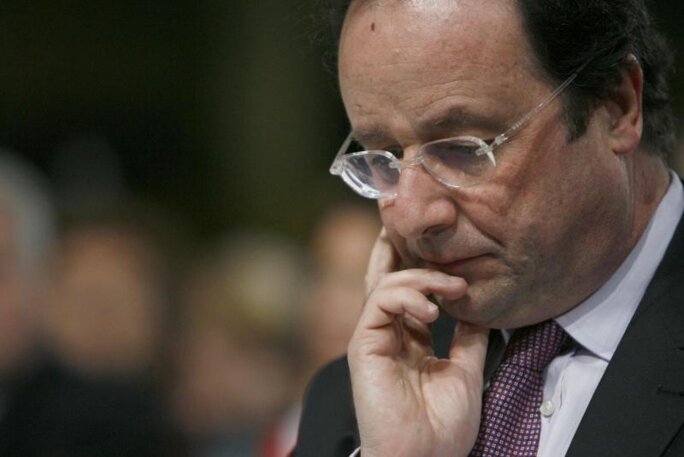
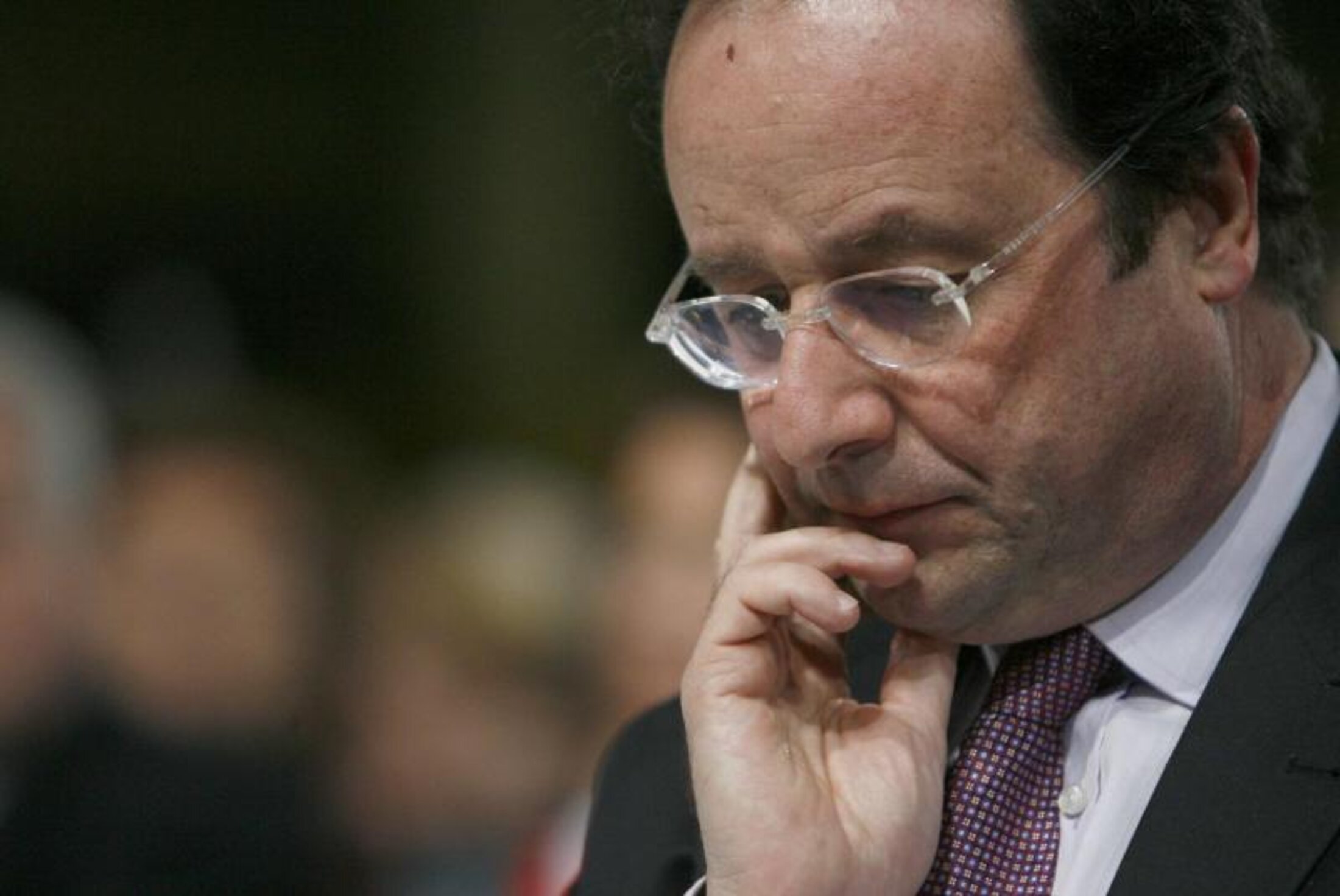
Enlargement : Illustration 2
The particularity and extent of the French political crisis is sorely underlined by the landslide victory of the Front National, for which one in four voters on Sunday cast their ballot. The French presidency, which spoke of “a shock” of which “lessons must be learnt”, has made clear that, bar a few changes to its approach to European issues, the direction of the government’s policies will remain in place. This was repeated by French Prime Minister Manuel Valls on Monday morning, when he told RTL radio: “I will not change the road map”.
If the government chains itself to this position, the threatened explosion is certain to come about. Apart from Hollande, who has lost all credit and whose legitimacy as president is bound to be contested, two other figures were also defeated by this election. Valls, appointed prime minister after the socialist rout in the March local elections but who has failed to reverse the party from its downward path, and Jean-Christophe Cambadélis, whose appointment as the Socialist Party’s leader after the March debacle was made without submitting to a vote by party militants or the holding of a congress.
“Cambadélis must say whether he’s Hollande’s representative or first secretary of the Socialist Party,” said socialist Senator Marie-Noëlle Lienemann, on the Left of the party, speaking during Mediapart’s live studio debate on Sunday evening (see the video of the programme here). “There will be a political reconfiguration,” she added. “François Hollande cannot govern the country with 14%. A new legislative pact must be urgently established, with all the forces of the Left.”
The question is thus first addressed to the presidency. Having thrown overboard the essential elements of his election campaign manifesto almost as soon as he was elected, with a brutality never applied by any of his predecessors – Nicolas Sarkozy, Jacques Chirac or François Mitterrand – Hollande has enduringly lost his electorate and has prompted an unparalleled crisis of confidence. Could he be the one who can reunite the electorate of the Left? Undoubtedly not, save for a clean sweep of the table and an electoral consultation of one sort or another. The last years of Jacques Chirac’s presidential mandate, which ended in 2007, were akin to those of a ‘roi fainéant’, the ‘do-nothing king’ as the last of the Merovingian kings were nick-named. The three years that separate Hollande from presidential elections in 2017 present themselves today as being those of the ‘useless king’ – that is, if he manages to see out his mandate.
The question is next addressed to the Socialist Party and all the other forces of the Left, none of which gained any benefit from the socialists’ debacle. The radical-left Front de Gauche on Sunday garnered just 6% of the vote, the same score it managed in the last European elections in 2009. That stagnation reveals numerous strategic impasses that have been carefully brushed aside until now by its leaders. The Greens emerge with a loss of half of their previous seats, which will force them to review their organization (with a spectacular lack of ground troops) and their programme (a patchwork of contradictions and holes), as well as their alliances. Finally, the Nouvelle Donne party, created in 2013 and named after Franklyn D. Roosevelt’s New Deal programme, must ask itself, after gaining just 3% of votes cast, whether the addition of yet another party on the Left is really an urgent necessity.
This dispersion of so many groups, fuelled by internal divisions, ego battles and weak ideological considerations, has now exploded in the full light of day, all the more so because of a growing distance with society, its associations and its numerous collective projects. Not to mention the trades unions who have become the major missing features of the political landscape since the election of François Hollande.
Until now, the alternation under the current Fifth republic of governments of the mainstream Right or Left allowed the party in opposition the time to rebuild itself. But this was also blown apart by the vote on Sunday. For the debacle of the Left is joined by the deep crisis of the conservative opposition party, the UMP, sapped by the internal conflicts led by its chiefs and a series of corruption scandals. Between a lost Left and a discredited Right, there is only one party that remains in marching order, one which happily wears its Bonapartist and extremist hat, which has seen reinforcements among its militants, its party officials and its local resources, and one which has an uncontested leader. It is a party that today has all the means to achieve ultimate political power. If Hollande, Valls and the parties of the Left continue on the same path, 2017 will be the year when midnight strikes and the nightmare begins.
-------------------------
- The original French version of this opinion article can be found here.
English version by Graham Tearse