


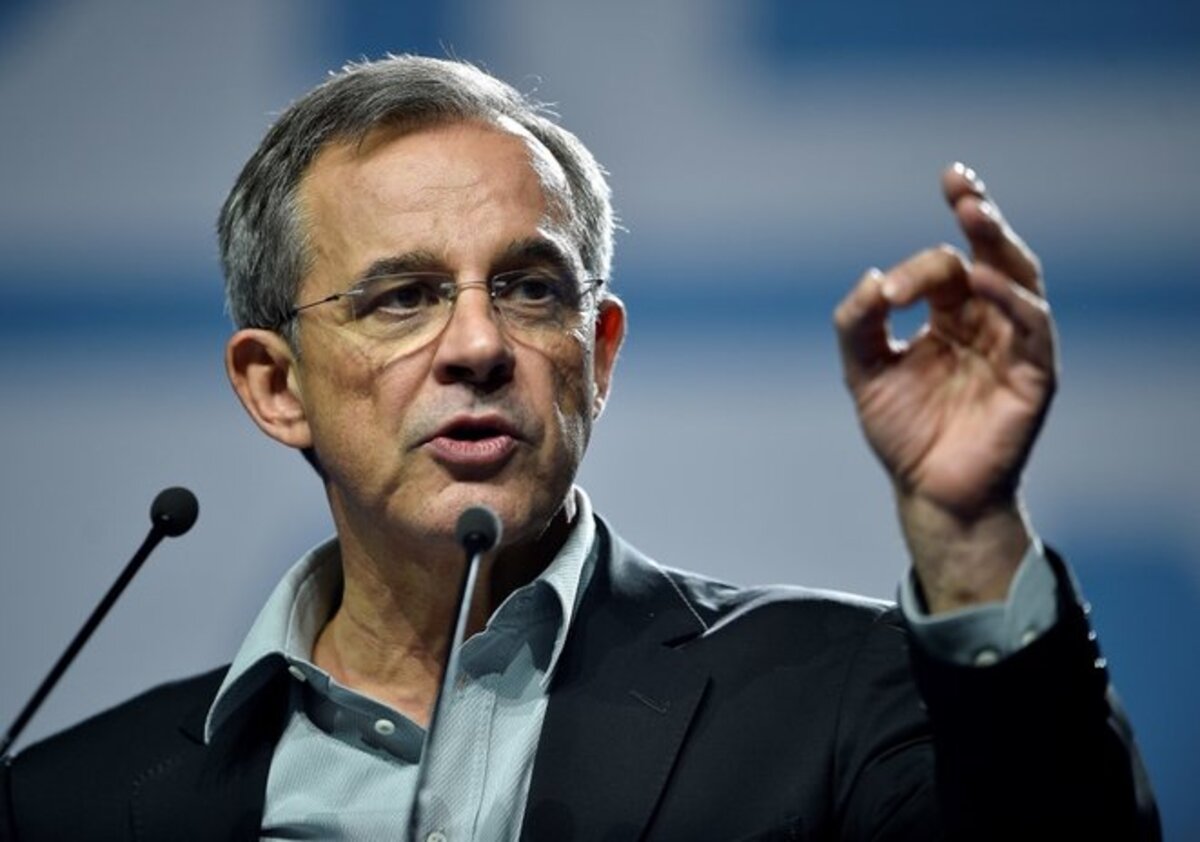
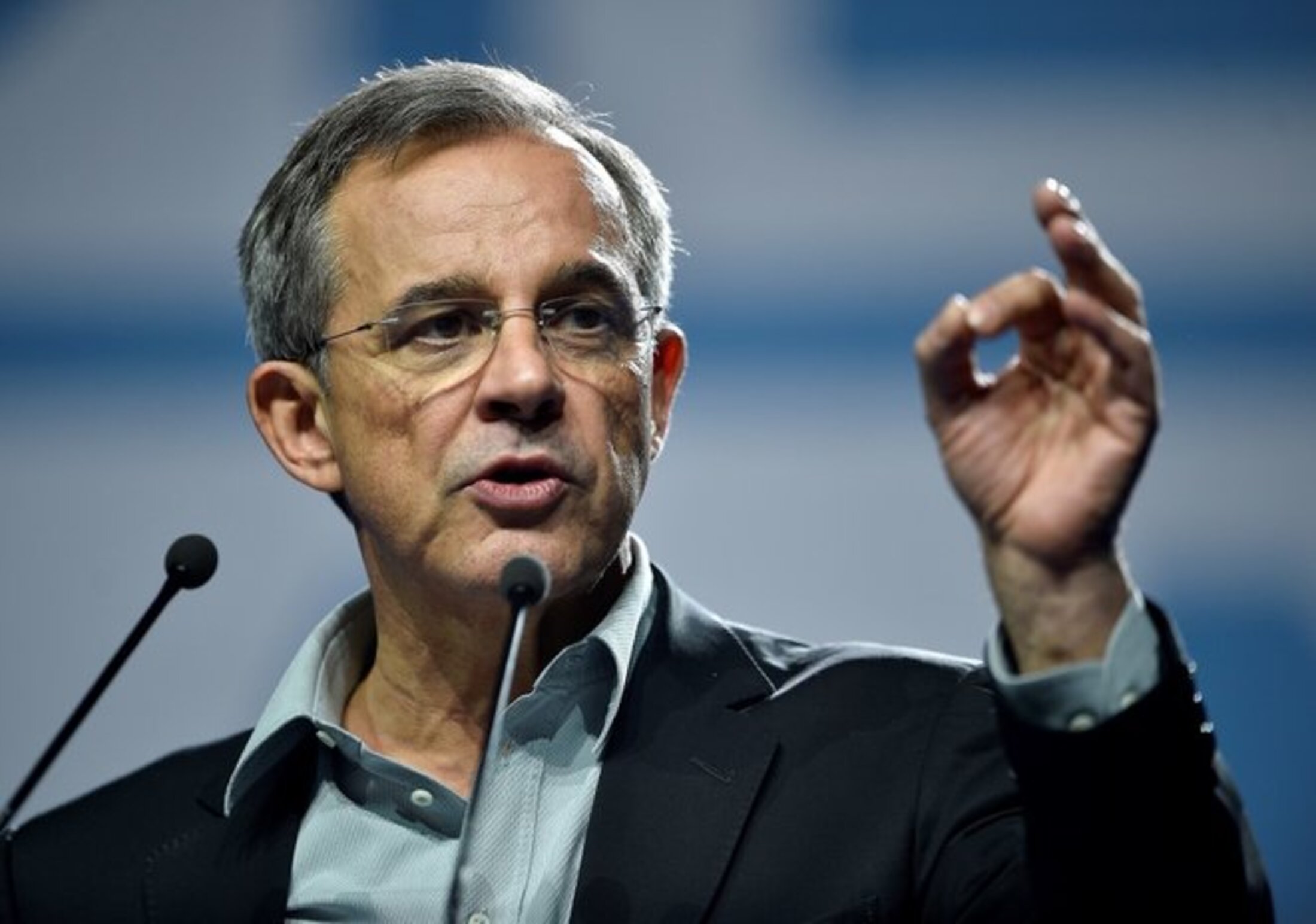
Thierry Mariani, a French far-right Member of the European Parliament (MEP) who enjoys close links with Moscow, has been appointed to the governing board of an NGO in part funded by the European Union which is self-described as supporting “people striving for democracy” in countries neighbouring European Union member states, which unofficially implies countering Russian influence east of the bloc.
Mariani, 61, a former conservative minister who became an MEP for France’s Rassemblement National (RN) party – the former Front National – in 2019, sits on the board of the Brussels-based European Endowment for Democracy (EED), an association created in 2013, notably inspired by the National Endowment for Democracy, an NGO based in the US.
On its website, the EED says it is a “grant-making organisation for people striving for democracy” and was established “by the European Union (EU) and EU member states as an autonomous International Trust Fund to foster democracy in the European Neighbourhood”, the Middle East and North Africa, and “the Western Balkans, and beyond”. It “supports civil society organisations, pro-democracy movements, civic and political activists, and independent media platforms and journalists working towards a pluralistic, democratic political system”.
Mariani is known for his frequent trips to Moscow to meet with Russian President Vladimir Putin, has made trips to Damascus to meet with Syrian dictator Bashar al-Assad, and in 2018 travelled to the pro-Russian Donbass region of Ukraine to take part in monitoring elections that were deemed to be illegal by the international community – all representing regimes which the EED appears to want to destabilize.
Mariani’s surprising arrival on the EED board is the result of the internal balance of power at the European Parliament following the latest elections to it held in May 2019. Within the parliament, MEPs representing national parties join together in separate pan-European groups. Mariani’s French far-right party, the RN, is a member of the Identity and Democracy group, which is now the fourth largest in the chamber.
As set out under the EED’s articles, nine MEPs sit on its board, allocated according to what is called the “d’Hondt method”, (so-named after Belgian mathematician Victor d’Hondt), and one of the nine seats is reserved for the current fourth-largest political group in the European Parliament, namely the far-right and populist alliance Identity and Democracy to which Mariani belongs.
“As the coordinator on foreign affairs for my group, it’s logical that I take part,” Mariani told Mediapart, adding that he carried out “more than 80 parliamentary missions” when he worked for the parliamentary assembly of the Organization for Security and Co-operation in Europe. He said he wanted to sit on the EED board “to check the manner in which European money is spent via this NGO”.
According to the EU’s Transparency Register, the EED budget in 2019 totalled 16 million euros of public financing, half of which came from the European Commission, while the other half was provided by donations from a majority of EU member states.
“We’re in a very paradoxical situation that bothers me terribly,” commented Bernard Guetta, an MEP for French President Emmanuel Macron’s ruling LREM party, allied to the liberal-centrist Renew Europe, the third-largest parliamentary group, who was also recently appointed to the EED board. “A member, and not the least, of a party whose attachment to democracy is not its principal characteristic, will sit on the board of an association whose objective is to support democracy in countries neighbouring the EU […] but I can do nothing about it, whatever my displeasure”.
Enlargement : Illustration 1
“He will be very much in a minority among the board, so I don’t think that it will modify the orientations of the association,” commented Belgian socialist MEP Marie Arena, who also sits on the EED board. “But the question of access to information is more sensitive. Some information has to be encrypted, to avoid it being misused. We’ve called for an extreme caution to protect the people we help on the ground.”
Asked whether his position would be akin to that of the fox minding the geese, acting on behalf of Moscow, Mariani, who missed the board’s first meeting in December 2019, replied: “That’s hilarious! […] Besides, I still haven’t taken part [in a board meeting] in this organisation, which proves to you just how very badly I carry out my job as a spy. […] It’s the risk peculiar to every democracy, and the rule for an organisation which wants itself to be transparent. Opponents, they also, have [a right of] access to information.”
Mariani’s appointment to the EED board raises wider questions over the functioning of the European Parliament, and notably on the participation of far-right MEPs in its various activities and representations – or their exclusion from some, which would likely only harden opinion among their electorate.
During the previous 2014-2019 legislature, the French MEPs from Mariani’s party – then called the Front National party, now renamed Rassemblement National – belonged to the parliament’s eighth and smallest group by number of MEPs, a far-right coalition called Europe of Nations and Freedom, and which wielded little influence. Following the 2019 elections, the far-right became part of the fifth-largest parliamentary group, renamed Identity and Democracy (ID). But in January, with the departure of 73 British MEPs as a result of Brexit and their partial replacement on a proportional basis from other EU countries, the Greens-EFA alliance lost seven seats and the far-right gained three, moving up to take the place of the Greens as the fourth-largest group.
Now with 76 MEPs out of the parliament’s total of 705, and amid a now particularly politically fragmented chamber, the far-right are in a more powerful position than before to wield their influence in the workings of parliament and to demand posts in certain organisations.
“As a Belgian, I’m in favour of a ‘cordon sanitaire’ and to always reach political majorities without the far-right,” commented Marie Arena. Fellow MEP Bernard Guetta, as part of the liberal group, argued for much the same approach. “I am opposed to the idea that the democratic members vote in favour of giving any responsibility or function to members belonging to this party [of the ID group], he said. “It is not a ‘cordon sanitaire’, simply the expression of democratic values which one upholds.”
Indeed, sitting on the parliament’s foreign affairs commission, Thierry Mariani has been unable to obtain for his party the management of a single reporting mission since the beginning of the new legislature. On May 19th, MEPs on the commission voted to exclude the ID from the redaction of a report that was intended to look into “European policies in Central Asia”. The conservative European People’s Party (EPP), the largest group in parliament, had supported the ID taking charge of the report, but the Socialist and Democrats (S&D), the second-largest group, along with the liberals and the leftwing GUE-NGL group (the smallest, in seventh position) blocked the move. The Greens, meanwhile, abstained.
That vote well illustrated the mixed and hesitant approach among the groups to the question of handing parliamentary responsibilities to the far-right. Further complicating the situation is that the latter are also present in groups other than ID, such as MEP’s from Hungarian Prime Minister Viktor Orbán’s ruling Fidesz party who are allied to the EPP. Meanwhile, the far-right group is not the only one to count among its ranks MEP’s who are Eurosceptic and with sympathies for countries outside the bloc.
In December 2019, French RN party MEPs obtained the presidency of just one of the 26 intergroups, which are cross-party bodies set up to look into specific issues like the Commission’s so-called Green Deal or Artificial Intelligence and which are expected to meet together all through the parliamentary term. The intergroup handed to the RN is about the situation of Christian populations in the Middle East, and is presided by Thierry Mariani.
Meanwhile, it is possible that in the coming weeks some parliamentary commissions may allow the far-right the management of certain reporting missions.
The next meeting of the governing board of the EED is due on July 1st. In principal Mariani will not attend that either. He said he plans, depending upon the situation with the Covid-19 pandemic, to “observe” the referendum that same day in Russia to decide whether Vladimir Putin can serve two further mandates as president after 2024.
-------------------------
- The French version of this article can be found here.
English version by Graham Tearse