


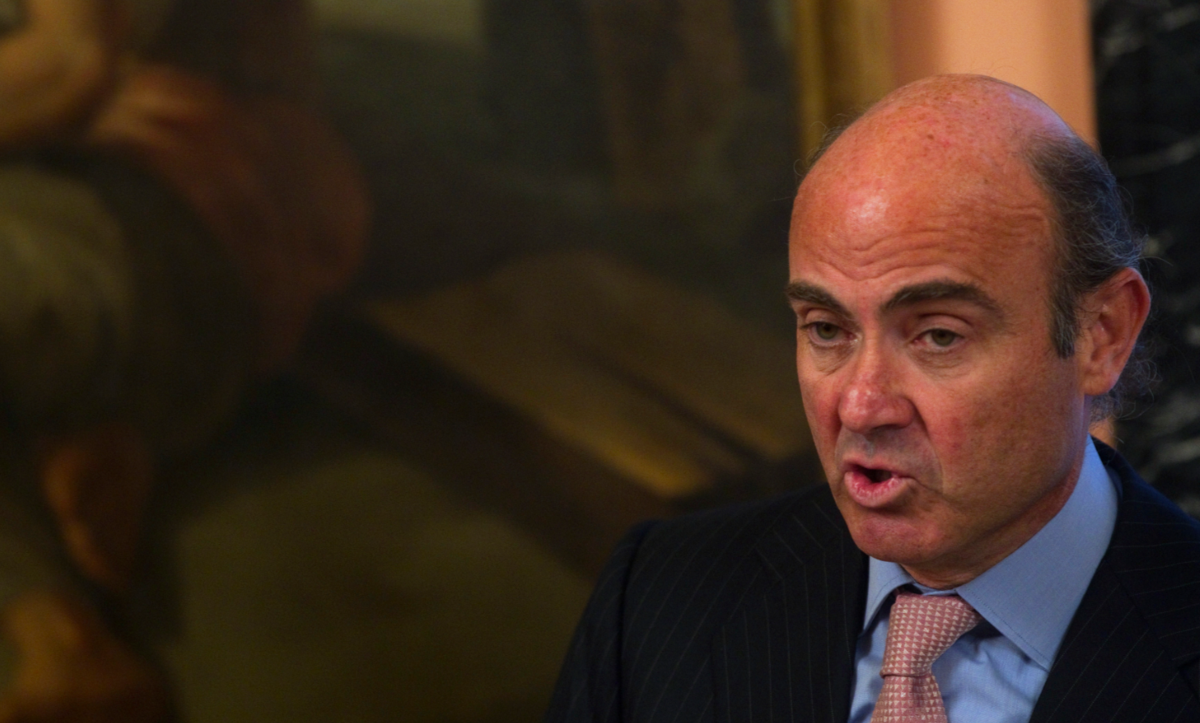
Spanish Prime Minister Mariano Rajoy, whose conservative right Popular Party was elected to government in a landslide victory in November, earlier this month named Luis de Guindos, formerly with Lehman Brothers and PricewaterhouseCoopers, as his new economy minister.
The appointment, announced December 21st, was the latest manifestation of a viral pattern now spreading across Europe, whereby technocrats are filling key posts in national governments and private sector 'experts' are shaping EU decision making.
Enlargement : Illustration 1
De Guindos, 51, was once a junior economy minister in the 2002-2004 government of José Maria Aznar. He later became head of the Spanish and Portuguese operations of the now-bankrupt US financial services company Lehman Brothers, between 2006 and 2008, before working as a consultant for London-based financial services group PricewaterhouseCoopers during which time he was an advisor, in the role of administrator, to several large Spanish corporations.
According to a recent report in the Spanish daily Público, de Guindos, who has never held an elected seat, is the 21st figure from the financial world to enter the governments of the European Union since the beginning of the Greek debt crisis in May 2010.
Enlargement : Illustration 2
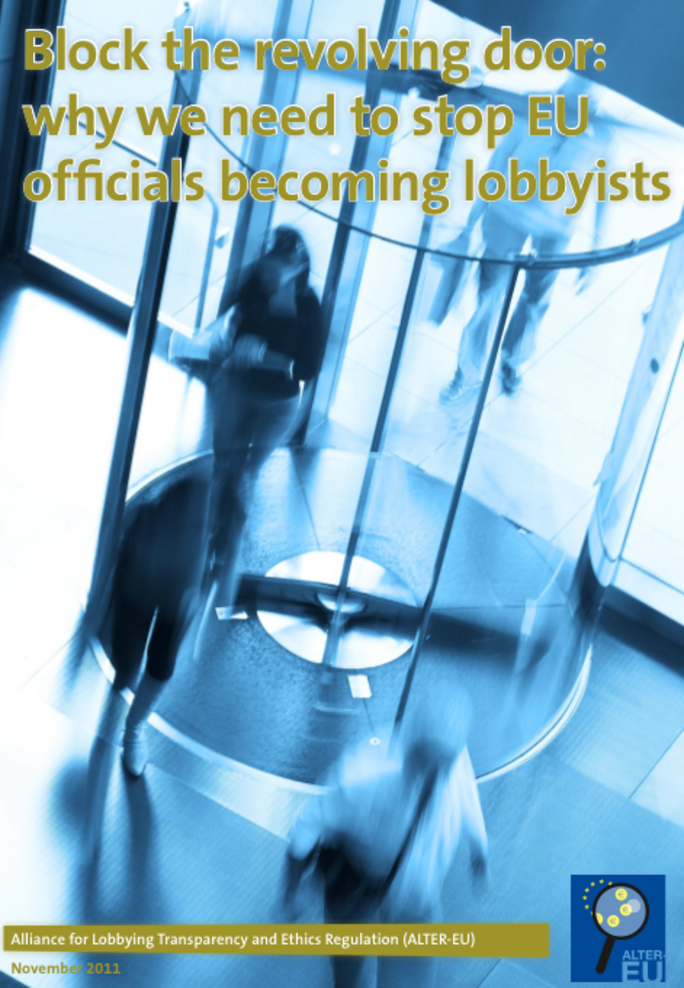
While the trend suggests that experts from the private finance sector are the men of the hour at this period of deep economic crisis created by professional politicians, the blurring of the borders between politics and finance in this process of ‘revolving doors' has prompted a number of NGOs to sound the alarm against a dangerous situation of conflicts of interest. Newly-appointed Italian Prime Minister Mario Monti is among a few high-profile former Goldman Sachs employees to cross the threshold, but many other lesser-known figures are involved in this crisis-led transhumance.
Examples include Latvian finance minister Andris Vilks, appointed in November 2010, and who is a former head of the SEB Unibanka bank, one of the largest in the country. In the UK, the state secretary for trade and investment, Stephen Green, (Baron Green of Hurstpierpoint), appointed in December 2010, is a former group chairman of the HSBC bank. Italian industry minister, Corrado Passera, is a former executive with Intesa Saopaolo, one of the country's two largest banks.
'Promoting policies of interest to our members'
"The public and private sectors stand to benefit from this porosity," commented Nicolas Véron, economist with the Brussels-based think tank Bruegel, whose activities centre on research and debate on international economic issues. "There must of course be rules to avoid conflicts of interest, but there are also examples of cross-fertilization, in a financial field where practical experience is decisive to understand what's going on.
But while those who move into government roles are the visible example of this rise to political power of the private sector, others are also playing a role in the shadow of the media glare, called to the negotiating table by politicians surpassed by the events. One example of this was during the July and October 2011 European Council summits on the eurozone debt crisis, when Charles H. Dallara, head of the Institute of International Finance, the IIF, which lobbies for the interests of the banking sector, officially took part as an advisor in negotiations to restructure the Greek debt.
In its mission statement, the IIF states: "The Institute of International Finance is committed to being the most influential global association of financial institutions. We strive to sustain and enhance our distinctive role on the basis of the professional excellence of our research, the unmatched breadth of our membership, our extensive relationships with policymakers and regulators, and the strength of our governance. Our mission is to support the financial industry in prudently managing risks, including sovereign risk; in developing best practices and standards; and in advocating regulatory, financial, and economic policies that are in the broad interest of our members and foster global financial stability."
More broadly, there are almost 900 "consultative entities", made up of some 30,000 experts who assist the EC as advisors in drawing up legislation, according to an official European Commission register. Largely unknown to the general public, they are mostly composed of representatives of EU member countries.
"Made up of outsiders with various statutes, these groups have a power that is strictly consultative, which they exercise in situations that are as crucial as they are often little-publicized," commented Cécile Robert, a senior lecturer at the Lyon Institute of Political Studies, l'Institut d'études politiques, who has led research into the panels and their members.
One of the better-known is the Groupe de Larosière, so-named because it is presided by former Internatuional Monetary Fund managing director Jacques de Larosière, which advises on financial regulations. In February 2009, it rendered its conclusions concerning supervision of cross-border financial groups; within a few weeks, the proposals were adopted as the official position of the European Commission. At that time, five of the eight members of the Groupe de Larosière panel were employed by the private finance sector.
A political vacuum
The problem posed by such panels is that, behind the role of offering expertise, they over-represent the interests of the financial world - which bears a large responsibility in the current economic crisis - at the heart of EU decision making. "The extreme complexity of this sector, and texts on financial regulation, are a part of the problem," warned Yiorgos Vassalos of the NGO Corporate Europe Observatory, a group campaigning against the lobbying power of large corporations in shaping EU policies.
Joost Mulder, Head of Public Affairs for Finance Watch, a Brussels-based NGO dedicated to protecting and promoting what it considers is the public interest against the private interests lobbied by the financial industry, holds a mitigated view of the power of the advisors. "It's true that there can be problems with the expert panels, but the system would no doubt be worse without them," he cautioned; "In any case, lobbying doesn't need these groups in order to prosper."
"Take the MiFID directive, this is a 500-page document that touches upon a dozen or so issues linked to the functioning of the financial markets," Mulder added. "There are an enormous number of very precise decisions to take, and so an expertise is absolutely necessary. At the same time, by wanting to regulate at such a detailed level we take the risk of missing the general hypothesis, the most important context. In short, we run the danger of de-politicizing."
Cécile Robert agrees. "The European Commission places expertise at the fore in helping to take political decisions, with the possible bias of valorising of the capacity of some to make their arguments technical ones, running the risk of losing from sight the political stakes of the issues dealt with," she commented.
Bruegel think-tank economist Nicolas Véron suggests that the real problem lies in the lack of competence of staff at the EC. "The question is not so much about the expert panels as the expertise of the European Commission," he said. "Its administration, in most of the departments, is made up civil servants with a general background rather than experts with specialised skills. The multiplication of expert panels can only partially fill this gap, and raises problems of conflict of interest."
-------------------------
English version: Graham Tearse