To fund its campaign for this month’s European Parliament elections, the French far-right Rassemblement National party (the renamed Front National) has raised around 4 million euros through so-called “patriotic” loans from its members and supporters, to who it has promised a 5% interest rate. The party will submit the amounts raised, with interest, in its application for a post-election refund of campaign spending that is granted to parties and paid out of the public purse. The generous interest payments paid to its lending members and supporters will cost the taxpayer around 200,000 euros, and the party says it plans employing the same strategy in future elections. Marine Turchi reports.
The Pitié-Salpêtrière hospital in Paris has been at the centre of a major controversy after incidents that took place there in the aftermath of this year's annual May Day demonstrations. Throughout the evening of May 1st and into the following morning, several members of the government and senior health managers in Paris insisted the well-known hospital had been “attacked” by violent demonstrators. Yet in fact there was no such attack: instead, a few dozen protestors sought refuge in the hospital's buildings to escape police tear gas and charges. There was no threatening behaviour from protestors towards hospital staff and none of them damaged the premises. However, some were later hit by the police. Now interior minister Christophe Castaner has formally retracted his use of the word “attack”. Dan Israel reports.
On Tuesday April 30th 2019, a 19-year-old woman formally lodged a criminal complaint with the Marseilles prosecution services against unnamed persons for attempted murder, aggravated assault and failure to assist a person in danger. This followed an incident on December 8th 2018 when, on the fringes of a demonstration by 'yellow vest' protesters in the southern French port city, 'Maria' – not her real name – was kicked in the head and struck with batons by police officers, according to several witnesses, as she lay injured on the ground. She suffered a skull fracture and brain damage. Pascale Pascariello reports.
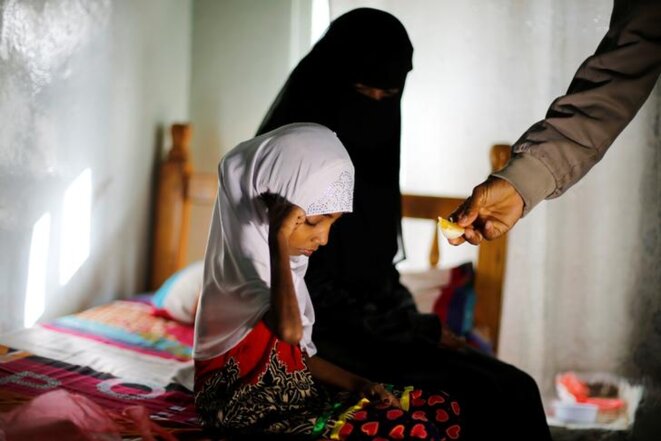
Weapons sold by France to the Saudi-led coalition offensive against the Houthi rebellion in Yemen are being used to starve millions of the country’s population, a strategy the United Nations has described as a method of warfare that “may constitute a war crime”.
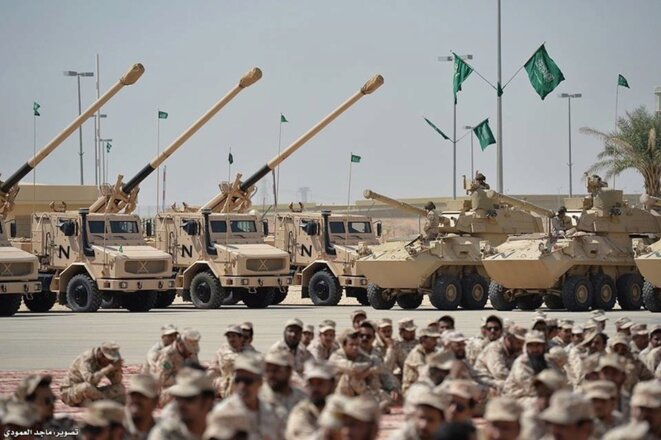
Amid the ongoing war in Yemen, France continued to supply weapons to, and also signed new contracts with, Saudi Arabia, all of it behind a veil of secrecy.
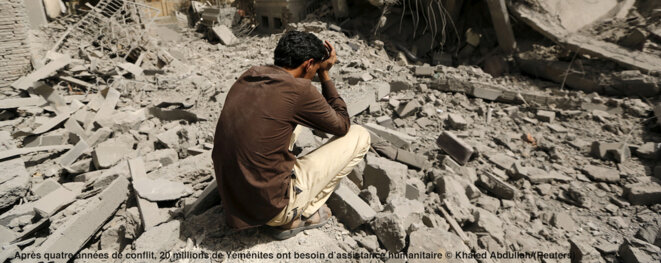
An unprecedented leak of secret documents from France’s military intelligence agency, the DRM, has revealed the massive use of French-made weapons, like those also of the US, the UK and Germany, in the ongoing civil war in Yemen. The contents of the leaked documents are detailed here in three exclusive reports published simultaneously by Mediapart and its partner Disclose, a newly founded independent, not-for-profit online magazine of investigative journalism, which reports how these weapons have been used against the civilian population in a war that has wreaked what the United Nations describe as “one of the worst humanitarian crises in the world”.
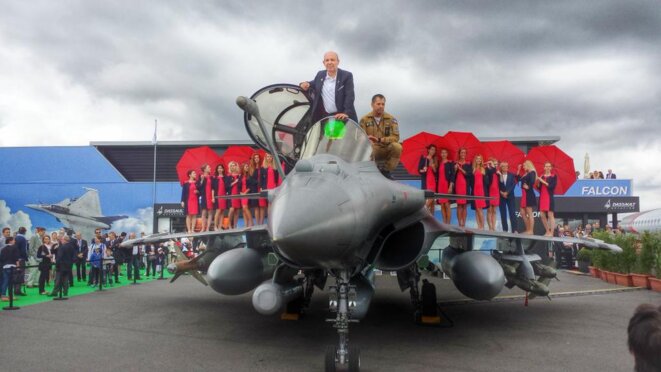
As India heads into tightly fought general elections on Thursday, outgoing Prime Minister Narendra Modi has become further engulfed in a suspected corruption scandal surrounding the sale by France to India of 36 Rafale fighter jets, built by French group Dassault Aviation, in a deal he signed in 2016. It emerged this weekend that, during negotiations over the contract, the French tax authorities extraordinarily wrote off a tax debt of more than 140 million euros owed by a French company belonging to Anil Ambani, an Indian businessman and friend of Modi’s, whose company was made industrial partner in the deal in questionable circumstances. Meanwhile, anti-corruption NGO Sherpa has submitted further information to the French public prosecution services over numerous “irregularities” that implicate the different parties in the contract, worth 7.7 billion euros.
Secret documents obtained by Mediapart and German publication Der Spiegel show for the first time how Airbus gave direct orders to an intermediary to hand out 9.5 million euros in commissions to help clinch the sale of its aircraft in Egypt. This deal is now being examined by France's fraud prosecution unit and British fraud detectives who are carrying out a major investigation into alleged corruption by the giant European aircraft manufacturer. Yann Philippin and Virginie Le Borgne report.
A Mediapart investigation can reveal the extent to which the publicly-owned French defence contractor Naval Group has been overseeing the renovation and modernisation of Saudi warships. This vital maintenance work has been taking place as the Saudi navy enforces a punishing blockade on Yemen as part of the ongoing conflict there. Meanwhile lawyers warn that any company that helps or supports the Arab coalition military effort in Yemen could potentially be seen as being complicit in possible war crimes. Eva Thiébaud and Thomas Clerget report.
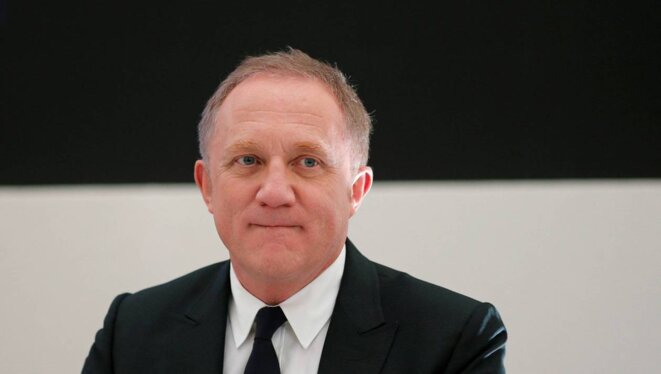
Following Mediapart’s revelations about a vast tax-dodging scheme mounted by French luxury goods group Kering, whose brands include Gucci, Yves Saint Laurent, Bottega Veneta, Stella McCartney and Balenciaga, a Swiss parliamentarian has lodged a formal complaint with the public prosecution services in Lugano to demand they investigate the suspected fictitious tax domiciliation of Gucci executives in the canton of Ticino, which is estimated to have saved the group tens of millions of euros in taxes and social charges. Already in January, Kering, owned by French billionaire François-Henri Pinault, confirmed that an offical investigation in Italy has concluded the group evaded 1.4 billion euros in taxes that should have been paid in in the country. Yann Philippin reports.