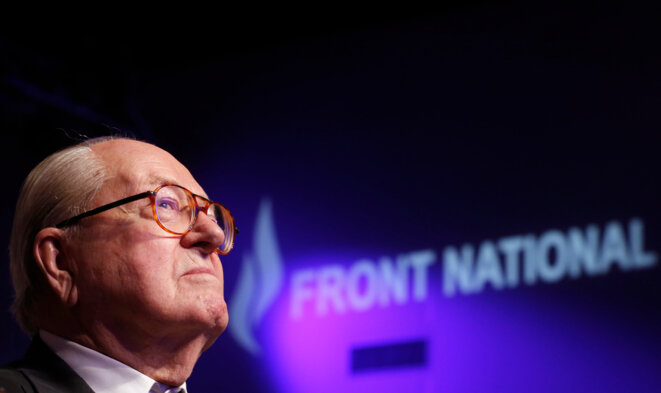
The honorary president of the far-right Front National, Jean-Marie Le Pen, was the economic beneficiary of a undisclosed trust in Switzerland which was overseen by his butler and which contained 2.2 million euros in its bank account, according to information received by Mediapart. Gold ingots and coins made up 1.7 million euros of the sum involved. The revelation of the undeclared account, which was at the HSBC bank and then moved to the Compagnie bancaire helvétique (CBH), is set to provide fresh embarrassment for the Front National which is already the subject of a a judicial probe over campaign funding, and which has been hit by a damaging public split between Jean-Marie Le Pen, its former president, and his daughter Marine Le Pen, its current president. Jean-Marie Le Pen could now face investigation for tax fraud or for making false declarations to public authorities. Karl Laske and Marine Turchi report.
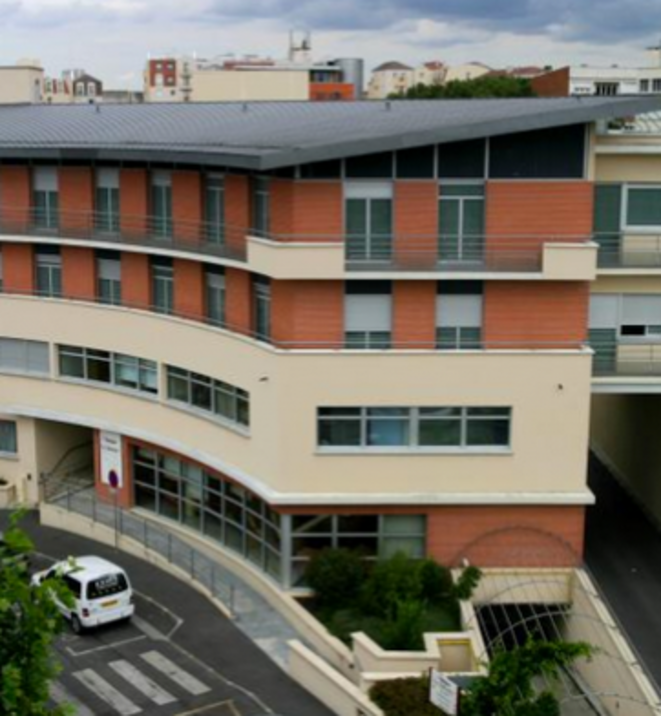
The Franco-Canadian group Orpea, which runs private retirement homes and health clinics, has been using “observers” to spy on its workforce and in particular trade union activities, according to documents seen by Mediapart. When the French trade union in question, the CGT, decided to make a formal legal complaint, the group offered it a deal worth four million euros in return for withdrawing the complaint and keeping quiet about the snooping – a deal the union ultimately refused. Mediapart can also reveal that the three “spies” used by the healthcare firm came from a company which is linked to allegations that furniture retailer Ikea spied on its staff and customers in France. Mathilde Goanec and Mathilde Mathieu report.
Mediapart has gained access to confidential documents, backed by witness accounts, which tell a dark and disturbing story of how Danish pharmaceuticals firm Lundbeck succeeded in making a blockbuster in France of an antidepressant drug that experts judged had little, if any, medical interest. They reveal staggering examples of conflicts of interest, of secret links between the drugs firm and official health watchdogs, and of hidden price-fixing agreements. The result of the shady lobbying was a money-spinner which cost the deeply-indebted French public social security system hundreds of millions of euros. Michaël Hajdenberg and Pascale Pascariello report.
In the French Senate, it appears that crossing a courtyard can be a lucrative affair. Mediapart has learnt how the secretary general of the upper house’s conservative UMP party group of senators was given 173,000 euros, paid out of publicly-provided funds, as an indemnity payment for losing his job, and just weeks before taking up another post with the Senate’s president, UMP party member Gérard Larcher. Mathilde Mathieu reports on the latest example of the gravy-train lifestyle enjoyed at the Senate, whose UMP party group is at the centre of an ongoing judicial investigation into suspected money laundering and misuse of public funds.
Mediapart has gained access to a report by the French government’s environment and energy agency which concludes that France’s electricity supply, of which 75% is currently produced by nuclear power, could be entirely provided by renewable energies in 2050. Furthermore, the study found that a 100% reliance on renewables is not only materially and technologically feasible, but that it would also cost relatively little more than the electricity supply in which nuclear power plays a key part. The study was due to be made public this month, but its publication has now been inexplicably postponed until after the summer, and after key energy strategy decisions are to be taken by the government. In this report by Christophe Gueugneau and Jade Lindgaard, Mediapart presents the study in its entirety and highlights the key findings.
Secret text messages hacked from a senior official at the Kremlin highlight an intriguing coincidence between the Front National's support for the annexation of Crimea and the payment in subsequent months of 11 million euros in Russian bank loans to its president Marine Le Pen and her father Jean-Marie for party funding. SMS messages between two Russians refer to Marine Le Pen's recognition of the results of the Crimean referendum on March 17th, 2014, and the fact that she should be “thanked” in some way for it. The following month Jean-Marie Le Pen's micro party received a 2-million-euro loan from the offshoot of a Russian state bank subsidiary, while in September 2014 the Front National borrowed 9 million euros from the Moscow-based First Czech Russian Bank. Marine Le Pen has dismissed any link between the party's policy on Crimea and the loans. Agathe Duparc, Karl Laske and Marine Turchi investigate.
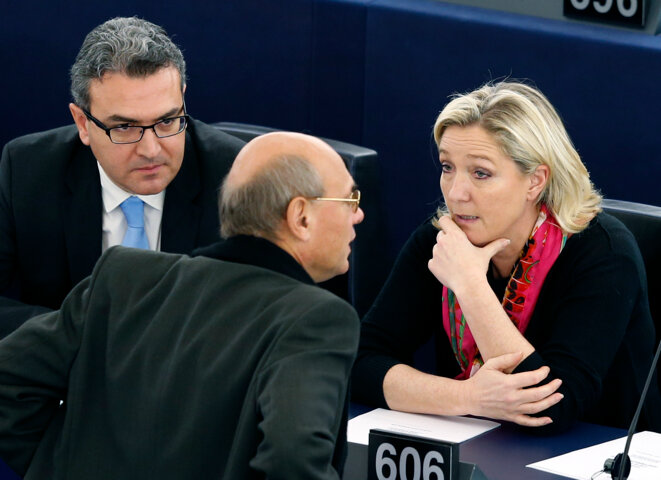
The French prosecution services have been asked to launch a probe after an investigation by Mediapart revealed that medical experts in charge of key medicines regulation bodies were secretly moonlighting as consultants for pharmaceutical firms. France’s health minister Marisol Touraine has also ordered an inquiry. The investigation by this website shows how this tight-knit network of friends, all senior medical personnel, sat on committees that approved medicines as safe and, crucially, recommended which new medicines should have their costs refunded by the state-backed health insurance system. At the same time they were receiving cash payments or gifts for secretly advising pharmaceutical firms on how to present those very same new products to the authorities. These clandestine meetings cost the drugs companies up to 60,000 euros a time. Some of the medical officials have admitted their involvement but say there was no conflict of interest, others have denied the claims. There are also allegations that some medical experts even solicited large sums in return for agreeing to favour a drug's application. Michaël Hajdenberg and Pascale Pascariello report on an affair that raises serious questions about the moral integrity of the French health system.
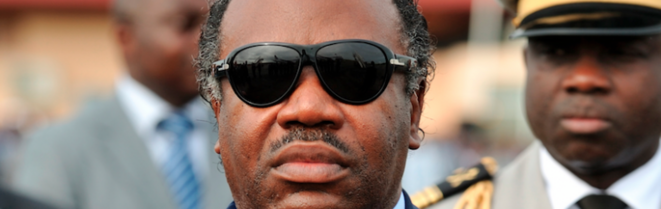
Mediapart has gained access to confidential documents that reveal how a handful of Gabon’s ruling Bongo clan, and Gabonese President Ali Bongo in particular, prey on almost every sector of the country’s economy via a holding company called Delta Synergie. The company, established under the late dictator Omar Bongo, has stakes in the insurance, banking and property sectors, the agroalimentary and construction industries, agriculture and raw materials, gas and oil production, wood processing, business aviation, the transport and medical sectors, and the security business. The scandal comes on top of revelations of the vast wealth, including offshore bank accounts, that Ali Bongo and his sister Pascaline have inherited from their father, and while the West African country, where a third of the population live in poverty, is gripped by a wave of strikes and protests over poor living standards. Fabrice Arfi reports.
On Wednesday March 4th, France’s top appeal court ruled that billionaire Kazakh opposition politician and former banker Mukhtar Ablyazov could be extradited over an alleged six-billion-euro fraud. Meanwhile, behind the scenes in this complex affair, a mysterious website has revealed a mass of emails hacked from Kazakhstan leaders. They reveal that Bernard Squarcini, who was the head of France's domestic intelligence agency under President Nicolas Sarkozy, has worked as a consultant on behalf of the Kazakh authorities in relation to the Ablyazov affair. Talking to Mediapart, Squarcini admits the Kazakh government is a client of the firm he works for and that he has worked on the case, but denies claims that he tried to “infiltrate” Ablyazov's team of lawyers and supporters. Agathe Duparc reports on this murky affair.
A former French environment minister is the brains behind a high-level business forum on climate to be held in Paris in May which aims to produce ideas for the critical global climate conference in the French capital in December. Among the organisers of the business event is an executive seconded from Areva, the French nuclear group. Is there a conflict of interest in a nuclear power executive taking a role in such a summit? The man behind the summit insists not, saying that it was “rather good” of Areva to send someone. Jade Lindgaard reports.