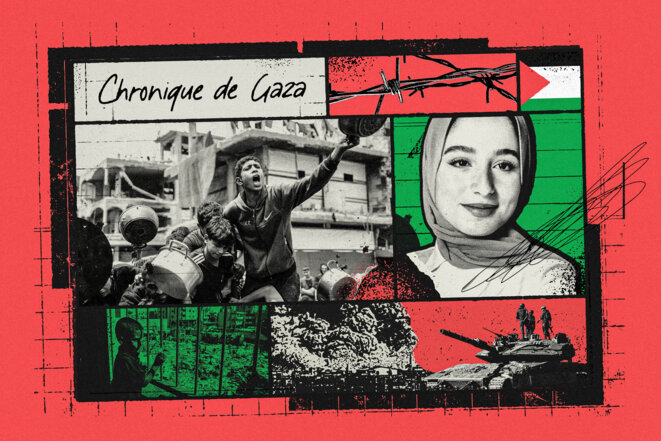
Mediapart is publishing a series of reports regularly sent to it from inside the Gaza Strip by two young Palestinians. Nour Elassy, a 22-year-old journalist, who is also a poet and writer, and Ibrahim Badra, a 23-year-old journalist and human rights activist, chronicle the grim reality of life and death in Gaza as Israeli Prime Minister Benjamin Netanyahu continues to wage a genocidal war against the population of about 2.1 million. “Israel’s goal is no longer hidden, it wants Gaza emptied of Palestinians,” writes Nour Elassy in her first contributions presented here, “and we are beginning to let go of our belief that we can live here, grow here, raise our children here.”
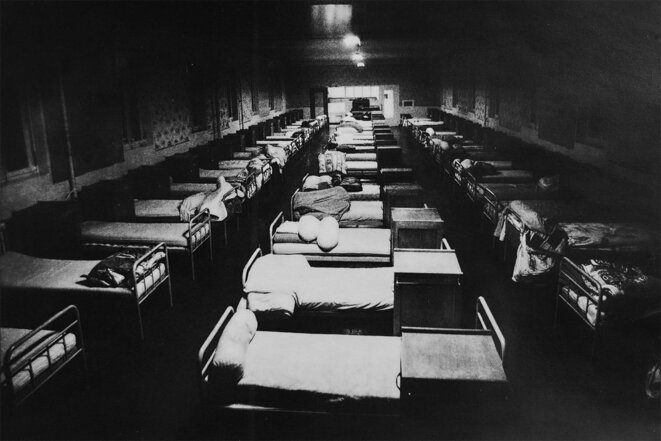
The number of suicides among prisoners in France is steadily increasing, while overcrowding of prisons is soaring. Often, the families and close entourage of the deceased face a lengthy legal battle to establish the circumstances of their deaths and the eventual responsibility of the prison authorities who, some complain, treat them with insensitivity and even disdain. Feriel Alouti reports on their distressing experiences.
On Wednesday a parliamentary inquiry led by MPs published its report on the scandal at the prestigious Notre-Dame-de-Bétharram private Catholic school in south-west France and the wider issue of the abuse of pupils in French schools. Prime Minister François Bayrou, a former education minister and local politician whose own children attended that school, was criticised by the inquiry for “failing to act” in relation to the scandal. However, in their report, the MPs also refer to the “Pélussin affair”, which broke in 1995 at a Catholic boarding school in the south-east of France. According to documents uncovered by Mediapart, in that case, too, François Bayrou ignored whistleblowers, who have now attacked his “inaction”. Mathilde Mathieu and David Perrotin report.
In what is the first legal move of its kind in France, a woman has filed a formal complaint for war crimes, crimes against humanity, and genocide over the deaths in Gaza of two of her grandchildren, and the wounding of another, all French nationals, during Israeli airstrikes in October 2023. Meanwhile, similar moves are being launched in other countries against named Israeli military personnel accused of committing war crimes. Gwenaelle Lenoir reports.
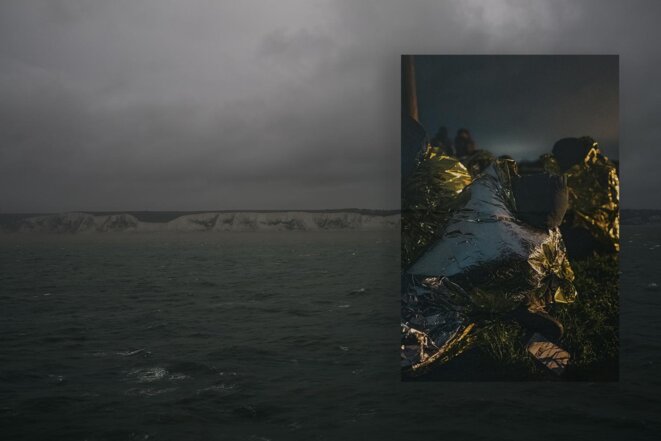
The macabre and seemingly weekly occurrence of bodies washed ashore on France’s northern Channel coast bears witness to the recurrent tragedies that befall migrants attempting the dangerous clandestine passage to southern England in overcrowded, unseaworthy dinghies. When the small boats sink, the exact numbers of passengers who originally embarked on them is mostly unknown, as are the numbers who disappear in the incidents. Maïa Courtois, Maël Galisson and Simon Mauvieux report on the difficult and often mismanaged process of identifying the corpses of victims returned by the sea, and the angst of the families who remain uncertain of their fate.
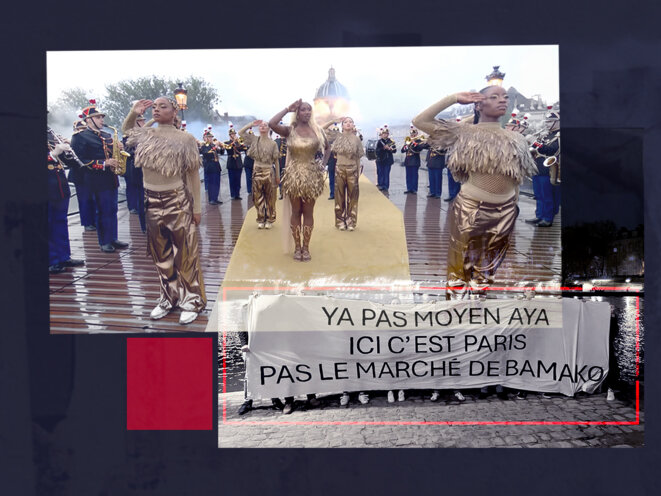
In the spring of 2024 reports that Malian-born French singer Aya Nakamura would perform at the opening ceremony of the Paris Olympics later that summer attracted controversy and opposition. More than a year later, thirteen members of the extreme-right group Les Natifs are set to stand trial in a Paris court over a banner they wrote attacking her planned participation in that ceremony. Among those appearing in court on June 4th is a young woman who, at the time of the banner incident, was a parliamentary assistant to MPs from the far-right Rassemblement National party. Matthieu Suc reports.
On May 22nd the city of Strasbourg in north-east France announced that it was planning to twin with the Aida refugee camp for Palestinians in the West Bank. But this declaration, though it led to criticism of the city's mayor, is not an isolated act. Across France major towns and smaller councils alike are establishing or strengthening partnerships with Palestinians. However, this form of grassroots diplomacy has not gone down well with the Israeli authorities: two delegations of local elected representatives from France were banned from entering the country in April. Clothilde Mraffko reports.
The Mediterranean sea continues to be a watery graveyard for many migrants seeking to reach the shores of Europe. Sometimes large-scale tragedies at sea hit the headlines and occasionally even reach the courts. But often the tragic loss of life in such circumstances receives scant attention. Here Mediapart recounts the story of one such harrowing event which claimed the lives of more than 50 people. In March 2024, an inflatable boat carrying around 80 people drifted for nearly a week in the central Mediterranean. Though spotted several times, no one came to its aid; some have claimed it was “left to die”. In the end, only 24 people survived. Cécile Debarge reports from Italy on its grim journey.
On May 27th the French Parliament's lower chamber, the National Assembly, voted for a bill that gives the right to assisted dying. The Senate, the upper chamber, still has to vote on the law and that could be a long process. But for reasons of democracy, secularism and the new freedom it creates, we should welcome the MPs' backing for this new right in France, argues Mediapart's co-editor Lénaïg Bredoux in this op-ed article. However, she says that now more than ever we must battle to save our healthcare system, so that neoliberalism and capitalist cost-cutting can never exploit this right in order to choose who among us should exercise it.
French professional football, and in particular the top-level Ligue 1, is having to confront massive financial problems as the domestic season comes to an end. Indeed, from the collapse of a seemingly-lucrative deal with media rights company Mediapro to the Faustian pact later signed with Jersey-based private equity fund CVC, top-flight club football in France has completely lost its way in the space of just a few years. The root cause, as Mathias Thépot explains here, is that the game has become blinded by delusions of grandeur and undermined by a shaky economic model, leading to financial shortfalls which some of the weaker French clubs may struggle to survive.