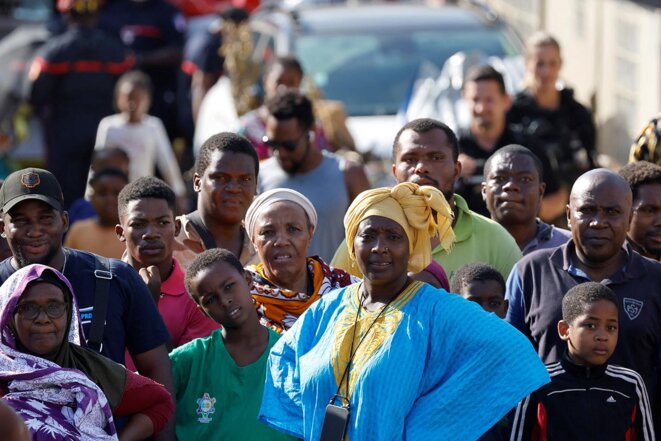
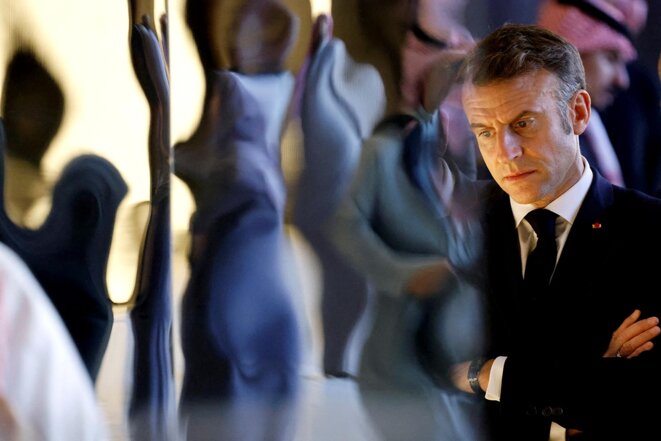
President Emmanuel Macron’s brief visit to France’s Indian Ocean territory Mayotte this week was marked by heated exchanges with local residents who are angry at the struggling authorities’ inability to provide adequate water and food supplies almost one week after Cyclone Chido flattened most of the archipelago. While the official death toll stands at 31, there is rising concern over the fate of inhabitants, mostly illegal immigrants, of the numerous shantytowns on the territory, where few searches have yet been carried out. Jéromine Doux reports from Mayotte.
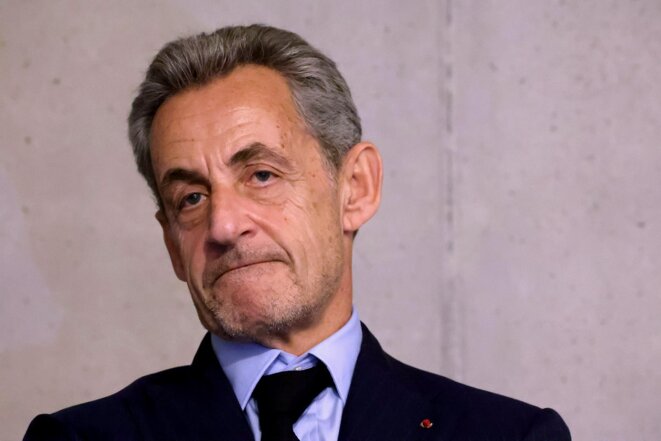
Nicolas Sarkozy on Wednesday lost his ultimate appeal against his conviction in 2021 for “active corruption” and “influence peddling”. France’s highest appeal court also upheld the sentence he was handed of three years in prison, two of them suspended, and a three-year ban on holding public office and voting. Sarkozy, 69, will serve his prison sentence at home wearing and electronic tag. Michel Deléan reports.
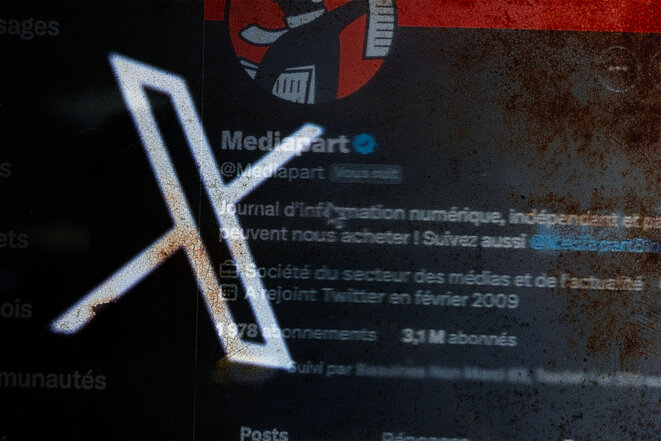
With Donald Trump’s re-election to the White House, billionaire Elon Musk’s social media platform X, the former Twitter, has become transformed into a weapon of mass disinformation. Mediapart refuses to serve the cause of the enemies of journalism and the public general interest, explains publishing editor Carine Fouteau.
Since the Covid-19 crisis, the use by patients of companies who provide telephone and online health consultations with doctors has soared in France. Financial groups are now investing in what has become a fast-growing sector. However, these services are becoming increasingly expensive for the state health insurance system, which has to reimburse the cost of them. Caroline Coq-Chodorge and Manuel Magrez report on the growing role of remote healthcare providers in the country.
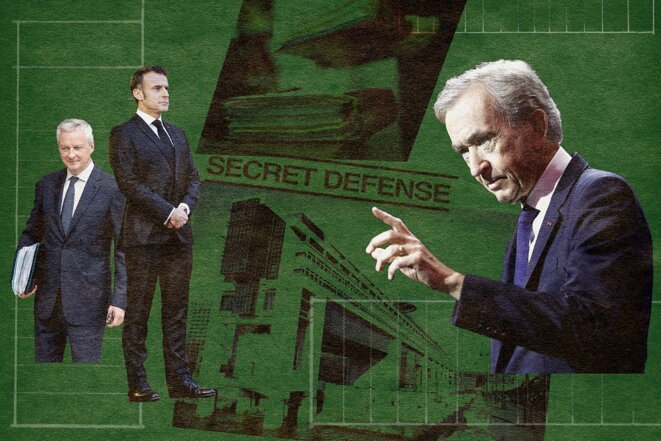
In the summer of 2022, France's richest man Bernard Arnault was panicking at the prospect of an MP from the radical-left La France Insoumise (LFI) party taking charge of the Finance Committee at the National Assembly. The boss of the LVMH luxury goods group apparently feared that as chair of the influential committee the politician would be able to get access to his tax details. Representatives for the billionaire then requested that his personal tax records be classified as a state secret. But as Fabrice Arfi, Yann Philippin, Antton Rouget and Ellen Salvi report, the authorities balked at this extraordinary request and ultimately rejected it.
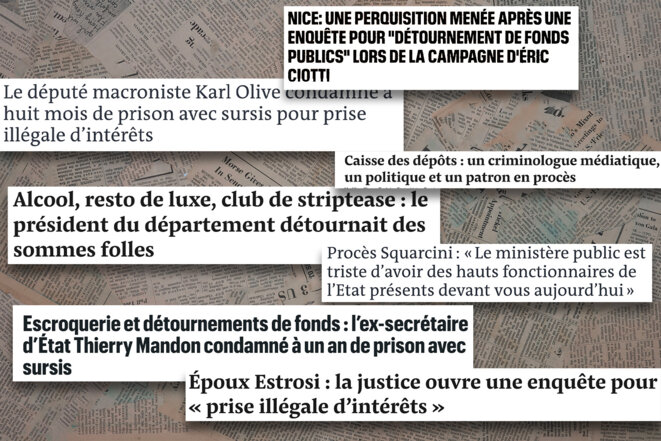
Even though concern about corruption looms large in the very opinion polls that the worlds of politics and journalism hold so dear, no one seems to want to tackle this issue head on. This was shown again recently when a new survey suggested that 63% of people in France think that “most politicians are corrupt”; yet subsequent public discussion of the findings focussed on other matters. To highlight the issue Mediapart has painstakingly compiled daily cases involving corruption from the last few weeks. As Antton Rouget reports, the list speaks for itself.
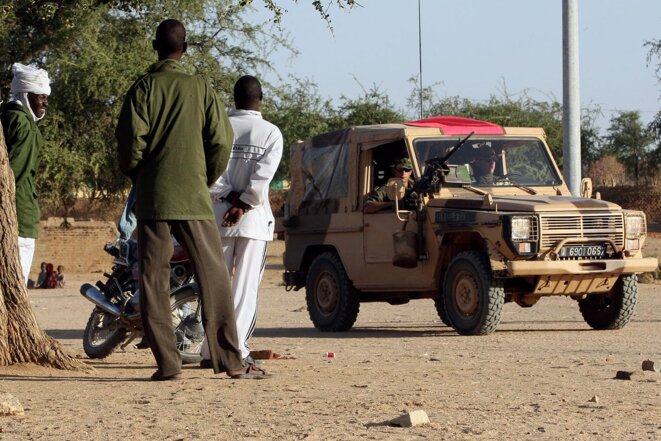
At the end of last month the authorities in the Senegalese capital of Dakar and in N’Djamena in Chad both announced that they want the French military to pack up and leave their countries. These decisions – which in Chad's case came as a shock - undermine Paris's ongoing plans to restructure its troops' deployment in Africa. More broadly they also challenge a French military presence on the continent that is a hangover from colonial days. Rémi Carayol reports.
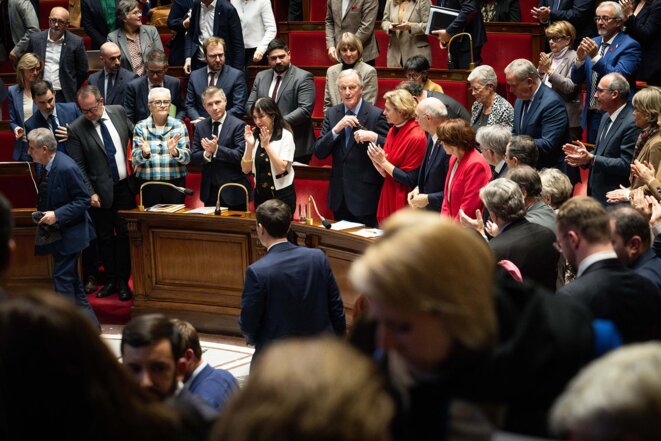
The downfall of prime minister Michel Barnier's government on Wednesday night was only the second time under France's Fifth Republic that an administration has been toppled by MPs in a no-confidence vote. In an interview with Mediapart's Fabien Escalona, law professor Bruno Daugeron examines the similarities and differences with the current situation and that of 1962, when prime minister Georges Pompidou's administration was also brought down. According to the academic, France is now paying the price for decades of what he terms “majoritarian presidentialism” that no longer works.
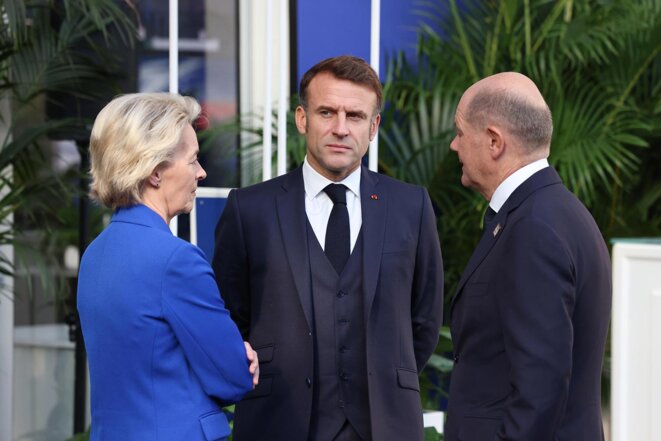
The collapse of Michel Barnier's administration on Wednesday night after a no-confidence vote has repercussions that spread beyond France itself. For example, the political crisis in Paris further complicates the European Union’s efforts to formulate a response to Donald Trump’s imminent return to power in the United States. And it also comes as negotiations on the EU-Mercosur trade agreement – which is deeply unpopular with French farmers – look as if they could be concluded by the end of this week. Mediapart's Brussels correspondent Ludovic Lamant reports.
A vote of no confidence brought down prime minister Michel Barnier’s short-lived administration last night, something that has only happened once before under France' Fifth Republic, and that was in 1962. Yet the vote – backed by 331 French MPs - will not persuade President Emmanuel Macron to change course. On the contrary, says Mediapart's political correspondent Ilyes Ramdani, the head of state is now actively seeking solutions from among his most loyal supporters about how to hold on until the summer when fresh parliamentary elections can be held.