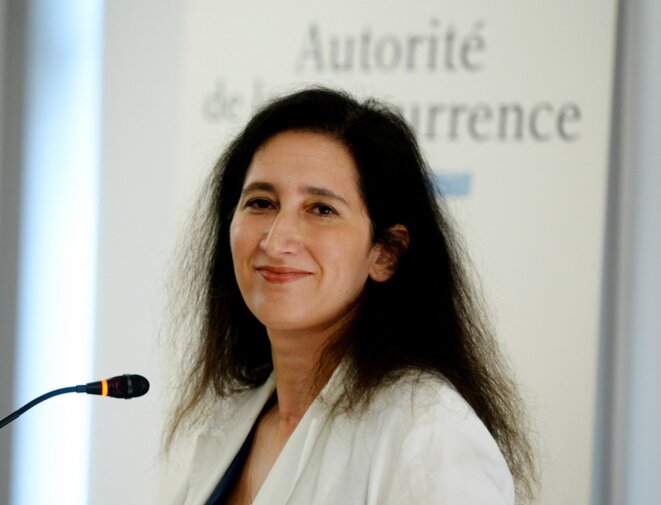
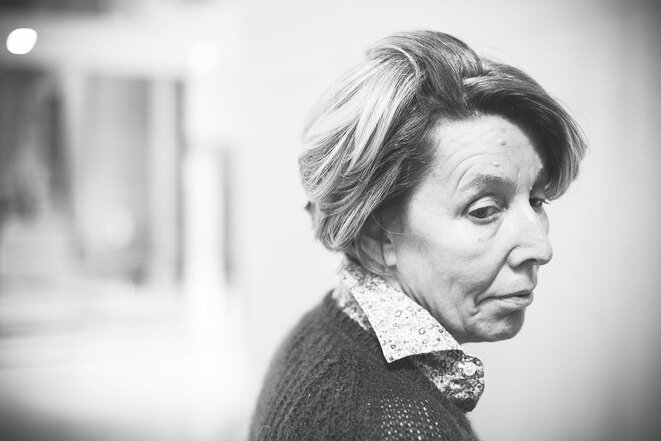
Abruptly and without any warning, the Élysée decided that it was not renewing Isabelle de Silva's contract as the president of France's competition authority the Autorité de la Concurrence from October 13th. The decision, which has reportedly surprised and dismayed government ministers as well as many observers, was taken so late that a successor has not yet been lined up. The main theory to explain Emmanuel Macron's shock move is that the highly-respected De Silva was seen as an obstacle to the proposed merger between two private French TV companies, TF1 and the smaller M6, a tie-up that the Élysée favours. More generally, the independent Autorité de la Concurrence is also seen as a block to Emmanuel Macron's aim of creating large-scale national business champions. Martine Orange reports.
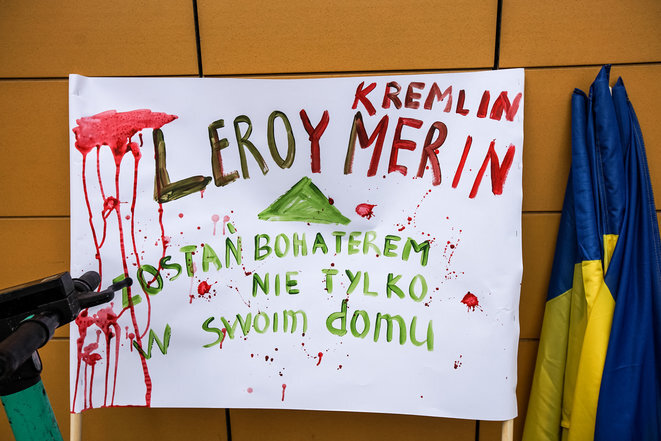
On Wednesday Match 23rd the Ukrainian president Volodymyr Zelensky called on French companies to quit their involvement with Russia, but without much success. This can largely can be put down to the greed of the business world. But as Mediapart co-founder Laurent Mauduit argues in this op-ed article, the lack of solidarity by businesses can also be explained by the French government's ambiguous stance on the issue.
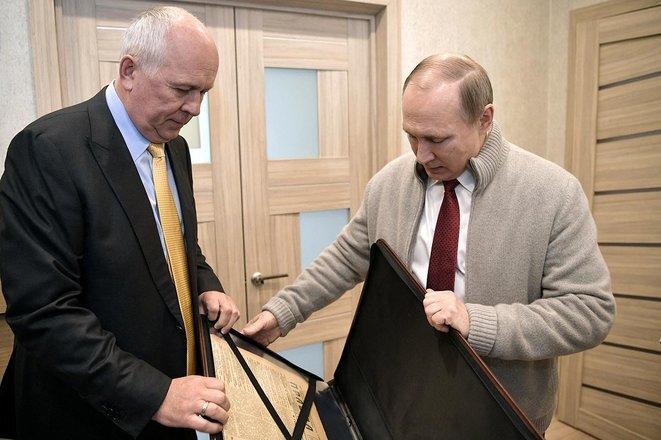
In this second part of a lengthy interview he gave to Mediapart this month, oligarch Sergei Pugachev, once a Kremlin insider close to Vladimir Putin, says one of the Russian president’s key allies, a former fellow KGB officer, Sergei Chemezov, regularly negotiated secret commissions on arms deals which were paid into offshore accounts for the benefit of both Chemezov and Putin. According to Pugachev, that was also the case in an ill-fated deal for Russia’s purchase from France of several Mistral amphibious assault vessels.
The trial of 20 individuals accused of variously perpetrating or helping with the carrying out of the November 13th 2015 terrorist attacks in Paris is continuing, in proceedings that are expected to last nine months. As part of its regular coverage of the trial, Mediapart is publishing the first-hand reactions and reflections of seven victims of the massacres as they follow the court proceedings. Here Roman, aged 30, who escaped alive after terrorists attacked La Belle Équipe restaurant where he was dining with friends, gives his evidence to the court about the attacks and describes the events that preceded it.
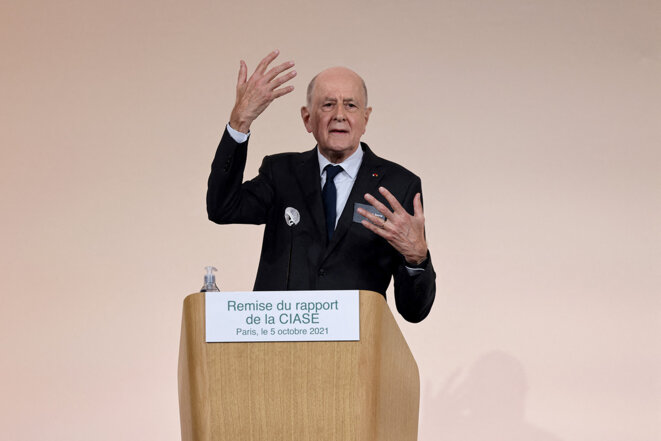
On Tuesday October 5th a report revealed the shocking scale of child sex abuse inside the French Catholic Church over many decades. The report's authors estimate that 330,000 minors have been the victims of sexual abuse within the church since 1950, a majority of them at the hands of ordained clergy. Since the report's publication the overall reaction from the political classes, both Left and Right, has seemed timid. Some politicians, however, are calling for the courts to intervene and for the church to undergo deep reform. Mathieu Dejean, Mathilde Goanec, Pauline Graulle and Ilyes Ramdani report.
He has not spoken about it publicly. But behind the scenes the French head of state Emmanuel Macron has written to the president of Uganda supporting the role of French oil firm Total in developing an oilfield and a lengthy new oil pipeline in the East African country. In the capital Kampala, meanwhile, the French embassy has been wholeheartedly lobbying for the French multinational. Yet the projects are opposed by environmental and human rights groups who say they are not just bad for the climate but will also displace thousands of local people from their land. Mediapart's environment correspondent Jade Lindgaard reports.
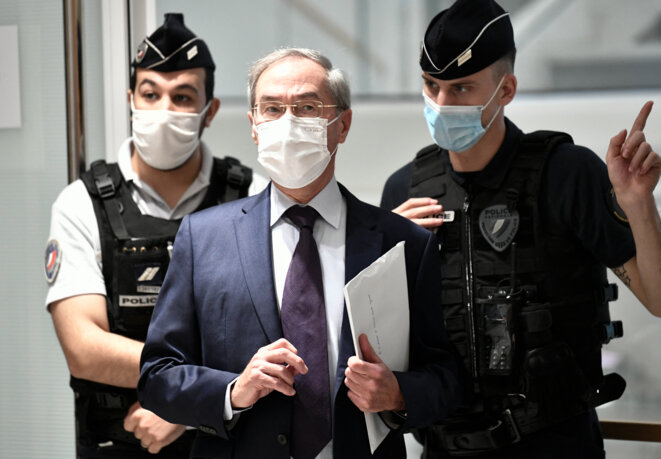
Former French interior minister Claude Guéant, who served for years as chief of staff of Nicolas Sarkozy before and after he became president, received 500,000 euros paid through a complex money trail that led back to a sovereign wealth fund controlled by the late Libyan dictator Muammar Gaddafi, a Paris appeal court has confirmed. The payment was made when Guéant, dubbed “the cardinal” because of his power and influence as Sarkozy’s right-hand man, was secretary general of the Élysée Palace. Fabrice Arfi and Karl Laske report.
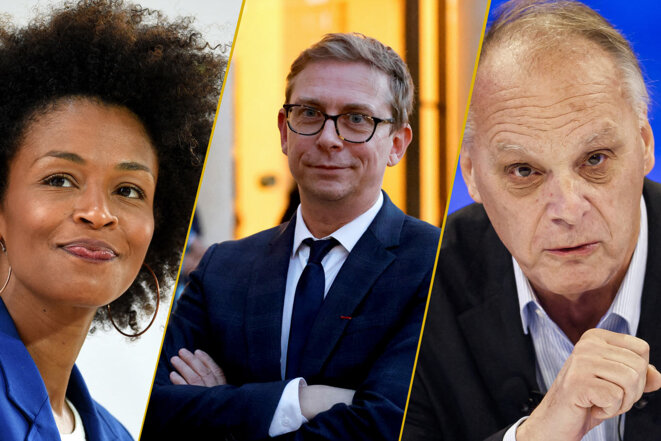
On September 29th 2021 the Élysée officially unveiled a new commission to help fight against conspiracy theories and disinformation. Officially called the 'Enlightenment in the digital age' commission, President Emmanuel Macron wants it to champion science, reason and truth and come up with new policy options in an era where social media in particular is awash with a bewildering array of views and theories. Critics, however, accuse the head of state of wanting to impose his own narrative ahead of next April's presidential election. Already the membership of the commission has been bitterly criticised, in particular its chair, social scientist Gérald Bronner. And after also coming under fire another member, Professor Guy Vallancien, a high-profile urologist, has just resigned from the body. Joseph Confavreux and Ellen Salvi report.
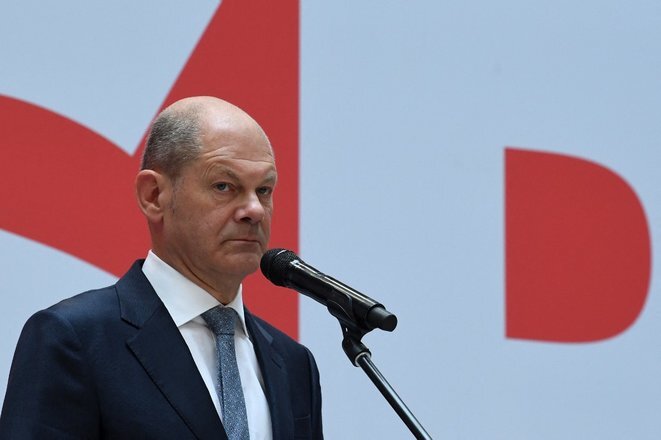
Germany’s social democrat SPD party came first in the country’s parliamentary elections on September 26th, garnering just more than a quarter of votes cast. It places the centre-left party in prime position to form a new coalition government, which would see Olaf Scholz, the party’s candidate for chancellor, succeed the outgoing Angela Merkel. But, writes Fabien Escalona in this analysis of the wider implications of the election, the knife-edge victory of the once moribund SPD is very much a relative one, and is far from auguring a resurgence of the social democrat movement in Europe, despite similarly fragile recent wins in Nordic countries.
The trial of 20 individuals accused of variously perpetrating or helping with the perpetration of the November 13th 2015 terrorist attacks in Paris this week entered its third week, in what is just the beginning of a legal marathon that is expected to last nine months. As part of its regular coverage of the hearings, Mediapart is publishing the first-hand reactions and reflections of seven victims of the massacres as they follow the court proceedings. Here, Nadine Ribet-Reinhart, whose 26-year-old son was among 90 people massacred at the Bataclan concert hall, and Georges Salines, who lost his 28-year-old daughter in the same attack, write about their initial experiences of a trial that has been almost six years in the making.