Ahead of next year’s presidential elections, France’s conservative party, Les Républicains, has yet to choose its candidate to stand against a widely expected, although as yet unannounced, re-election bid by Emmanuel Macron. But the party has now published its policy programme. Ilyes Ramdani reports.
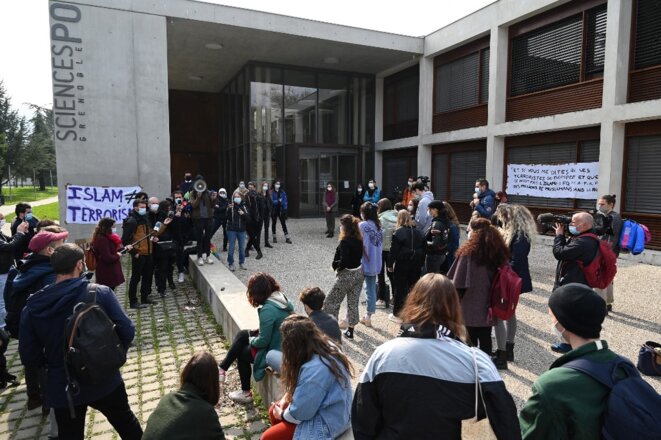
A national controversy blew up in France earlier this month over a ‘naming and shaming’ campaign by students at a political sciences school who accused two of their teachers of Islamophobia, prompting police protection for the pair. While there has been widespread political and media condemnation of the students’ campaign, this investigation by Mediapart found that the case is far more complex than so far presented, and that the controversy was fanned by the timidity of the school's management to intervene in a simmering dispute within its walls. David Perrotin reports.
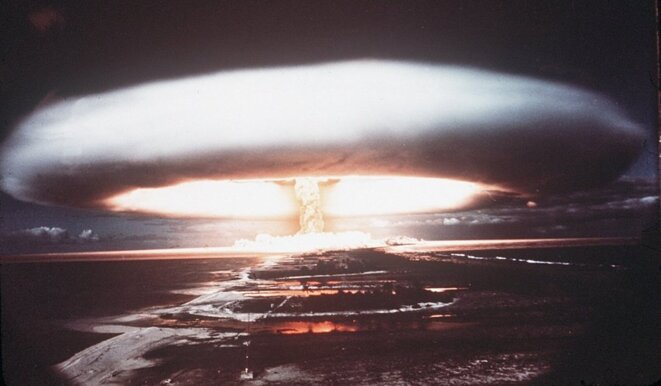
Beginning in 1966, France carried out close to 200 nuclear tests at its South Pacific territory of French Polynesia, 15,000 kilometres from Paris. The most contaminating were the nuclear bombs exploded in the atmosphere. This report from a series of investigations by Mediapart's editorial partner Disclose presents the extent of the radioactive fallout from one of those bombs in the Polynesian island of Tahiti, a hidden nuclear disaster that is estimated to have exposed 110,000 inhabitants to alarming levels of radioactivity.
For several years, Hassen Bouchakour and his horse Peyo used to compete together in equestrian shows, but they have since entered a radically different world. Peyo, now aged 15, revealed himself to have an unusual empathy towards people in distress, and a remarkable ability to relieve their anxiety. The pair now visit patients, often the terminally ill, at a hospital in Calais, northern France, where Peyo’s comforting close physical presence is so calming for those in pain that it reduces the need for heavy medication. Medics and veterinarians are studying the exceptional character and powers of he who is now called “Dr. Peyo”. Jérémy Lempin reports here in words and pictures.
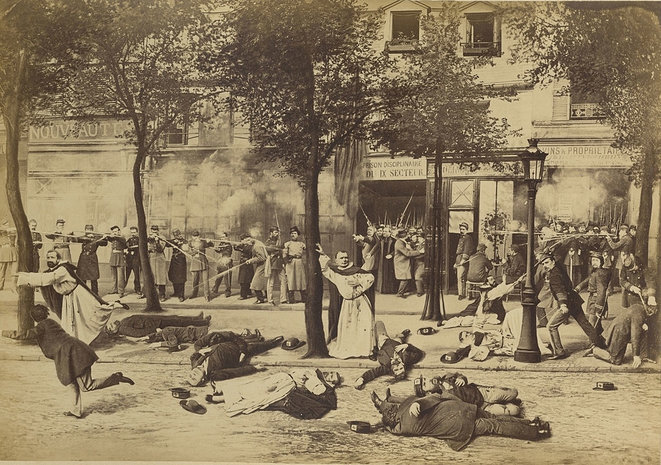
The Paris Commune, an uprising in which ordinary citizens seized control of the French capital, began on March 18th 1871 and lasted for two months before coming to a bloody end. Now, 150 years after those dramatic events, an exhaustive book on the Commune has been been published. As Joseph Confavreux reports the book, edited by historian Michel Cordillot, retraces the uprising in minute detail and explains why this traumatic event still provokes debate in France to this day.
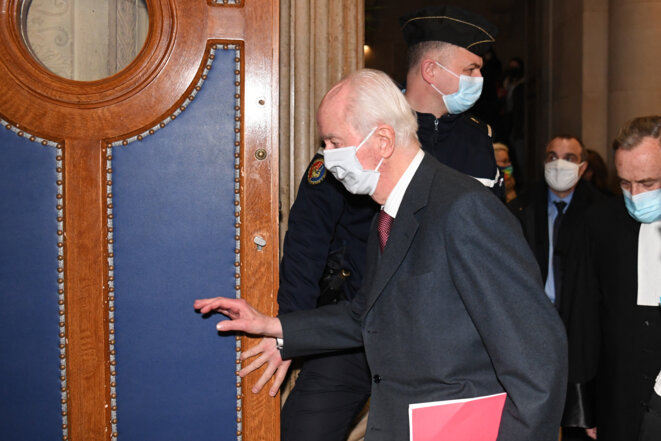
On Thursday March 4th 2021 the Cour de Justice de la République (CJR) – which tries cases of alleged ministerial misconduct – cleared former French prime minister Édouard Balladur of any wrongdoing in the long-running Karachi affair. At the same time it found Balladur's former defence minister François Léotard guilty of complicity in the misuse of assets and handed him a two-year suspended prison sentence. The verdicts were much more lenient than those for ministerial aides in the earlier criminal trial involving the same affair. Karl Laske wonders how long the hybrid CJR court, most of whose 'judges' are politicians, can survive.
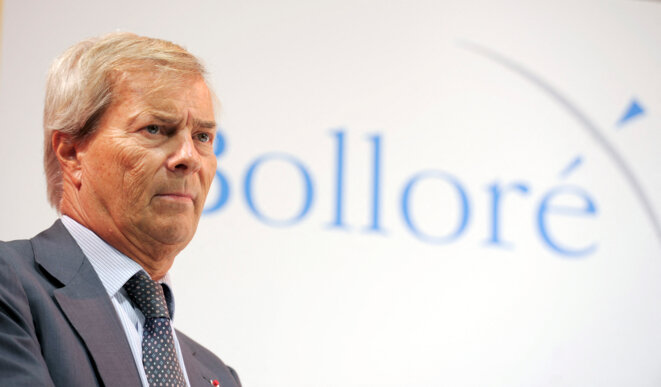
The businessman had negotiated a deal with the French financial prosecution unit, the Parquet National Financier, under the terms of which he would have only received a fine of 375,000 euros over a corruption case in West Africa. But on Friday February 26th a court in Paris rejected the plea bargain agreement, ruling that it was too favourable to Vincent Bolloré, whose group has a string of economic interests in African countries. Fabrice Arfi and Yann Philippin report.
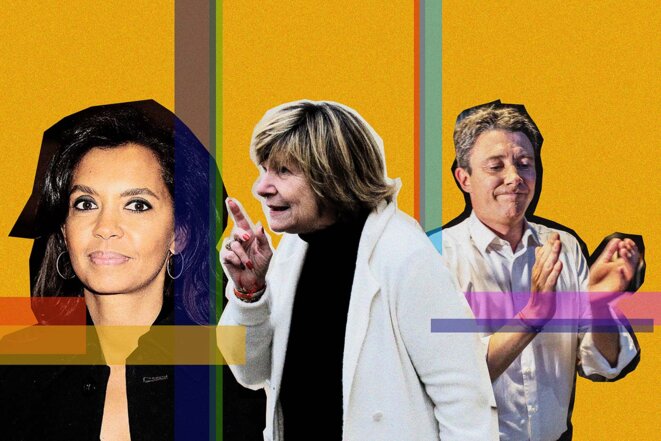
Michèle 'Mimi' Marchand, a powerful figure in the French gossip press and an influential PR fixer to politicians, has already been placed under investigation over the retraction of evidence by businessman Ziad Takieddine, a key witness in the probe into Libyan funding of Nicolas Sarkozy's 2007 election campaign. Now Marchand, 74, the boss of paparazzi agency Bestimage, has been placed under investigation in relation to a second case, involving allegations of police leaks. It concerns the publication of photos of the arrest of a man over a sex tape affair that ended the hopes of former government spokesperson Benjamin Griveaux of becoming mayor of Paris for Emmanuel Macron's party. Marchand, who denies any wrongdoing, is also being investigated for alleged “extortion” against well-known French television presenter Karine Le Marchand. Fabrice Arfi and Antton Rouget report.
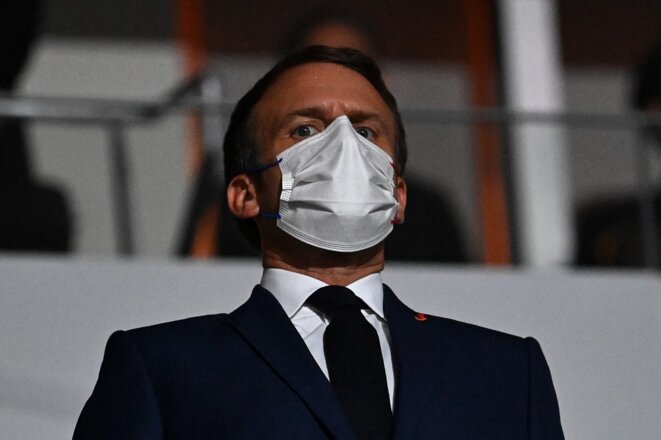
The scale of protests across France this summer against the policies being deployed to tackle the Covid-19 pandemic is the price being paid by the head of state for his authoritarian, lying and irresponsible presidency, says Mediapart’s publishing editor Edwy Plenel in this op-ed article. Never, he argues, has the issue of democracy been so relevant - and so urgent.
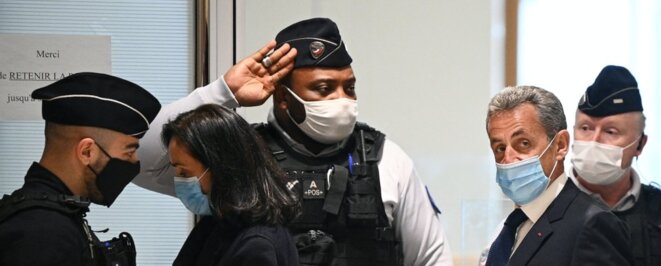
Nicolas Sarkozy arriving at the court in Paris on Monday 1st March 2021.
The former French president Nicolas Sarkozy was found guilty by a Paris court on Monday March 1st 2021 of corruption and influence peddling in the case known as the 'Paul Bismuth affair'. The ex-head of state was handed a three-year prison sentence with two of them suspended, though it appears unlikely he will serve time in jail and his lawyer said he will appeal against the conviction. It is the first time in French legal history that a former president of the Republic has been convicted of such serious crimes. The case stemmed from judicially-approved telephone taps of conversations between Nicolas Sarkozy and his friend and lawyer Thierry Herzog, who has also been convicted in the case. Mediapart's legal affairs correspondent Michel Deléan reports, with additional reporting by Ilyes Ramdani.