


Gérard Longuet on Tuesday took up his post as French Minister of Defence, replacing Alain Juppé, the new foreign minister, who himself replaces Michèle Alliot-Marie. The mini reshuffle, which also saw former Elysée Palace secretary general Claude Guéant take over the interior ministry, was prompted by Alliot-Marie's forced departure over her links with the ousted regime in Tunisia, revealed by Mediapart and the investigative weekly Le Canard Enchaîné.
While Longuet, 65, is relatively unknown outside France, his chequered political career stretches back nearly five decades, when he was a student militant with the now-disbanded far-right group Occident. His previous ministerial career (communications, then industry), was cut short by his suspected involvement in a fraudulent purchase of a villa in St. Tropez, for which he was subsequently cleared.
The key to his appointment is his leading role in a free market, anti-state intervention movement on the right of President Nicolas Sarkozy's ruling UMP party, commonly called les libéraux (liberals), whose support Sarkozy depends upon as the 2012 presidential campaign starts rolling. But, Mathilde Mathieu argues here, the president may very soon come to regret the appointment.
-------------------------
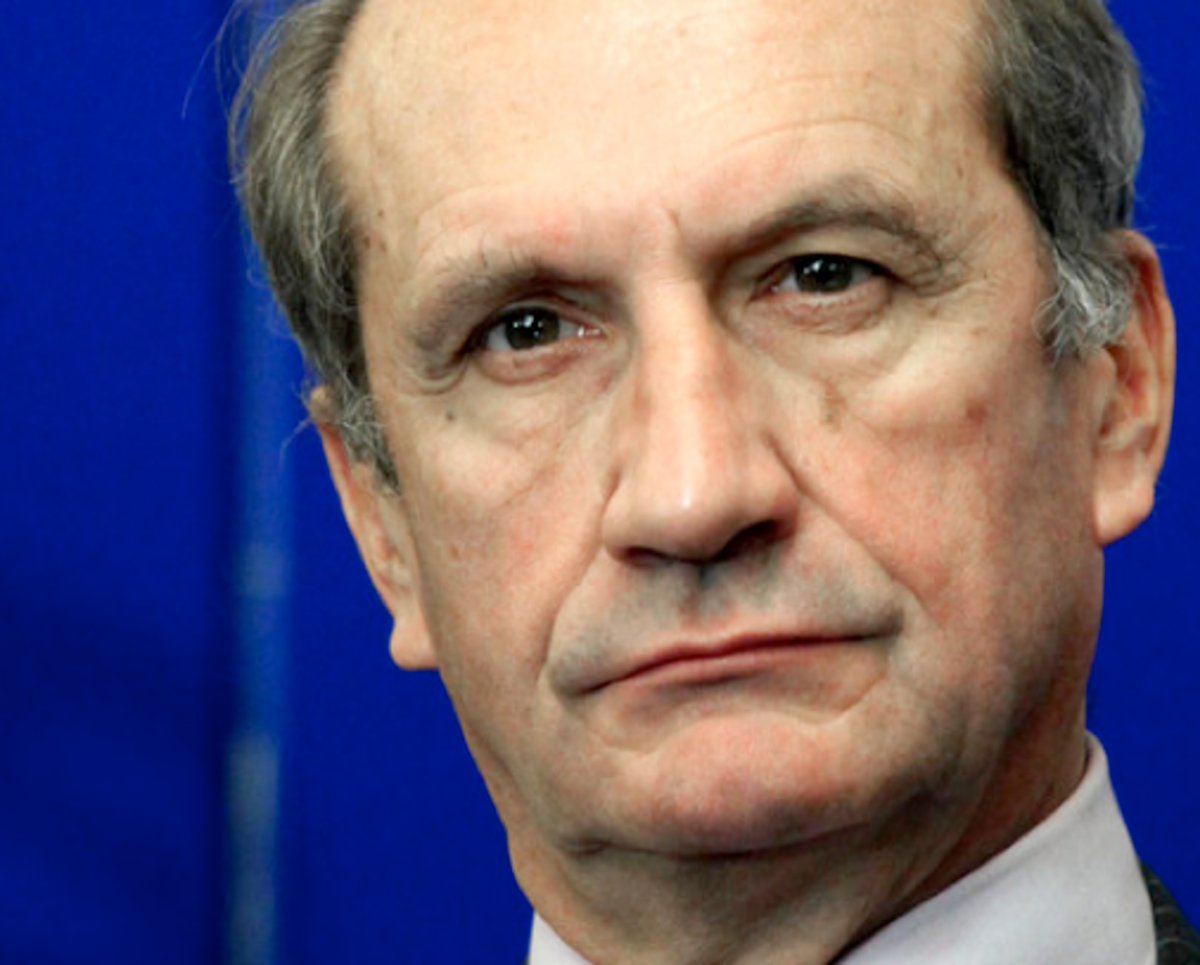
Last November, when President Nicolas Sarkozy organised his much-awaited government reshuffle, he felt politically strong enough to pass over Gérard Longuet's keen lobbying for a ministerial post. The senator, president of the ruling UMP group in the upper house, carried an explosive reputation over alleged conflicts of interest, at a time when the issue had become a major political controversy in France following the L'Oréal-Bettencourt affair.
But Longuet is also a leading figure of the so-called ‘Réformateurs', (Reformers), a political club established by the free-market libéraux members on the right of the UMP party who want to see a reform of the state, notably concerning economic policy.
His nomination illustrates the political cul-de-sac into which the French president has driven himself. He has come under pressure from the 80-odd ‘Reformist' Members of Parliament, angry at the forced exit from government in the reshuffle last November of their president, Hervé Novelli1. They had threatened to disrupt the ruling majority just as the 2012 presidential election campaign gets underway.
Sarkozy, then, was left with little choice other than to appoint the cumbersome Longuet, although his arrival in government threatens to become a sword of Damocles above the president's head; parliament will soon debate a government bill defining and outlawing conflicts of interest among politicians, an issue that Longuet has long found himself at the centre of.
He was forced to resign from government in 1994 after he was investigated for suspected fraudulent financing of the construction of a villa he owned in St. Tropez (see further below)), and one year later was investigated for his role in suspected illegal political party financing involving his Republican Party (Parti républicain), a case finally dismissed only last year.
Mediapart revealed last summer how senator Longuet earned extra income from his 15-month role as a consultant for French energy group GDF-Suez, at the very same time as parliament was debating the privatization of the French energy sector. As leader of the group of ruling UMP senators, his role gave him the power to shape the debating procedure in the senate, which is involved in approving, or not, every law that passes through parliament. Yet from September 2008 until December 2009, Longuet was paid, via his consultancy company Sokrates, for work that involved both a study and lobbying on their behalf. The amount he was paid has never been made public.
-------------------------
1: Novelli was Secretary of State responsible for small- and medium-sized business, tourism and consumer services. He was subsequently made assistant secretary-general of the ruling conservative right UMP party.
Longuet began consultancy work for the private sector in 1999, during a long period in the political wilderness. That was when he bought up several companies, before regrouping his investments in the name of a holding company called Sokrates Group, of which he is today the majority shareholder. Beginning in 2007, he sold off some of his acquisitions, the last to date being the sale, for one million euros, of a company called Sanesco, specialized in consultancy work for hospitals and medical institutions. However, in July 2010, interviewed by Mediapart, he confirmed that he had kept on "a small personal activity in consulting".
Martin Hirsch, a maverick left-wing political figure, a former French government commissioner for the fight against poverty and now head of the French Civic Action Agency, caused a political storm last autumn with the publication of his book denouncing conflicts of interests among politicians in France. In Pour en finir avec les conflits d'intérêts1, (For an end to conflicts of interest), Hirsch recalled an incident when, in 1994, he was general secretary of the French commission for financial transparency in political life (CTFVP), an agency that investigates suspected illicit financing of politicians.
Longuet was quizzed by the commission over the circumstances of the purchase of his St. Tropez villa; he was suspected of having benefited from the largesse of the company that built the house, and which was notably based 800 kilometres away in Longuet's political fiefdom in the Lorraine region of France. Longuet told the commission that he financed the purchase with money made from the sale of a stamp collection that had been offered to him by the French post office while he was Minister of Telecommunications.
Over a period of 12 years, Longuet has been acquitted of his suspected involvement in three cases of fraud: in 1998, over the purchase of his villa in St. Tropez; in 2004, in a case involving the payment by a property developer of 170,000 euros to one of Longuet's companies, and again in 2005, in connection with a case of illegal party funding by construction companies in the Paris region.
Longuet is no stranger to controversy. The fact that he was, in his late teens, a member of the French far-right students' group Occident served to heighten the outcry he caused with his comments on a candidate for the presidency of the French High Authority against Discrimination (Halde). When Malek Boutih, a Socialist Party militant of Algerian immigrant parents, was widely tipped tobe appointed head of the Halde, Longuet stated his preference for someone from "the traditional French corps". On the subject of the man who eventually got the job, former Renault chairman Louis Schweitzer, Longuet commented: "A Protestant, perfect."
In 2009, he again ran into trouble over comments made during a senatorial commission on the subject of a national programme in French schools to eradicate homophobia. During a questioning of the then education minister Xavier Darcos, Longuet said, in an ironic tone, that it was "wonderful to know that new forms of sexuality are being promoted in schools, while at the same time we are combating paedophilia."
With presidential elections due in just 15 months, the appointment of Gérard Longuet to government, a billboard announcement of Nicolas Sarkozy's forced compromise to the dissatisfied right of his party, may very well become one of the president's great regrets.
-------------------------
1: Published by Stock.