


In the early hours of April 30th 2019, a group of six young men aged between 16 and 22 were travelling in a car through the bois de Boulogne, a sprawling green public parkland area on the west side of Paris. They pulled up at a set of traffic lights.
“A black car blocked us off,” recalled Hugo, 19, one of the passengers, who said that when men got out of the vehicle, “I saw two guns pointed at us, and a few seconds later we heard shots.” Hugo said he was sitting at the rear of the car with his friends. “I dropped my head down, I saw my life rushing past me because I saw the window smash,” he added.
The car he was in was driven by Paul, who said that the armed men shouted at him, “‘Cut the ignition, cut the ignition arsehole’. I was terrorised. I engaged into reverse gear, because I thought we were going to be killed.”
It was around 2am. There were soon three vehicles in all surrounding them, out of which eight armed men in all had descended, their guns trained on the young men, and one of the officers fired his gun twice, notably in the direction of Paul’s head.
While Paul, Hugo and their friends believed they were being attacked by thugs, they were in fact police officers from the brigade anticriminalité (BAC), a plainclothes branch of the police which is often involved in cases of serious crime. They suspected the young men of being involved in stealing a handbag. The arrests were carried out without the officers presenting their identity or wearing police armbands, nor did their vehicles use a flashing blue light. Furthermore, while there was no obvious danger to them, the officers used their firearms without serving any warning.
Unlike recent cases of police violence, no images of the events that night have until now appeared via the traditional or social media. They were however filmed by CCTV cameras at the scene. These were requested from the public prosecution services by Paul’s lawyer, Raphaël Kempf, on several occasions since May 2019, and were only finally provided in June this year.
The images, which prove the illegal actions of the officers, including the unjustified shooting by one of them, remained shelved for more than a year. For Paul, they “disprove the version of the police officers who accused me of violence”. He was prosecuted over the accusation, but the case against him was finally dismissed in court earlier this month. “On the other hand, the officer who fired, taking aim at me, continues to walk around with his weapon,” said Paul.
Below are the CCTV images of the violent arrests of the young men:
Now, more than a year and a half after the events, the Paris police prefecture has taken no action against the officers involved in the arrests, and the officer who fired his gun continues to exercise his job. Questioned by Mediapart, the police prefecture declared, on November 16th, that “the prosecution services have concluded [that the officers acted] in self-defence”, and as a result “no administrative [disciplinary] procedure has been taken against the officer who made use of his service weapon”.
But according to judicial sources, the prosecution services have not come to any such conclusion. Their investigation, opened in May 2019, into “violence committed by a person holding public authority”, has only recently been completed and it remains possible that the officers may be prosecuted.
Mediapart was re-contacted by the prefecture on November 28th, when it then said that the officers had not been suspended from duty because of “the legal complexity of this case”, in what appeared to be a confusing explanation for the fact that no disciplinary action has been ordered by Paris police prefect Didier Lallement.
Following the events, Paul, 22, was issued with an official medical certificate pronouncing a 40-day total incapacity to work, or otherwise lead normal activity, due to the psychological trauma he endured. He had been forced to interrupt his studies because, an expert psychological assessment declared, he was suffering “impulsive explosions”, “crying fits” and “ruminations centred on the fear he had had of dying”.
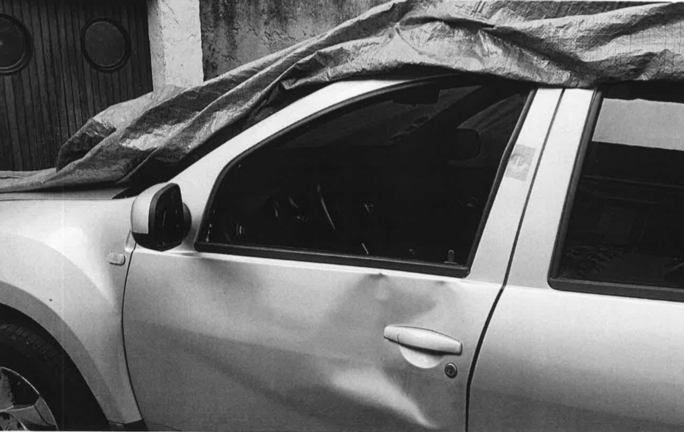
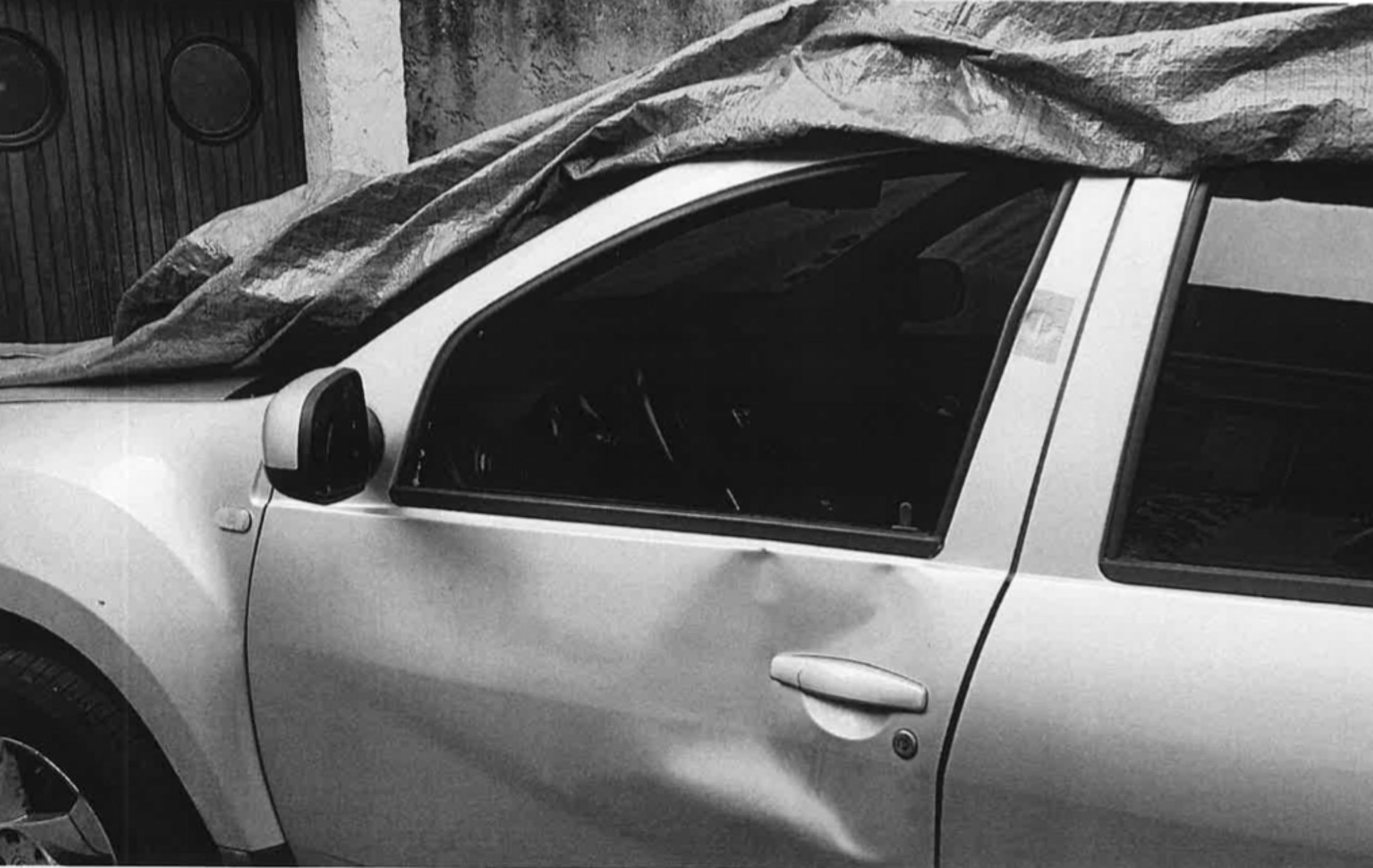
“The bullet landed in the [car] bodywork just a few centimetres on the side from my head,” Paul told Mediapart. “I thought I was going to die.”
He said that the previous evening, he and his friends had decided to “take a spin around Paris” and to make a trip into the bois de Boulogne. This vast, partially wooded public parkland area on the western side of the capital’s upmarket 16th arrondissement, with lakes, sports fields, and criss-crossed by through-roads, has for decades been a notorious nocturnal meeting place for prostitution. “Some [among us] had never been there, and we made [challenging] bets between us,” said Paul. “It was as stupid as that.”
He said that after asking a prostitute for cigarette paper, the six of them decided to drive out of the area and back into Paris when, at a set of traffic lights, a vehicle overtook them and blocked them. “Two men got out, a gun in the hand,” recounted Paul. “I thought they were thugs who were holding us up to steal from us. They never said they were police officers.” He said that as the men approached, “I then went into reverse so we could get away because I thought we were going to get killed. At that point I hit something, thinking it was a tree or a pavement.”
In fact, he had hit an unmarked police car, one of three, which had slipped in behind them. “But I hadn’t seen it,” said Paul. “My attention was taken up by the men who were threatening us. When I heard the sound of the gunshots I instantly dropped my head down.”
He said he switched off his car’s ignition. “A man opened my door and tried to get me outside, but I had the seatbelt on. He was forcing, while shouting.” He said it was only “when I felt handcuffs that I realised they were police officers”.
“I saw that my friends weren’t injured. I told myself that it was OK, that I wasn’t going to die here.” But Paul’s relief was to be brief. Tripped and held to the ground by three officers, one of them pulled his arm behind him “so hard that he dislocated my shoulder”.
“I was yelling, but he didn’t want to hear anything,” he said. On the journey to the police station, “I was spaced out, I had the impression of being outside my body, a moment of hesitation during which I was refusing [to believe the reality of] the scene without being able to understand this outburst of violence”.
“I don’t know if the colour of my skin came into play, some of us being of mixed race,” Paul added. “The police officers called me ‘arsehole’ [editor’s note, “enculé” in the original French], and ‘son of a bitch’.”
Quite rapidly, the accusations of theft against the six young men were dropped. Five of them were released, but Paul was kept in custody on suspicion of “voluntary violence against persons holding public authority with an improvised weapon, without total incapacity to work”. The convoluted terms of the accusation refer to his car, as a weapon, and the act of hitting the police vehicle without causing serious injury.
The Paris public prosecution services decided to send Paul for trial over the police complaint, but the case against him was dismissed during his court appearance on November 4th, more than 18 months after the events. The CCTV images were shown to the court and provided evidence that the officers were neither wearing nor carried any police insignia, therefore justifying Paul’s attempt to escape, by reversing his car, in the belief that he and his friends were being attacked by thugs. “For more than a year and a half I was waiting for this verdict while placed in the position of someone who was guilty,” said Paul. “Inside oneself, it’s revolting.”
“When I saw the impact of the bullets on the car, I broke down,” he said. He is still receiving treatment for stress and anger attacks, and has given up his studies. He now works as a waiter, in part to pay for his legal fees, and while hoping to reorientate his life. “Everything collapsed, in my studies and within my family where relations with my mother have become strained,” he added. “She’s a primary school teacher and my father works in security at the Senate. I’ve already been subject to police controls because of the colour of my skin, but I’ve never really felt anger towards the police. Since [that] April 30th, the fear of dying and the behaviour of the officer who filed a complaint against me has revolted me.”
He said he is now impatiently awaiting news that the police officer who shot at him will stand trial, and cannot understand why he has not been suspended from duty: “The bullet passed just a few centimetres from my head, and this policeman is still armed and continues to work. What is one waiting for, that he kills someone?”
'Nothing led us to suppose the individuals were dangerous'
Mediapart has obtained access to the reports by the police officers written up after the arrests of the six young men, and also the statements they gave to the subsequent investigation into the allegations of theft. They reveal multiple offences committed by the officers.
In the early hours of April 30th 2019, three teams of BAC officers – from the 16th and 17th arrondissements of Paris, and the nearby western suburb of Boulogne – were patrolling the bois de Boulogne in three unmarked police cars. According to police major Patrick O. (last name withheld) who led the arrest of Paul and his friends, they received a radio message from the police emergency call centre “indicating the theft of a handbag, […] the only description we had was that one of the two [suspects] was of African type and the [vehicle] registration number”. That number corresponded with the car in which the six friends were travelling.
Enlargement : Illustration 2
After finding the car, he continued, because of “the lack of lighting we did not have the possibility of determining the number of individuals aboard the vehicle”. They decided to stop the car, but beforehand contacted the person who had complained of the handbag theft. “She did not want to file a complaint,” declared the major, in charge of the joint operation. “But I convinced her by telling her that we had the individuals under surveillance. I told her that we were going to check them over and that I would call her back to ascertain for myself that they are indeed the two individuals.”
The officer conceded that without the filing of a complaint there would have been no “pointless arrest”. According to another officer present during the arrests, they had no description of the handbag in question, which none of them had apparently thought of asking the victim for.
“I would like to make clear that we had no flashing light nor police armband”, said major Patrick O. in his statement, describing the moment of the arrests. “Action took the lead over pulling out one’s armband.”
The behaviour of the arresting officers was without respect for the “interior security code” (CSI), a legal code that includes the regulations for all types of police operations. It imposes the limitations on the use of weapons, the requirement of issuing the standard warnings before their use, and the obligation of wearing identifiable police armbands.
Under Article 435-1 of the CSI police officers, in the course of their duties, “may use their weapon [while] wearing their uniform or exterior and apparent insignia” of their status. The CSI dictates that this applies to several types of case, such as if there is a threat to their lives or to the physical integrity of themselves or a third party and if, following two warnings, they cannot otherwise defend a place or people, or in the case of the escape of suspects, to immobilise their vehicle or to avoid the recurrence of murder.
In the early hours of April 30th 2019, and when the officers faced no threat justifying the use of their weapons, none of these requirements were respected.
Furthermore, there was apparently confusion over who fired the shots. In his statement to the judicial police investigation, Major O. said that when “the two shots [were] heard, separated by a few seconds”, he himself did not know “if it concerned a colleague who had fired or one of the passengers of the vehicle”, adding that “to [his] knowledge” no warning summons had been issued before the shots were fired.
The interviewing officer of the judicial police, in attempting to establish the reason for the use of an officer’s weapon that night, questioned the major about his view of the threat posed by the six young men. “There was no element that led us to suppose that the individuals could be dangerous,” he replied.
Another officer present at the scene said he jumped back when the first shot was fired. “I’m knocked out, I don’t much realise what’s happening when a second shot was fired,” he said in his statement. “With the impact, a colleague fell over and I also made a movement backwards in response to the impact. I saw the driver hunched up over himself.”
In his own statement, the officer who fired the shots, Alexis B. (last name withheld), defended his actions by claiming that the reversing of the young men’s car represented a danger. “The driver reversed and hit us, I get out and grab my weapon and point it at the vehicle and shoot,” he said. Alexis B. said he fired a second shot “given the determination of the driver, thinking that he was going to engage forward gear”.
The video shows that the driver, Paul, did not engage forward gear. Alexis B. said he “pointed in the direction of the danger to protect the colleagues, so a shot as a riposte”, which was aimed at the driver’s window – and which narrowly missed Paul by just a few centimetres. According to Alexis B., he shouted “Police! Police!” before firing.
At the end of his interview, and after he filed a complaint against Paul for violence using “an improvised weapon”, Alexis B. claimed that he was suffering from pain to his cervical vertebrae, but he officially recorded that he did not want “to see a doctor from the judicial-medical unit”.
The handbag that was reported stolen was never found, and the officers themselves confirmed that they carried out no searches for it at the scene or among nearby surrounds. The case against the young men for theft was therefore dropped.
But following the initial investigations, the Paris prosecution services decided to pursue a case against Paul for committing violence. Yet no ballistic report was carried out. Paul’s lawyer Raphaël Kempf requested one, arguing that “the bullet only very slightly [missed] the head of the driver and that of the rear left-hand side passenger, which is obviously constituent of extremely serious events”.
The investigation into the events was marked by irregularities, including questioning of the police officers that leant in their favour, and a fragmented presentation of the CCTV images, the complete recording of which was only provided to Paul and his lawyer one year after the events and after several repeated requests. “Yet these images show the violence and illegitimacy of this arrest and refute the version of the police officers,” commented Kempf.
“The legal action against Paul decided by the prosecutor was aimed at covering up the police violence,” added the lawyer. When that case against the young man was dismissed on November 4th, the court ordered the state to pay him 1,000 euros in damages. During the hearing, the prosecution services announced that it was to launch legal proceedings against the police officers.
“This young man believed he was going to die, and for more than a year has lived with the fear of a prison sentence,” said Kempf. “While the officer who fired at him, within a few centimetres from his head, is the subject of no questioning in custody, no suspension, no measure to place him out of the way, whereas he represents a danger.” The lawyer denounced the “privileged” treatment accorded to the officers, “a treatment which contributes towards their impunity and gives them the feeling of being above the law, with all the errancies which that induces”.
Kempf expressed the hope that now that an investigation into the events had been completed by the police internal inspection services, the IGPN, the prosecution services will open a judicial investigation, as required for such a case under criminal law. “We’re in a situation of attempted voluntary homicide with a police officer who fires while aiming at the driver of the car,” he said. “As for the other officers, they could see themselves accused of voluntary violence as a group against these youngsters.”
-------------------------
If you have information of public interest you would like to pass on to Mediapart for investigation you can contact us at this email address: enquete@mediapart.fr. If you wish to send us documents for our scrutiny via our highly secure platform please go to https://www.frenchleaks.fr/ which is presented in both English and French.
-------------------------
- The original French version of this report can be found here.
English version by Graham Tearse