


A battle of figures is under way over plans for a massive new commercial centre in the Paris region. The EuropaCity project has been earmarked for construction on one of the last large undeveloped areas around the French capital and is now at the heart of a debate between two very different views of development.
The first approach insists that this monument to consumerism and entertainment can help save a suburb of outer Paris that has long been burdened by unemployment and social stigma. The other approach fears that this vast development on farmland between Gonesse, Roissy and Aulnay-sous-Bois north of Paris, a triangle of land squeezed between the airports of Le Bourget and Charles de Gaulle at Roissy, will destroy the quality of life of locals and contribute to greenhouse gas emissions and climate disruption. Ironically, the COP21 climate summit in December, at which France and other nations pledged to combat climate change, was held just down the road at Le Bourget conference centre.
Enlargement : Illustration 1
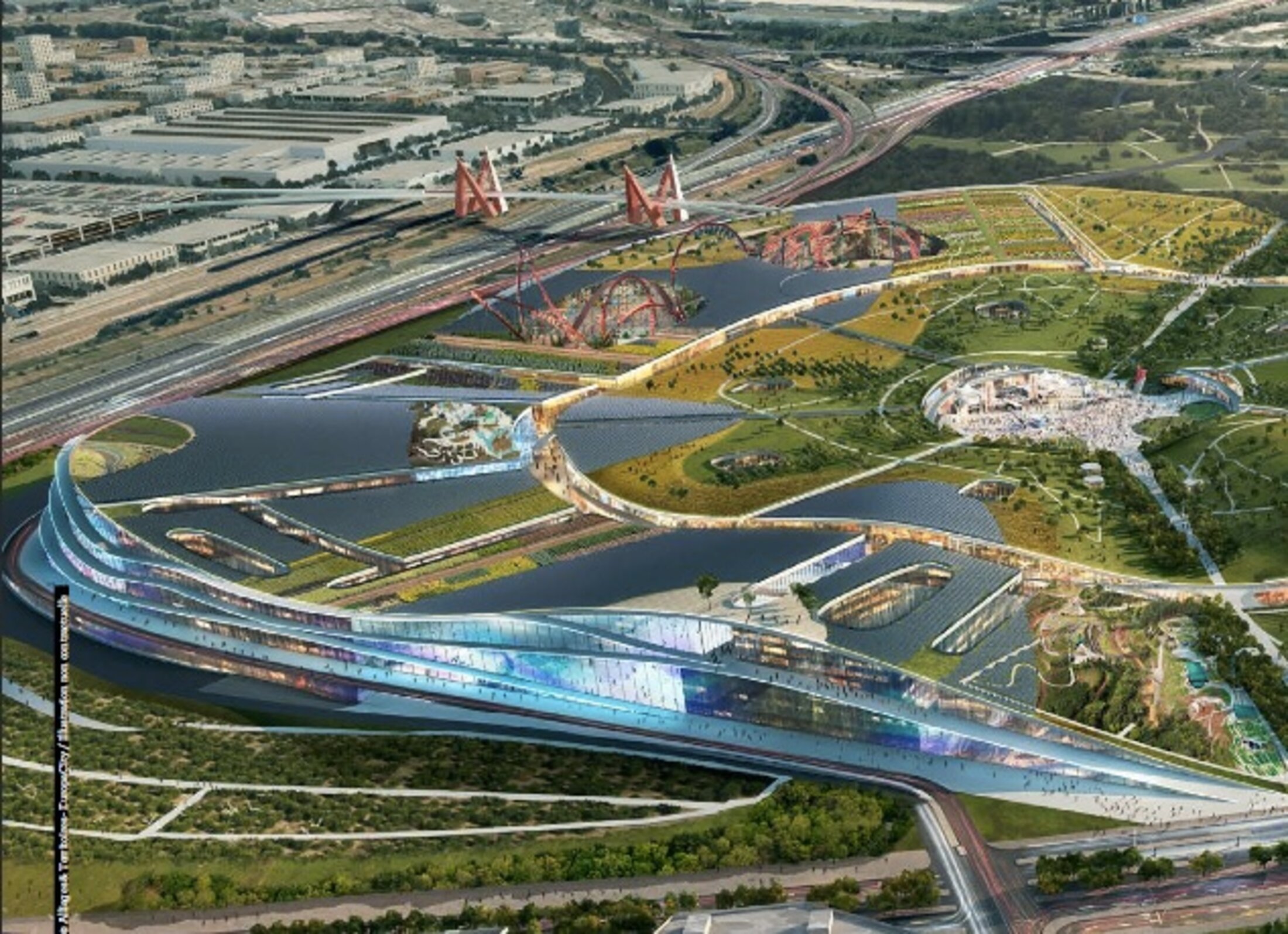
The group behind EuropaCity, over which public debate has just formally begun, is the massive French supermarket chain Auchan via their property subsidiary company Alliages et Territoires, who hope to complete the project by 2024. If built, it will contain 230,000m2 of shops plus a leisure park, a swimming pool under a bubble structure and a ski resort using artificial snow, and house cultural attractions too. The figures involved are certainly large: it is expected to cost more than 3 billion euros, contain 800,000m2 of buildings spread over a 80-hectare (nearly 200 acres) site and aims to attract 30 million visitors a year. To put this last figure into context, that is double the number of visits received in 2013 by Disneyland Paris,which is currently the leading private tourist destination in Europe.
The site will undeniably have a futuristic look. The model of the planned site designed by the architect group BIG – which has designed the new Google HQ at Mountain View in California and one of the new skyscrapers on the World Trade Center site in New York – resembles a floppy flying saucer emerging from the ground, covered in soil, plants and solar panels (see image below).
Enlargement : Illustration 2
However, EuropaCity is not just about its look or its size. More than the Center Parcs holiday centres, from which it seems to have drawn inspiration, and the other shopping centres that are springing up around the outskirts of the French capital, the Auchan project claims to have an anthropological ambition. Namely, to represent a “new concept of leisure time” and to be an “urban utopia”. For project director Christophe Dalstein the aim is not just to have a selection of shops, games arcades and auditoriums, but to provide a “new leisure destination for Greater Paris” and to seek to embody a “leisure time society” and the “experience economy”. As far as Auchan is concerned, the “latest consumer revolution is also one of leisure time”. In an earlier era revolutionaries wanted to seize the Winter Palace; today big developers want to build an entertainment palace in the name of the utopia of leisure.
The developers say that EuropaCity will also contain a circus, an auditorium for cultural events, collaborative shops, hotels, co-working areas, a giant 'fab lab' and a recycling centre. In the magazine promoting the centre, Play, there are interviews with Jean Blaise, the founder of the Festival des Allumes and the Lieu Unique cultural centre in Nantes in west France, with Diana Filippova, one of the organisers of collaborative economy group OuiShare, with Stéphane Distinguin, a member of the national digital council the Conseil National du Numérique and former president of La Cantine collaborative working area, and the designer Erwan Bouroullec. “We're going to create a laboratory from which we will select and extract the forms, codes and values that will later serve commerce in the 21st century. As a laboratory it's fascinating,” says sociologist Jean Viard.
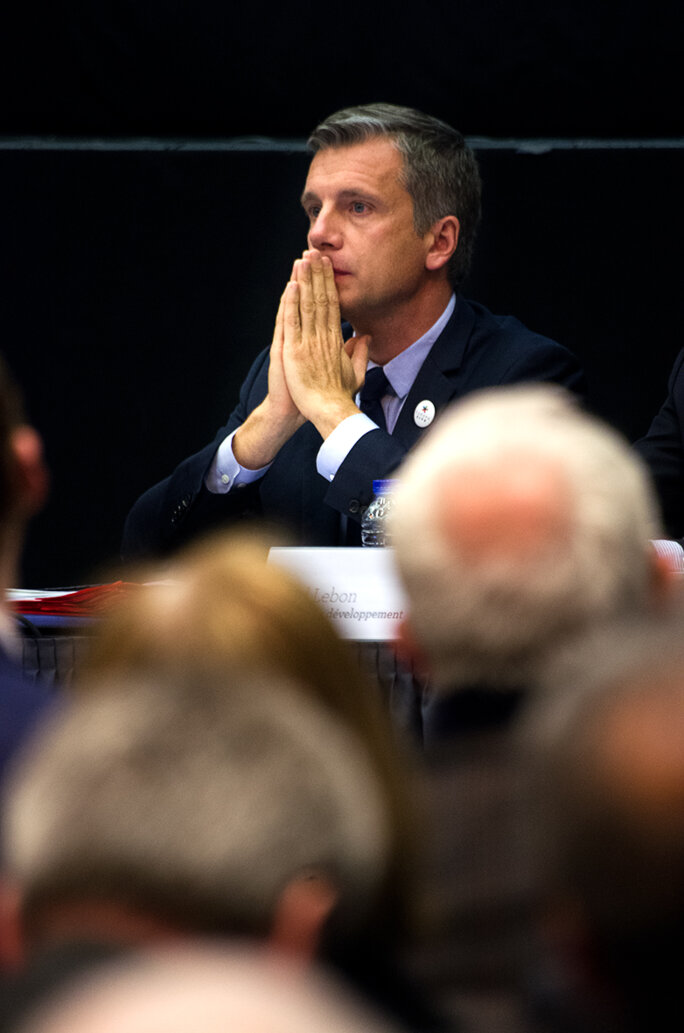
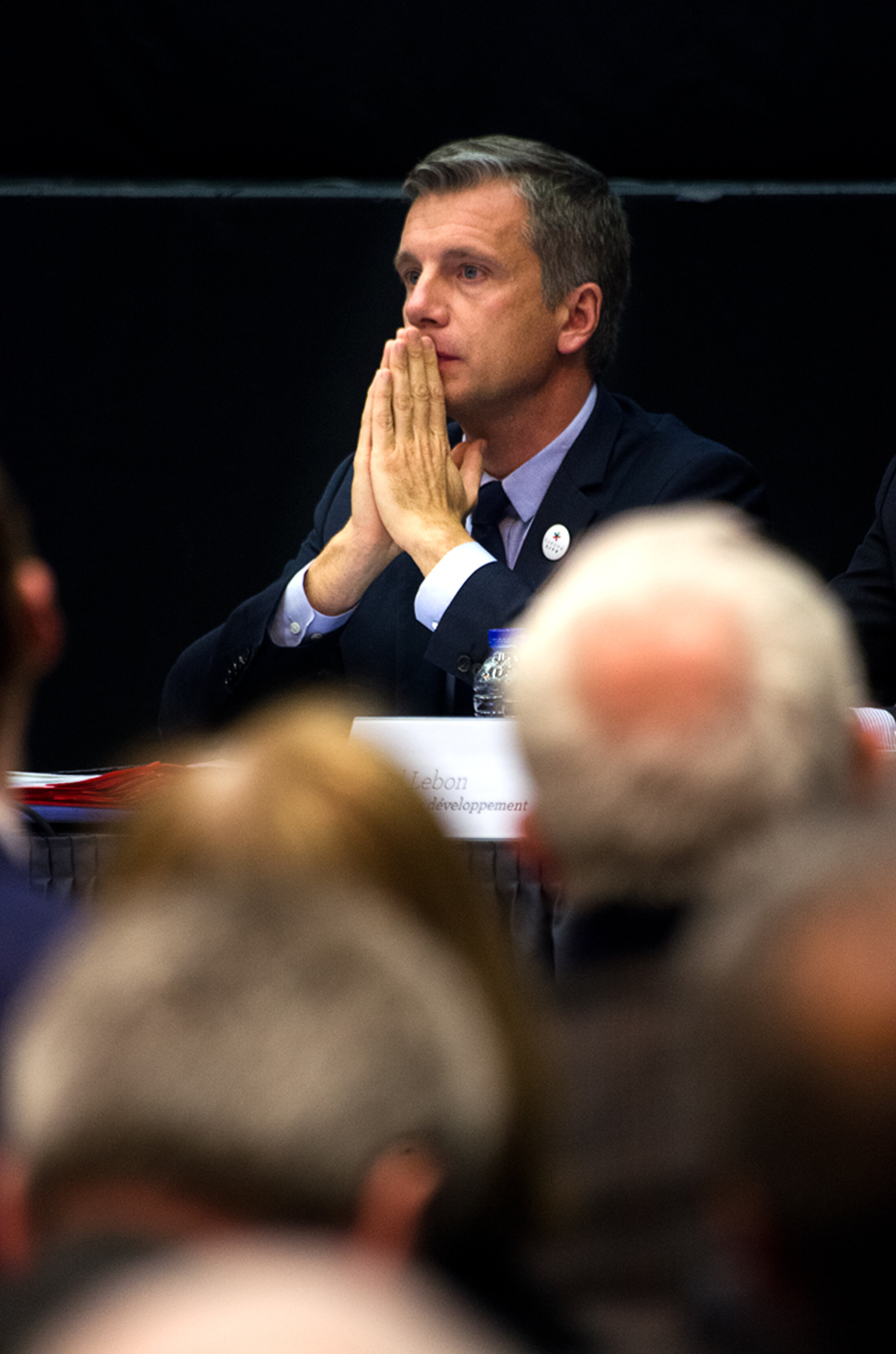
Overall, the amount of space that EuropaCity plans to devote to cultural activities is just a fifth of what will be available for commercial activities. But David Leblon, the director of development for EuropaCity, says: “At 50,000m2 of cultural space that's the equivalent of Beaubourg [editor's note, the area of Paris that includes the Centre Georges Pompidou]. That's no mere drop in the ocean.” Indeed, Jean-Pierre Blazy, the socialist mayor of Gonesse and a strong supporter of EuropaCity says that “for me, the cultural project is at the heart of it. It can turn the Gonesse triangle, which is considered repellent, into a place that you go to, like you go to the Grand Palais [editor's note, the exhibition and museum complex in central Paris].” The project is dependent on the construction of the new line 17 of the Grand Paris Express, an enlargement of the metro system which aims to link towns in the outer Paris suburbs. As far as Auchan is concerned EuropaCity will not be a holiday area but a “district” in which to live.
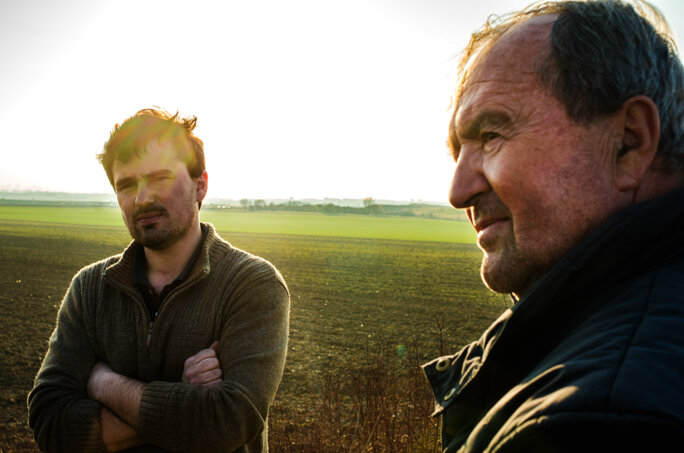
The Gonesse triangle, which lies between Le Bourget and Charles-De-Gaulle airports, is a distinctive area. It covers nearly 700 hectares in all, much of which cannot be built on because of the noise from the two airports. Seventeen local farmers grow wheat, maize, rapeseed and beet on the land using intensive farming methods. The insurance firm Axa owns some of the plots of land. “When the wind comes from the south you smell the kerosene [from the planes],” says Dominique Plet, who farmed the area until he retired.
Enlargement : Illustration 3

On the horizon are the tallest monuments of Paris. In fact, EuropaCity has made this a selling point: the leisure park with views of the Eiffel Tower. Closer to home in these northern suburbs of Paris, other shopping centres are being developed: O’Parinor at Aulnay-sous-Bois, Aéroville and its Luc Besson multiplex EuropaCorp between Roissy and Tremblay, and My Place at Sarcelles. Just to the south lies the industrial wasteland of the old PSA Peugeot Citroën car factory at Aulnay, which closed in 2013. It covers 180 hectares, more than double the area that EuropaCity will occupy, yet Auchan did not seek to locate it there. To the north of the triangle, meanwhile, a 90-hectare golf course is being built, there are plans for an international trade centre, a station for the new Grand Paris Express has been earmarked for the area, while a special development zone or ZAC is also under development.
Three of the nearest towns, Sarcelles, Villiers-le-Bel, Le Blanc-Mesnil, are poor areas whose inhabitants are among the most impoverished in the Paris region. The state statistical agency INSEE meanwhile puts the unemployment rate in Gonesse itself at 16.7% and the poverty rate at 25%. In the whole of the département or county of Val-d'Oise where Gonesse is situated some 23% of young people aged 18 to 21 are out of work. In this context the promise that EuropaCity will create 4,200 construction jobs and then 11,800 jobs when it is operational strikes a massive chord.
'A private firm wants to offer three billion euros and we'd say no?'
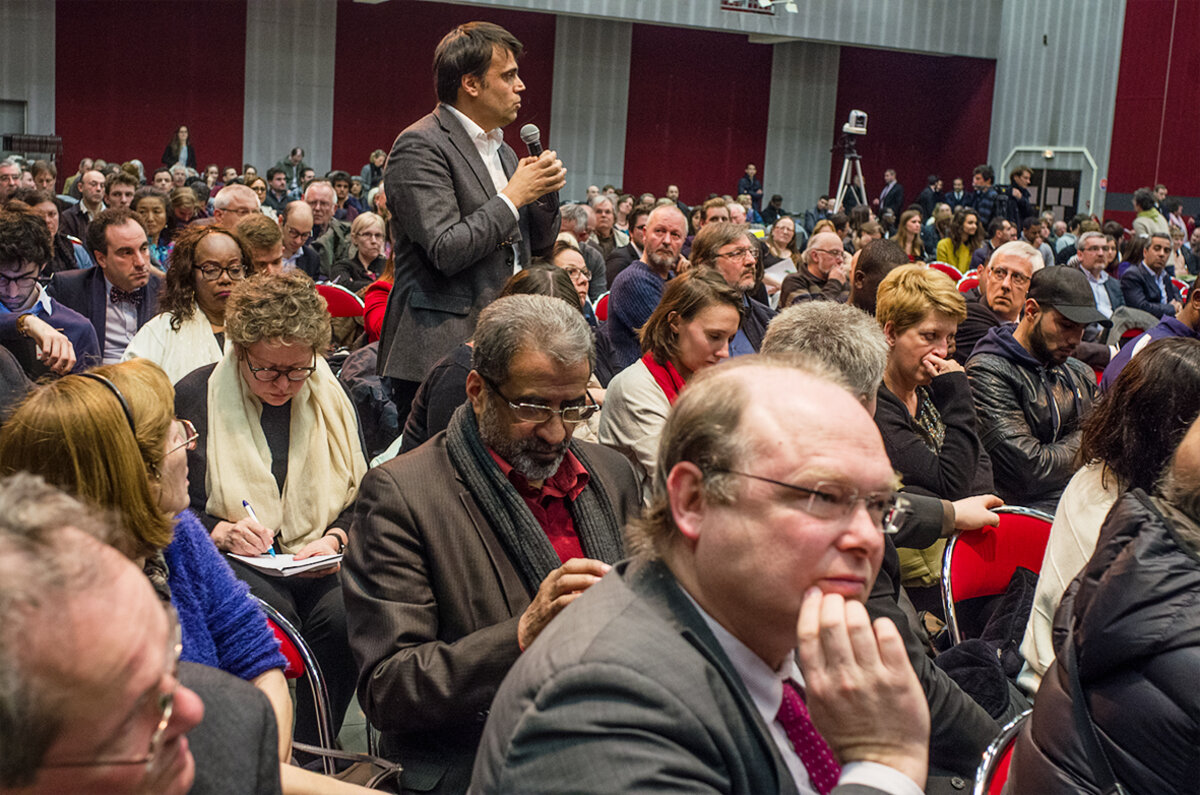
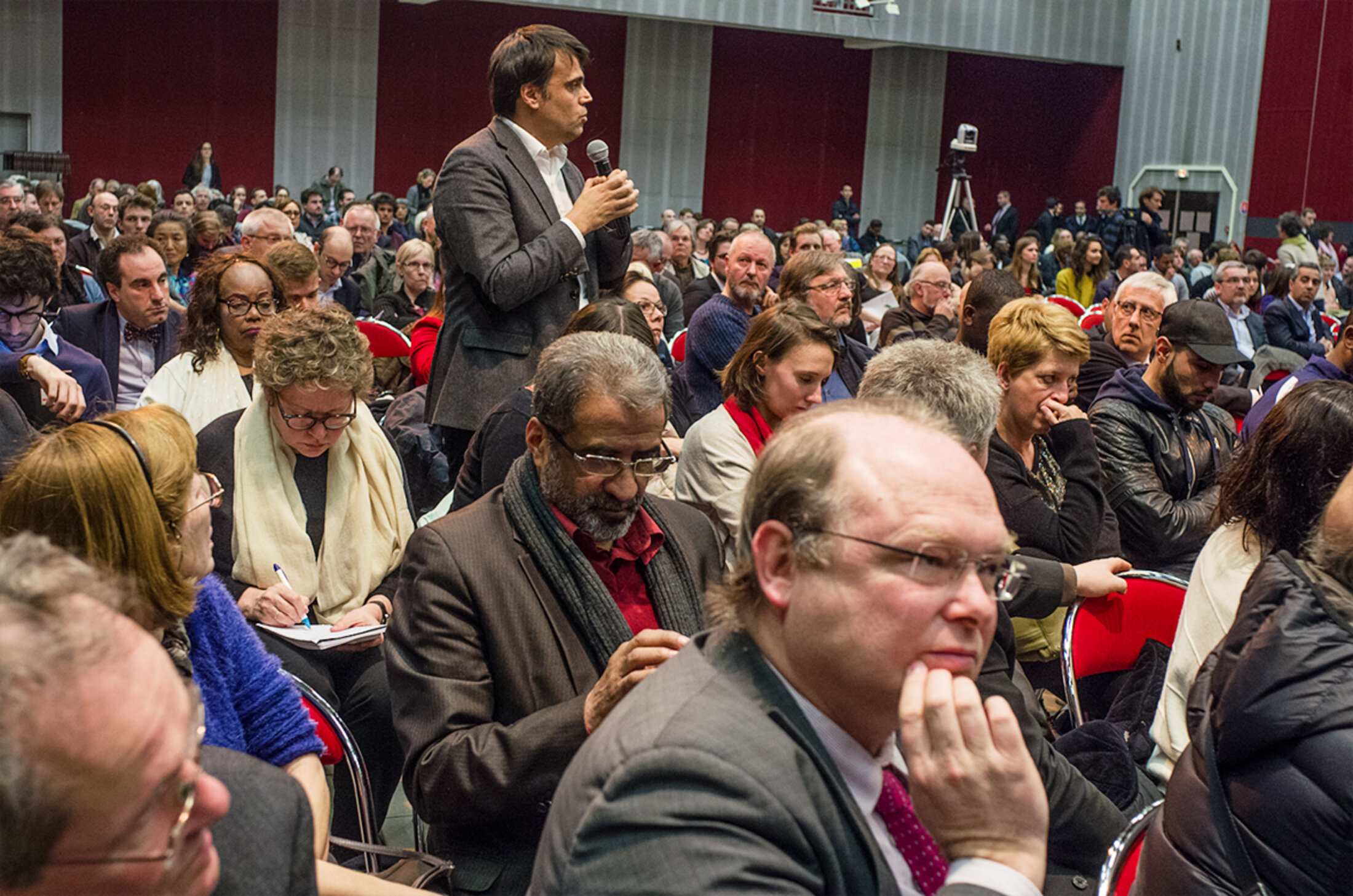
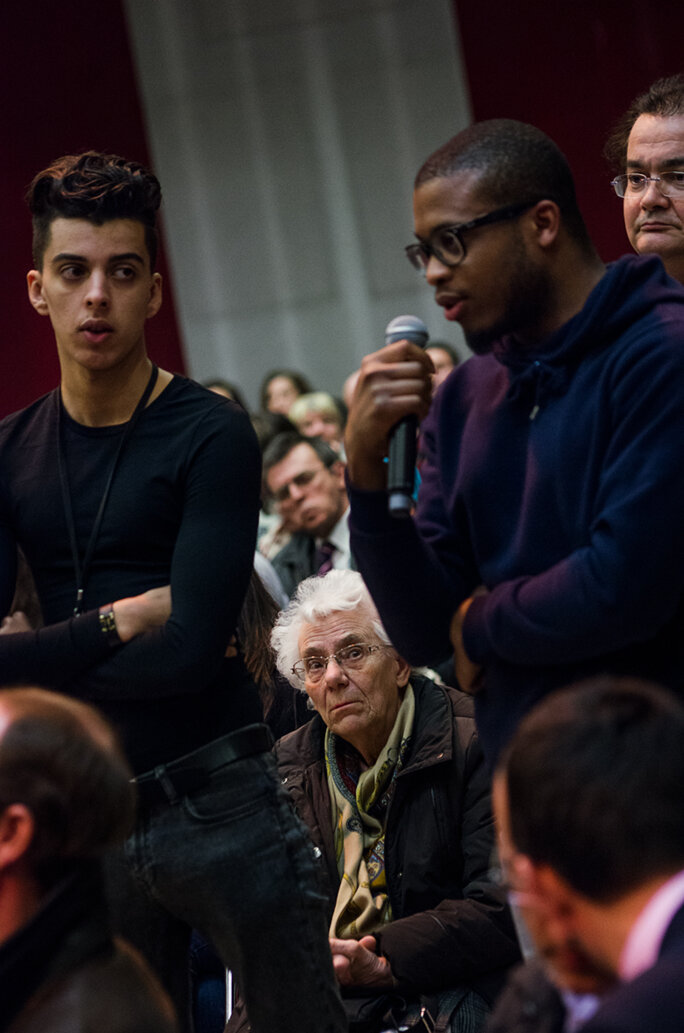
The stark differences in approach to the project were highlighted during the first public debate on the subject held at Gonesse on Thursday March 17th. At dusk a few dozen people began queuing in front of the town's Jacques-Brel auditorium. In the end close to 500 people attended the meeting. At the entrance security guards searched for banners and tear gas in people's bags, and the developers feared disruption from opponents. Yet that was not what transpired during the nearly three-and-a-half hours of the meeting. For after an initial burst of criticism from several activists about the way the debate was being carried out, local residents and councillors backed EuropaCity.
Enlargement : Illustration 4
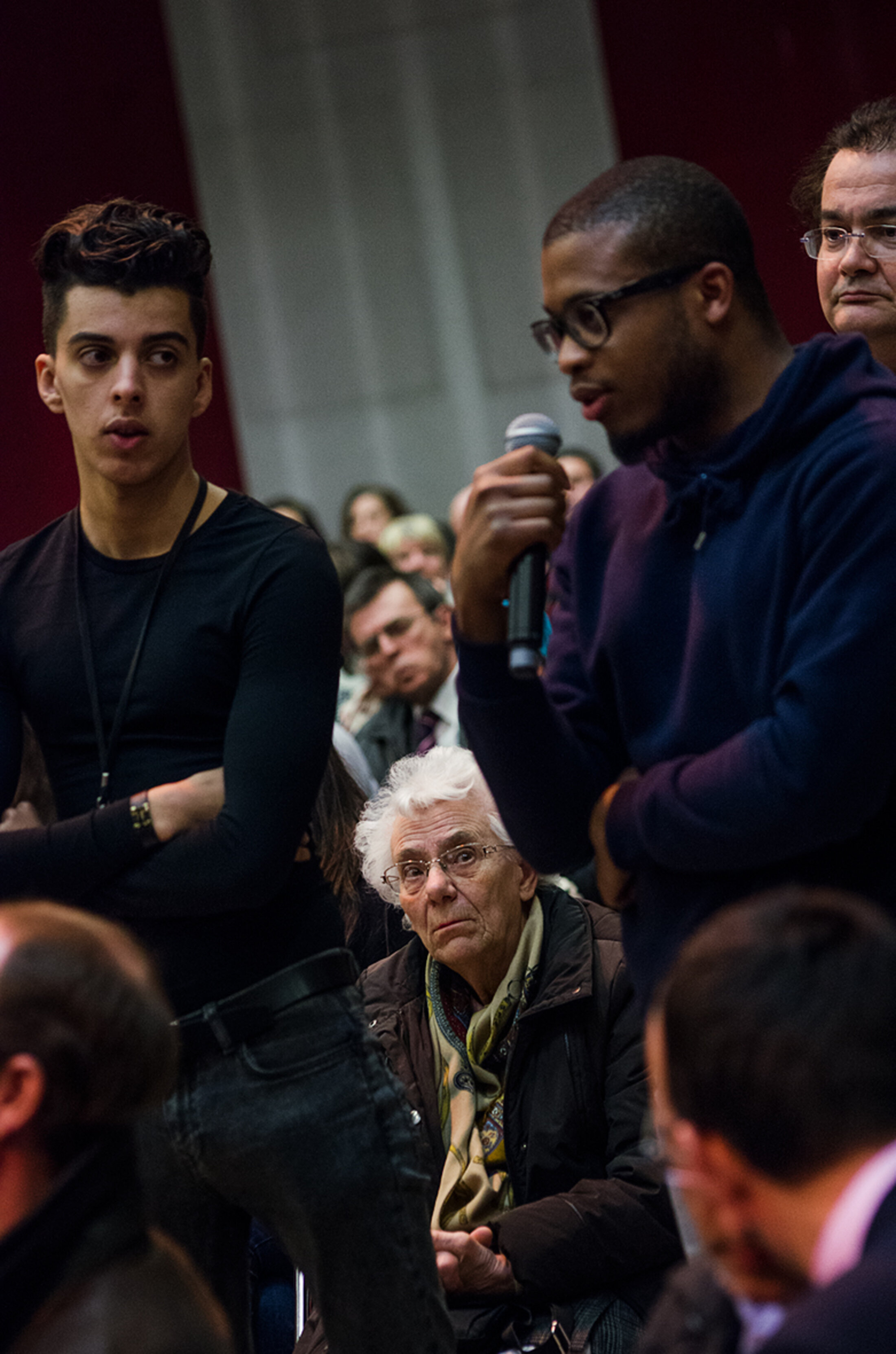
“You can't turn you nose up when faced with such an investment,” said one town councillor. “It's an extraordinary opportunity,” declared the head of a business group at nearby Roissy. The head of an association from nearby Sarcelles said: “It's a spectacular project. It's going to change our region's image. We move forward or we slumber.” A student noted: “It's an opportunity for young people, for jobs and for job training. When you want to take the children to a museum you need a bus. Here we'll have a museum next to us.”
One school pupil, a member of the local youth council, mocked the apparent age of opponents who spoke, many of whom had grey hair, as “not concerned by this project as it's a project of the future”. A woman in the audience said: “I live in Gonesse, I work at Roissy. Gonesse must live. EuropaCity will bring work.” A man in a red scarf added: “It's a project of the future, you have to give hope, create jobs.”
The mayor of nearby Arnouville, Pascal Doll, told the meeting: “A private company wants to offer three billion euros and we'd say no? That would be collective suicide. If there hadn't been a Stade de France [editor's note, the national football and rugby stadium at Saint-Denis north of Paris] there would have been no Plaine Saint-Denis [editor's note, an area of urban regeneration]. It's going to change our area. They'll no longer say 'east Val-d'Oise' [to describe us] but 'I'm going to EuropaCity'.” He was warmly applauded for his comments. A councillor from Gonesse then added: “We mustn't let this opportunity pass.” There was more applause and a shout of “Bravo!”
A member of the citizens council in Sarcelles then somewhat dampened the mood of enthusiasm that seemed to be spreading around the hall. “I invite councillors to stop using those apps with which you can create towns in two days,” he said. “If it opens in 2024 and the works start in 2018, then training in building work and foreign languages must start straight away. When you know how long it takes to replace a French teacher... I suppose that everyone in Sarcelles and Gonesse is polyglot. But are they the right languages?”
Critical voices among local politicians are few and far between, and those that are opposed have little in common politically. For example, the mayor of Aulnay, Bruno Beschizza, who is from the right-wing Les Républicains, is against, as is the president of the green EELV group for the Paris region, Mounir Satouri. Another local politician opposed is the former socialist deputy mayor of Gonesse, Karim Ouchikh, who is now culture advisor to the president of the far-right Front National, Marine Le Pen. Ouchikh spoke twice at the meeting against what he called “a project that is scandalous from an economic point of view and odious from an environmental point of view”.
The meeting was not, however, an opinion poll and it was impossible to gauge how representative the speakers were of people in the community. Some of the young people who spoke greeted the local mayor warmly at the end. Some residents say they came at the invitation of the mayor's office. The stance and influence of the local council is clear. In the streets of Gonesse a poster promoting the public debate states: “Opening of the public debate: to build EuropaCity together.” Whatever their background, local residents expressed a willingness to believe in Auchan's promises, in its vision for the development – and in the power of its money.
For their part, environmentalists criticised the destruction of the farmland – which is among some of the most fertile in the Paris region – the large amount of carbon dioxide that building EuropaCity will emit, and pointed to the uncertainty over the true number of jobs that will be created. They spoilt the mood with their stark figures and down to earth alternative view. But the Auchan executives left the meeting with smiles on their faces. Bernard Loup, from the Collectif pour le Triangle de Gonesse, a body opposed to the project, points out: “In public you don't get rejected by the residents. We're not swimming against the tide of the local population. But they're not mobilising.”
Enlargement : Illustration 5
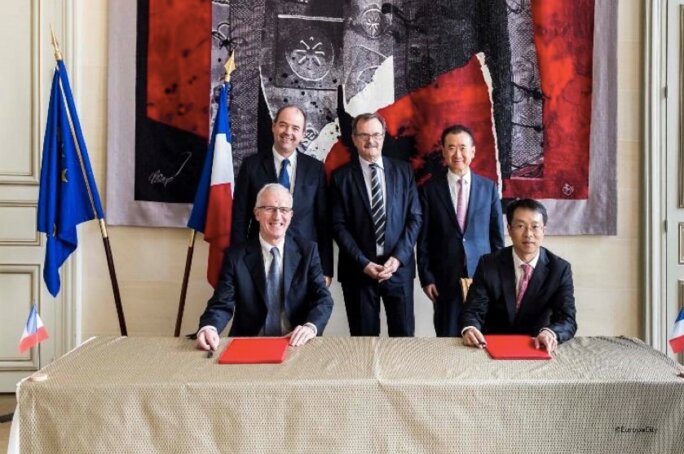
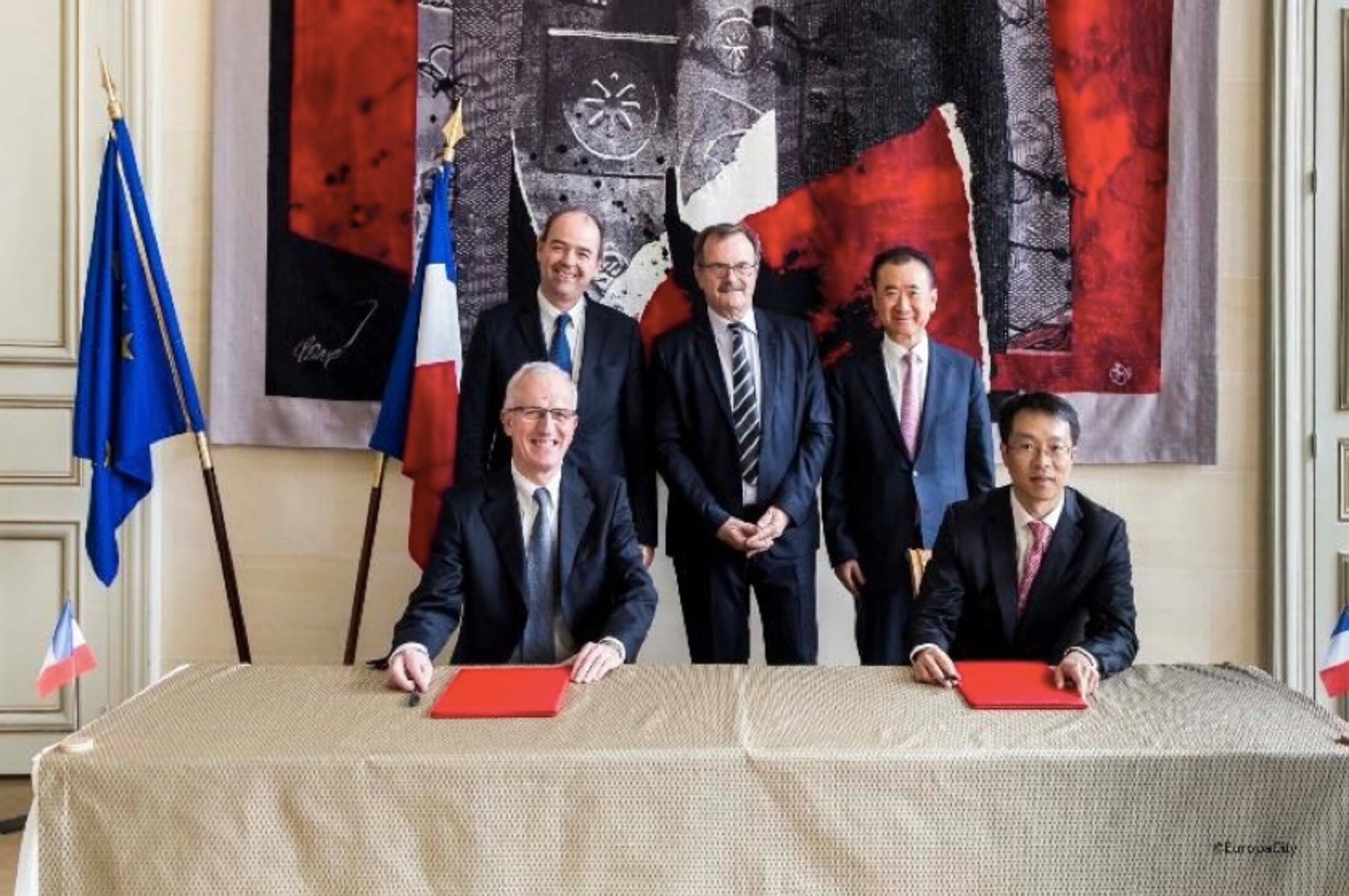
In all, some 15 public meetings are planned between now and the end of June. The developers are due to announce their final decision in November. The public debates themselves will not be decisive and the commission that is running them will not give an opinion but instead deliver a report outlining the views expressed. This mandatory democratic environmental process is supposed to make the developers justify their project and encourage citizens to question it. But the resources at the disposal of the opposing sides could hardly be more unequal. On the one hand there is the Auchan group which had a turnover of 54 billion euros in 2015, its lobbyists and the people in its debt, and which is allied with the Chinese Dalian Wanda Group, a world leader in operating cinemas, and on the other there are the opponents of the scheme who have nothing other than their personal expertise, their free time and their voluntary work. The developers' dossier that was handed to people taking part in the debate was printed on thick glossy paper and full of spectacular images of the future site.
The unequal nature of the battle is made greater by the stance of the national government which is openly supporting the EuropaCity scheme When he was minister of foreign affairs and tourism Laurent Fabius called it a “major project”. At the public meeting at Gonesse that Mediapart attended everyone knew each other and greeted each other informally. Christian Leyrit, president of the body that is overseeing the debate process, the Commission Nationale du Débat Public, happens to be the former prefect of the local département the Val-d'Oise. His successor as prefect Yannick Blanc was present. He presented EuropaCity as “an exceptional, innovative and bold project”. He also explained that the decision had been taken to “urbanise the Gonesse triangle and increase the density of this region”.
The president of the Val-d'Oise council, Arnaud Bazin, said that “three regional plans have opened the Gonesse triangle up to urbanisation. It's happening.” He said that the airport corridors – the areas surrounding the airports – in cities such as Frankfort, Kuala Lumpur and Denver are all developed. “Obviously I know that in France we can't do the same as everyone else but...” The vice-president of the Paris region, Jérôme Chartier, told the meeting that “the region will not go back on the developable status of the Gonesse triangle”.
The director of EuropaCity, Christophe Dalstein, emphasised the fact that the decision to develop the site had already been taken by the authorities. “We would not have come if this decision to urbanise [the area] had not been taken,” he said. “There is a chain of responsibility. This development operation is in progress whether EuropaCity happens or not.”
Enlargement : Illustration 6
Meanwhile at another public meeting, one to discuss plans for a Greater Paris, the prefect for the Paris region, Jean-François Carenco, said of EuropaCity: “There is strong government support for this project.” He recognised that “it eats up farmland but it's better that it is eaten up by that than something else.” Carenco then let slip: “I thought there were too many farmers, that's what I was told, but ok...” The prefect said that what was at stake was “France's attractiveness at an international level. Billions in investment are involved.” He added: “It's French society which is in question in this project.” It is a phrase that recalls the words of the junior minister for regional reform, André Vallini, who said in 2015: “For France to remain France we must continue to build airports, dams, motorways, high-speed railway lines, tourist infrastructure.”
This mixing of private and public interest has left Dominique Plet, a retired farmer who used to farm, the Gonesse triangle, perplexed. “How can one be expropriated, why is it 'in the public interest' when there are private interests?” he wonders. “For railways or a road, I understand. But for building a circus and shops, that I don't understand.” Plet says that his family has farmed these lands for five generations. “Doing this is a scandal. When Citroën came to build its factory they promised thousands of jobs. Look, there's nothing left.”
Dominique Plet's son Robin, 22, would have liked to have taken over the family farm as his business. “The problem is that a business must grow. That's going to call into question our activities.” He is the only young farmer working on this land. The others are approaching retirement age and are not very worked up about the new development plans. “The people here are pretty much against, they say it's stupid to do this, but they don't give a damn,” he adds. His father Dominique says: “The land here is extraordinary. It keeps its moisture. When you grow maize you don't need to water it. It's deep and easy to work. There are no stones.”
The regional development plan requires 400 hectares of farmland to be preserved on the site. But the environmental authority, the Autorité Environnementale (AE), whose job is to evaluate the environmental impact of development projects, considers that the preservation of the agricultural land is “not guaranteed”, as the nearby special development zone or ZAC is going to destroy 210 hectares of “land of very great agricultural value”. In its official report the AE say that EuropaCity will “generate particularly high new greenhouse gas emissions, which in principle does not seem consistent with the national objective of reducing them”. It also doubts Auchan's promises to produce its own 100% clean energy. The AE says “at best” that only two thirds of the site's energy needs can be met by “renewable production”.
Mediapart had met Dominique and Robin Plet in the afternoon before the public debate. Their voices were partly drowned out by the noise of the lorries speeding along the nearby dual carriageway. Dominique Plet cast his eyes over the land which was starting to darken as dusk fell. “You should have come yesterday. There were hares everywhere, at least fifty. It's the mating season,” he said.
----------------------------------------------------------------------------
- The French version of this article can be found here.
English version by Michael Streeter