


The official body charged with scrutinising campaign funding has refused to divulge the reasons why it rejected the accounts for Nicolas Sarkozy's campaign in last year’s presidential elections. For months Mediapart has been asking the Commission des comptes de campagne et des financements politiques (CNCCFP) to give the full details behind its shock decision in December, when it merely indicated that the defeated president’s campaign fund had exceeded the 22.5 million euro official spending cap.
Frustrated by the commission’s refusal to publish its full decision and answer key questions – such as precisely what items had been omitted and by how much the campaign had exceeded the official spending ceiling – Mediapart referred the issue in February to the freedom of information watchdog the Commission d’accès aux documents administratifs (Cada).
That independent body, which oversees the 1978 law giving citizens the right of access to administrative documents, has now ruled that the public – including Mediapart – does indeed have the right to see the CNCCFP's full ruling. Cada's president Serge Daël has confirmed that the CNCCFP's decision can be “communicated to anyone who asks for it” as it “has the characteristics of an administrative document”.
Enlargement : Illustration 1

In continuing to refuse to release the details of its decision, the CNCCFP is in effect breaking the law. Cada has now informed the CNCCFP of its ruling.
In January the CNCCFP and its president François Logerot gave Mediapart no legal reason as to why the organisation would not publish its full decision, which so far has only been seen by Nicolas Sarkozy and his advisers and the state's highest constitutional authority the Conseil Constitutionnel or Constitutional Council to which the former president has appealed the decision.
In an email the CNCCFP simply responded that it had taken advice on the issue from the president of the Conseil Constitutionnel, Jean-Louis Debré. Debré's response was apparently along the lines of: “It does not seem possible to grant such a demand...” The reason? That it was the Conseil Constitutionnel that had “full jurisdiction” in the case and it would be that body that would give the definitive ruling on Sarkozy's campaign accounts. In other words, the initial decision of the CNCCFP was simply a preliminary verdict that did not merit communicating to the French public.
Jean-Louis Debré did not respond to questions about whether he publicly stood by this analysis. However at the Conseil Constitutionnel officials insisted, with some irritation, that Debré had not taken any official position on the issue, and that it was down to the CNCCFP, and it alone, to justify its reasoning for not releasing its decision on the Sarkozy case. The CNCCFP's president now says that it will meet “very soon” to follow what course of action to take following Cada's ruling.
High stakes
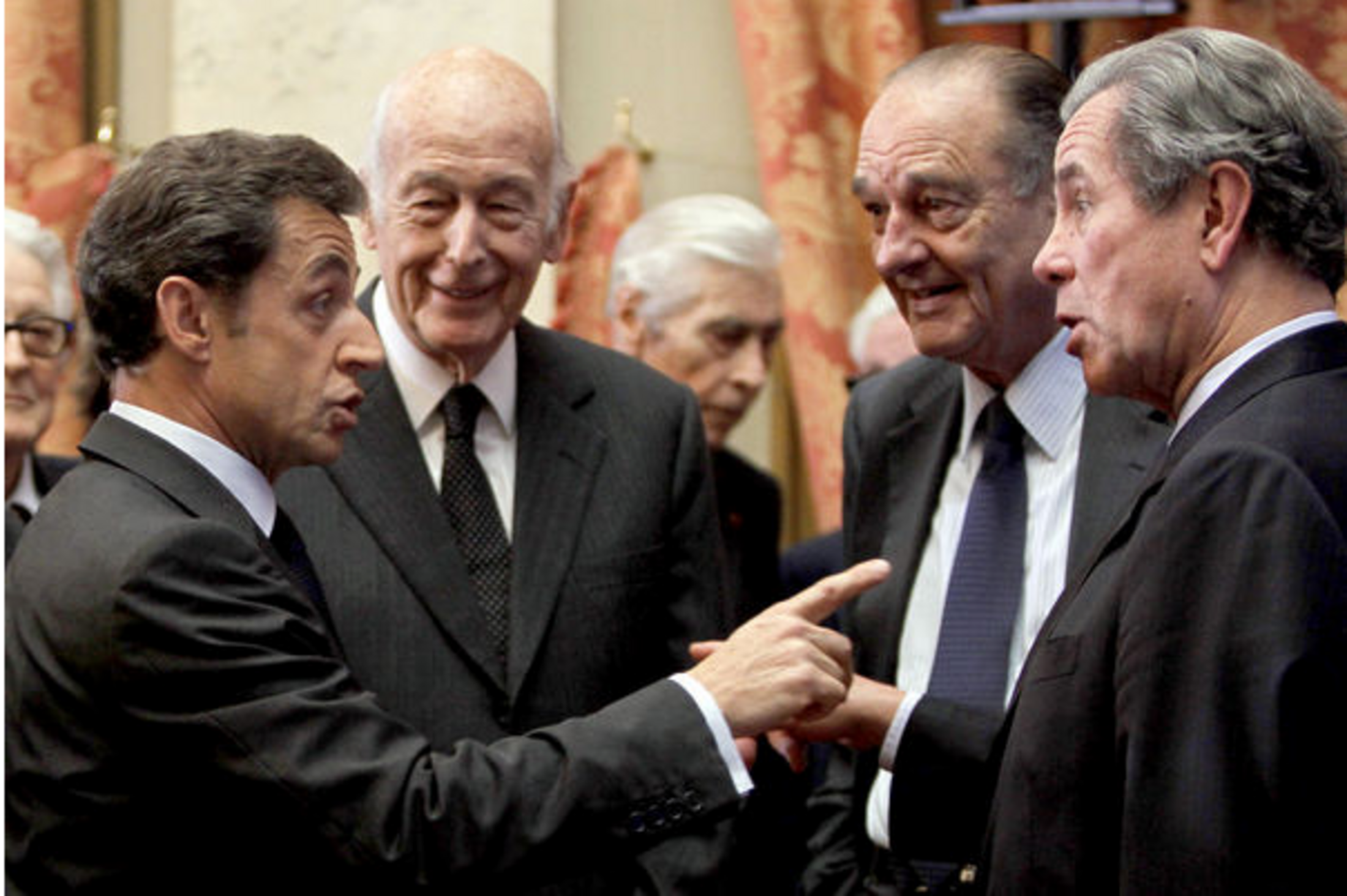
Getting the CNCCFP to reveal now its full reasoning for its misgivings would at least have the merit of forcing the Conseil Constitutionnel to justify its own future decision on the accounts, especially if it rules in favour of Nicolas Sarkozy. For there has been a history of such decisions - or rather the reasoning behind them – being kept secret for many years. For example, in 1995 the Conseil approved the election accounts of the defeated right-wing candidate Édouard Balladur – who lost to centre-right candidate Jacques Chirac – despite considerable internal misgivings and controversy surrounding those accounts, as revealed by Mediapart in 2010. The Council made its decision behind closed doors and details of the proceedings remained secret for 15 years. The body's membership includes former politicians from both Left and Right and as a former president Sarkozy himself is a member of the Conseil, though he has not attended deliberations since lodging his appeal.

Enlargement : Illustration 3
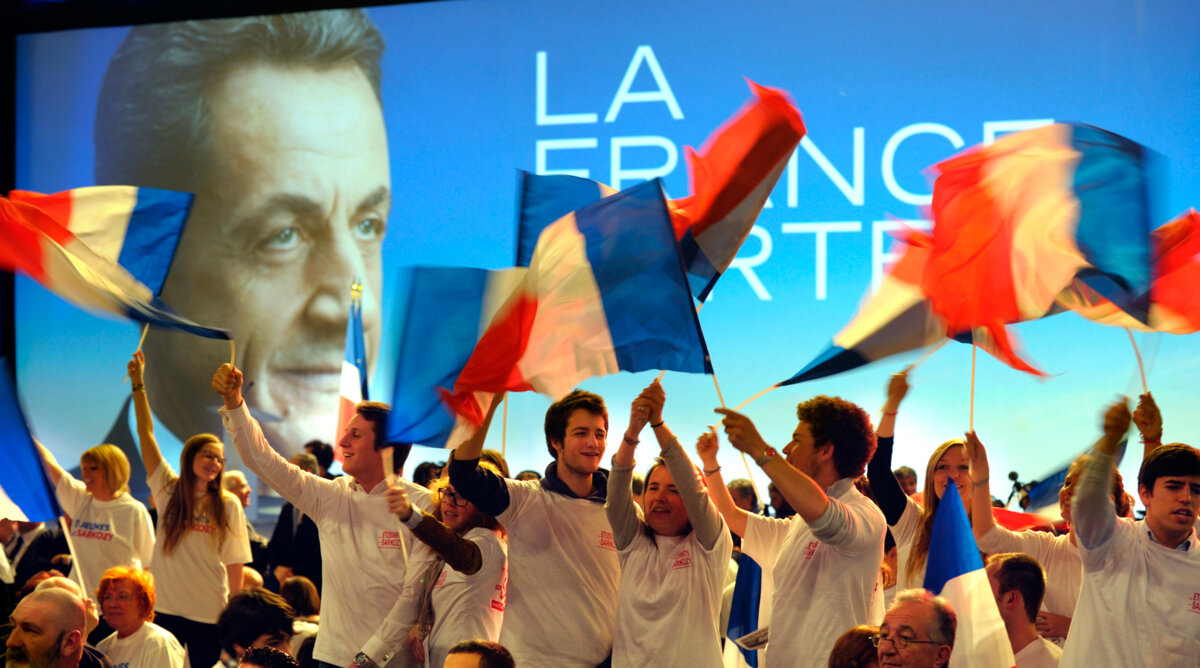
For Nicolas Sarkozy, who was Balladur's campaign spokesman in 1995, and his party the stakes are high in relation to his 2012 accounts. To fund his campaign he borrowed 10.6 million euros from the UMP, which is itself facing budgetary problems following its poor showing in last summer's parliamentary elections. If the Conseil Constitutionnel rejects the accounts then it means that the state will not automatically reimburse him for the money he himself has spent – in other words, the 10.6 million euros. In such an outcome the cash-strapped party would almost certainly take the financial hit itself.
According to the published summary of the accounts (see below), Sarkozy's campaign cost 21,459,931 euros, just over a million below the permitted ceiling and behind those of the victorious socialist candidate François Hollande (who took out a bank loan to cover his own 11 million euro contribution).
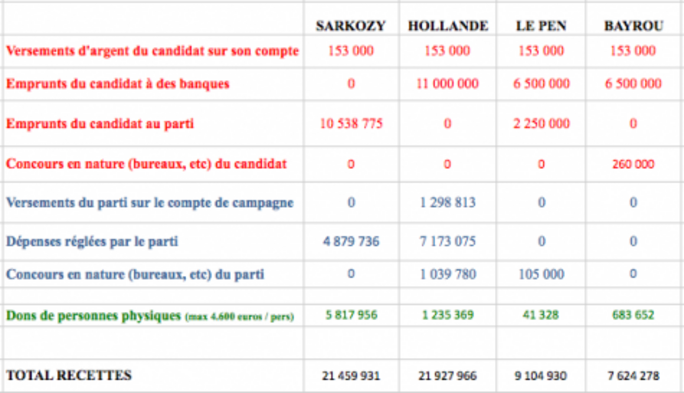
Philippe Briand, Sarkozy's financial representative for the campaign, says the CNCCFP rejected the accounts because they had not included around 1.5 million euros of election expenses spent after the president's formal declaration on 15th February 2012 that he was a candidate. This sum included 1.06 million euros linked to a huge political rally held at Villepinte, on the north-east outskirts of Paris, in March 2012 and whose overall cost was around three million euros. These sums would have meant the campaign breached the official spending cap by about 350,000 euros or around 1.6% of the overall sum.
However, the CNCCFP also indicated it is concerned about the period before the incumbent head of state Nicolas Sarkozy announced his candidacy, in which he made a number of 'presidential' visits which looked to many observers and critics like electioneering, and about which complaints were made as early as November 2011. These have not been included in the Sarkozy accounts.
“He wasn't even a candidate then,” points out Briand. However, just before Christmas, when it was revealed his accounts had been rejected, the Socialist Party once again highlighted the political nature of the presidential visits made by Sarkozy. “We have pointed out the confusion that existed between Nicolas Sarkozy the president and Nicolas Sarkozy the candidate before the official declaration of the campaign,” said PS spokesman David Assouline.
------------------------------------
English version by Michael Streeter