


For the inhabitants in and around Sardy-les-Épiry, a small community sitting in the heart of a traditionally socialist-voting region of Burgundy, hard-hit by rising unemployment and an exodus of the rural population, the project first presented in 2011 appeared as if a godsend.
Erscia, the French subsidiary of Belgian company Wood & Energy, announced it wanted to build an industrial site of 110 hectares in this densely forested part of the Nièvre département (county) of north-central France, situated at the entrance to the vast and mountainous Morvan national park, a region of outstanding natural beauty.
The plan includes building a sawmill for coniferous woods, a unit to produce wood pellets and a (partly) biomass-fuelled cogeneration plant capable of providing electricity to some 25,000 homes. It also foresees the production of more than 250,000 tonnes of biofuels, mostly for use in industry as an alternative for fossil-derived and nuclear energy.
Viewed from one side of the divide, it’s a modern, virtuous and solid project that will create jobs and bring a sorely-needed boost to the local economy. For its supporters, those who oppose it are a motley bunch of self-centred home-owners barricaded behind their trimmed thuja hedges, obsessive snail protectors and unshaved eco-warriors who bounce around in idleness from one protest spot to another, like those dug in in a rural camp at Notre-Dame-des-Landes in western France, to prevent the planned building of a new airport close to Nantes.
For its opponents, the site of the Erscia project has become another ‘Zone to be defended’ (in French, ‘zone à défendre’, or ZAD), and a battleground over economic and societal choices that pit outsiders after a quick profit against local inhabitants with a long-term vision of their environment.
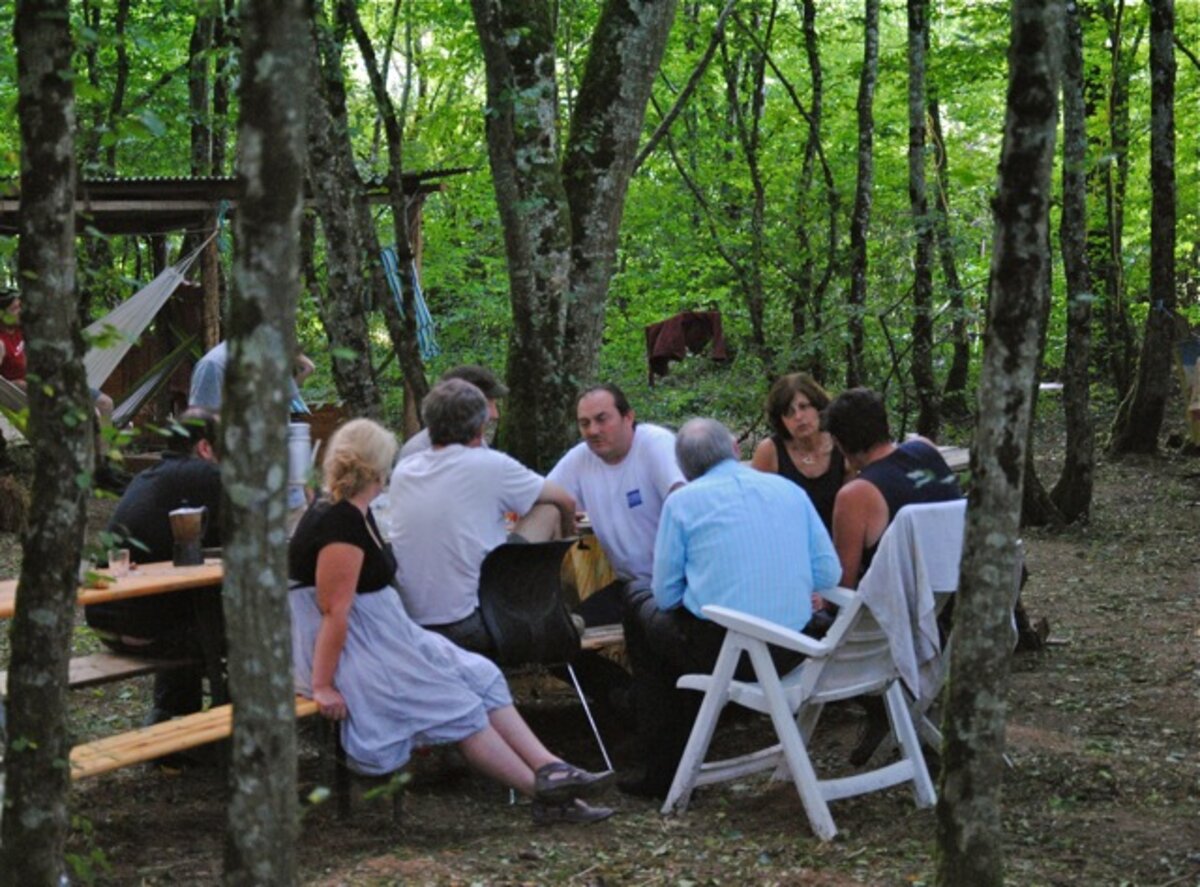
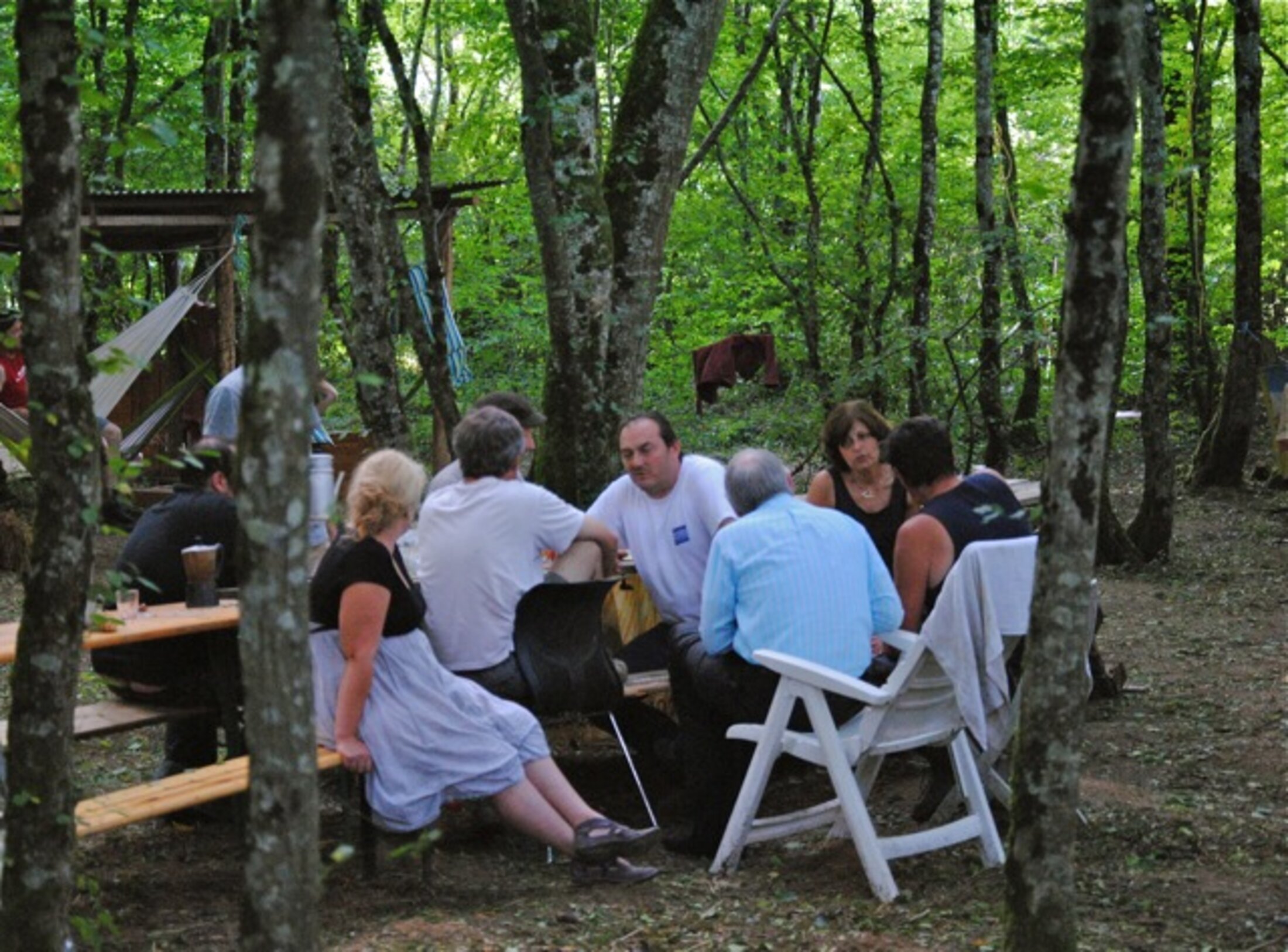
The latter mirrored the protestors at Notre-Dame-des-Landes, albeit in much more modest terms, by setting up a makeshift camp in a forest near the proposed site, where they regularly meet and plan future actions. But what might appear as little more than a talking shop belies both their determination and competence in mounting a robust campaign. On the website of their association, Adret Morvan (Association pour le Développement dans le Respect de l'Environnement en Territoire Morvan), An online petition calling for a halt to the project has gained more than 70,000 signatures of support.
Enlargement : Illustration 1
But their biggest coup came in February when they successfully gained a court order from the Dijon administrative tribunal banning the planned clearance of the 110-hectare site. The ruling said that while Erscia’s project “presents an incontestable public interest”, the granting by the local public administration of a special dispensation to destroy “sites of animal reproduction or their resting places” did not meet the necessary criteria that this was “indispensable” or “without another implantation solution”.
An appeal against the Dijon court ruling was subsequently lodged with the Council of State, France’s highest court, and its decision is now imminent. If it overturns the Dijon magistrates’ ruling, the construction will begin with the felling of trees from the site and the laying of a vast concrete floor.
The managing director of Erscia France, Pascal Jacob, argues that the project involves no environmental dangers and no threat of deforestation for the Morvan region. About 80% of the wood supplies would come from forest areas outside Burgundy, within a 300-kilometre radius of the site, and there would thus be no competition with local sawmills. Meanwhile, it would create 120 jobs on-site, and 250 others through sub-contracting.
The ground surface area required by Erscia’s plant is 61 hectares, while some 50 other hectares of the site could be used by other businesses to set up secondary transformation of wood matter processed by the plant.
The project has met with approval from most local politicians, including Thierry Pauron, mayor of Sardy (unaffiliated to a political party), and from Jean-Paul Magnon, a Socialist Party councillor for nearby Corbigny. For them, it represents an opportunity to maintain - and even attract the return of – the local young adult population, as well as to bring in new inhabitants, reviving the local economy and in turn public services like schools and the post office. Magnon describes those opposed to the project as divided into two categories, “those who are for, but in the own back yard” and those who support “a utopist alternative”, made up of “Greens and anarchists”.
'Jobs are waved like a flag'
Opponents of the Erscia project argue that the sawmill activity is not the main interest of the company. On its website, the association Adret Morvan reports that “the organisation chart of the group to which Erscia belongs shows that the main shareholder (75%) is the Jost company”, whose activity is road transport. “Erscia is here to drive its trucks,” the campaigners conclude.
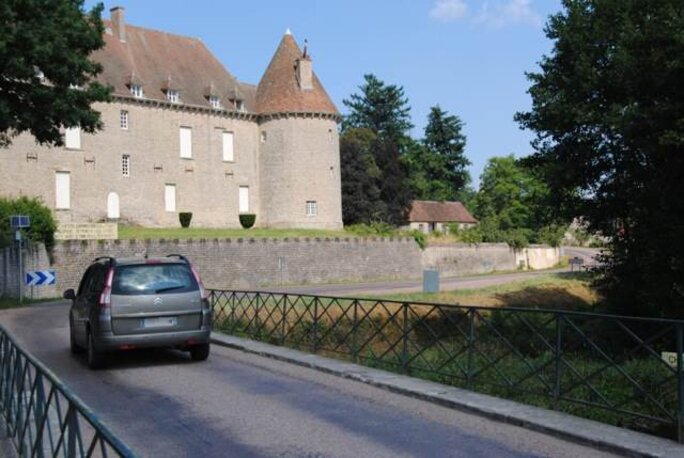
They have a point, for the site’s cogeneration plant will not burn only biomass. It is planned that up to 75% of its source of fuel can come from scrap wood, such as waste from demolition work, flooring that has been varnished and painted, and packaging. Beyond the issue of almost round-the-clock pollution from smoke emanating from the plant’s 50 metre-tall chimney, the residues from the plant will be daily evacuated by some 170 truckloads via the region’s narrow and snaking roads. In such circumstances, it is difficult to imagine how the single-lane bridge leading to and from the 15th-century château de Marcilly (see picture below) will survive.
Enlargement : Illustration 2

After careful research, the opponents found that the local prefecture had given authorization for the Erscia plant to annually emit up to 60 grams of dioxins, a highly toxic compound that is a by-product of industrial processes. The figure, which Jérôme Bognard, vice-president of Adret Morvan, said would have “wiped out” the local population, was subsequently corrected to 60 milligrams – 1,000 times less, but which is still uncomfortably high for the campaigners. “A typo in the text or an error in the calculations by Erscia’s engineers?” pondered Bognard. “Whatever, the 60 grams were authorised by the public services.”
“Erscia obtained a special dispensation to burn [matter] at a minimum 800 degrees [Celsius] during [a period of] two seconds which is a problem notably concerning dioxin emissions,” Bognard continued. “120 seconds are needed in order for them to be properly degraded. We get the impression that the dispensations from the established norms are adjusted to the requirements set out by Erscia.”
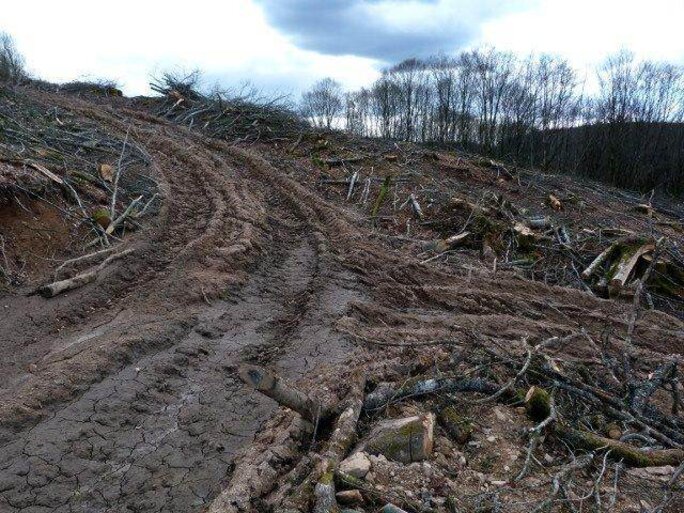
In the debates over the Erscia plant, opponents of the project have also highlighted what they see as the failings of decades of forest management. The woodlands of the Morvan are made up in half of conifers, mostly the evergreen Douglas spruce (also known as Oregon pine), which were planted in the 1970s as part of a subsidized industry-orientated forestry plan. This intensive monoculture on vast, consolidated plots led to the acidification and impoverishment of the soil floor, subjected to a frequent turnover of plantation, an overabundant use of fertilizers and the subsequent destruction of a natural bio-diversity. While a forestry management charter exists, its guidelines cannot be legally enforced upon a landowner seeking a quick return on their investment, and which sees mature wood plots raised to the ground before the process begins again.
Enlargement : Illustration 3

In general, a tree reaches maturity after between 60 years and 70 years of growth, although some types of tree grow quicker. “The diameter of a Douglas [conifer] grows by one centimeter per year,” explained Pierre Mathé, vice-president of an association representing wood trade professionals in the Morvan region, called Artisans Bois Morvan. “In its place of origin, Oregon, very beautiful specimens can be found aged 300, 400 years and more.” In the Morvan, to meet the demands of the wood industry the Douglas is felled after about 40 years which, in the case of the many forestry plots planted in the 1970s, means their time has come. The production is forecast to reach its height in 2020, after which it will take another 30 to 40 years before the forestation reaches its present level.
The Erscia project aside, this means that tree resources will soon be inferior to the capacity of local sawmills. The raising of forested plots will leave a desolate terrain with unfortunate consequences for both the local environment and for the important local tourist industry. In this scenario, the announced job creations will ultimately amount to what was a temporary transfer of skills from one area to another, with no enduring effect on unemployment either in the Morvan or the wider region.
In their makeshift forest camp, sitting around a long table and sipping coffee, the anti-project protestors denounced what one called “a cash pump”, a regularly-coined term in French to describe a money-making activity disguised as something else. A minimum total of 22 million euros in public aid has been set aside for Erscia and other companies that join it on the site, and which can all hope to receive the coveted ‘Green certificate’, a label awarded to companies for their environmentally responsible behaviour, and which will facilitate the opening to them of administrative doors for other projects.
Among the group is Cyril Couvenant, who set up his own sawmill in the local village of Lusy eight years ago. He received no public aid for his small business that has created four jobs. He argues for a different model for the local forestry-based economy, one made up of a chain small business amid “a particular vision of the forest and of life”.
Antonio (last name withheld), an inhabitant of Marcilly, a village close to the proposed plant, is another of the site’s opponents. “Here we’re lucky to be on top of the head streams with good quality water sources,” he said. “Erscia is going to implant itself above a huge water table that is 30 metres-deep and which supplies the region with drinking water.”
Jean-François Davaut, a municipal councillor from the nearby village of Cervon, and a member of the Radical Left Front de Gauche party, is one of the very few local political figures to come out against the Erscia project. “Why is there this stubborn [support] from the people’s elected representatives despite the lack of debate or of consultation?” he asked. “A lack of competence? An insufficient understanding of the dossier? Or a deliberate refusal to take into account all the warnings, in the name of immediate electoral profit just a few months ahead of municipal elections, [when] jobs are waved like a flag, which could well turn against them in the long term?”
Christian Paul, a Socialist Party Member of Parliament for the local constituency, is firmly in favour of the project. “Like every industrial project, this one must include every guarantee regarding environmental security, which the French state has the means to ensure,” he said. “This site seems to me much more appropriate than if it was situated in a semi-urban environment. The debate is normal, but here what the opponents want is not to make this initiative secure but to kill it off.”
Concerning forest management, Paul, who has served as an MP for the Nièvre since 1997, pointed out that he initiated the drawing up of three forestry management charters for the Morvan region. He said he wanted to see French law changed to give them more clout. But he agreed that the row over the Erscia project involved wider issues. “Yes, what’s being played out here is truly a debate about society,” he commented.
-------------------------
English version by Graham Tearse