


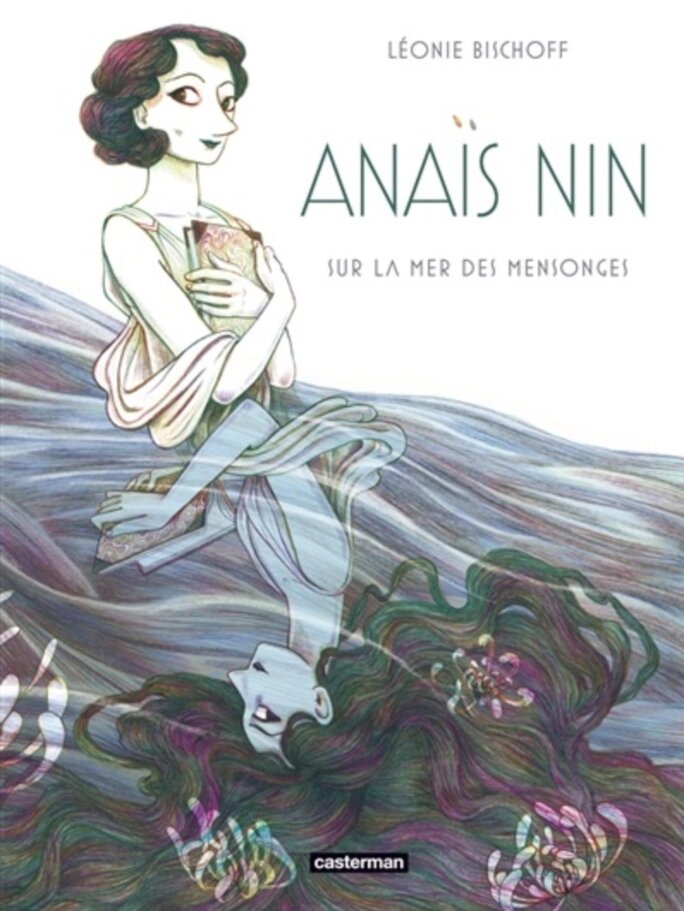
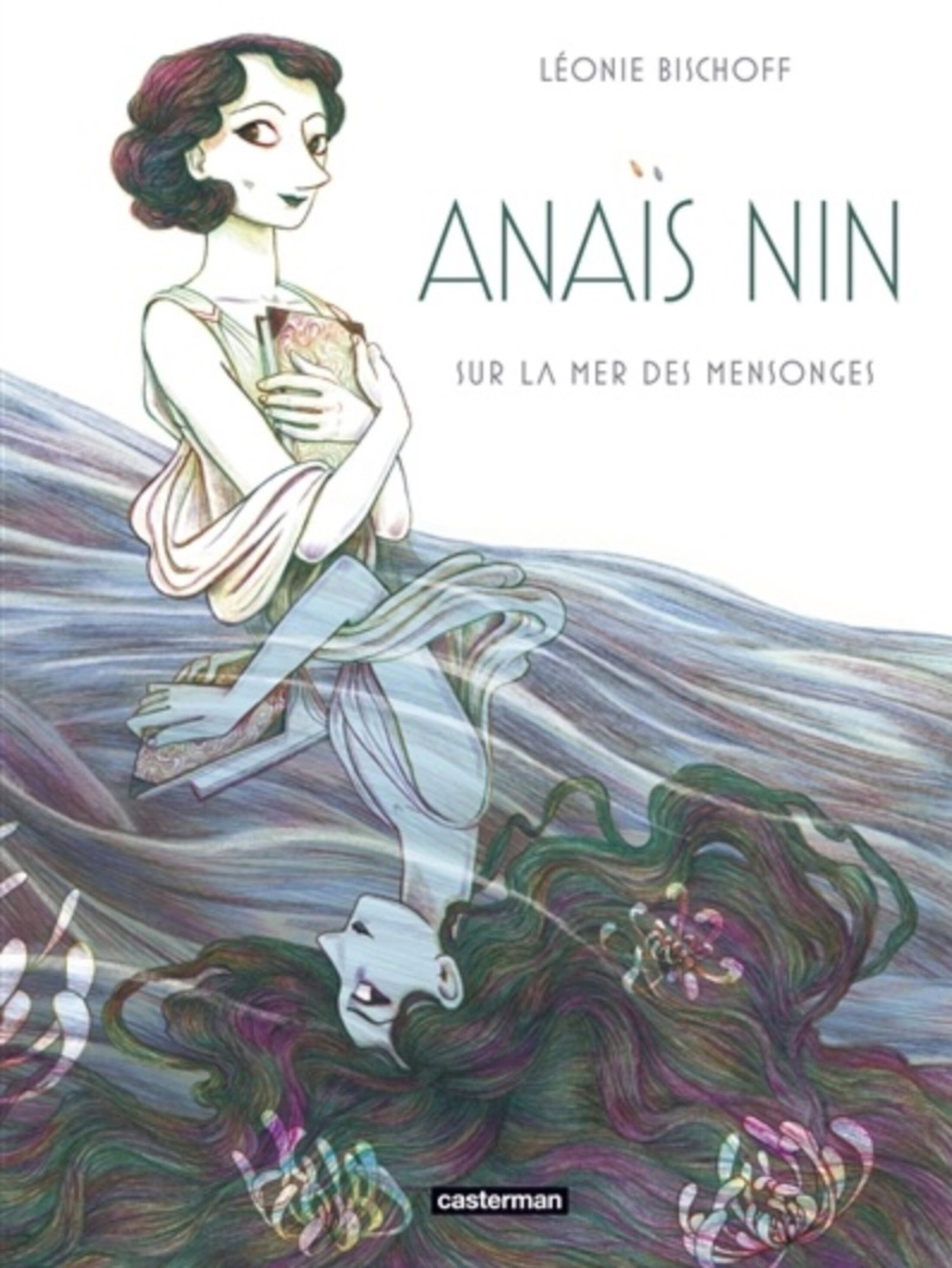
Flowers in bud abound, the ocean also, and a boat subjected to raging waves. But in Léonie Bischoff’s graphic novel, such somewhat classic images are not what they might at first seem: Anaïs Nin, Sur la mer des mensonges (Anaïs Nin, on the sea of lies), which follows a part of the life of the French-Cuban-US writer during the 1930s, is anything but an ode to classic romanticism.
Largely basing herself on the unexpurgated intimate diaries whose publication made the literary reputation of Anaïs Nin (1903-1977), and while keeping at bay the temptation to produce a pure biography, Léonie Bischoff tells the story of the quest for emancipation of the writer living in an outwardly ‘sensible’ marriage to a banker and artist, Hugh Parker Guiler aka Ian Hugo.
Artistic emancipation: in writing, in dance, and in psychoanalysis, the young woman went in search of her voice, that which would allow her to say truly what she felt, far from the fetters imposed by her gender and by epoch. Sexual emancipation also: entering marriage a virgin, the heroine gradually extended her erotic activities, having relationships with other men, and other women. All of which did not prevent her marriage to Guiler lasting until her death in 1977.
These different stages constituted the literary material from which sprung Nin’s most intimate journals. Published very late on, in unexpurgated versions and only after the death of Guiler in 1985, they recount in fine detail – and in a raw tone that was unexpected of a woman of her time – her experiences and the lessons learned, her thoughts and her dreams: these were about her freedom, but also the contradictions of she who wanted to remain a good wife, a loved daughter, all the while seeking to escape convention.
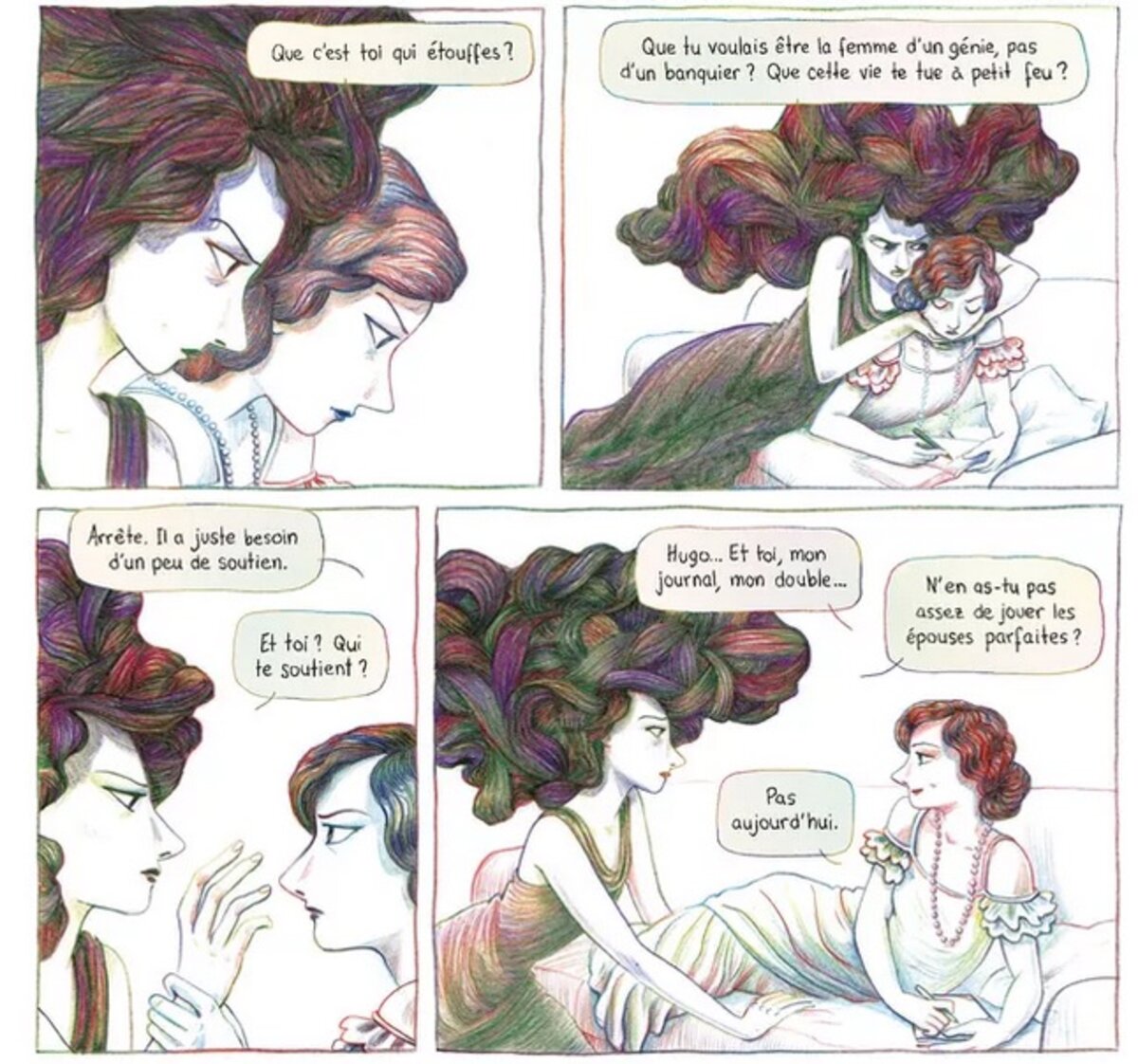
Enlargement : Illustration 1
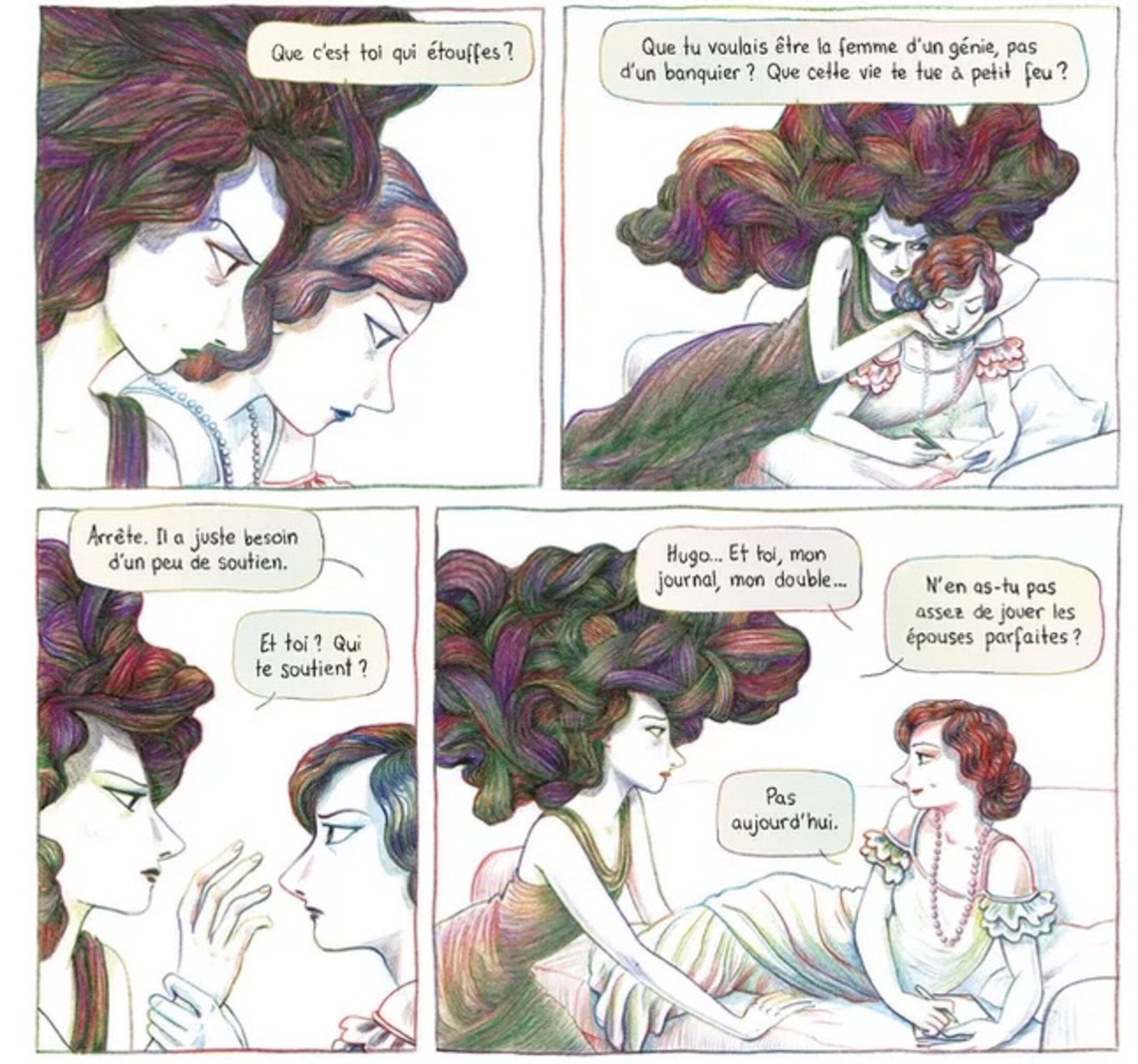
Above: Anaïs Nin and her voluptuous double (her intimate journal) who questions her “suffocating” role as “the perfect wife”.
Léonie Bischoff takes these themes head on, quoting widely from extracts of Nin’s intimate diaries and re-creating the key moments of the writer’s life journey. The studied pencil strokes navigate in a firm and precise manner to create effective oneiric scenes. The graphic novel presents Nin’s journals as her double, one that is more spirited, less constricted, and their eroticism is omnipresent throughout.
During the entire year that she worked on her drawings (after a seven-year period of preparing the project), Bischoff, 40, used almost only coloured pencils, and above all single pencils with multi-coloured leads, which produce constantly changing hues to the characters and settings. The effect is highly successful, allowing Bischoff to insist in a subtle manner upon the inner unrest through which Nin was permanently evolving, and the moving sands of her desires and thoughts.
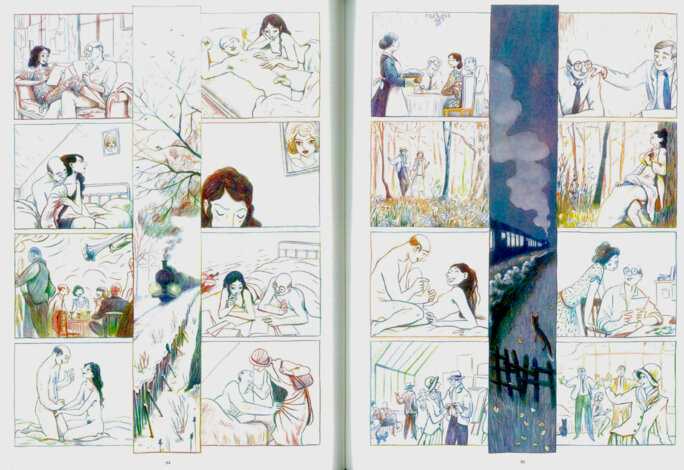
Enlargement : Illustration 2
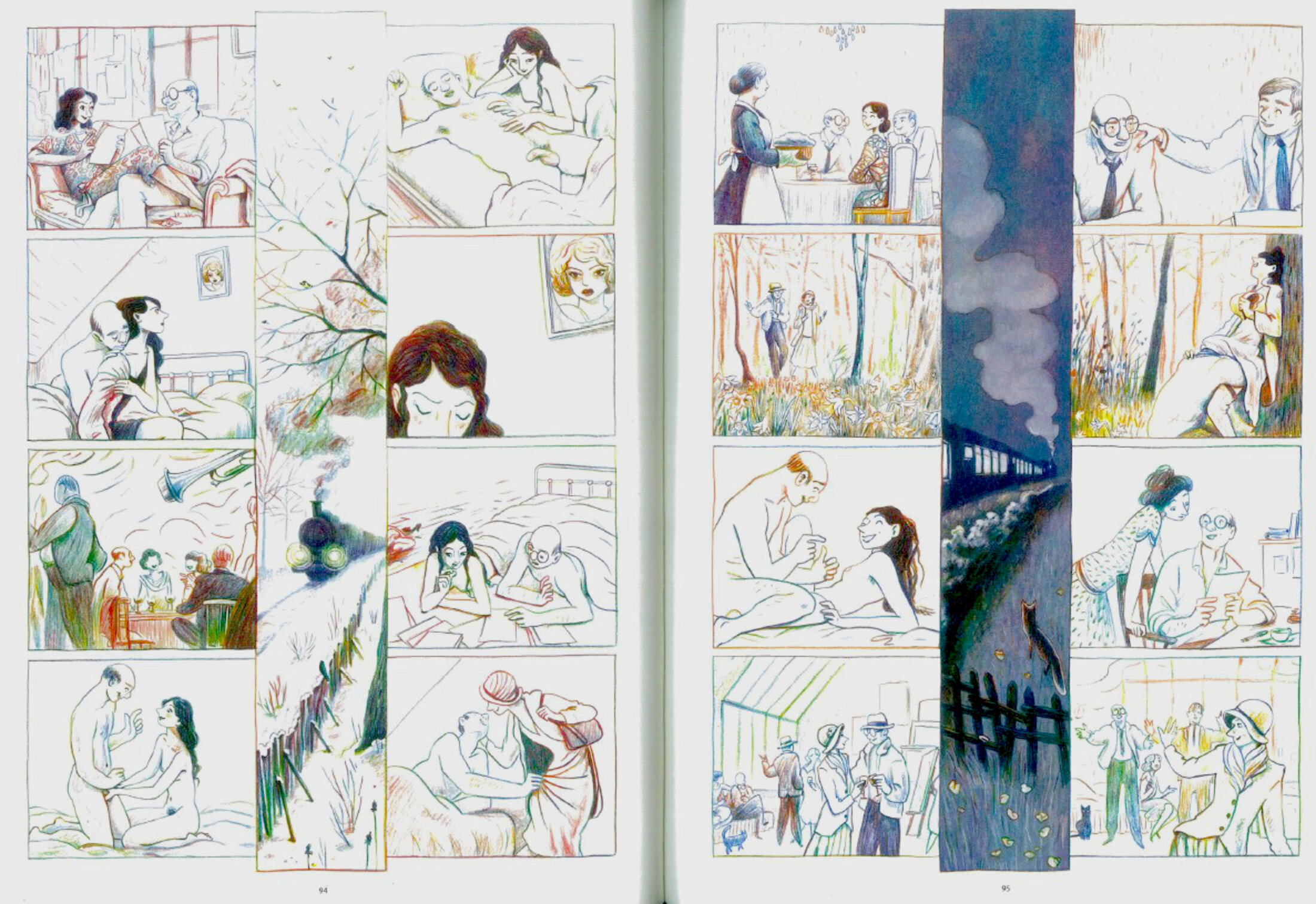
Above: an extract from scenes depicting Anaïs Nin’s sexual adventures.
At the heart of the novel lies the encounter between Nin and American writer Henry Miller (1891-1980). Their immediate mutual attraction was at first amicable and intellectual, before the relationship became also sexual. The pair would debate literature, discuss their work, make love, and begin all over again. But Nin also fell in love with Miller’s wife June, with whom she would discover her bisexuality, a relationship that is the subject of several fine pages of the graphic novel.
Bischoff depicts some of the very difficult periods of Nin’s life, such as when she fell pregnant with a daughter who would be aborted stillborn. It also recounts what might be regarded as the most disturbing content of her diaries; this was about being abused as a child by her father, Cuban pianist and composer Joaquin Nin, who would abandon his family for a mistress, how the contact between the two was restored many years later and how they renewed the relationship which became incestuous.
Enlargement : Illustration 3
The novel recounts a scene from that incestuous affair, which Nin described on her part as involving her total consent, while also adding it horrified her. For the scene, Bischoff inverts the graphic style, using bright colours against a black background. It ends with the wind blowing against a window, which shatters. The reflection of Nin coming from the many pieces of broken glass undoubtedly provides the very best portrait of her.
Anaïs Nin, Sur la mer des mensonges by Léonie Bischoff, is published in France by Casterman, priced 23.50 euros.
-------------------------
- The original French version of this review can be found here.
English version by Graham Tearse