


When Giovanni Tagliamento was arrested recently on the French Riviera, he had just celebrated his 60th birthday and had been living in France in relative tranquillity for eleven years. He was picked up by the French authorities on the way back from San Remo, northern Italy, and is now under investigation for conspiracy to defraud, criminal association and smuggling.
Italy's justice system has long considered Tagliamento, arrested on May 20th, to be the ambassador on the French Riviera for the Camorra, the Neapolitan Mafia. He is suspected of having organised vodka trafficking in several European countries under the brand name Lioness Paw from a company based in Monaco.
After his arrest Tagliamento was placed under judicial investigation by Judge Christine Saunier-Ruellan as part of an inquiry opened in February by the Marseille specialist inter-regional jurisdiction(JIRS), following a search of his ex-wife's home in Ospedaletti, just up the coast from San Remo. He is currently being held in the Baumettes prison in Marseille.
His arrest was reported in La Stampa on May 21st but, beyond basic coverage in the local Riviera press, it has not been given any prominence in France. The indifference is significant given the French authorities' apparent ambivalence over the Mafia presence in France, something Italian anti-Mafia magistrates regularly criticise.

Enlargement : Illustration 1
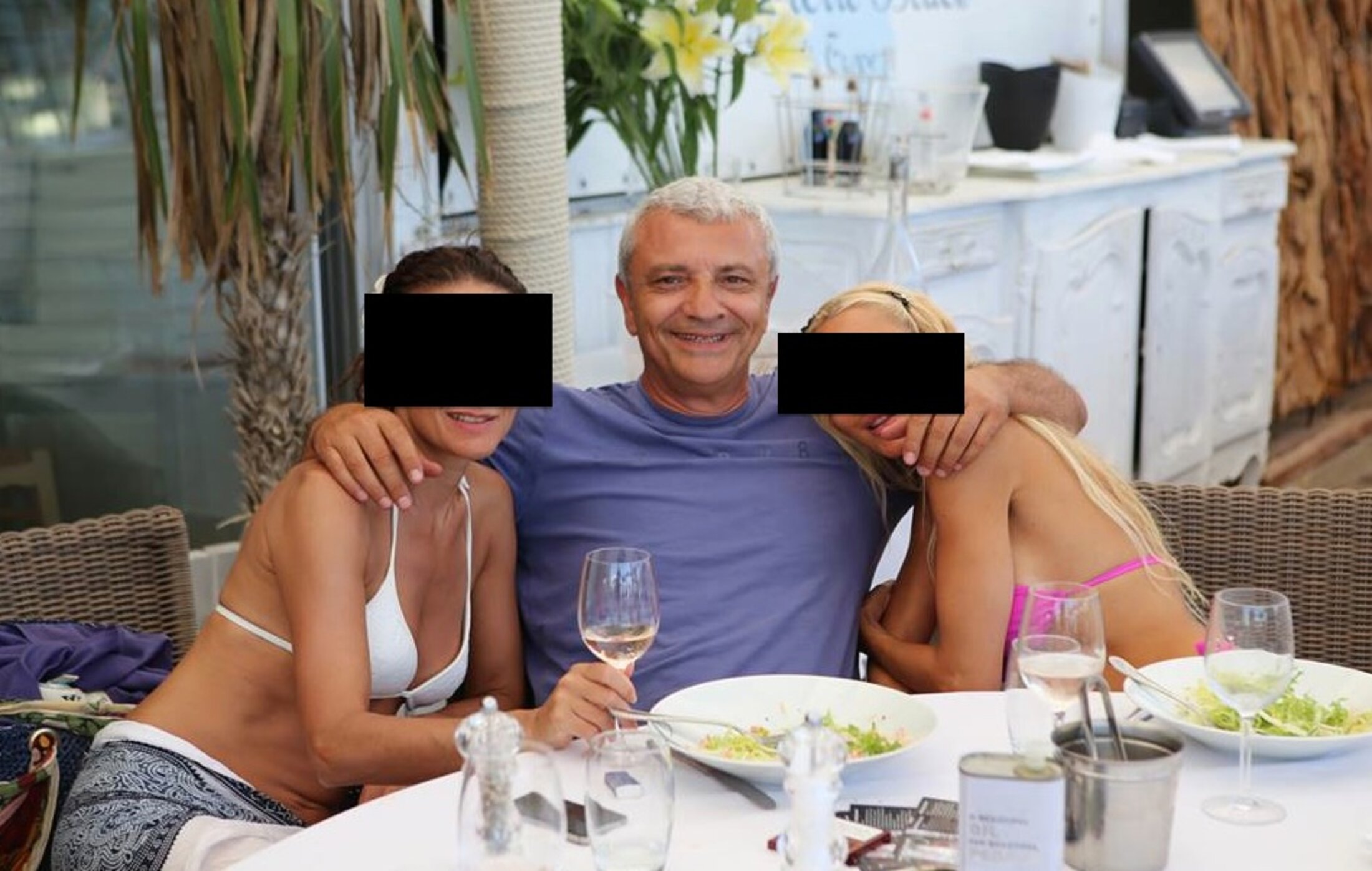
The Mafia's cronies are not stereotypical gangsters in spats. They dine in the best restaurants, employ the informal 'tu' when talking to local dignitaries and use the same commercial lawyers as them. They are what the Italians call the Mafia 'bourgeoisie'.
“The Mafia does its best business deals when there is silence about its existence and actions. Its best weapons are not the Kalashnikov but bribes and corruption of the economic, social and political life of an area,” said Roberto Cavallone, the deputy public prosecutor in the Italian province of Imperia who specialises in cases against the Mafia in the wider Liguria province of northern Italy, speaking during a hearing on the Mafia before an Italian parliamentary commission, whose records were made public in February 2013.
Nicknamed the 'Little Spider' ('Ragnetto'), Tagliamento is one of numerous Italian Mafiosi who have taken refuge in France. Before that, he had spent 15 years in prison in Italy for several offences, including belonging to a mafia-style association, which is among the most serious offences under Italian law. He was lieutenant to Mafia chief Michele Zaza, nicknamed 'The Madman' ('O'pazzo'), who died in 1994, and that connection provided him with a useful introduction for some time.
Before Tagliamento came to live in France, he had already been involved in an organised criminal attempt to take control of the casino in the French Riviera coastal town of Menton, on the French-Italian border, in the late 1980s. This attempt was mentioned in a report on gambling in France to the French Senate in February 2002. The report said: “The attempt to take control of the Menton casino certainly demonstrated and proved the intervention of the Camorra. It was all there, starting with a shell company, Sofextour, whose shareholders were all using assumed names, which was in fact controlled by Italian interests (Gianni Tagliamento, an associate of Michele Zaza), Monaco residents and representatives of Corsican organised crime.”
The current investigation by the Marseille JIRS, which specialises in organised crime, is being run by Nice criminal investigation police and their criminal investigation colleagues in Customs & Excise, but is still in its infancy. It may ultimately succeed in bringing to light the impressive network of relationships Tagliamento wove in the South of France between the business, criminal and political worlds.
Some choice names have already surfaced, including that of Linda Fargette, daughter of Jean-Louis Fargette, the godfather of organised crime in the Var département or county of southern France who was murdered in Italy in 1993. She has been place under judicial investigation and supervision for her role as the secretary of a company controlled by Tagliamento. And according to Mediapart's information, a person close to the royal family in Monaco, where Tagliamento easily navigated his way around the jet set, is also to be brought before the judge for a hearing in the next few days.
Will the customs and fiscal angle chosen for the investigation bring to light the activities of someone Italy considers to be a major Mafia chief, even though France has drawn a blank up to now? “We have tracked everything he has done for three years without finding anything,” says a police officer in Nice, who asked not to be named.
Cavallone, the Ligurian deputy prosecutor, told the Italian parliamentary commission in 2013 that Tagliamento had a dominant position in drug trafficking in France. “Tagliamento is a point of reference for all Italian criminals who want to operate in drug trafficking in France. Even for Calabrians, when they intend to operate in the Menton and Nice area,” he said at the time.
Contacted about Tagliamento's arrest in France, Cavallone said: “I don't know the details of the case that led to him being put under investigation. All I know is that this man is dangerous. So if the French [authorities] have been able to assemble proof of an illicit activity, so much the better.”
Until May 20th, the French judiciary had not found anything convincing enough to bring Tagliamento in, though not for lack of trying. The first alert they received about him goes back to 2007, when information from the Italian authorities put the French on the trail of what became the biggest political-financial scandal on the Riviera of the past decade, the Odéon affair. It concerns suspected corruption in financing the building of the Odéon Tower, the highest skyscraper in Monaco. The resulting trial is due to open in Marseille in November this year after a lengthy investigation and the death of the main protagonist, René Vestri, the former mayor of Saint-Jean-Cap-Ferrat.
Mediapart has seen the judicial document ordering this case to go for trial, and the evidence it lays out is of high quality, including a corruption pact and envelopes of banknotes. The pedigree of those facing charges is also impressive. A total of 11 defendants will stand trial, including Paolo and Claudio Marzocco, two major property dealers in Monaco, and Gérard Spinelli, mayor of Beausoleil, a commune overlooking Monaco. But Tagliamento will not be among them.
The Camorra connection
On July 17th 2007, the Italian police had informed their French counterparts in Nice that “a certain Giovanni Tagliamento, born on April 5th 1956 in Naples, living in Menton and close to the Neapolitan Camorra, is suspected of money laundering, on the Côte d’Azur, sums coming from illicit activities of the said Camorra, by investing in property projects and different companies”.
Enlargement : Illustration 2
The Nice investigators mounted a surveillance operation targeting Tagliamento, and found that he often lunched with individuals whom a police report described as “unfavourably known to the Italian justice services for having direct or indirect links with the mafia”. They also found that Tagliamento was involved with construction sites in Menton that were managed by the Pellegrino brothers, two Calabrian members of the N’Drangheta in Liguria, the Italian coastal region that runs up to the border with France. Giovanni and Roberto Pellegrino were sentenced in October 2014 by a court in in Liguria to 16 and ten years in prison respectively for their Mafia associations and bribery of politicians in Bordighera, a small coastal town in Liguria.
Tagliamento was also found to have close relations with Lino Alberti, a Monaco-based businessman who lived with Chantal Grundig, the wealthy widow of Max Grundig, the man who founded the German electronics company of the same name. Alberti frequented both the Riviera’s underworld and its local establishment. The Nice police detectives today recall, with undisguised pleasure, how their surveillance of Tagliamento led them to a dinner organised, on July 4th 2009, by Alberti and Chantal Grundig at La Plage du Pirate, a restaurant in the Riviera town of Roquebrune-Cap-Martin. Among the guests were, of course, Giovanni Tagliamento but also Roger Mouret, nicknamed “the gypsy” and who was a veteran figure of the French underworld whose operating zone stretched from Grenoble, close to the Alps, down to the Riviera. He enjoyed good relations with local politicians and businessmen, including the Riviera regional representative for construction group Vinci, which built the Odéon Tower in Monaco.
But after several months of the surveillance operation, as more and more was discovered about the others around him, Tagliamento went off the radar and appeared to have played no role in the Odéon tower case.
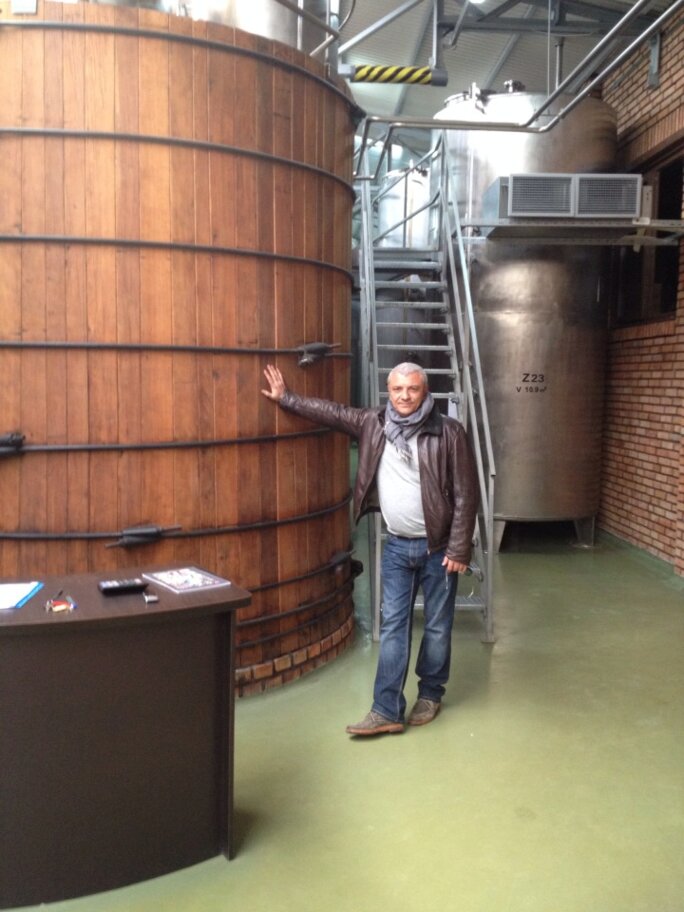
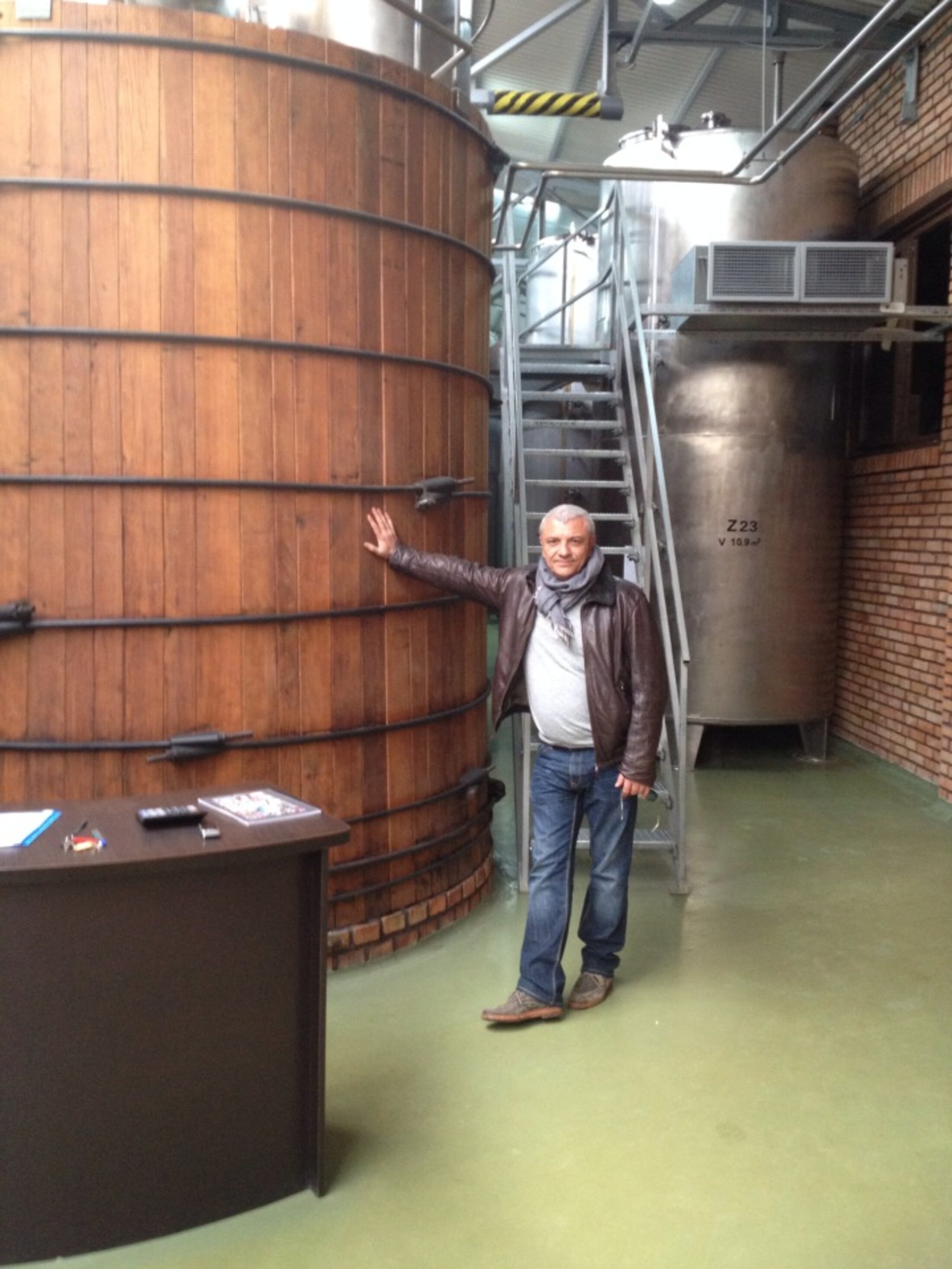
The wide exposure of this corruption scandal saw Tagliamento abandon his activities in property and enter the drinks trade. He set up a company in Monaco to manage the distribution of a new brand of vodka, Lioness Paw, which he promoted in Riviera restaurants and night clubs.
On January 9th 2014, the current writer was carrying out research for Razzia sur la Riviera (Razzia on the Riviera) a book about Italian crime syndicates operating in south-east France, and came across Tagliamento sitting at the terrace of a restaurant on the Cours Saleya in Nice. “Let me live my life, please,” he said. “I’ve been living in France for ten years now. I’ve tried working in property, but I had to stop after my name was cited in the Odéon Tower case. Why do the Italians obstinately continue to designate me as a mafioso? I don’t understand.”
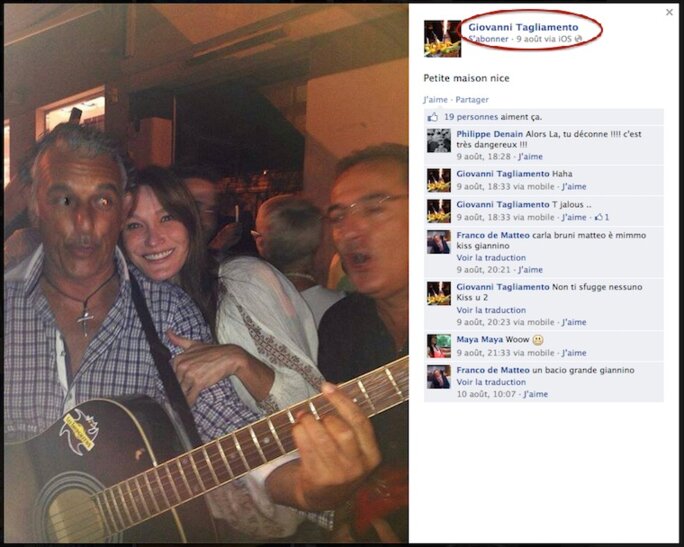
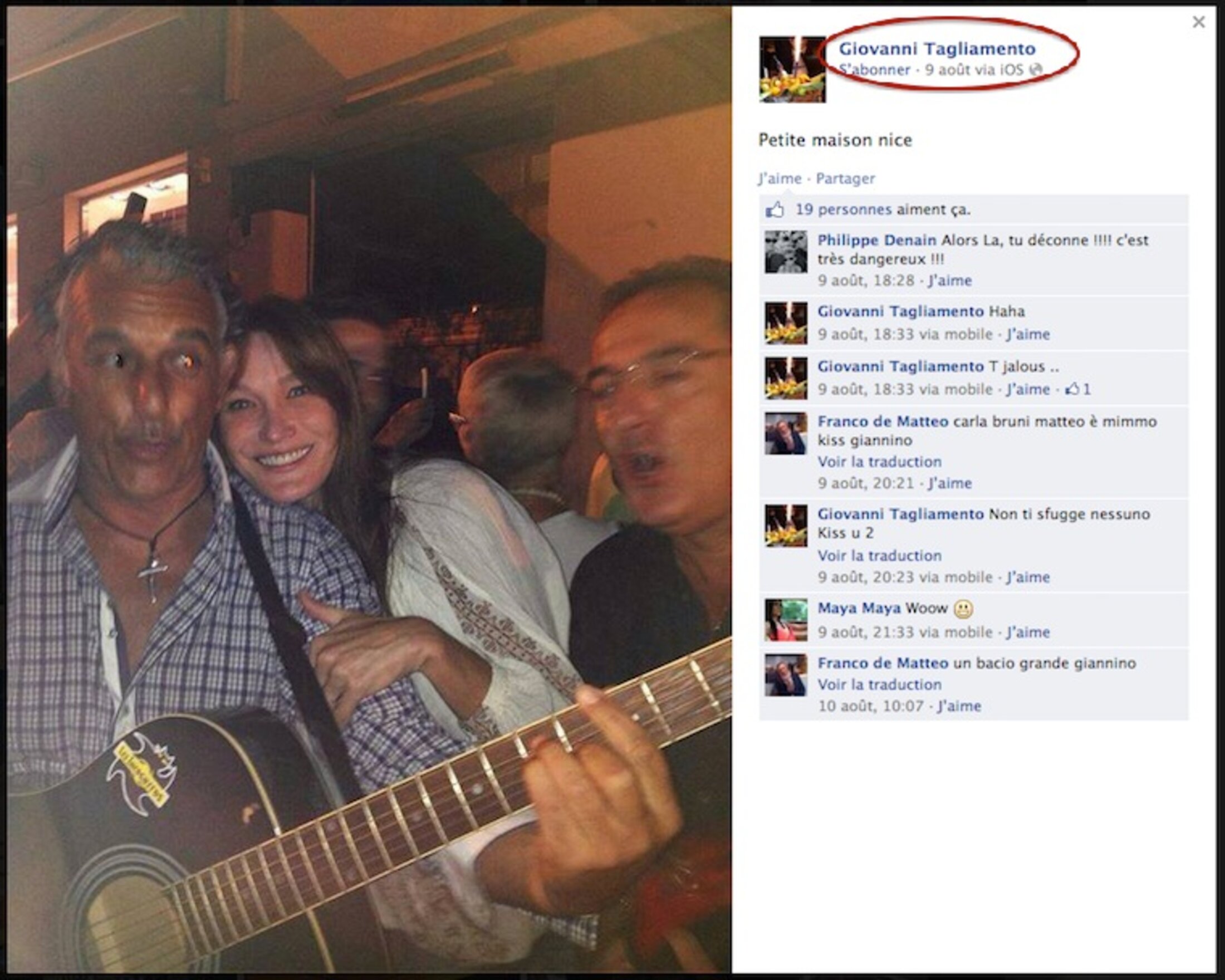
At the time, Tagliamento had the confident look of a man upon whom life is once again smiling. He had opened a Facebook account in his name on which he posted a number of photos of his partying. The account was later closed, but some of the photos were archived. One of them, dated August 9th 2013, was taken at La Petite Maison, a well-known restaurant in the Old Nice quarter which counts former French president Nicolas Sarkozy as a regular client.
The day the photo was taken, Sarkozy and his wife Carla Bruni enjoyed a stroll through the streets of Nice before also dining that evening at La Petite Maison, invited by King Abdullah of Jordan and his wife Rania. Apparently, as shown in the photo below, Giovanni Tagliamento was also among the guests.
Enlargement : Illustration 3
It took a murder for his vodka business to attract the interest of the French police. On the evening of June 1st, 2015, Régis Mijatovic, 43, was shot dead as he sat at a table of an expensive restaurant situated in the French Riviera town of Cagnes-sur-Mer. His machine gun-wielding and helmeted assailant was riding pillion on a powerful motorbike driven by an accomplice. Mijatovic, who came from Cannes and who was of Croat origin, was one of the rising stars of the Riviera underworld. After serving five years in prison in France for drug trafficking, he left for the US and later moved to Croatia. When he returned to Cannes, he began expanding his influence among the night clubs and bars.
The night of his murder, Mijatovic was dining with Tagliamento, who suffered minor injuries in the attack. He was questioned by police who did not detain him further, but who carried out a search of his home in Cannes. There they found documents relating to his vodka business.
That soon led to the discovery of evidence suggesting a tax fraud. A full-blown judicial investigation was opened and Tagliamento was formally placed under investigation by Marseille Judge Christine Saunier-Ruellan. He is suspected of an excise duty scam which consists of pretending to sell vodka to customers in a country with a low rate of excise duty when, in fact, the vodka was destined to customers in a country with a high excise rate.
Tagliamento is now in preventive custody in the Marseille prison Les Baumettes. His lawyer, Luc Febbraro, who has appealed against the decision to detain him, minimizes the importance of the case against Tagliamento. “My client wanted to get rid of a stock of vodka in a hurry,” he said. “He found a buyer in Macedonia, who didn’t pay for the merchandise. The order was cancelled and the vodka was finally delivered to Belgium. All of that for a profit of 5,000 euros. And the JIRS, which aspires to be the French anti-mafia [service], portrays him to us as Don Corleone.”
For the moment, Tagliamento is the only alleged member of what Judge Saunier-Ruellan believes is an “organised gang” behind the trafficking to have been identified. The success of her hunt for accomplices will depend significantly upon the cooperation she receives from the authorities in Monaco, where his business was based and where he enjoyed an influential network.
-----------------------------------------------------------------------------------
- The French version of this article can be found here.
English version by Sue Landau and Graham Tearse
Editing by Michael Streeter