


On January 28th, French interior minister Bernard Cazeneuve attended a traditional New Year ceremony with a union representing senior police officers, during which he heaped praise upon Jean-Michel Fauvergue, head of the national police force’s elite intervention squad, the RAID.
The RAID (a French acronym for “search, assistance, intervention, dissuasion") played a major role in anti-terrorist operations during the terrorist attacks in and around Paris in January and November 2015. During the ceremony last month, Cazeneuve was scathing of those who voiced criticism of some aspects of the RAID’s interventions, inviting them to leave “the warmth of their homes” and join the RAID’s “assault columns”.
Cazeneuve also paid tribute to France’s other elite intervention squads, the BRI (Brigades de Recherche et d'Intervention) - a police unit also known as the anti-gang squad - and the gendarmerie’s GIGN (Groupe d’Intervention de la Gendarmerie Nationale).
But behind the praise and show of unity, a fierce and growing dispute is poisoning relations between the police and gendarmerie, and especially between the hierarchies of the three elite intervention groups. Cazeneuve’s irritation over the rivalry “is huge” one police union official told Mediapart, speaking on condition his name was withheld.
Broadly, and not without exceptions, France’s national police force, the Police Nationale, is assigned to the policing of the country’s urban areas, while the national gendarmerie force, the Gendarmerie Nationale, polices rural areas.
After recent reforms, the gendarmerie, previously en entirely military force, is now overseen by both the Minister of the Interior – the ultimate boss of the national police force – and the defence minister, in an ongoing effort to harmonize the operations of the two forces. But the notion of harmony appears currently a distant prospect, amid mutual suspicion and rivalry that has been significantly fuelled by the tensions of last year’s terrorist attacks in France.
Enlargement : Illustration 1
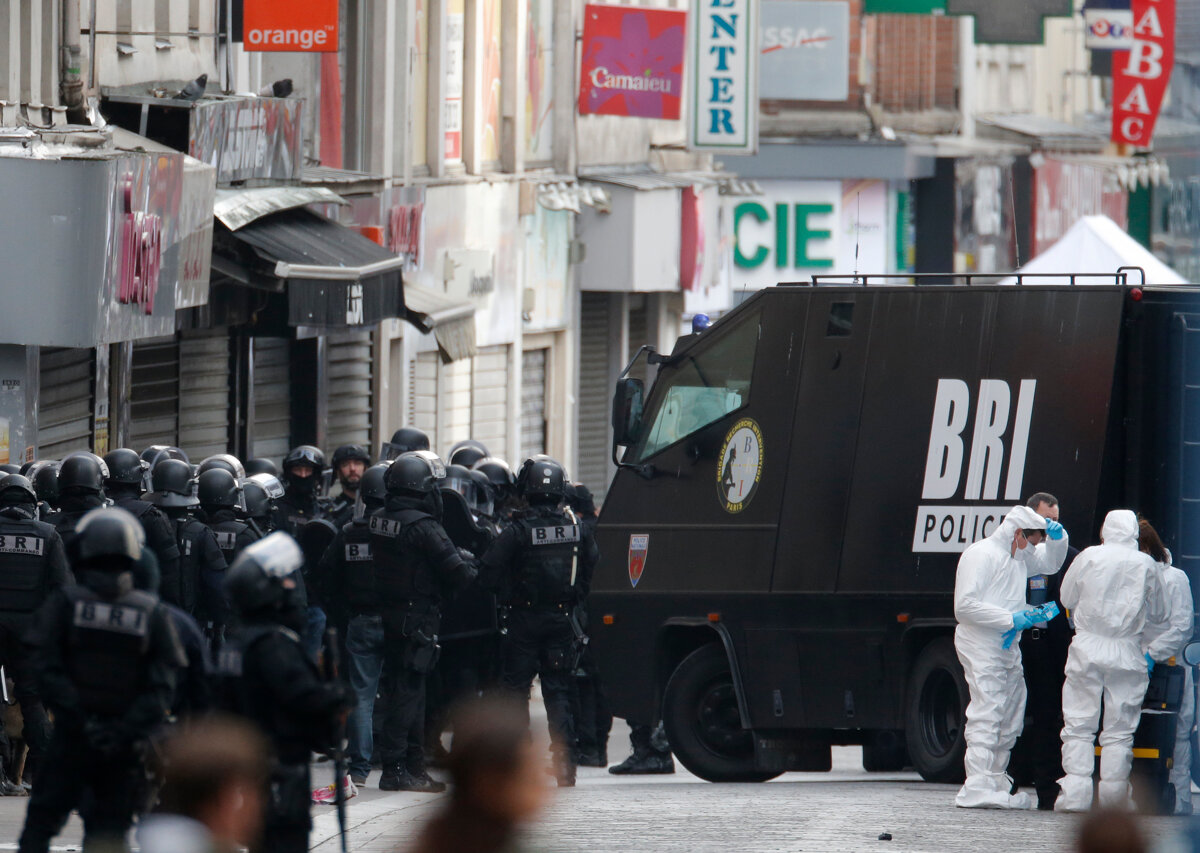
On Friday January 9th 2015, an armoured vehicle from the French police BRI squad arrived at Dammartin-en-Goële, a small town about 30 kilometres north-west of Paris. Earlier that morning, Saïd and Chérif Kouachi, the brothers who two days earlier had carried out the attack on the Paris offices of Charlie Hebdo magazine, in which 12 people lost their lives, had set up siege in a building housing a printing company on an industrial zone in the town.
Despite its proximity to Charles-de-Gaulle airport, Dammartin-en-Goële is situated in a rural area, which is the gendarmerie’s patch, and the gendarmerie’s elite commando group, the GIGN, was already at the scene. The BRI wagon eventually turned back to Paris, but the gendarmes were not happy about the intrusion.
Later that same day, at around 1 p.m., gunman Amedy Coulibaly, who claimed to be acting in the name of the Islamic state group, attacked a kosher supermarket - Hyper Cacher - situated on the Porte de Vincennes, a wide road junction that separates the south-east edge of Paris with the suburb of Vincennes.
The BRI has authority to intervene in Paris, whereas its police commando sibling and GIGN equivalent, the RAID, has authority in all other urban areas, and notably the Paris suburbs. The site of the kosher supermarket illustrates the complexity of the administrative divide of policing in France. The closest suburban zones around the capital come under the administrative authority of the Paris police prefect, who oversees the BRI. The RAID, meanwhile, comes under the administration of the senior management of the National Police force.
Making things yet further complicated, both the BRI and the RAID are joint members of the Force d’Intervention de la Police Nationale, the FIPN, a body that was created to better coordinate anti-terrorist intervention operations. The head of the FIPN is the chief officer in charge of the RAID, and his deputy at the FIPN is the head of the BRI.
Coulibaly took customers and staff hostage inside the kosher supermarket, before soon killing four men. As the siege began, the then-police prefect of Paris, Bernard Boucault, ordered that the BRI detachment, which was the first police commando group to arrive at the scene, should take part alongside the RAID in the storming of the store, which was ordered just after 5p.m. In the event, Coulibaly was killed during the operation and there were no other fatalities.
The competition with the police was illustrated over the following weeks in interviews in the press. After the BRI’s chief negotiator during the kosher supermarket siege spoke about his phone conversations with Coulibaly, another was published with the RAID officer who was the first to enter the store during the police assault. Relations between the head of the BRI, and his counterpart at the RAID, appeared to have become dire, feeding the rumour mill.
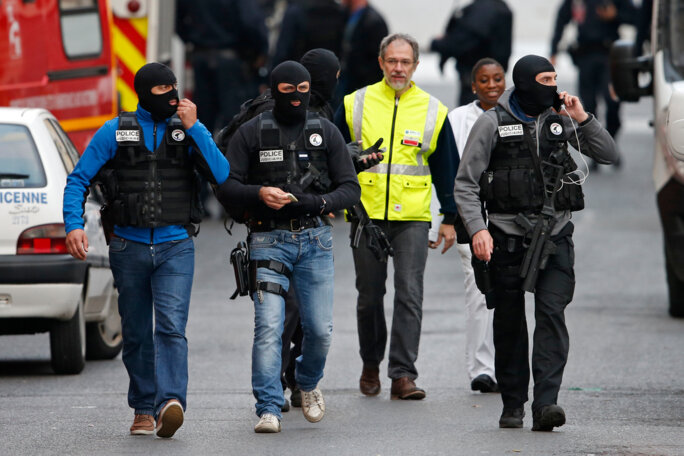
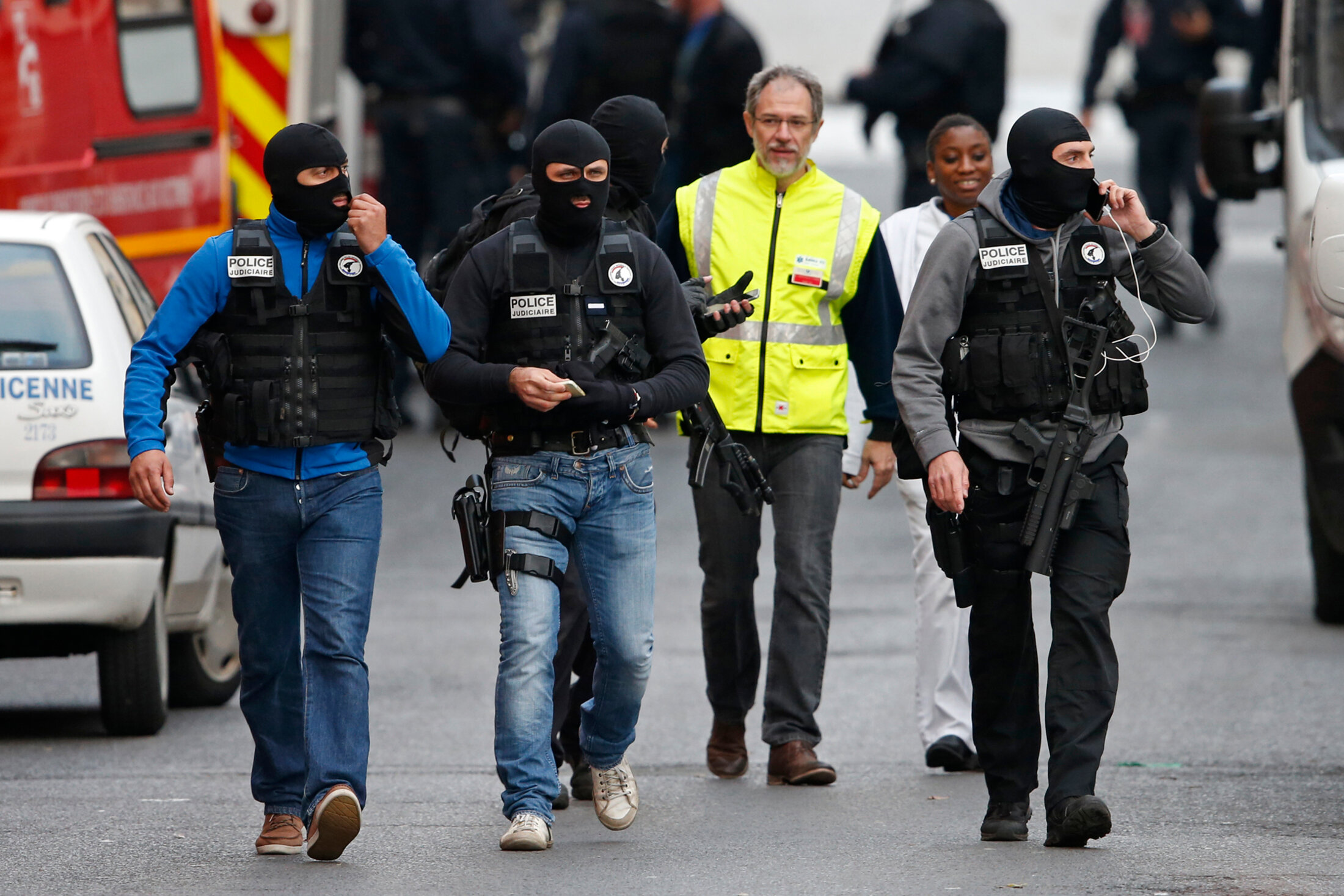
During Mediapart’s recent investigation into the real circumstances of the police assault, five days after the November 13th terrorist attacks in Paris, on a flat in the north Paris suburb of Saint-Denis, (when two terrorists involved in the November 13th attacks were killed), several police officers advised us to study the footage of the main evening news programme broadcast on French TV channel TF1 that same day. The November 18th bulletin featured a studio interview with RAID boss Jean-Michel Fauvergue and BRI head Christophe Molmy, who appeared side-by-side. We were told that the two men dislike each other to the point that they did not shake hands when leaving the studio (although a journalist present at the time refuted this).
But whatever did or did not take place, and however much animosity there is between the two, they and the police officers they command share a common and very pronounced exasperation with their arch rival, the gendarmerie.
Police unions denounce 'denigration campaign'
The poor relations between the police and the gendarmerie are historic. The police have long envied the means allocated to the gendarmes, while the latter object that the police, by virtue of their role in policing urban areas, are involved in most of the bigger crime investigations. Didier Migaud, the head of France’s national court of audit, the Cour des Comptes, last year led a review of the workings of the police and gendarmerie, studying operational efficiency, career management and cooperation between the two corps. In his report to government, dated March 11th 2015, Migaud was widely scathing of the rivalry between the parallel services, noting that “the police claims a division […] that would give it all the investigations into major organised crime (international drugs trafficking, major criminal gangs) and terrorism, leaving the gendarmerie to deal with break-ins, cases of itinerant delinquency, metal thefts and damage of the environment”.
Regarding terrorism, the rivalry has become all the more intense since the creation in 2014 of the gendarmerie’s own anti-terrorist intelligence unit, the SDAO (Sous-Direction de l’Anticipation Opérationnelle). Socialist Senator Jean-Pierre Sueur, rapporteur of a Senate commission to study means for improving the fight against jihadist terror networks, wrote in the commission’s report of conclusions, published last April, that “the national gendarmerie, which thanks to its fine mesh across [the national] territory should provide for an effective gathering of local intelligence, appears to be quite little asked to contribute”.
Enlargement : Illustration 2
A document prepared last year by the most representative police union, Alliance, which was highly critical of the lack of means allocated to anti-terrorist services, also deplored what it called the “intrusive methods” of the gendarmerie. It cited one police intelligence officer, a member of the Renseignements Territoriaux service which operates as a regional structure, based in western France. He said he had the proof that gendarmes “shamelessly” copy-paste his department’s reports “by changing the seal” before then presenting them as their own to the local prefect. The union said the gendarmes had “set up a race for results” and claimed they prepared documents “containing raw, unverified information”.
When terrorist gunmen and suicide bombers, acting in the name of the Islamic State group, attacked targets in and around Paris during the evening of November 13th last year, the BRI was given the task of overpowering those who took control of the Bataclan theatre. Three Kalashnikov-wielding terrorists had stormed the venue during a concert by US band Eagles of Death Metal, shooting dead 89 people and taking dozens of hostages in a siege that was to last almost three hours. The BRI was given the intervention task, which ended after the three gunmen were killed.
Five days later, two other terrorists involved in the November 13th attacks were traced to a flat in the Saint-Denis suburb north of the capital where, in the early hours of November 18th, the RAID launched an assault on the hideout, killing both men. None of the anti-terrorist operations on November 13th or in the immediate aftermath involved the GIGN.
Soon after, the BRI operation at the Bataclan came in for criticism over the length of time it took for the officers to end the siege. The first to enter the concert hall did so at around 10.30 p.m., about 50 minutes after the gunmen first struck, and the final assault was launched at twenty minutes past midnight. Retired GIGN officers and others close to the force let it be known that from the start of the massacre (at about 9.40 p.m.) a team of the gendarmerie commandos was present in their barracks, la caserne des Célestins, based in the nearby Marais quarter of central Paris, ready to intervene but ignored.
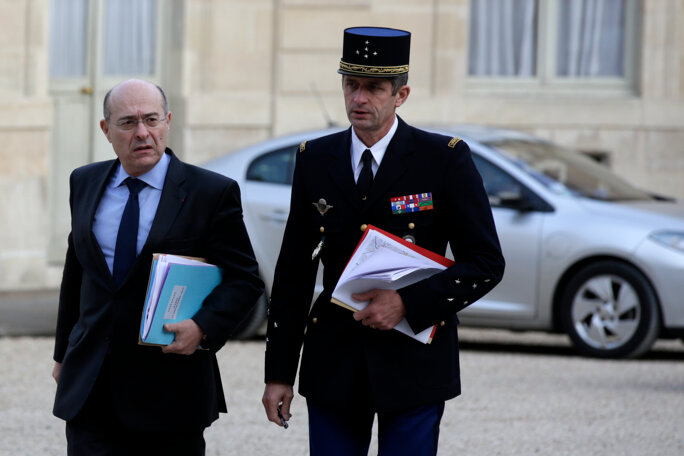
The suggestion infuriated senior police officials. At a meeting at the French interior ministry in the presence of General Denis Favier, the head of the gendarmerie, and the newly-appointed Paris police prefect, Michel Cadot, the latter presented CCTV footage showing the GIGN team arriving at the Célestins barracks on November 13th at 11.15 p.m., some 45 minutes after the first BRI officers entered the Bataclan.
On January 1st this year, several unions representing police officers addressed a joint letter to interior minister Bernard Cazeneuve in which they denounced what they described as the gendarmerie’s “destabilisation manœuvres” against the BRI and the RAID, and the “gendarmerie’s expansionist aspirations”. The letter began with the observation that the various police units involved in the November 13th anti-terrorist operations were the target of criticism in the press “from ‘courageous ‘experts’ preferring most of the time to remain anonymous”.
“Who benefits from the crime?” the unions asked in the letter, adding that the “denigration campaign” served the plans “of a minor player in the field of security: the gendarmerie”. The unions’ main target was gendarmerie boss Denis Favier, himself a former head of the GIGN who led the successful 1994 assault at Marseille airport against four Islamist hijackers of an Air France plane.
Extracts of the letter were first revealed in French weekly JDD in a report published on January 24th. On January 26th, interior minister Bernard Cazeneuve attended a traditional New Year greetings ceremony with the SCI police union (which had not taken part in the letter), when he notably referred to “the same courage, the same pride”, shared by the police and gendarmerie, adding that the two also shared “the same sorrow and the same hurt”, adding: “When the security of the French is at stake, it’s me who decides.”
Police-gendarmerie war 'would be suicidal'
During the official enquiry into the handling of the RAID’s assault on the flat in Saint-Denis on November 18th 2015, police officers who were questioned urged for an investigation into the GIGN’s handling of the January 9th 2015 siege at Dammartin-en-Goële, where brothers Saïd and Chérif Kouachi, who carried out the Charlie Hebdo massacre, were barricaded in the offices of a printing company.
Enlargement : Illustration 3
Unlike the police assault that same day on the Hyper Cacher store, where Amedy Coulibaly had taken customers and staff hostage, killing four people, or the police raid on the flat in Saint-Denis on November 18th, the press – and notably TV cameras – were kept at a distance during the GIGN operation against the Kouachi brothers. The handling of the siege, which ended with the deaths of Saïd and Chérif Kouachi after they came out of the building works, weapons blazing, never came in for criticism.
Yet in the official reports in the aftermath of the siege, bullets from the gendarmes' weapons were observed to have caused extensive damage within the printing company. Ammunition had pierced ground-floor ceilings and ricocheted off walls, the remains of neon lights were left dangling while a first-floor showroom was in ruins. The question is raised as to how could so much damage have been inflicted inside the building, and notably the first floor, when the two terrorists engaged in a gun battle on the car park in front of the offices?
In its February issue, the magazine L’Essor de la gendarmerie, which claims itself to be “the first independent journal” dedicated to gendarmerie affairs, reported on an interior ministry project to place intervention groups within 20 minutes of any potential scene of terrorism in France. “What a culture change, for which some in the police will drag their feet for fear of losing out in this reform,” the magazine commented. “It can be recalled that two GIGN sections – totalling about 40 men – were deployed on the evening of the Paris attacks on November 13th. They were, arms at the ready, in the Célestins barracks at 11.15 p.m. but were never called out to the Bataclan, situated a few minutes’ away. Neither was the elite gendarmerie unit called upon during the assault in Saint-Denis, where its competence in explosives would have been highly useful.” That last phrase was a reference to the fact that the explosives employed by the RAID proved unable to blast open the door of the flat hiding the terrorists.
At the heart of the upsurge in rivalry between the police and the gendarmerie, which is fanned by the tensions of the current security threats, lies a battle between individuals and the concerns among staff on both sides over who will end up strongest in the continuing streamlining of the two forces. Meanwhile, according to several sources, the relationship between the ranks of the RAID, BRI and GIGN - the elite commandos whose hierarchies are at the summit of the infighting – are supposedly excellent, based on the mutual esteem among those in the field.
Contacted earlier this month by Mediapart, gendarmerie boss Denis Favier refused to comment on the issues raised in this article, other than insisting that there should be no polemic and that “we all collectively advance”. Two days later, on February 4th, an interview with him was published in French daily Le Parisien. “There’s no place for corporatist squabbles,” he said, apparently referring to police unions. “If such a war was declared it would be simply suicidal.”
-------------------------
- The French version of this article can be found here.
English version by Graham Tearse