


By mid-January in France, the number of weekly new cases of the Omicron variant of SARS-CoV-2, the virus that causes Covid-19, among children aged up to nine was recorded at a rate of 5,000 per 100,000, and among those aged between ten and 19 the weekly rate was 7,000 per 100,000. That month, between six and seven percent of French children tested positive for the virus in just one week.
In December, medical and scientific circles in France were divided as to deciding which were the most appropriate measures to counter the spread of the virus among the young.
In an open letter published late that month in the weekly Le Journal du dimanche, a group of 50 medical professionals, including epidemiologists, general practitioners, infectiologists and biologists, had called on health minister Olivier Véran to postpone the return of school classes in January.
“Since the beginning of November, more than 300,000 [young] children and teenagers have been confirmed as positive for Covid-19,” they wrote. “The hospitalisations of children in conventional services and in intensive care have surpassed all preceding waves, with more than 800 children under the age of ten, and 300 adolescents between the ages of ten and 19 hospitalised in six weeks, and these figures are unceasingly climbing.”
On the other hand, the representative body for French paediatricians, the Société française de pédiatrie, argued strongly for schools to remain open, despite the intense circulation of the virus. In a statement, also published in late December, it warned that “the closure of schools has serious deleterious effects, notably for the most vulnerable children and families”.
Now, six weeks later, as the tide of Omicron appears to at last be ebbing, just what have been the consequences of the epidemic for children? Was it necessary to limit their social contacts in order to protect them from the virus, and were the psychological effects too high in relation to the health risks of the virus? Mediapart travelled to the south-east city of Lyon, where medical staff at the Hospices civils de Lyon (HCL), the second-largest teaching hospital group in France which runs 13 public establishments serving the Greater Lyon urban agglomeration, gave their opinion.
At the HCL Lyon hospital services, like elsewhere in France, there has been a spectacular rise in admissions of children suffering from psychiatric problems in comparison to pre-epidemic times, which Professor Yves Gillet, head of the HCL’s paediatric accident and emergency (A&E) services estimates at “more than 40%”.
“We see an explosion of anxiety troubles, conditions of depression, suicide attempts, eating disorders,” said Gillet. “Of course, children and adolescents don’t say it’s the fault of lockdown. But the reduction in social contact and the rise in domestic violence certainly play a role.”
On February 10th, two children were hospitalised for Covid complications in the A&E services, one of them for severe Covid-19 that had complicated an underlying respiratory illness, while the other was recovering from Paediatric Inflammatory Multisystem Syndrome (PIMS), which is an inflammation caused throughout the body from Covid-19 infection.
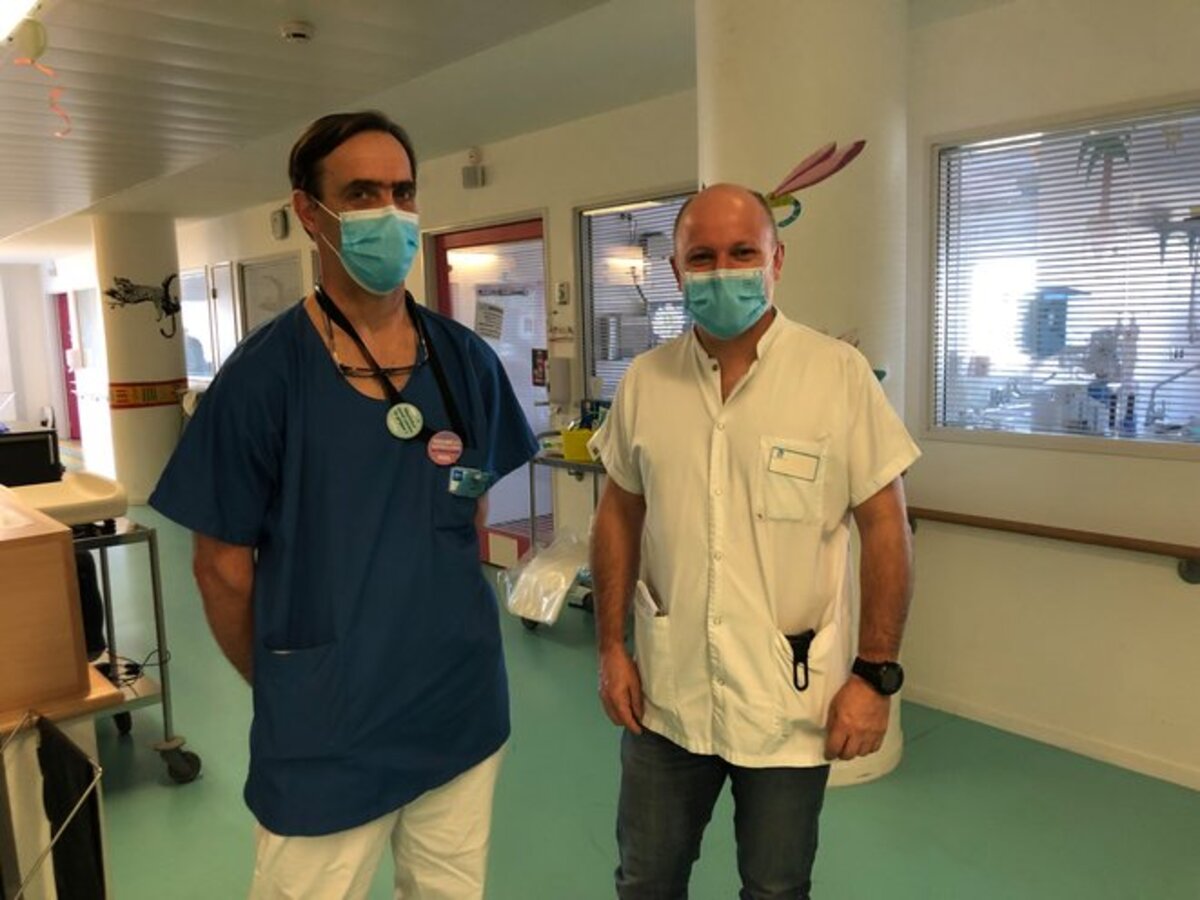
That same day, in the 23-bed paediatric intensive care unit (ICU), there were three children infected by the SARS-CoV-2 virus. “One was admitted following a serious road accident, Covid is not the cause of his hospitalisation,” explained Professor Étienne Javouhey, head of the paediatric ICU. “The second, who has been hospitalised since birth, is in intensive care due to respiratory distress. The third was hospitalised for respiratory distress that complicated a kidney disfunction.”
Enlargement : Illustration 1
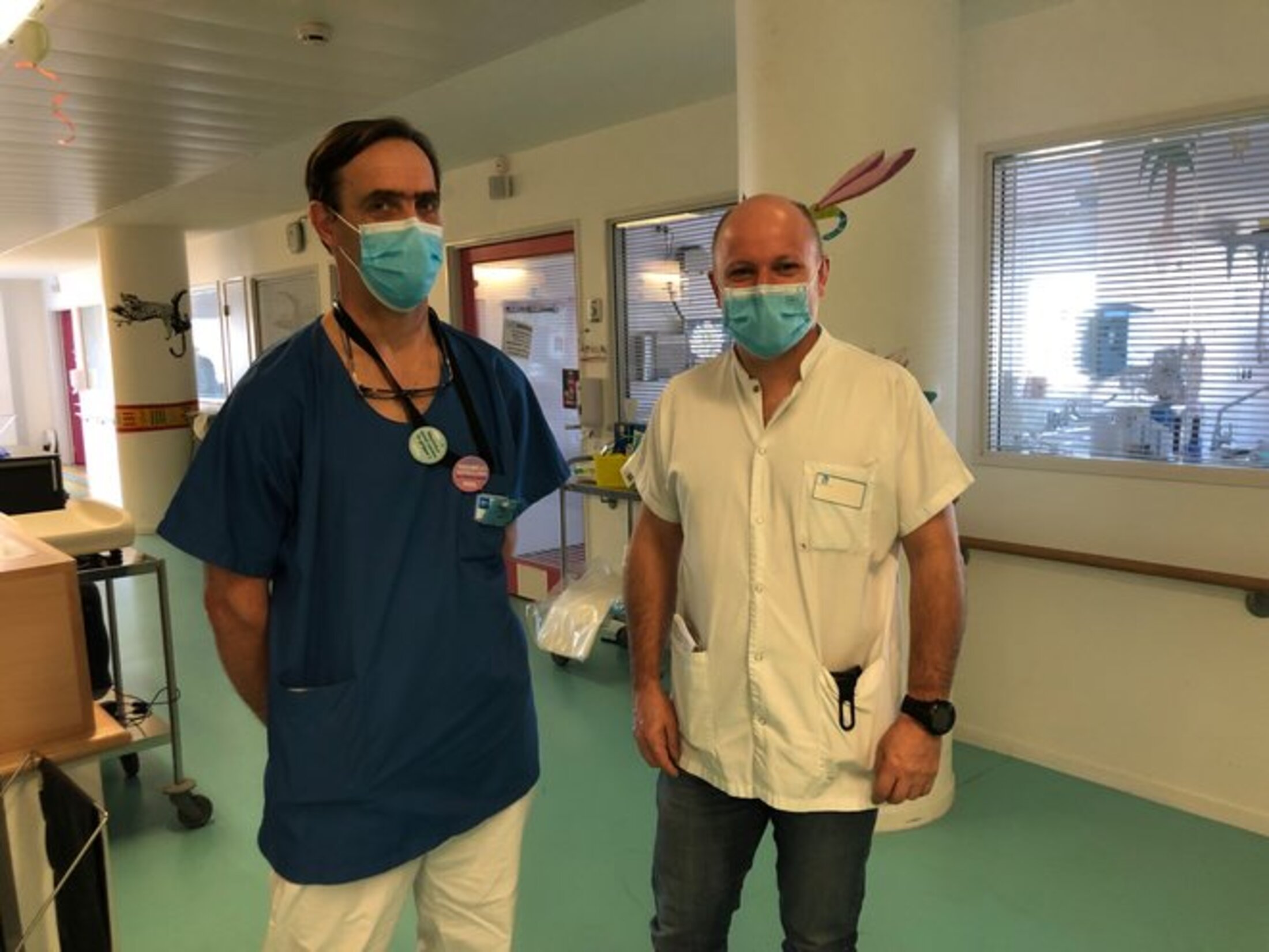
Other children suffering from less severe consequences of Covid-19 were also hospitalised in other services, bringing the total in all to 17.
For both Javouhey and Gillet, those numbers were fairly typical of their experience of the consequences of Covid-19 among children – consequences which can be difficult to identify, and which are above all serious for those in fragile health due to other, underlying illnesses. However, the inflammatory condition PIMS, which Covid provokes several weeks after infection, is most often found in children who are otherwise in good health.
“People still don’t realise what serious Covid is like for adults,” commented Coline Fleurent, a house physician who is currently working at the paediatric A&E service after attachment to the adult A&E and ICU services. “It is nothing like for children.”
But nevertheless, paediatricians are far from complacent about the effects, and potential long-term effects, Covid may have on children. In September, the 42 paediatric ICU services spread around France created their own monitoring network to share information and provide more precise data that that collected by Santé Publique France (SPF), the French health ministry agency responsible for epidemiological monitoring of the population; the SPF data includes all those hospitalised who have tested positive for the SARS-CoV-2 virus, whatever the frontline cause of their hospitalisation.
Since that monitoring network was set up, the 42 paediatric ICU services have recorded 173 hospitalisations of children suffering from what they term “acute Covid” (when the virus is the single cause of their serious condition), 163 from what is termed “chance Covid” (when the virus is not the primary cause of their hospitalisation), and 183 cases of PIMS.
“Among adults, serious Covid is very well identified, in children, that’s not the case,” said Yves Gillet. He gave the example of the two children hospitalised in his A&E service, both of whom were suffering from gastroenteritis. They had tested positive for the coronavirus, which can cause problems for the digestive system, but they had also tested positive for rotavirus, a common cause of gastroenteritis among children.
This grey area means that the number of children who have died from Covid-19 is uncertain. In the monitoring network’s records, 13 children who tested positive for the Coronavirus have died since last September, of which the paediatricians estimate eight deaths were caused directly by Covid-19. “But Covid is sometimes not the only cause of death,” said Gillet. “These are often complex clinical cases, for example an epilepsy attack associated with respiratory distress syndrome.”
Paediatricians in France place Covid rates among children into perspective with other illnesses. For example, this winter has been busy for paediatric services because of the spread of the respiratory syncytial virus (RSV) that causes bronchiolitis. Most years, just less than a third of infants under the age of two are affected by the RSV virus, which is variable in its severity, but its spread during the 2021-2022 winter has been particularly strong.
“During the 2020-2021 winter, the bronchiolitis epidemic was very weak,” said Étienne Javouhey. “That is without doubt due to lockdown. The reduction in social contact and [social] distancing worked. But it is thought that this created an immunity ‘debt’; this winter there were fewer people sensitized to this virus, notably among pregnant women who [normally] transmit antibodies to babies.”
At the height of the RSV epidemic, in early December 2021, almost 2,000 children, mostly aged under two, were hospitalised in just one week due to bronchiolitis. According to data from the Santé publique France agency, at the height of the current fifth wave of the coronavirus, in late January (and due principally to the Omicron variant), the numbers of all under 19-year-olds hospitalised for Covid-19 were also around 2,000. “But we estimate that thirty percent of [SARS-CoV-2 virus] positive cases in intensive care, [and] between forty and fifty percent in conventional hospital services, were for a different reason than Covid,” said Javouhey.
His colleague Yves Gillet said that as of mid-December, when the number of bronchiolitis cases among children began falling, the automatic testing for the SARS-CoV-2 virus among admissions to paediatric services showed increased numbers of positive results, with some children “co-infected with other viruses”.
“For certain cases of bronchiolitis, we don’t know what is the part played by this coronavirus and that played by other viruses,” he added. “But we believe that SARS-CoV-2 causes few bronchiolitis cases. For proof of this, their numbers fell as of the end of December, when the Covid epidemic exploded.”
Enlargement : Illustration 2
According to the data collected by the national monitoring network of paediatric services set up last September, Covid has little affected those who are immunosuppressed, such as children receiving treatment for cancer, or who have undergone organ transplants, but has mostly affected children with other underlying problems such as cardiac and respiratory illnesses and neurological conditions. Those suffering from sickle cell anaemia, a blood disorder that is most often inherited, are particularly vulnerable to the coronavirus (as also to other viruses) which triggers attacks of the disease.
The specificity of Covid infection among children is in its after-effects. “PIMS is a new illness,” explained Javouhey. “At the beginning, it was compared to Kawasaki disease. But it more resembles superantigen illnesses, such as the toxic shocks that follow infection from a streptococcus or staphylococcus infection. The antibodies developed by the organism following an infection could, among a small number of patients, trigger an increased inflammatory reaction. It is for this reason that PIMS comes about four or six weeks after infection. The illness appears, probably, in a concomitant manner with the production of antibodies.”
PIMS, explained Javouhey, is a systemic inflammation of all the body’s organs. “It manifests itself with a high fever, digestive problems, pain and a great fatigue linked to cardiac effects or hypotension”. He said the Lyon services were expecting an imminent increase in PIMS admissions because of the wave of the Omicron variant. “But the British, who have a few weeks advance [in experience of the spread of Omicron] have described less severe cases.”
The Santé publique France agency last month reported that between March 2nd 2020 and January 27th this year, a total of 932 cases of PIMS had been recorded around the country among under-18s. One child is known to have died from the condition, in March 2020 at the beginning of the SARS-CoV-2 epidemic, but medical staff are now confident about successfully treating it. “It is an illness that we know how to deal with, using immunoglobulin and corticoids, said Yves Gillet.
As for the effects and rates of ‘long Covid’, sometimes called post-COVID-19 syndrome, in children, he said they were still very much in the dark: “We really lack data. Parents describe a state of fatigue among children who have suffered PIMS. But that could also be a consequence of hospitalisation, notably in intensive care – fifteen to twenty percent of [ICU] patients suffer post-traumatic stress afterwards.”
An association called “Familles des enfants victimes du PIMS Covid”, created last year by parents of children who became victims of PIMS, has voiced concern over the problems of diagnosing PIMS quick enough, and about the unknown long-term effects of Covid. “It’s difficult to be certain about anything at all concerning the long-term consequences of Covid, the number of PIMS cases from Omicron, nor concerning the number of children who will develop long Covid,” said the association’s founder and president, Marie Valdès, the mother of a child who suffered PIMS.
Valdès argues that it is “premature” to make comparisons with other existing illnesses because of the lack of sufficient data on the effects of long Covid and the true number of paediatric cases of long Covid. “It is a rare but serious syndrome, which can be fatal,” she underlined. “It responds well to treatment, but the sooner the child is treated the quicker they’ll get over it. However, some children suffered from delays in being taken into care, or diagnostical errors, and today find themselves with sequels or secondary effects that persist over several months, [such as] cardiac problems, or muscular and articular pains that can prove to be handicapping.” She said the association had “massively” alerted health professionals and public opinion about the first symptoms of PIMS as far back as spring 2021.
One criticism of the paediatric profession raised by parents and other medical professionals is their lack of enthusiasm until now in encouraging the vaccination of under-12s. Around 230,000 of this age group in France, representing less than 4%, have currently been vaccinated. Interviewed by Mediapart in December, Christèle Gras-Le Guen, president of the representative body for French paediatricians, the Société française de pédiatrie (SFP), said it was waiting for “more complete data” before positioning itself on the vaccination of the very young. “If there is just one [case of] a problem with a vaccinated child, the consequences would be catastrophic,” she said.
However, in a statement issued on February 8th, the SFP recognised that there was “reassuring data” about the safety for children given the Pfizer mARN vaccine. It said that in the US, “8.6 million children aged between 5-11 have already received one dose, and 6.2 million have received two doses, without worrying indications”.
“At the beginning, we feared that the vaccine might also create PIMS,” said Javouhey. But among the 230,000 children [in France] aged between 5 and 11 who have been vaccinated, there have only been nine cases of an inflammatory syndrome as a result of the vaccination. One study shows that a child is one hundred times more likely to develop PIMS [from Covid] than a post-vaccination inflammatory syndrome.”
He regrets the low rate in France of vaccinations of children against Covid. “Even among children with chronic illnesses, vaccinations are no higher than thirty percent,” he said. “It’s not enough.”
-------------------------
- The original French version of this report can be found here.
English version by Graham Tearse