


In the run-up to this month’s reshuffle of the French government, and referring to the planned departure of Laurent Fabius as foreign minister, Ségolène Royal spoke in private of her disinterest in taking over the Quai d’Orsay, as the riverside ministry is often called, where she would be “bored stiff by ambassadors”.
But, demonstrating both her strong belief in herself and skills in ambiguity, she also put about that she was capable of any role. In the end, it was Jean-Marc Ayrault, who served as President Hollande’s first prime minister until 2014, who succeeded Fabius, while Royal kept her job as environment and energy minister, the third most powerful ministry in the French government.
Until the reshuffle announcement on February 11th, the ambassadors had been kept sweating. “Her at the Quai?” asked one French diplomat, contacted by Mediapart about Royal’s potential appointment as foreign minister. “No, no, it’s an accident guaranteed.”
In the end the reshuffle saw 63-year-old Royal, whose political career spans 35 years, emerge in a stronger position. While she was not promoted, her ministry has gained muscle, notably with the added role of managing “international relations on climate issues”.
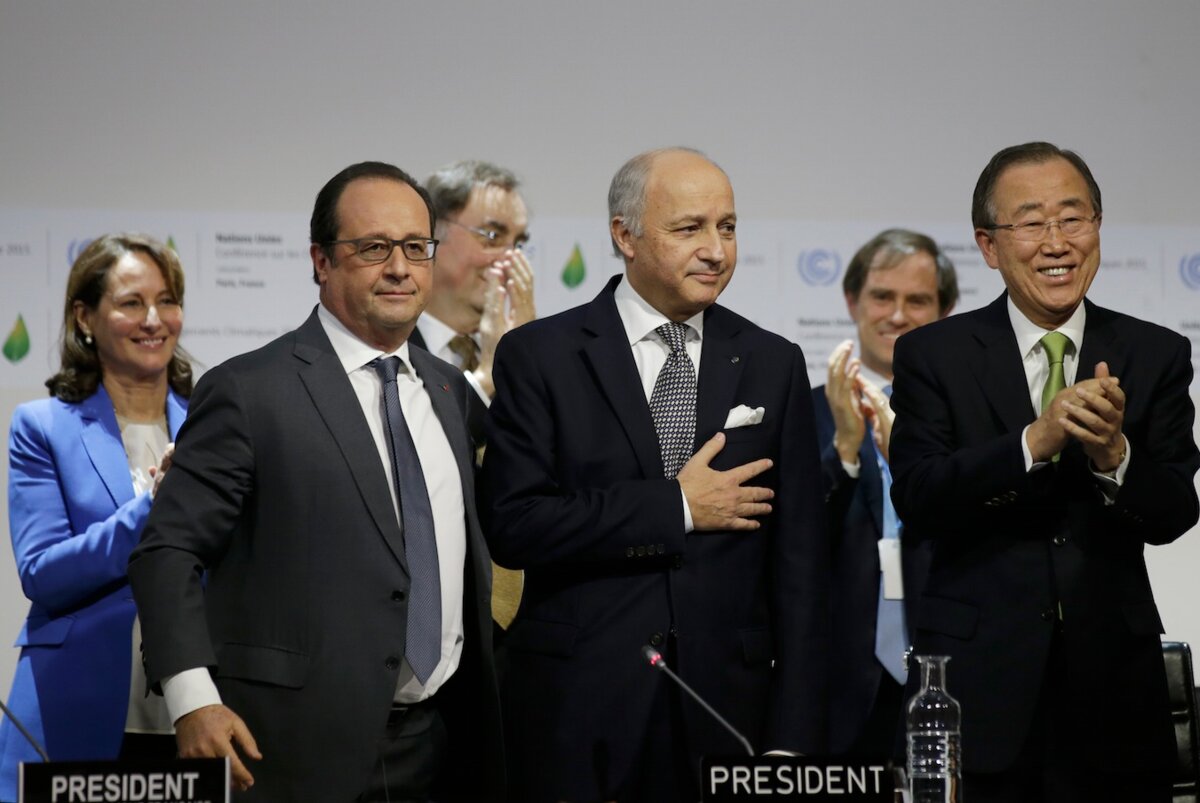
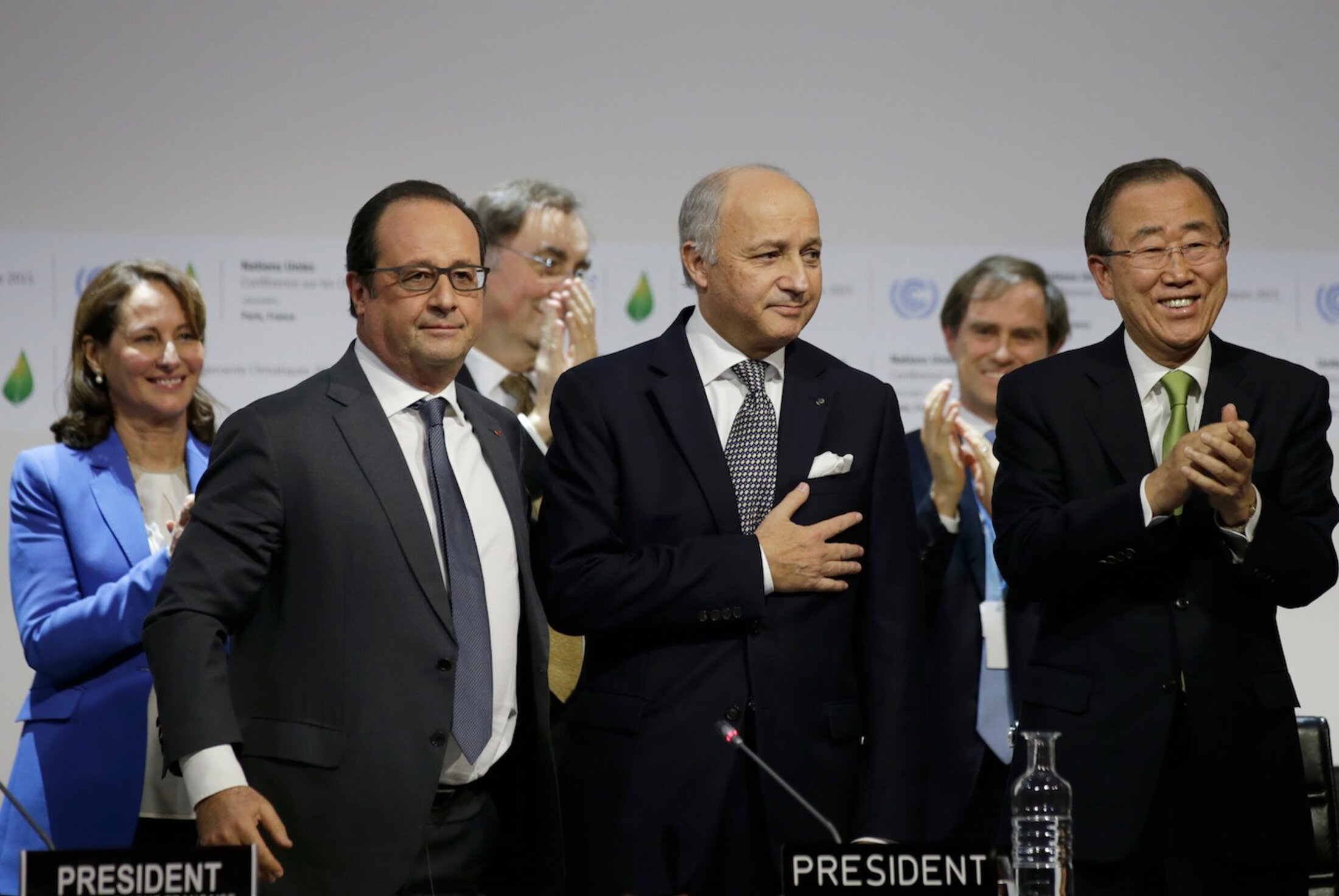
Royal has taken over from Fabius - who chaired the UN ‘COP 21’ conference on climate change held in Paris late last year - the presidency of the after-conference COP 21 programme, which will see her working on the implementation of the deals agreed. Fabius, who now becomes president of France’s Constitutional Council, had at first wanted to keep the role.
Meanwhile, a secretary of state for biodiversity - former Green party MP Barbara Pompili - has been added to Royal’s ministry (while she keeps a secretary of state for transport, Alain Vidalies, who has worked under her for the past two years).
Enlargement : Illustration 1
Although Socialist Party heavyweights hardly appreciate her – she is even disliked by some – Royal, who stood as socialist presidential candidate in 2007, has bolstered her standing in Hollande's front line. She was chosen for her "solidity", in the words of the president, who is her former partner and father of their four children. According to a friend who ran into her a short time ago, she is "radiant" and enjoying a small measure of revenge.
She fought for months to be co-president of COP 21, the United Nations Climate Summit held in Paris last December. Hollande picked then foreign minister Laurent Fabius, who had stood against Royal in the Socialist Party primary contest in 2006. Fabius has always hated her and the feeling is mutual. The months leading up to COP 21 were full of mutual machinations and minor humiliations.
At the COP General Secretariat, which was in charge of preparing this major diplomatic gathering on climate change, Royal's and Fabius's teams spied on each other, argued about documents at the photocopying machine and fought battles in vain over a few words in a press pack. In early December, when the entire planet was negotiating at Le Bourget and Fabius was being lauded to the skies, Royal, who was in charge of mobilising civil society, did everything to be in the limelight, even sleeping over at the conference and exhibition centre north of Paris.
Her revenge also consists of becoming indispensable. Hollande kept her at a distance from the seat of power after he was elected, under pressure from the veto of his former mistress, Valérie Trierweiler, and from the artillery of his historic supporters. Royal joined the government in 2014, when Manuel Valls was appointed prime minister.
Since then she and the president are reconciled. They see each other, consult with each other and talk via text messages. In line with protocol for high-ranking ministers, Hollande has nominated Royal to represent him several times – at the funeral in Jerusalem of victims of the terrorist attack on a Paris kosher supermarket last January, in Algeria, in Cuba, with the Pope or during the state visit of the king and queen of Spain.
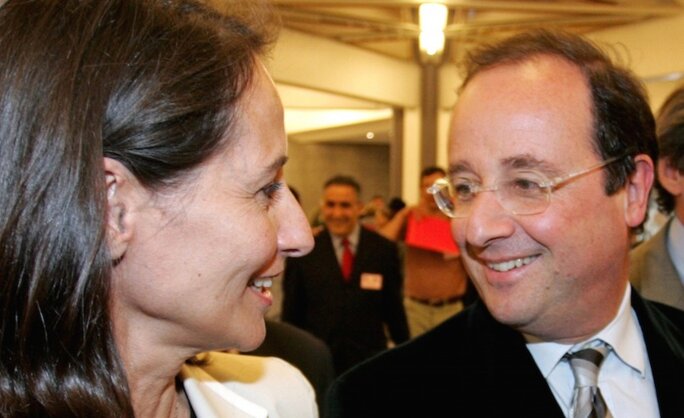
Photographers have immortalised the Royal-Hollande duo several times on the steps of official buildings – almost looking like a couple. Royal finds it amusing. "The king and queen, the French people love that," says one of her inner circle. Nor did Royal take exception to being described as "vice-president" by weekly magazine L'Obs, a sign among others, in her eyes, of her re-gained status. Some close associates have nicknamed her "The Queen Mother," although they do not dare say it to her face.
Royal believes – knows – that she is necessary. She has said as much, proudly: "If I wanted to go, I would be asked to stay".
For Hollande, Royal brings several advantages. To start with, her popularity, which is useful for a government that already seems to be in its dying days a full year before the presidential election. A former advisor recounts with amusement the time when, during a meeting on the ill-fated eco-tax at the ministry, angry truck drivers took out their mobile phones to immortalise their encounter with Royal. She is recognised in North Africa and sub-Saharan Africa and sometimes welcomed as "Madame Hollande". A Brussels diplomat jokes, "At the European Council, it's as if Sharon Stone had come when she arrives."
Besides this, Royal, who has been a minister several times since 1992 and has also presided the Poitou-Charentes region in western France, also has the plus of never contesting the party line, even to the point of accepting the reduction of her ministerial budget in the name of budget cuts. Delphine Batho, ecology minister at the beginning of Hollande's mandate who was close to Royal, did not accept this and had to resign in 2013.
In private, Royal is sceptical about the power of technocrats and the government's turn towards some neoliberal ideology. "She thinks [economy minister Emmanuel] Macron is politically stupid when he questions the 35 hours [working week] or when he attacks Air France employees," confides a person who was a pillar of her presidential campaign in 2007.
According to Mickaël Vallet, the Socialist mayor of Marennes in Charentes-Maritime, in Royal's political fiefdom, she "retains a concern for the state and the lower classes, which is not so common in the government and the political class." Vallet is one of those who continue to drive what is left of a "Royalist" current in the party. However, Royal never expresses her divergences in public. "I stay in my lane," she often says.
As for the government's security policy, which is increasingly assertive since the terrorist attacks of January 2015, Royal, who advocates a 'just order', has no hesitation. This is someone who proposed militarised imprisonment for delinquent minors and sought to rehabilitate the French flag in her 2007 campaign. Now she is happy to see Socialist Party leaders exalting the French republic and the nation. Just before Christmas, when Hollande seemed to waver over possibly withdrawing a provision to strip terrorists with dual nationality of their French citizenship, causing a real ideological split in the party, Royal urged him to stand firm.
'You offer her three solutions, she takes the fourth'
"The debate within the government is very clear. But I will not go round criticising the prime minister or a minister. When I have something to say, I say it to them," Royal told Mediapart last October. However, there have been quite a few notable exceptions to her rule. She regularly makes sure that certain clashes are made public.
"There are clashes every day," she says. With agriculture minister Stéphane Le Foll over pesticides, with interior minister Bernard Cazeneuve over a decree reforming the Environmental Authority, but above all, with the prime minister. And she enjoys those most because she has nothing to lose.
Enlargement : Illustration 2
She and Valls go back a long way. He supported her in her 2007 presidential campaign, but then tried, in vain, to get the party behind him. Ever since, Royal has never lost an opportunity to challenge him.
In the break between last Christmas and New Year she accused him of having directly ordered the prefect of the Bouches-du-Rhône département around Marseille to renew permission for an aluminium refiner, Alteo, to discharge toxic red bauxite residue into the Mediterranean Sea near the Calanques natural reserve in southern France [1]. In a television interview in late January, Royal called it a "very bad decision" and promised that the affair was not over. "This is the economy-ecology combat," she said.
In another controversial case, she responded to Valls making the building of a second Nantes airport at Notre-Dame-des-Landes a symbol of the government's authority with a refusal to countenance evacuation of the occupied site by force. Hollande announced a local referendum on the issue before October. Even though the move came from the presidency, as an advocate of participative democracy – her mantra in 2007 – Royal can interpret that as a victory, even if the referendum risks being no more than a smokescreen.
While Valls refused to condemn the law enforcement authorities at Sivens, where Rémi Fraisse, a young ecology militant, was killed by a grenade in 2014 during a protest against the planned dam there, Royal boasted that she had managed to calm the situation. "I got people to talk to each other again, I brought them back to the table, I sent experts there, it eased the tension," she says.
Valls has demanded of Hollande several times that Royal respect his authority. "Tell her, " Hollande answers. Translated: your problem. After all, Royal is also useful for keeping this prime minister at bay. Valls is sometimes seen as dangerous by Royal's inner circle, and Hollande increasingly doubts his loyalty as the presidential election approaches.
Royal guards her power jealously. She is a graduate of ENA, the elite school that trains France's top civil servants, yet mistrusts the civil service. And she manages her ministry like her own private turf. She wants to be seen as a fighter for ecology, but a very personal brand of it, one that is "of the people" and which "speaks to people".
Over the past two years, this maverick minister, who has spoken out against initiation rituals and pornography, has put a lot of effort into her own ecological battles, launching concrete campaigns with a strong media potential – and variable success. She has campaigned against palm oil in Nutella hazelnut spread, the sale of pesticides in gardening shops, extending tennis ground Roland-Garros, restricting circulation of vehicles at times of heavy air pollution and wood fires in Paris. On such subjects she is on the opposite side to Socialist mayor of Paris Anne Hildago, with whom relations are glacial. Royal also champions the fight against waste and plastic bags, and recently, the plethora of advertising panels at the entry to towns.
One Sunday she demanded that motorways be toll-free at the weekend – "because there was hardly any news", grumbles a person who knows the ministry well. One day she protested against the annual rise in train ticket prices that she herself had previously approved. Another day, in a television interview, she pre-empted an announcement by power company Engie that it was to stop building coal-fired power stations.
"She proceeds task by task," said Denez L'Hostis, president of the influential association France Nature Environnement (FNE). "If she can pull something off, she goes for it." And generally gives advance warning to no one.
One of few Socialist senators who claim allegiance to her, Sébastien Denaja, explained: "Ségolène Royal considers that ecology is a sovereign subject, central and with a matrix. At the same time, she is from the provinces, she is not a Parisian. She always has the reflex to put herself in the place of the suburbanite who struggles." Another supporter, deputy and former minister Guillaume Garot, says Royal "is interested in subjects that politicians leave to one side or scorn."
Vallet, the mayor of Marennes, concedes: “Yes, she has bees in her bonnet, but it is to bring everyone on board. She is interested in things that make sense to people and it’s quite unstoppable. Ségolène Royal is like that. She waves a banner, she makes a fuss and everyone comes along.”
At her ministry, powers are centralized and Royal looks after everything, “from the canteen menus to the decorations” in the words of one of her staff. “She’s the boss, things have to work,” said a person close to Royal. She is keen to practice the politics she preaches (politics through proof” is one of her mantras), and has had an ‘apiscope’ set up in her offices, is concerned when lights are left on in empty offices, and worries about the health of the animals present in the ministry garden. Visitors present at a meeting with the minister last spring recalled how she interrupted the talks to look after sheep in the garden which were bleating because they were hungry.
Royal acts as her own head of communications. She re-reads statements to be issued, takes the decision on graphics used in press packs - preferably flashy ones – and will call last-minute press conferences. Amid the preparations for the COP 21, she had huge badges of her own design especially made to place upon personalities attending the talks, like Sean Penn. On one occasion, during a mini-summit on the climate talks, Royal chased after German Chancelor Angela Merkel in order to have a photo taken with her, causing a degree of surprise among the German delegation.
On a day-to-day level, working with Royal can be anything but ordinary, and often difficult. “You offer her three solutions, she generally chooses the fourth,” said one former member of her staff. “You mustn’t get annoyed.” There are sometimes casualties. “She can be very harsh, humiliating, violent,” commented a friend. “She’s paranoid and doesn’t believe anyone apart from Jean-Louis Bianco,” said another of her entourage, referring to the veteran socialist, former presidential chief of staff and minister under François Mitterrand, who became Royal’s presidential election campaign director in her failed bid in 2007 and who continues to advise her (on an unpaid basis). Her ministerial cabinet staff has seen a high turnover over the past two years, with some leaving in anger, disappointment and even in pieces. “There’s movement but those close to her are still there,” said one of her loyal allies. Sources say that when the question is put to Royal, she argues sarcastically that if people find their work tiring “they should go and rest”.
At her ministry, powers are centralized and Royal looks after everything, “from the canteen menus to the decorations” in the words of one of her staff. “She’s the boss, things have to work,” said a person close to Royal. She is keen to practice the politics she preaches (politics through proof” is one of her mantras), and has had an ‘apiscope’ set up in her offices, is concerned when lights are left on in empty offices, and worries about the health of the animals present in the ministry garden. Visitors present at a meeting with the minister last spring recalled how she interrupted the talks to look after sheep in the garden which were bleating because they were hungry.
Royal acts as her own head of communications. She re-reads statements to be issued, takes the decision on graphics used in press packs - preferably flashy ones – and will call last-minute press conferences. Amid the preparations for the COP 21, she had huge badges of her own design especially made to place upon personalities attending the talks, like Sean Penn. On one occasion, during a mini-summit on the climate talks, Royal chased after German Chancelor Angela Merkel in order to have a photo taken with her, causing a degree of surprise among the German delegation.
On a day-to-day level, working with Royal can be quite excentric and often difficult. “You offer her three solutions, she generally chooses the fourth,” said one former member of her staff. “You mustn’t get annoyed.” There are sometimes casualties. “She can be very harsh, humiliating, violent,” commented a friend. “She’s paranoid and doesn’t believe anyone apart from Jean-Louis Bianco,” said another of her entourage, referring to the veteran socialist, former presidential chief of staff and minister under François Mitterrand, who became Royal’s presidential election campaign director in her failed bid in 2007 and who continues to advise her (on an unpaid basis). Her ministerial cabinet staff has seen a high turnover over the past two years, with some leaving in anger, disappointment and even in pieces. “There’s movement but those close to her are still there,” said one of her loyal allies. Sources say that when the question is put to Royal, she argues sarcastically that if people find their work tiring “they should go and rest”.
----------
1: The environment page on Alteo’s website claims the company is reducing its environmental footprint with projects like that to "end bauxite residue disposal into the sea by the end of 2015".
'Nothing will be possible without her'
Enlargement : Illustration 3
Her ministerial post came close, in 2014, to being handed to Green EELV party heavyweight Cécile Duflot, and more recently to environmental campaigner Nicolas Hulot, but neither wanted the job. So for two years she has politically occupied the field of ecology, or at least “embodying” it to borrow the phrase of former junior minister Frédéric Cuvillier. She who already headed the ministry between 1992 and 1993, when it was a minor post, has retaken on the role with eagerness and a knack for communications coups.
But if one takes a closer look, her track record is a mixed one. She is the minister who scrapped the eco-tax project to levy extra finances from heavy trucks to fund improvements in the transport network, one of the major embarrassments of the term of François Hollande’s first prime minister (and now foreign minister) Jean-Marc Ayrault. Royal dumped the project with no regrets, calling it, to the disappointment of the Greens, a “punitive ecological tax”. She has for long held an ambiguous position regarding the closure of France’s oldest nuclear power plant at Fessenheim, in the east of the country, again bringing her into conflict with the Greens who loudly denounce the potential dangers of the reactors which entered service in 1977.
She has failed in her attempt, in opposition to the prime minister, to have the lucrative contracts signed between the state and the country’s private motorway operators renegotiated. Meanwhile, following the scandal last year over Volkswagen’s rigging of diesel engine tests to hide true emission figures, she has begun to target the problem of diesel emissions, creating a commission to study the emissions claims of French vehicle manufacturers.
The minister is the prisoner of a government schema whereby environmental issues, apart from the COP 21, are very secondary, said Denez L'Hostis, president of the high-profile France Nature Environnement federation of environmental associations. “There is progress but they don’t allow for a plan of global vision, apart perhaps from that of road traffic everywhere. There’s still a window left before the end of the government’s five-year term to create more environmental democracy.”
David Cormand, the newly-elected national secretary of the Green EELV party, was more scathing still. “At heart, it’s ecology that mustn’t bother anyone, including the lobbyists,” he said. “It’s all the more annoying because her personality would have allowed to shake things up. It’s a missed appointment. Her time at the ministry could have left its mark.
Royal herself does not deny the obstacles encountered, notably on energy issues. “To move from one system to another, to succeed in getting France to pass from carbon energy to de-carboned energy is difficult,” she said, while adding that the Greens would not have done any better if one was in her post. “An ecologist could never have drawn up the law on energy transition. There had to be compromises made on nuclear issues – they wouldn’t have been able, it wasn’t possible for them. But their more radical line allowed me to get voted through [parliament] lots of amendments from the ecologists [to the law], including [those that went] against my own ministry.
Royal is very proud of her energy transition law, which was supported by the Greens and centre-right and which was adopted in August 2015. It allows for a 40% reduction (in comparison with 1990) of greenhouse gases produced by France by 2030 and the reduction in nuclear-sourced electricity from the current 75% to 50% by 2025, the latter being an election campaign pledge by François Hollande. To impose her will, she said she would turn up at the inter-ministerial meetings to discuss the bill of law that were normally attended only by minister’s senior advisors – to their “broad stupefaction” she added. “I’m in a field where one must be radical,” she said. “If you’re in the half-way, nothing happens. Especially in a ministry which, with weak ministers, has had the habit of losing its trade-offs.” The contents of the law, prepared in consultation with the Greens, are recognised as representing significant progress with regard to environmental issues, but the publication of the decrees of application of the law’s articles is taking time. Royal’s staff insist that these are underway.
After losing the 2007 presidential election, and her disastrous score (6.9%) in the 2011 socialist primaries, and after losing her election bid to become a Member of Parliament (MP) in the south-west town of La Rochelle in 2012 (which she lost to dissident socialist candidate Olivier Falorni, who was supported by Hollande’s then-partner Valérie Trierweiler), Royal is, according to sources close to her, liberated of any further presidential ambitions. Indeed, she no longer carries any weight in the Socialist Party, where she counts on a few allies to maintain a small network of support.
For Hollande, whose presidential ambitions were blocked by Royal in 2006, when she resoundingly won the socialist primaries (60.65% share of the vote, while second-placed Dominique Strauss-Kahn garnered just 20.69%), she no longer represents a danger. “She is regarded [by some in the public eye] as being credible and sincere which she will use in [the presidential elections in] 2017 for the benefit of the left-wing candidate, and there is a strong chance that that will be François Hollande,” said a source close to Royal.
If he does stand for re-election, Hollande, who has little left up his sleeve to win back the leftist electorate without which he runs a strong chance of being beaten in the first of the two rounds, can hope to take advantage of her popularity. “If there is one person connected with society today, it’s her,” Kamel Chibli, a senior Socialist Party official and longterm supporter of Royal’s.
"She’s a popular personality and, I insist, popular on the Left," said another of her close guard, former minister and socialist MP, Guillaume Garot. “Nothing will be possible without her.”
------------------------
- The French version of this artcile can be found here.
English version by Graham Tearse and Sue Landau