


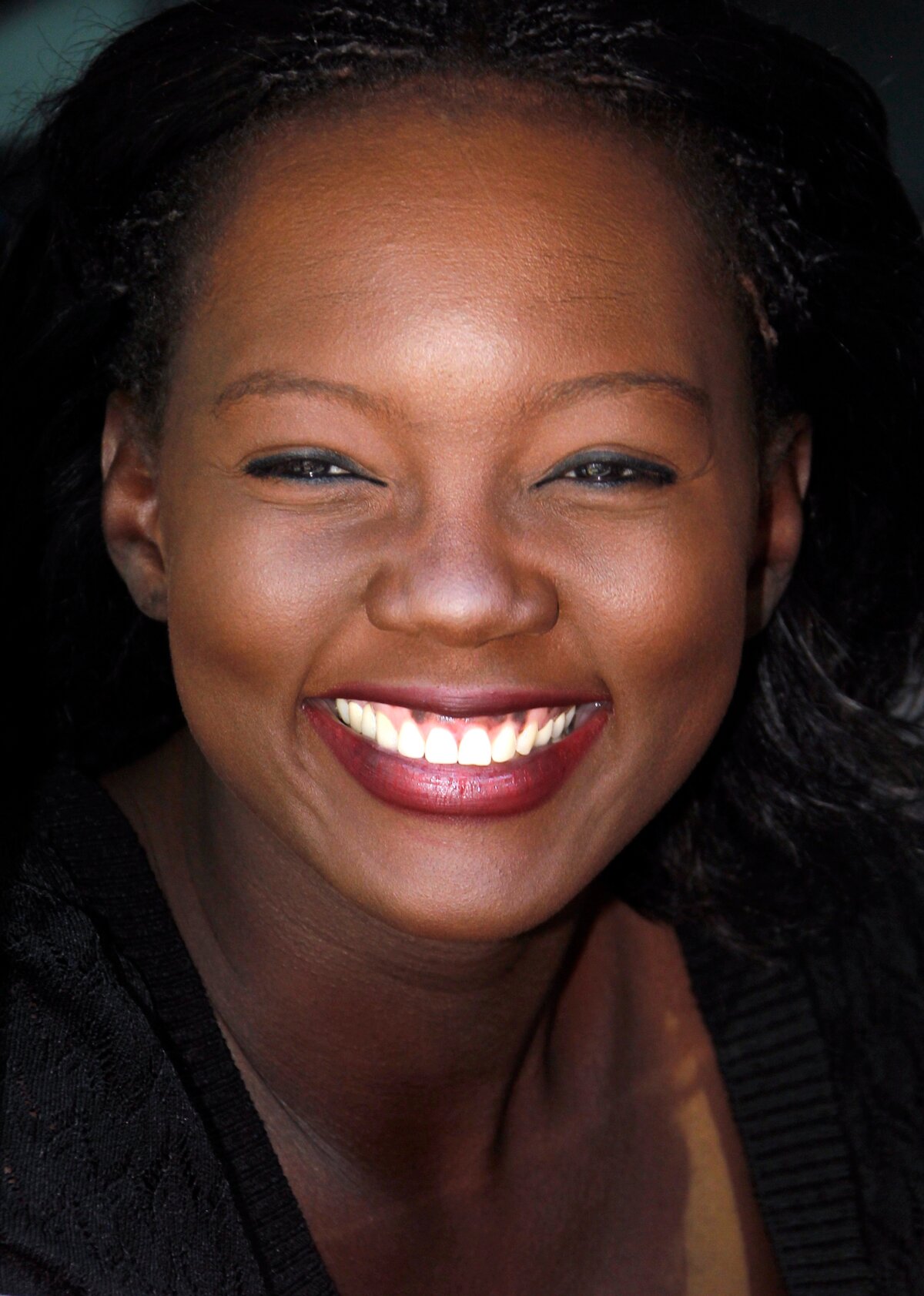
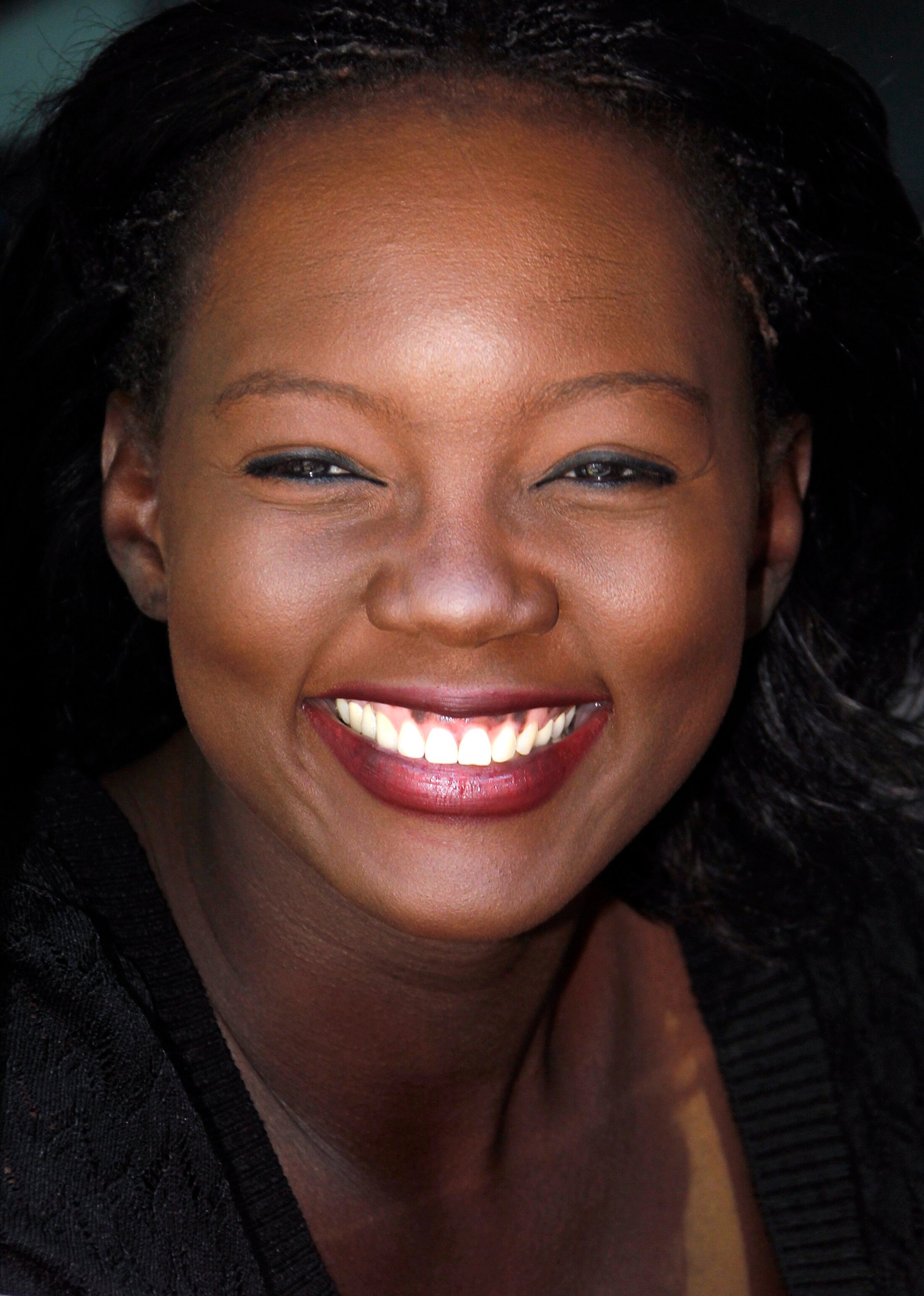
After her entry into President Nicolas Sarkozy's first government in 2007 at the age of 30, plucked from relatively nowhere, Senegalese-born Rama Yade rose swiftly, according to public opinion surveys, to become one of France's most popular political figures.
Previously a ranking militant in the president's UMP1 party, she was initially made state secretary for human rights, one of several high-profile government members from a non-white immigrant background.
She became an outspoken junior minister, beginning with her criticism of a December 2007 official visit to France by Libyan leader Colonel Muammar Gaddafi, and attracted international media attention.
In 2009 she was appointed state secretary for sport, and remained in the position until the November reshuffle. Her very public policy disagreements and refusal to lead a UMP European election list contributed to her falling out with Sarkozy, and the axe finally fell with the reshuffle in November 2010.
Following the sacking, she slammed the door on the UMP to join the centre-Right Radical Party, led by Jean-Louis Borloo, who also lost his post in the reshuffle as energy and transport minister. Borloo's presidential ambitions are arguably boosted by Yade's undoubted popularity among the French public.
But just as this loose cannon appeared loading up, in December came the surprising news that she had accepted Sarkozy's offer to appoint her as France's permanent ambassador to the Paris-based United Nations Educational, Scientific and Cultural Organization, UNESCO. Mediapart's Michaël Hajdenberg interviewed her shortly after the announcement, and suggested to her that the appointment carries more than a whiff of the gravy train designed to muzzle a rebellious protégé.
-------------------------
The unemployment rate among the under-35s is apparently something that preoccupies President Nicolas Sarkozy. For shortly after firing Rama Yade from her job as Secretary of State for Sport during the November government reshuffle, he offered her the job of French ambassador to UNESCO. Yade, who turned 34 this month, was quick to accept.
Contacted by Mediapart, she expressed astonishment at our astonishment over the event. "I am not initiating anything [new]", she said. "I'm not taking the place of an ambassador. Catherine Colonna, who preceded me in the post, had herself been a minister."
Indeed, among unlikely personalities to have been given the job in the past, Rama Yade could have mentioned one or two others: the journalist Jacqueline Baudrier in 1981, the lawyer Gisèle Halimi in 1985, the journalist turned media manager Hervé Bourges in 1993, the Gaullist politician Françoise de Panafieu in 1996 and Jean Musitelli, former spokesman for president François Mitterrand in 1997.
It is not as if there is a shortage of diplomats to fill such a post. According to France's Court of Accounts, the national audit committee, in 2006 there were 127 French diplomats (representing one in four of all diplomatic staff) qualified to occupy an ambassadorial post but who were employed in lesser positions.
MP François Hollande, the former French Socialist Party First Secretary and a hopeful to become its next presidential candidate, told French radio RTL that he was shocked at Yade's appointment. "The use of the functions of state to re-position a jobless minister or former ministers is anything but what demands an impartial, irreproachable [French] Republic," he said. He was referring to the irreproachable governance promised by Nicolas Sarkozy during his 2007 presidential election campaign.
"It's not me that François Hollande was criticizing, but the president," Yade told Mediapart. "Me, I asked for nothing. I put in for nothing."
"When I became Secretary of State for Human Rights at the age of 30, that too gave rise to comments. And at UNESCO I will be treating subject themes I know well, education, culture, international affairs."
-------------------------
1: Union pour un Mouvement Populaire (Union for a Popular Movement).
She 'thinks' it is a full time job
Enlargement : Illustration 1
She does not, however, know precisely what she will be engaged in. "I've just taken up my function. There's nothing mysterious, but it's like it is when one arrives at the head of a ministry. You don't call a press conference the first day to announce what you will be going to do."
Yade suggested a review of all this in one month's time, after she has received her instructions.
At UNESCO, meanwhile, we were told that she will be taking up her position during the course of January, that she will be responsible for preparing the organisation's two-yearly general conference next autumn, and that her role will involve keeping the French government informed of UNESCO's projects. She will also be involved in promoting French projects within the organisation, and one can only wonder what the next thrilling endeavour will be, now that France this year obtained the classification of its gastronomy and the port city of Le Havre as part of UNESCO's world heritage list.
Meanwhile, Yade, who continues to figure at the top of opinion polls of France's favourite public personalities, was above all keen to dismiss the controversy over her appointment. She "thinks" it is a full-time job, but suggests we ask her predecessor Catherine Colonna. She is offended at the suggestion that the job is a comfy perk. "I would earn a better living if I had continued my career as administration manager with the Senate," she argued. But at the same time, she said she does not know how much she will earn at UNESCO. "I didn't ask," she replied. All the same, it would be difficult to imagine that such a question would shock President Nicolas Sarkozy.
The French foreign ministry told Mediapart that, given Yade had not previously worked within the diplomatic corps, and therefore held no seniority, her salary would be broadly that of any ambassador of similar rank. As a comparison, a French diplomat nearing the end of his career can expect to earn about 8,000 euros per month.
Yade will be carrying out her diplomatic functions while remaining an opposition councillor in the Paris suburb of Colombes, and a regional councillor for the Greater Paris Region (Ile-de-France).
"I had already signed up for a job in the private sector when this proposition was made to me," Rade said. "I would have been earning a very good living. You don't work in politics for money. In Colombes I spend my days travelling the streets, but I earn 300 euros per month as an opposition party councillor. But what would you have said if I had refused the proposition? You'd have asked who does she take herself for?"
That is what she imagines. Just as she also imagines pursuing her political career. Just before Sarkozy offered her the job at UNESCO, she walked out of the president's ruling UMP party to join Jean Louis Borloo's centre-Right Radical Party (Parti Radical). She denied that she had previously asked UMP general secretary Jean-François Copé to give her the job of deputy leader. She said she does not interpret the president's offer of ambassadorial post as a means of silencing public opposition from her. "I asked him if the post was compatible with a political commitment, he told me yes. There is therefore no ambiguity," she said.
According to her, there is also no ambiguity in being simultaneously a municipal councilor, a regional councilor, someone who assumes a political label, and who holds a post officially representing France. "It is not like being an ambassador in a foreign country [...] I will be occupied with international affairs at UNESCO, and with France in my political activity."
-------------------------