


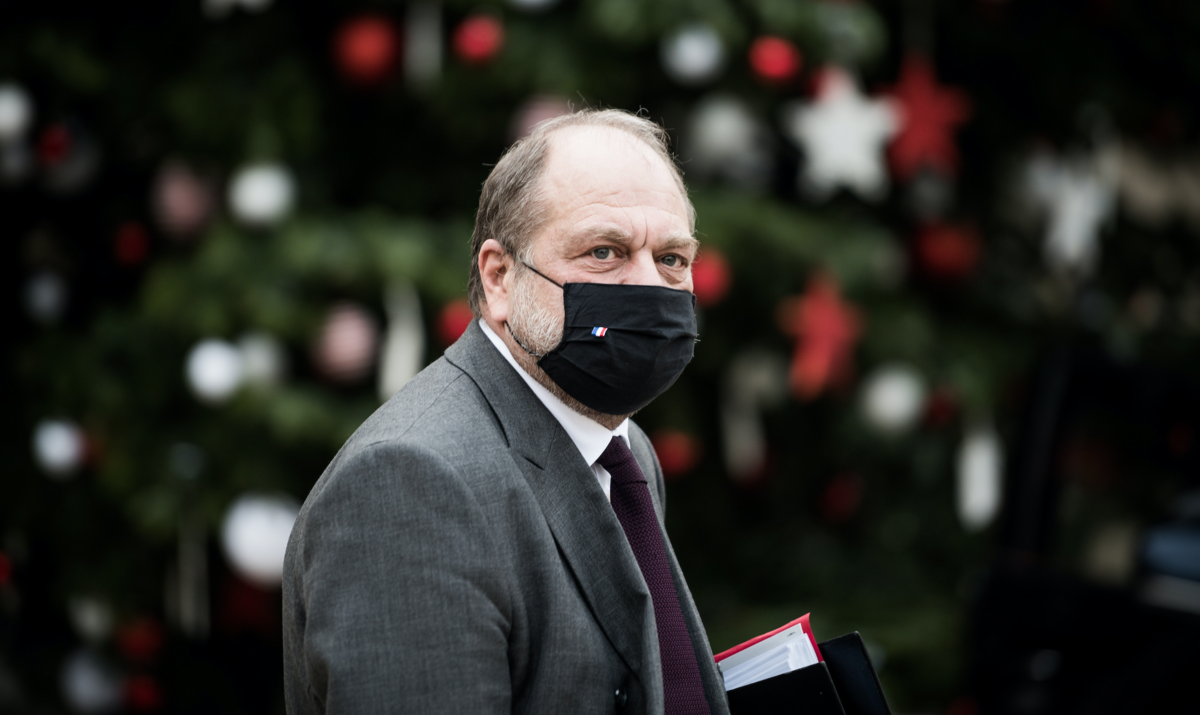
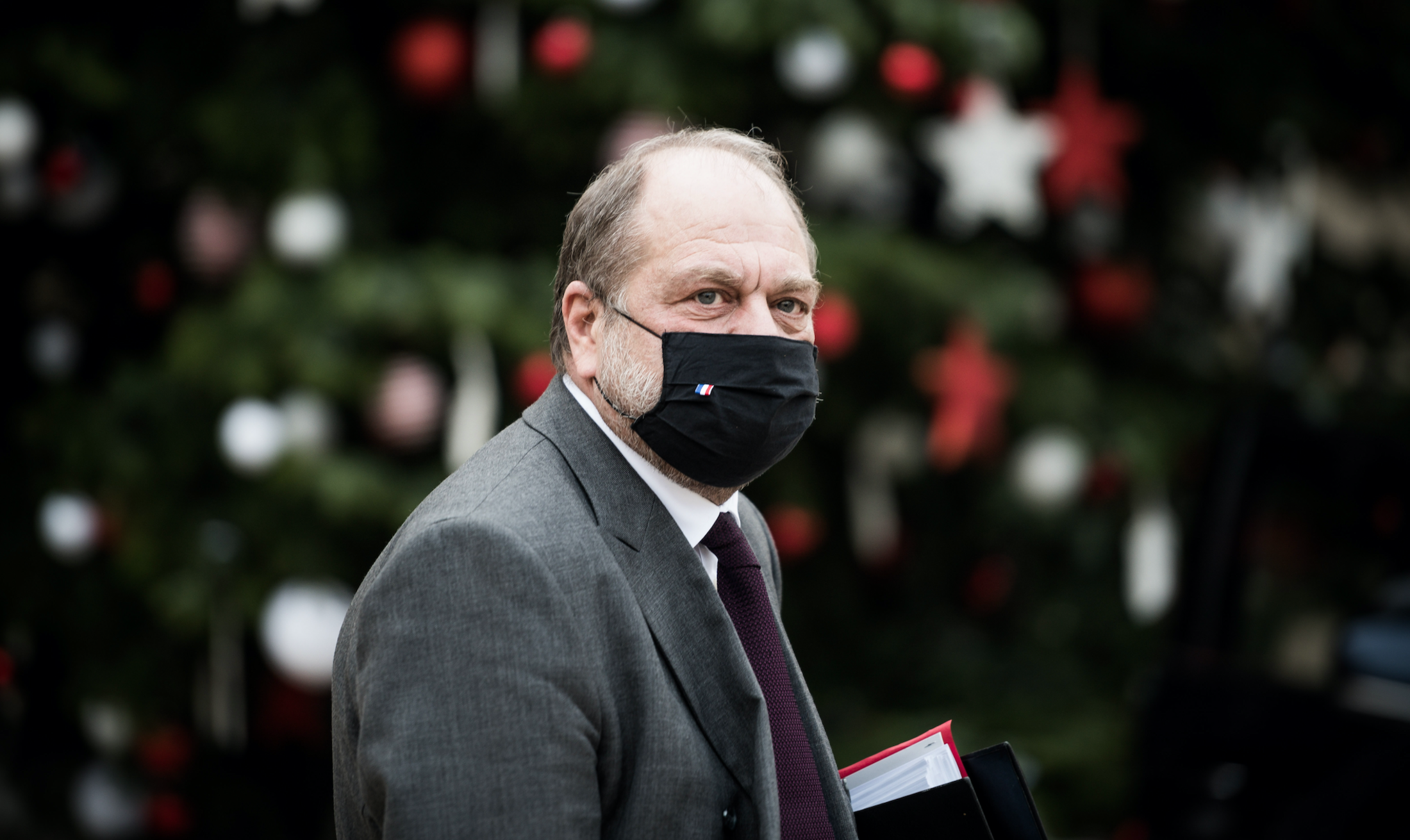
A planned reform by France's justice minister Éric Dupond-Moretti to allow in-house or company legal staff to acquire a new hybrid status of “company lawyer” is causing controversy in the judicial world.
Crucially, these corporate lawyers would enjoy the same form of “legal privilege” or confidentiality with their employer as their counterparts in private practice currently have with their clients.
Supporters of the plan, which would bring France in line with many other countries, say it would help protect large international French firms from the clutches of the aggressive American justice system.
But its opponents, including France's top financial crimes prosecutor, fear the reform would create a further obstacle to fighting corruption in the corporate world.
It was back in November that Éric Dupond-Moretti first proposed a pilot scheme that would create a new status for legal staff in companies. It combines the existing professions of independent lawyer and in-house legal staff to create a new hybrid status of company lawyer, who would be employed directly by a firm.
The two professions are already close in France; many in-house legal service staff at French companies have worked as independent lawyers in the past. But unlike the current in-house lawyer, the new status of “company lawyer” would be granted “legal privilege” in their work in the company. This lawyer-client confidentiality could, for example, protect their legal advice from being scrutinised by tax officials or officials from competition authorities.
Though controversial, the idea is not a new one. In 2009 senior French lawyer Jean-Michel Darrois wrote a report – in which Emmanuel Macron and current Member of Parliament Laetitia Avia were involved - that proposed a new status for in-house lawyers who would get legal privilege in their dealings with their employer. In 2014 the idea was included in the intial draft of the so-called Macron law aimed at boosting competition in the economy; Macron was economy minister at the time. But the measure was dropped from the final version of the legislation that was passed.
Enlargement : Illustration 1
In the middle of 2019 the idea was revived, this time with a new argument; that creating a new status of company lawyer whose advice was protected by legal privilege would help protect France's biggest companies from the clutches of the American justice system. That was the main proposal of a report produced by Raphaël Gauvain, a lawyer and, like Laetitia Avia, an MP for the ruling La République en Marche party (LREM) into how to protect French businesses from foreign laws.
This followed a string of cases in the mid-2010s in which French groups were subject to legal proceedings from the American justice system and ended up paying huge fines. They included: oil company Total (398 million dollars in fines), rolling stock manufacturer Alstom (772 million), Crédit Agricole bank (787 million) and another bank BNP Paribas (8.9 billion). French companies, who are more used to the French justice system – in which the fines tend to be inversely proportionate to the length of the investigations - were discovering the formidable effectiveness of the American justice system.
Raphaël Gauvain said that it was clear from drawing up the report, which took the views of numerous French and foreign law firms, that the “first and main weakness of French businesses faced with extraterritorial proceedings resides in the absence of the protection of confidentiality in the legal advice of the company's legal staff”. The consequence, he said was that while “in his criminal investigations into an American, English, Japanese company, an American prosecutor can neither ask for nor use the legal advice exchanged in this company” they “could do so in their criminal investigations into a French company”.
Allowing legal advice given inside companies to be protected by privilege would therefore stop this advice from being seized by prosecutors. This would also help protect French companies' commercial secrets; the American justice system has been suspected of deliberating targeting certain strategic businesses.
Marc Mossé, president of the company lawyers' association the Association Française des Juristes d’Entreprise, said that the aim is to “put French businesses on an equal footing with international competitors”. He added: “The daily working of a legal department presupposes that you can write things for the operational side which isn't then used against the company.”
Florence G'Sell, a professor of law at the University of Lorraine in north-east France, said there was a “problem in the position of French in-house lawyers in relation to their foreign counterparts, who benefit from the protection afforded by 'legal privilege'. The French in-house lawyer is the one who carries the risk.” Several people to whom Mediapart spoke highlighted the issue of legal departments that operate partly abroad.
But France's financial crimes prosecution unit, the Parquet National Financier (PNF), takes a very different view. The prosecutors to whom Mediapart spoke say that the Gauvain reports starts on the basis of several false premises “such as the view that the American justice system would automatically respect any 'legal privilege' within French businesses”, said one.
“Moreover, France is not the only European country without company lawyers [with this status]. Contrary to what the Gauvain report indicates, there aren't any in Italy. In Germany their scope is reduced and even in the United Kingdom there are many exceptions to 'legal privilege',” the prosecutor added.
Charles Duchaine, a magistrate and director of France's Agence Française Anticorruption (AFA), agrees. “I don't share the view that the law has become a weapon of destruction in an economic war waged by America. I refuse to consider the actions of the American justice system as just being about this war,” he said. “Moreover, it would be naïve to believe that we'd protect ourselves from American law by adopting it.”
Just over two weeks ago draft legislation produced by the Ministry of Justice showed the government's approach to the new law. It is an early version and subject to consultation, but the ministry is planning to move fast and wants the bill to go to the Conseil d'État or State Council – which advises on the conformity of any legislation with existing laws – in March. The aim is then to have a first reading of the bill in the French Parliament before the summer. But while the draft bill as it stands is an early version, its contents have already caused concern in some quarters.
Draft legislation already under fire
The Ministry of Justice's drafts proposal is for a five-year pilot study establishing a new status of company lawyer. This pilot study will take place in areas where the local legal body or bar council wants to take part. So far, the bar councils covering Paris and the neighbouring county or département of Hauts-de-Seine, where many French multinationals have their headquarters, are those most interested in taking part.
Article 2 of the draft bill states that “the legal advice and analysis written by a lawyer employed by a company … that is aimed exclusively at a management body or department in the company that employs them or any business in the group are, whatever their format, covered by confidentiality when they carry the words 'legal advice'”.
The handing over of this legal advice would then become an offence punishable by up to a year's imprisonment. Breaching business confidentiality would become a criminal offence.
Under Éric Dupond-Moretti's plans, during a search of a company's premises a representative of that company could object to the taking of any confidential documents. It would then be up to an independent judge – in French law a judge whose specific role is to adjudicate on individual freedoms including putting people in custody – to rule within five days on whether these items can form part of the legal case or not. In-house lawyers who support the proposed measure emphasise that it will not simply allow companies to simply hide information with impunity, as judges will have the right to lift confidentiality.
But the PNF prosecution unit, which has not so far been consulted by the ministry over the legislation, is deeply critical of the draft bill. “This reform would make our investigations much more difficult,” one prosecutor told Mediapart. “Eighty percent of our searches take place at companies. We will then have to take it to the [independent] judge. But sometimes we need more than two years to examine the data that has been seized.” For example, the 24 terabytes of data seized by French investigators in connection with the alleged tax dodging by Google could not have been gathered so easily under the proposed law.
Prosecutors also fear the draft legislation would open up yet another avenue of appeal for lawyers at companies who already know how to use – and in some cases abuse – such procedures. They point out that investigators have few enough resources as it is, and they do not want to see additional burdensome procedures in which they would have to establish the non-confidentiality of each document, item by item.
The head prosecutor at the PNF, Jean-François Bohnert, said the measure would have “deep repercussions on our ability to carry out investigations and fight against fraud”. The boss of the PNF continued: “It would be an obstacle for most preliminary investigations into tax fraud and laundering the proceeds of tax fraud. There is rarely one decisive item in the investigations that we carry out. We have to cross-check many insignificant documents. Moreover, it's often the legal advice that permitted the fraud, tax evasion or abuse of process.”
However, Marc Mossé of the Association Française des Juristes d’Entreprise defends the right of in-house lawyers to be protected by legal privilege. “In the countries where it exists, proceedings are not held up,” he insisted. “Why would that be the case in France? Moreover, the state rules are there as guarantees for everyone.”
However, Jean-François Bohnert points out that 'legal privilege' is a concept borrowed from the common law in English-speaking countries “which operates with its own balances, which are different from those in our continental law”. He added: “The formal rules of collecting evidence in France are more strict. Moreover, the pressure from the American justice system is so great that it can bypass the rules and ask companies to provide evidence.”
Nonetheless, prosecutors at the PNF say they are aware of the desire to protect French companies from foreign legal proceedings. “To fight against the extraterritoriality of the American justice system it would be better to reinforce the blocking statute which bans French companies from handing over certain documents,” said one PNF official. “That is, incidentally, what the Gauvain report also proposed.” The financial crimes prosecutors highlight the progress that this approach has already made in recent years. After the creation of a public interest agreement in France – a concept modelled on US and UK lines - the PNF was able to get involved in the handling of the Airbus 'bribery' case, involving the United States and the United Kingdom.
The major sanctions subsequently handed out to several French companies have also highlighted the credibility of this approach, says the PNF. “This plan for legal privilege runs counter to the strong political desire expressed over several years to fight effectively against fraud,” said one PNF official.
Academic Florence G'sell said that “one of the issues at stake here is introducing into our law things aimed at providing a defence against legal proceedings, such as 'discovery' which doesn't exist in our law”. According to magistrate Antoine Garapon, who supports the reform, this is a key change. “The French regulatory model lacks a lot of speed. In the great legal battle, it's important to defend our interests.” In other words, it is best to adopt international standards to fight on a level playing field.
In recent years France has introduced and adapted several facets of what is often referred to as 'Anglo-Saxon' law. This includes 'plea bargaining' and 'compliance'; the latter obliges companies to conform to anti-corruption rules. Marc Mosse said there was a general trend which was “leading company lawyers to carry out ever-greater risk assessments. But, in return, it is essential that this move towards more conformity gives in-house lawyers effective tools”. The argument here is that company lawyers should not be asked to police their own companies, only for the legal authorities to make use of this later.
However, Charles Duchaine of the anti-corruption AFA agency said there was a risk of doublespeak over the issue. “Either companies are committed to conformity and keep watch internally to make sure that there is no approach that might place them in a difficult situation, or they are just carrying out reduced compliance in which they could hide the most important elements,” he said.
The new Dupond-Moretti law is due to contain numerous different measures, including on lawyer-client confidentiality, the supervision of preliminary investigations, the possible filming of court hearings and the ethics of the notary profession. Meanwhile the battle over legal privilege and company lawyers is far from over.
As well as prosecutors, several major regulatory authorities are opposed to the measure, as are the tax authorities. But the justice minister himself, who is close to several commercial lawyers, is pushing for the reform, which was a campaign promise made by Emmanuel Macron during the 2017 presidential campaign.
#AGCNB L'Assemblée générale du CNB vote a 71,23% une motion contre l'avant projet du ministère de la Justice @justice_gouv sur l’expérimentation de l'avocat salarié en entreprise pic.twitter.com/QICPyO0pbe
— CNB (@CNBarreaux) January 22, 2021
Rather than the opposition of prosecutors, a key factor in the fate of the proposed measure may be the hostility of many lawyers to it. In mid-January 71% of delegates of the national bar council, the Conseil National des Barreaux, were opposed to it. Many advocates see being dependent on a company as incompatible with the exercise of their profession.
However, some local bar councils, notably in Paris and the neighbouring Haut-de-Seine département, do support the move. The issue thus splits what is a very diverse profession. A number of lawyers are unhappy about the shift in their work towards giving advice rather than being involved in litigation and disputes.
There are also concerns that the influx of thousands of new lawyers - former in-house legal staff who take on the new status of company lawyer – could affect the balance of the profession. Meanwhile many lawyers are appalled by the the idea of making client confidentiality simplya tool to be used by large companies. The coming weeks will show which conception of the profession comes out on top.
In a statement issued after the publication of this article in French, the Ministry of Justice said: “Departments at the Ministry of Justice launched a consultation in January with representatives of lawyers and in-house company legal staff to get their opinion on the idea of trialling, in those areas that want to, [the status of] company lawyer which exists in 17 countries in the European Union, without it being in those countries an impediment to criminal investigations, to tax investigations or to the investigations of regularity authorities into companies.
“Moreover, in the Airbus case, the PNF was able to carry out its investigation and impose its punishment based on document seized in the United States where legal privilege exists and which can absolutely be lifted by a judge.
“The object of the consultations, which are due to continue with other interested parties, including investigatory authorities, and among them those involved in the fight against corruption, is precisely to determine what level of confidentiality might be afforded to the advice of a company lawyer if that were to be introduced in France.”
It concluded: “Over and beyond the baseless accusations made against the ministry in this article, the misleading nature of its headline is obvious, as the Ministry of Justice is not seeking to hamper the fight against corruption as you assert.”
-------------------------
If you have information of public interest you would like to pass on to Mediapart for investigation you can contact us at this email address: enquete@mediapart.fr. If you wish to send us documents for our scrutiny via our highly secure platform please go to https://www.frenchleaks.fr/ which is presented in both English and French.
-------------------------
- The original French version of this article can be found here.
English version by Michael Streeter