


A young laboratory worker has died after an accident at work in which she contracted a variant of Creutzfeldt-Jakob disease. Émilie, aged 33, who died on June 17th 2019, had been working at France's agricultural research institute, the Institut National de Recherche Agronomique (INRA), at the time of the accident which took place nine years ago. Mediapart has learnt that the woman's husband and her parents have now lodged a formal complaint against the institute for “manslaughter” and “endangering the life of another person”. These claims are being examined by the prosecution authorities at Versailles near Paris.
The Ministry of Higher Education and Research, to which INRA reports, has meanwhile told Mediapart that it has launched two investigations into the affair, to evaluate the level of security employed in laboratories which are researching into prions - infected proteins – which cause CJD and specifically the circumstances in which Émilie became infected. The investigations will be carried out by the Inspection Générale de l'Administration, de l'Éducation Nationale et de la Recherche (IGAENR) and the workplace health and safety inspectorate the Inspection Santé et Sécurité au Travail (ISST).
The young woman was first diagnosed with vCJD – the human variant of bovine spongiform encephalopathy (BSE) or 'mad cow disease' - in April of this year, a diagnosis then confirmed in May by the CJD specialist unit the Cellule Nationale de Référence de la Maladie de Creutzfeldt-Jakob, which is based at the Pitié-Salpêtrière hospital in Paris. Though the medical team does not entirely rule out the possibility that the young woman contracted the disease through eating infected meat during the mad cow crisis, they conclude that in her case the origin of the illness is compatible with “an accidental contamination in a work setting”. In particular, they refer to the “exposure through work to a bovine agent and/or to the Creutzfeldt-Jakob disease's agent [editor's note, prion]. Under the hypothesis that there was contamination in 2010, the incubation period would be 8 years.” It was in 2010 that Émilie cut herself while handling contaminated prions in INRA's laboratory.
Émilie had initially worked at the Institut Curie cancer research institute before moving to INRA in April 2009 as an assistant technician. She was in the virology and immunology research unit and was part of the team researching into prions.
In its infectious form the prion protein can cause transmissible spongiform encephalopathies, from scrapie in sheep to variant Creutzfeldt-Jakob disease in humans. This incurable and fatal illness attacks the brain and destroys brain cells. Depending on its origins and its variant forms, the disease can emerge three to 50 years after the initial infection and can then lead to death within several months.
It is difficult to forget the images of shaking cows or the mass slaughter of herds that exemplified what was called the 'mad cow crisis' in the 1980s and 1990s and which hit the cattle sector in Great Britain. This health crisis caused the deaths of up to 224 people and led to countries in continental Europe placing an embargo on British beef.
At the time European laboratories raced into action, aware of the gaps in research on prions, and the number of research programmes grew in number, especially into how the disease was transmitted. Today the death of the young researcher Émilie raises questions over the circumstances in which some laboratories carried out their research.
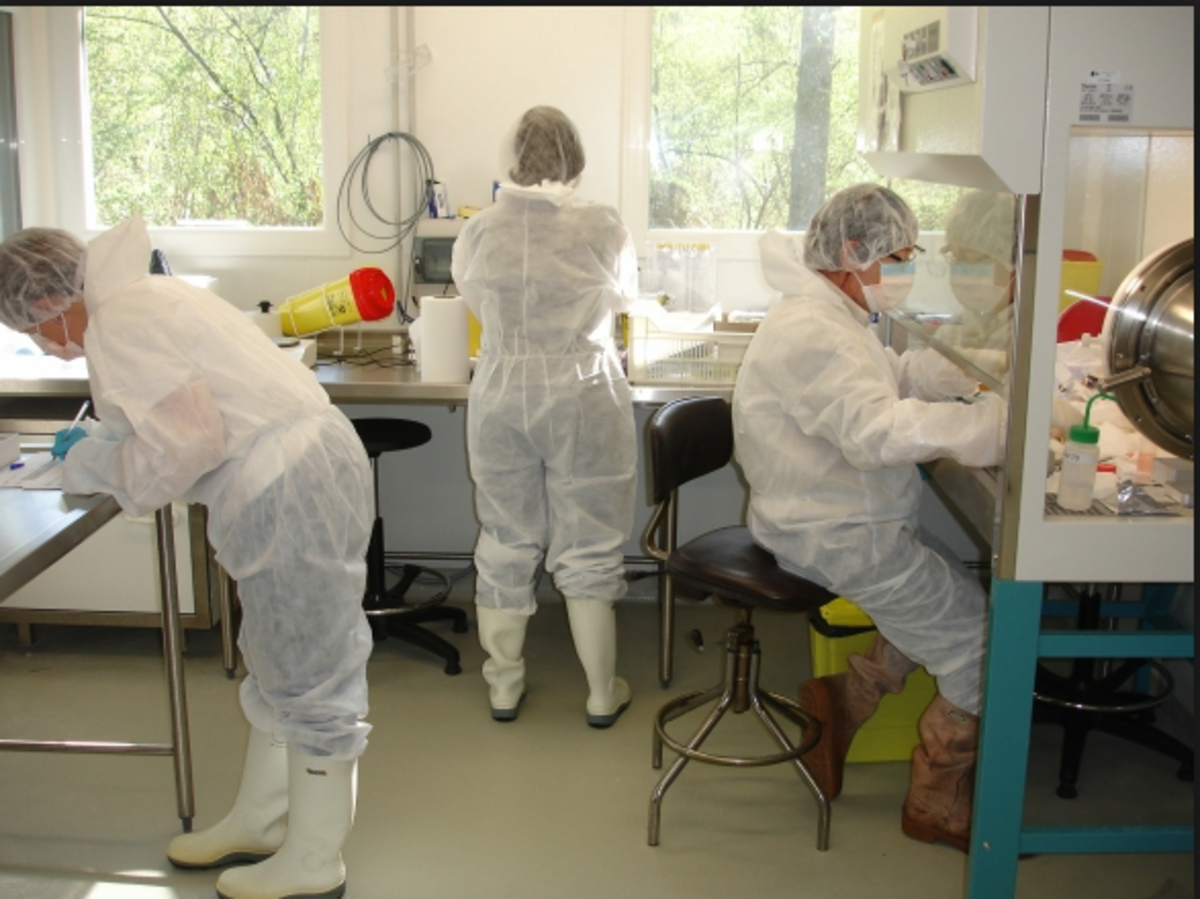
In 2010 Émilie was taking part in a research programme at INRA at Jouy-en-Josas, south-west of Paris, which is one of the institute's main research sites. She was working on the brains of transgenic mice infected with a strain of human prions.
In the regulations relating to the prevention of risks for workers exposed to biological agents, prions are classified as among the most dangerous - level three on a scale of one to four. As the national researche centre the Centre National de la Recherche Scientifique (CNRS) says in its risk prevention handbook “training must be given before the worker carries out an activity involving contact with biological agents”. The training is provided for in employment rules and in particular it entails knowing the health risks involved, the precautions to take and what to do in the case of an accident.
INRA's first violation of the rules concerns the preventative measures: the young technician was not sufficiently trained about the dangers of prions, nor about the protocols to follow in case of contamination.
On May 10th 2010, just three weeks before the accident, INRA put out a tender for a training contract to enable its teams to acquire or reinforce their “knowledge of working in confined areas” and “respect for good laboratory practice, awareness of the biological risks”. It was already too late for Émilie, whose accident occurred before this training could take place.
As one French researcher, who knows the risks of these pathogens well, put it: “The research institute decided to increase the number of strains of the most dangerous prions to humans in humanized transgenic mice which no longer have a species barrier with Man in order to facilitate to transmission of prions. But taking account of this very high level of danger, to have entrusted their handling to a person of 25 on a short-term contract, in a confined area, without any supervision from anyone senior, is multiplying the risks.” In fact it was just Émilie and a colleague who handled these deadly agents in a confined laboratory.
It was at 11.30am on Monday May 31st 2010, while she was tidying up the equipment used to cut the infected brain of a transgenic mouse, that Émilie cut her thumb on some surgical pliers. According to the accident declaration form that was written the same day, the cut “caused a bleeding wound”. The two pairs of latex gloves recommended for this kind of operation had not been enough to protect her.
The subsequent medical treatment of the young technician also points to a negligence bordering on amateurism on the part of the institute, which seems to have not complied with some of the safety regulations. Though in cases of potential infection with prions the victim is supposed to be disinfected immediately and on the spot, Émilie went to another room in the building and only received first aid for the first time 15 minutes after the accident. Even worse was the fact that she was treated neither by the laboratory's in-house doctor – who was absent that day as the accident declaration form show - or even by a nurse, whom she just spoke to on the phone.
When she went home later that day Émilie told her husband 'Mathieu' (not his real name) who is also a technician involved in scientific research. “She was always rigorous and it was important for her to declare this accident. But when she did so her bosses laughed and essentially made fun of her fears. It's awful,” he says.
“At the time Émilie was 25,” says her husband. “And she had wanted to trust her bosses. But, even so, she was worried and sometimes she hinted at it, saying to me, in a joking way to hide her fears: and what if I had been infected? She was thinking about the state of the mice that she was handling at the time.”
'We preferred not to tell her, we didn't want to terrify her'
A month later, in a letter dated June 30th 2010, the research institute INRA told Émilie that her accident had been acknowledged as being “attributable” by the administrative team, which confirmed the de facto responsibility of the institute. But even though the young technician was liable to have contracted what is known as variant Creutzfeldt-Jakob disease or vCJD, INRA stayed silent about the risk of contamination and did not demand any medical follow-up.
Mediapart interviewed a doctor about this, and he stated: “At that stage, given the disease's incubation period, the taking of a blood sample would not have served any purpose. On the other hand, informing the victim of the risk of the infection and asking them to carry out neurological examinations, that would have been a minimal requirement.”
Once her contract ended at INRA in 2012, Émilie was recruited by France's Atomic Energy Commission to work in a laboratory studying the metabolism of medications. She never handled prions again after leaving INRA.
Her state of health began to get worse progressively from November 2017. In April 2018 Émilie underwent a series of x-rays after suffering from persistent pains in her shoulders but they revealed nothing abnormal. By August 2018, however, she could no longer walk and sank into depression. Her health was getting worse and worse and she regularly spent time in hospital. Then she lost the mental capacity to use language and could not longer manage to get around.
It was only in April 2019, and after numerous examinations and blood samples, that doctors from the Cellule Nationale de Référence de la Maladie de Creutzfeldt-Jakob at the Pitié-Salpêtrière hospital in Paris finally diagnosed that Émilie had contracted variant CJD. However, Émilie herself never knew.
“In agreement with her parents and doctors, I didn't want to tell her what she was suffering from,” says Mathieu. “She knew the effects of this disease and above all that there was no possible way out, that's why we preferred not to tell her. It was so difficult to have made this choice but we didn't want to terrify her.” On June 3rd this year the doctor who was treating her noticed a “clear change in the disease which could soon put her life in jeopardy”. Émilie died on June 17th.
Her husband Mathieu had, however, told INRA about Émilie's illness. “I had no reply from them,” he says. Wanting to stay by her side for the last months of her life, he asked trade union representatives to take up her case with the institute.
They came up against the same silence, however, and union representatives told Mediapart: “We were only informed of this accident nine years later. It's unthinkable. To our knowledge there was no extraordinary meeting of the CHS [editor's note, a reference to the workplace health, safety and conditions at work committee] as the legislation and above all the situation demanded. Workplace regulations call for there to be an analysis and a follow-up of any incident or accident. We're still waiting for the proof that this was done here.”
A psychological cell has now been set up to respond to the concerns of the team who worked on prions at the time. However, one of the researchers, who is a trade union member, says “that won't help people understand what happened during the accident. INRA also has an obligation: to acknowledge its responsibility and the workplace nature of the disease contracted by the dead woman.”
Marc and Julien Bensimhon, who are lawyers for Émilie, her husband and her parents, say: “it's a real scandal. Creutzfeldt-Jakob disease is one of the most dangerous illnesses. Yet none of the safety and precautionary rules were respected by INRA. We're obviously seeing complete incompetence here, even though INRA is a recognised national institute. The justice system will be in charge of determining responsibility.”
The two lawyers are critical of the way that INRA “lost interest in the situation and continues to keep a low profile by refusing to accept its responsibility. This attitude is total unacceptable, especially when you know the suffering that Émilie went through. After eight years of incubation she started to suffer the symptoms of Creutzfeldt-Jakob disease for more than a year, the physical pain, then the mental confusion and the loss of awareness. Right up to April 2019 when the disease was diagnosed and confirmed by the national unit based at Salpêtrière hospital.”
Alongside the formal complaint to the prosecution authorities, on June 6th the lawyers referred the matter to the administrative court in Paris which “taking into account the gravity of the situation and Émilie's state of health had urgently appointed a neurologist”, says Marc and Julien Bensimhon. “He was able to carry out an initial assessment a few days before the death. This assessment will allow allow [us] to show who is responsible.”
Philippe Mauguin, the chief executive officer of INRA since July 2016, responded directly to Mediapart's questions himself because, he says, the “idea that INRA would hide things must be dispelled.”. However, the absence of any information given to staff during the incident in 2010 undermines his comments.
Meanwhile the INRA boss says he ways to reassure people that in the face of “such a tragedy, all the evidence in the case will be given to the justice system and that if the INRA has any responsibility it will accept it”. Mauguin, who is the former chief of staff to former agriculture minister Stéphane Le Foll, disputes that there was a lack of training but made no comment on the irregularities in the way that Émilie was cared for after the accident. “If this infection was due to that cut, if it is confirmed, we will take the appropriate safety measures,” he says. Yet in 2010 the safety protocols already existed under a 2007 ministerial decree; INRA had simply not respected them.
If proven, it would be the first time in France and – as far as Mediapart can establish – the first time in the world that a vCJD infection has been caused via the skin, following a cut to a finger.
On June 19th 2019 the CFDT, CGT, Sud, EPST and CFTC trade unions made a joint declaration in which they reminded management at the institute of the procedures for medical care to follow after accident declarations, and in particular those linked to biological, chemical and radioactive risks.
“It's frightening to have to remind INRA of these basic rules,” one union official at INRA told Mediapart. “Today, after the announcement of the death, management is in a panic because I think that it knows the extent of its responsibility in this tragedy. “ The union representative concluded: “It's regrettable that we have to wait for such tragedies as this to discover that there was an accident and to learn the disastrous circumstances in the way this technician was cared for. Since the announced of the death, a wave of panic has swept through French research, and several laboratories – not just at INRA – are watching this affair closely.”
-------------------------
If you have information of public interest you would like to pass on to Mediapart for investigation you can contact us at this email address: enquete@mediapart.fr. If you wish to send us documents for our scrutiny via our highly secure platform please go to https://www.frenchleaks.fr/ which is presented in both English and French.
--------------------------
- The French version of this report can be found here.
English version by Michael Streeter