


Two French presidents, both called François, have fallen victim to photographer Sébastien Valiela, a paparazzo and proud.
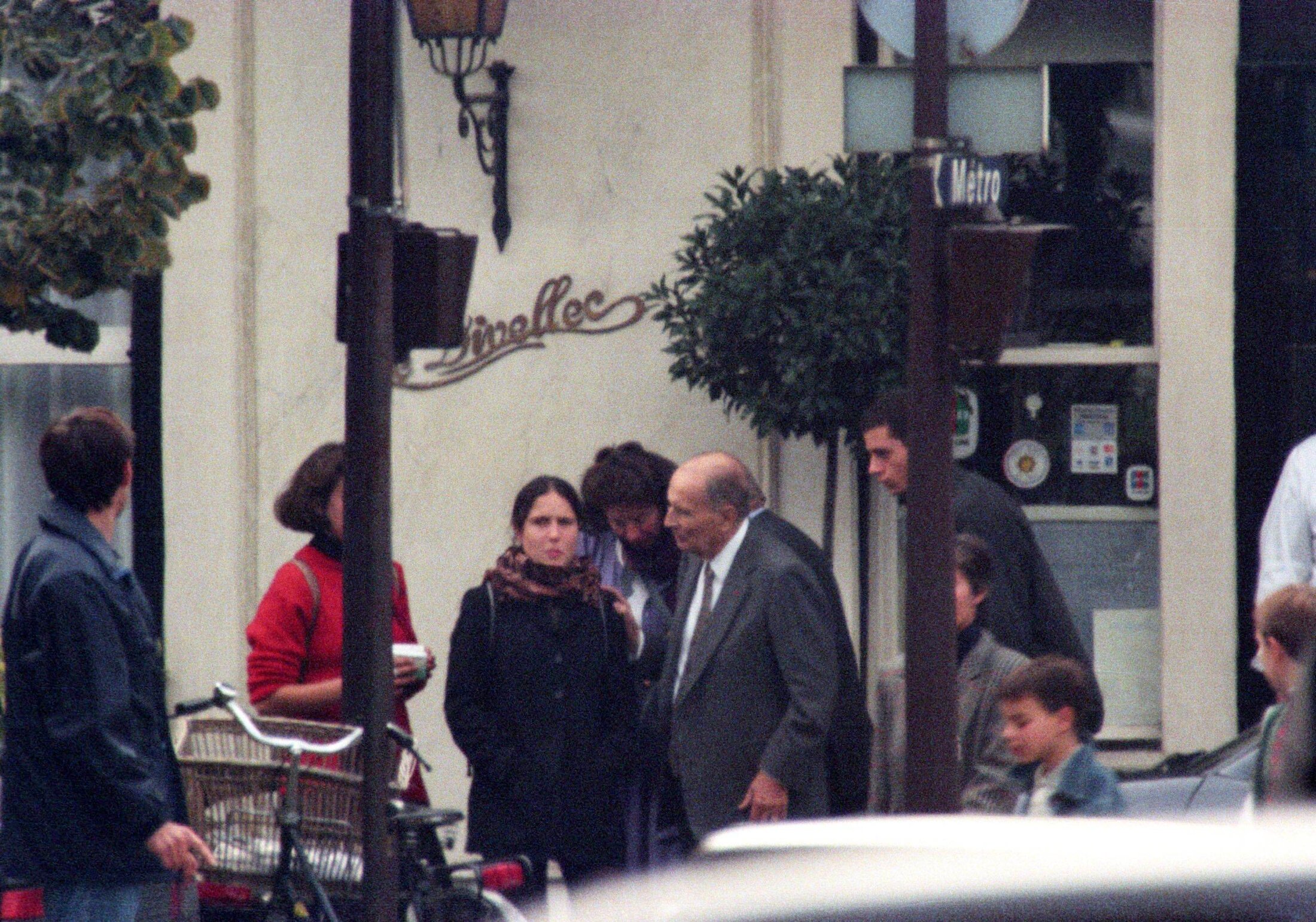
The first was the late François Mitterrand, who Valiela captured with his hand caressing the shoulder of Mazarine Pingeot, the illegitimate daughter he had long kept secret from the public – for which purpose he ordered a special presidential security unit to spy on journalists and others who he feared might reveal her existence.
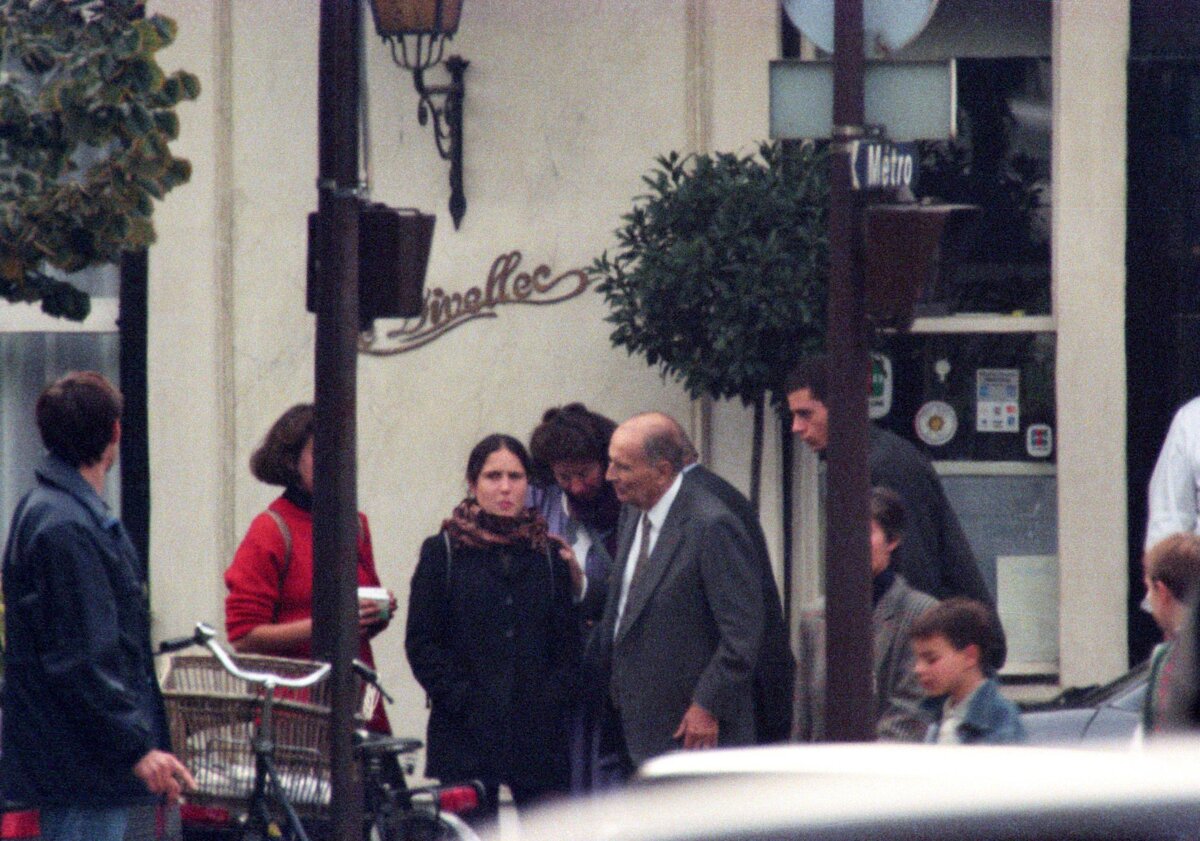
The photo below is from that sequence, taken in 1994, as Mitterrand and Pingeot stand in front of Le Divellec restaurant sited on the sprawling Esplanade des Invalides in central Paris. It is one of the 600 works on show in a new exhibition entitled Paparazzi ! Photographes, stars et artistes now showing at the Centre Pompidou annex in Metz, eastern France, and which is dedicated to the history, practices, aesthetics and influence of ‘paparazzi’ photography.
Enlargement : Illustration 1
Barely 20 years after that picture of Mitterrand and his daughter, Valiela’s second presidential target was François Hollande, who he photographed arriving on a scooter at the Paris apartment used for his secret romance with the actress Julie Gayet. Published in early January in French magazine Closer, it led to the end of Hollande’s relationship with his long-term partner Valérie Trierweiler.
Valiela said that taking the picture of Mitterrand was more difficult than taking that of Hollande, because of the security guards present. “There were some 15 guys and we had to work from 200 metres away,” he recalled. “For Hollande, there was virtually no-one […] I went into the [apartment] building when Hollande was there, I got to the door of the apartment, and no-one checked my ID. People with bad intentions could have done what they wanted, even just knocking over the scooter, especially because Hollande’s helmet wasn’t strapped, as can be seen on the pictures. What’s more, we picked up on a timing and habit that went against [the rules of] proper security, which allowed us to hide in the stairwell for a short time without being noticed by the neighbours and, therefore, to take pictures quite close up.”
None of the pictures of Hollande, however, are included in the exhibition. “I suggested it to them but it wasn’t accepted,” said Valiela. “It would have been fully in its place though, but Pompidou remains a public institution. In 50 years it’ll get there.”
The exhibition’s curator, Clément Chéroux, said it would have been “artificial and inept” to have included the picture of Hollande. “This exhibition doesn’t want to surf on news,” he said. “We’ve been preparing it for three years now and, to the contrary, we’ve tried to take a distance of time, to be able to ask questions of society, ethics and aesthetics.”
Enlargement : Illustration 2
One of the aesthetic elements explored in the exhibition is the certain flatness of pictures taken from a distance with powerful telephoto lenses. “It’s an involuntary aesthetic,” commented curator Clément Chéroux, who mounted the show with the assistance of Quentin Bajac, of the New York Museum of Modern Art (MOMA) and Sam Stourdzé, of the Musée de l’Elysée in Lausanne. “But the situations and the technical constraints of rapidity and distance produce an aesthetic which has inspired numerous artists.” The exhibition includes paintings, sculptures and videos to illustrate the influence of paparazzi works.
“We don’t control either our subjects or the light, and we work with telephotos, which give a certain grain,” explained Valiela. “And as people are natural in our photos, it’s true that you can tell a paparazzi picture at first glance.”
Pascal Rostain is a well-known French paparazzi who has just published a book about his work, Voyeur. Mémoires indiscrets du roi des paparazzi (‘Voyeur; the indiscreet recollections of the king of the paparazzi’). “It’s perhaps with a distance in time that you can determine an aesthetic,” he said. “But we haven’t taken these images thinking that one day that they would be hung on museum walls. We benefited from a period magnified by black and white and the incredible elegance of the icons we photographed, Brigitte Bardot, Romy Schneider, Jackie Kennedy. It was different and more exciting than today’s celebrities with the IQ of soles meunières.”
Enlargement : Illustration 3
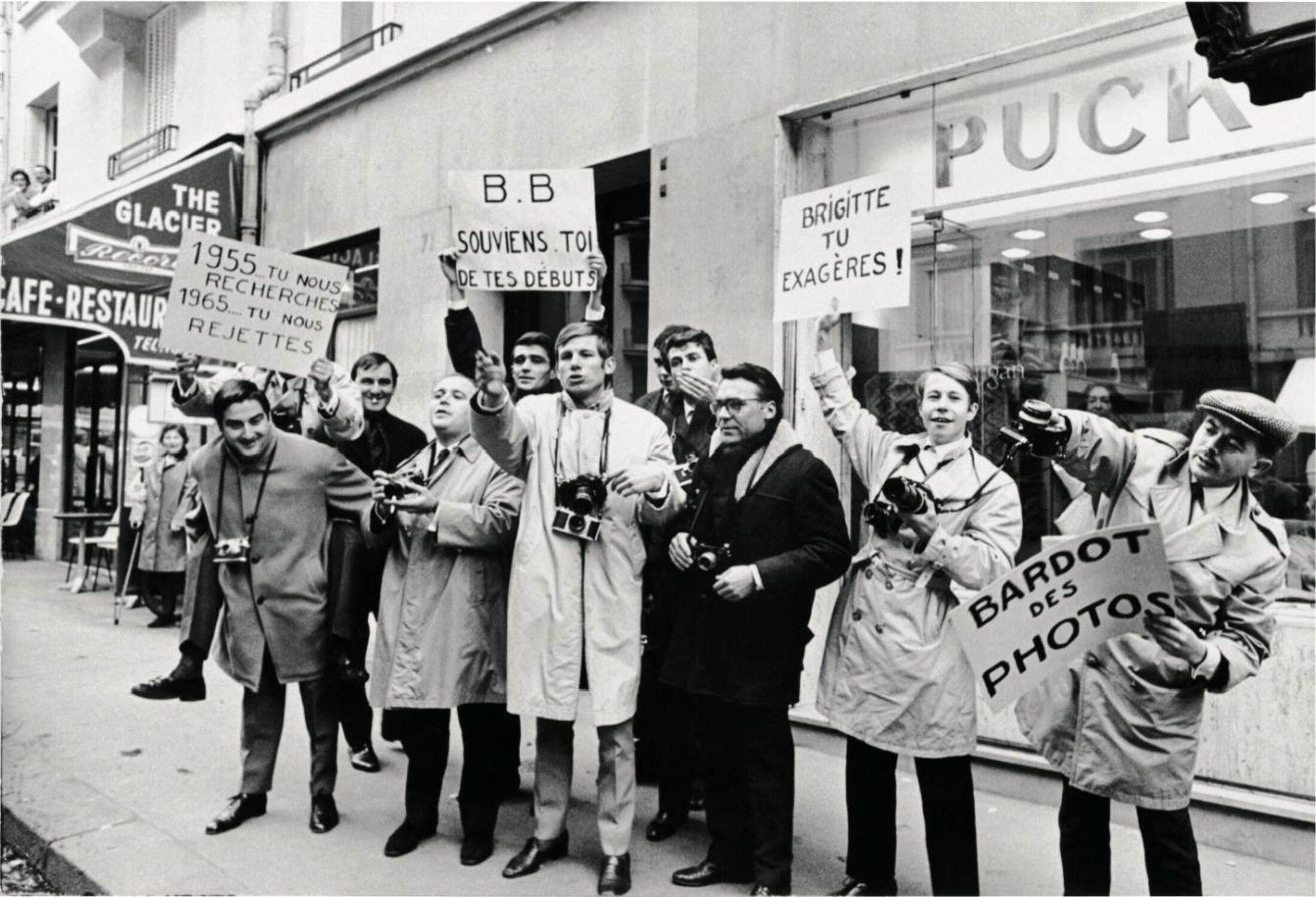
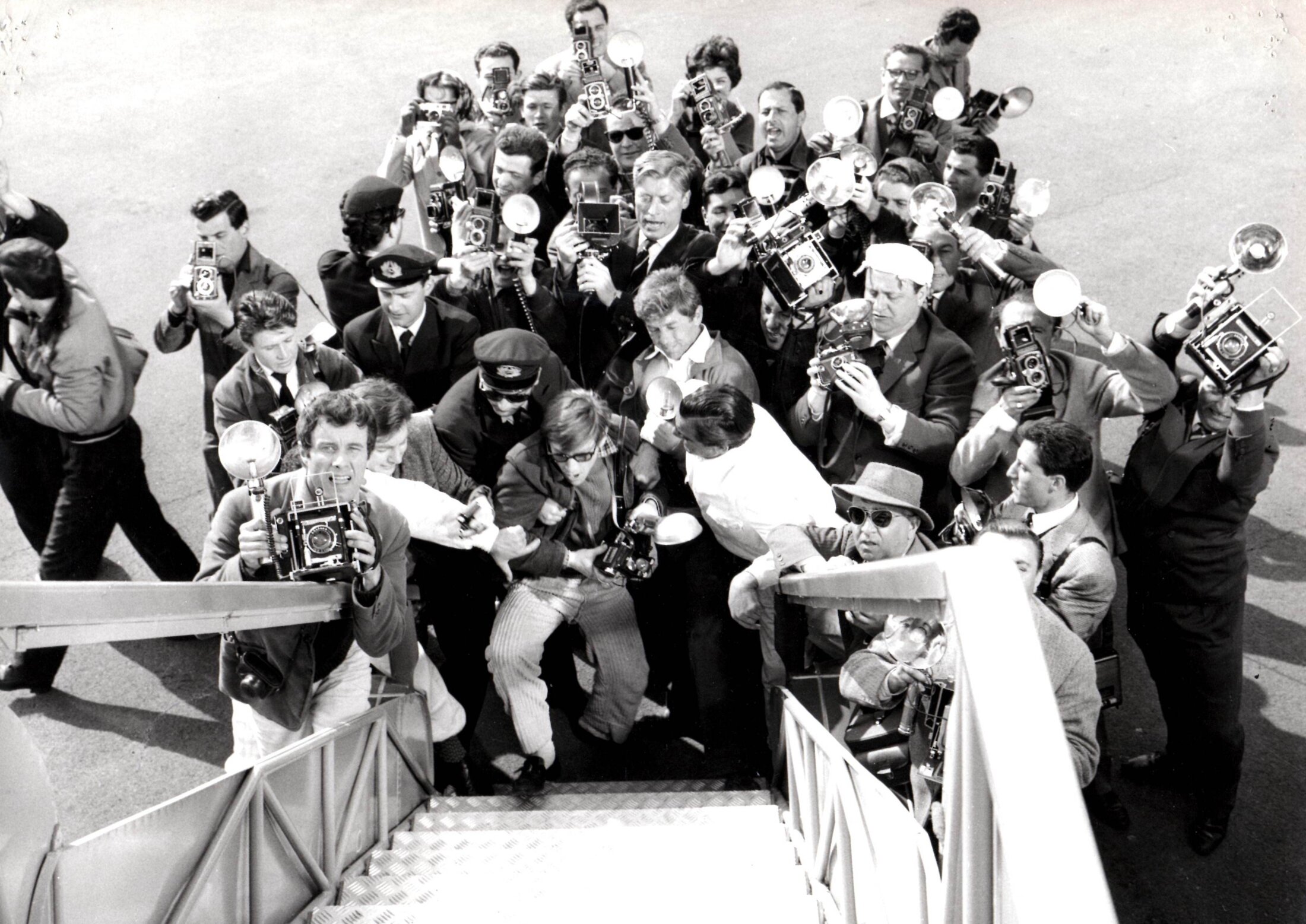
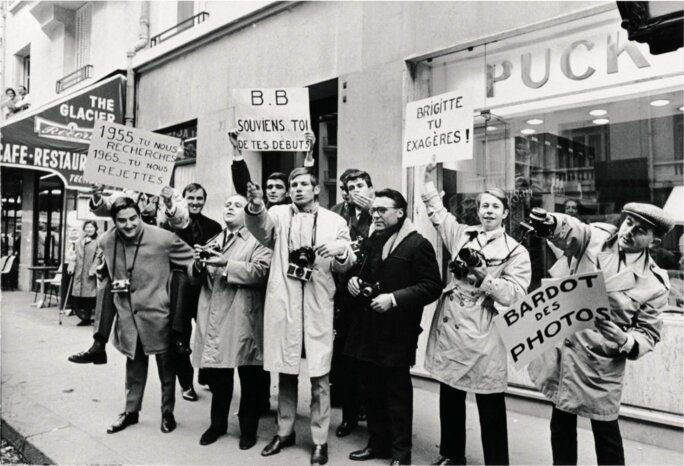
While affection and fascination are present in the relationship between the paparazzi and those they photograph, there is also hate and detestation. The exhibition underlines the confrontation between the two parties, such as when a hand is shoved over the lens, or when celebrities hide behind a hat or a coat, and when some threaten and even attack the photographers with whatever they have to hand – like when Anita Ekberg once grabbed a bow and arrow.

Enlargement : Illustration 4

“To satisfy the public’s curiosity, paparazzi want to throw every light on celebrities, including when they are far from the floodlights,” reads an introduction in the exhibition catalogue. “The latter react so as to maintain a degree of shadow over their private life. The whole exhibition covers this conflict of interests which is, in sum, the eternal combat between shadow and light.”
The violent relationship between photographer and subject can be all the more so because it largely opposes the two sexes. “We realized that most paparazzi were men and most of their prey were women,” explained Clément Chéroux. “You find very few counter examples. Even if certain men are also victims of paparazzi, there is a replay here of something of the violence in society towards women.”
When entering the exhibition, visitors walk in on a red carpet. That triggers a work by Irish artist Malachi Farrell setting off a battery of flash guns, prodding microphones and shouted questions.
The show is divided into three parts. The first is dedicated to individual paparazzi and how they work. This is illustrated with photos and documentary films, along with various gadgets used by the photographers: these notably include cameras hidden in false watches and cigarette packets – often used to take pictures inside court hearings – and also plaster casts that photographers strapped on themselves as a disguise to hobble around a hospital in search of their prey.
Here we discover that, contrary to received opinion, paparazzi have existed since the early 20th century, well before their trade name was created in Frederico Fellini’s 1960 film La Dolce Vita. (The word paparazzi was developed by him from the name given to a ferocious mosquito, called a papatacci, found on the plains bordering the river Po, Fellini’s native region, and the Italian word for flashes, razzi, while it also plays on ragazzi, a term for young men).
Enlargement : Illustration 5
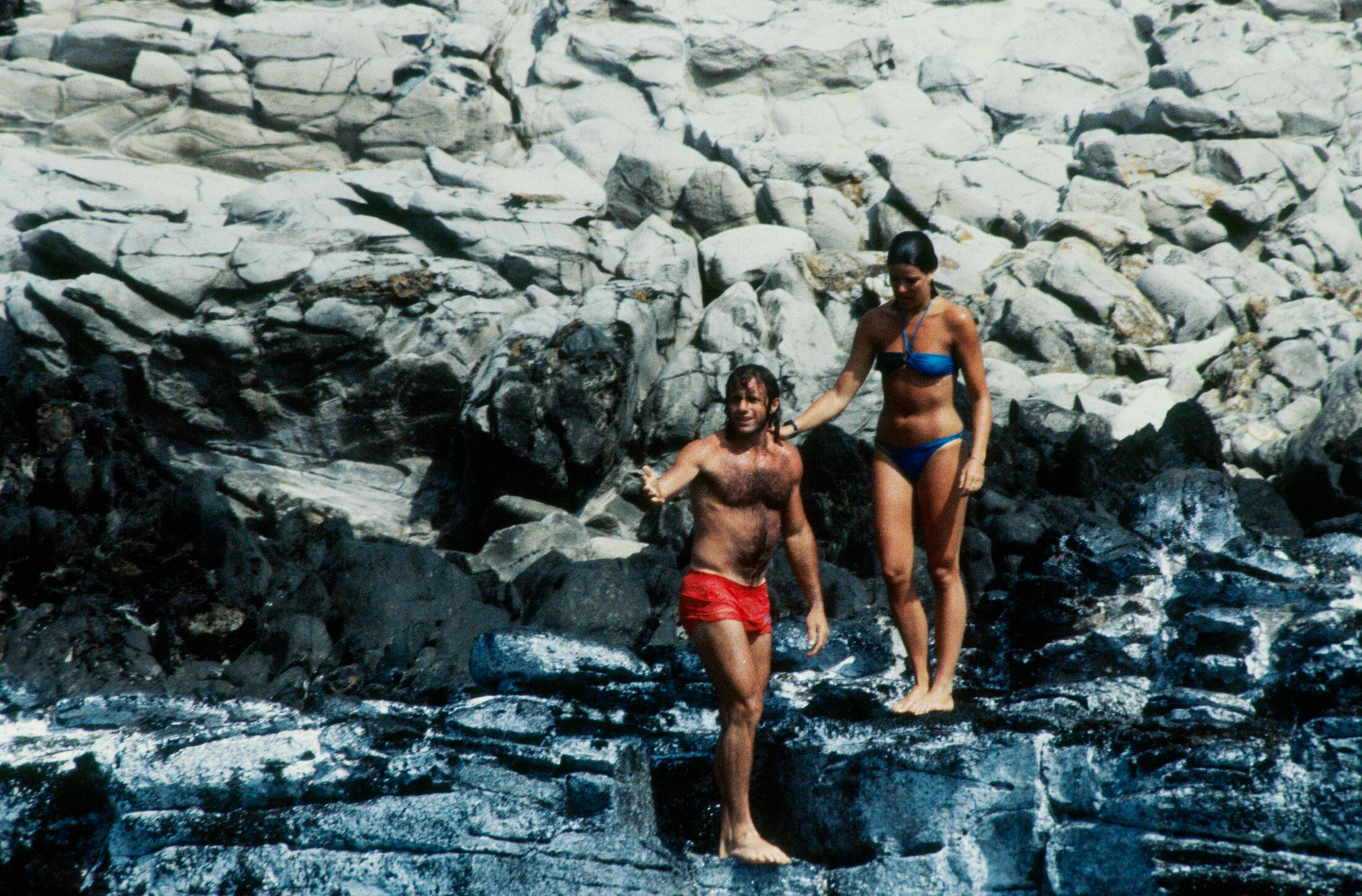
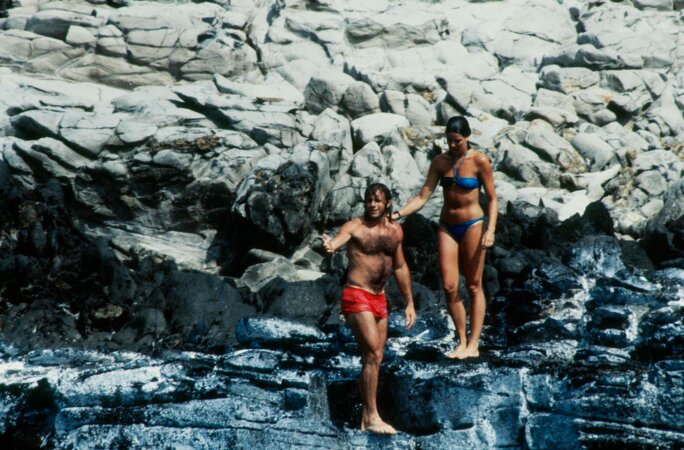
The second part is made up of the works of paparazzi. Celebrities are often snapped in cars. “In a car, the star is trapped,” said Chéroux. “Once they are inside, they [the paparazzi] can turn around it. That produces a certain number of aesthetic effects, like the reflections of the flashes or the photographers themselves.”
There is also the sub-genre of the deathbed picture, the ultimate stage in the hounding of a celebrity. These include deathbed photos of Michaël Jackson, Whitney Houston, François Mitterrand, but also that, in 1898, of Prussian statesman Otto von Bismarck and captured by a hidden camera. It is presented alongside a more presentable re-touched version published by a German newspaper.
Despite its age, Chéroux said the photo of Bismark is not necessarily the first of the paparazzi genre. “We cannot know precisely where the paparazzi photo was born,” he explained. “At the time, the pictures were anonymous, and we can only say that it developed at the beginning of the 20th century, first in the United States and then in Europe.”
The last section of the exhibition is dedicated to how, from the 1960s onwards, artists of various types have used the style codes of the works of paparazzi. This was the case of pop art, notably with Andy Warhol, but also with the photographers Richard Avedon and William Klein who transposed aspects of the paparazzi style to their fashion pictures.
Another exhibit here is a 1996 work by Swedish artist and photographer Ulf Lundin, called Pictures of a Family. Lundin used a telephoto lens to follow the banal activities of an ordinary family and the resulting pictures of their daily lives are lent a distressing atmosphere, so much so that when one falls off a bike it appears almost as if a crime scene.
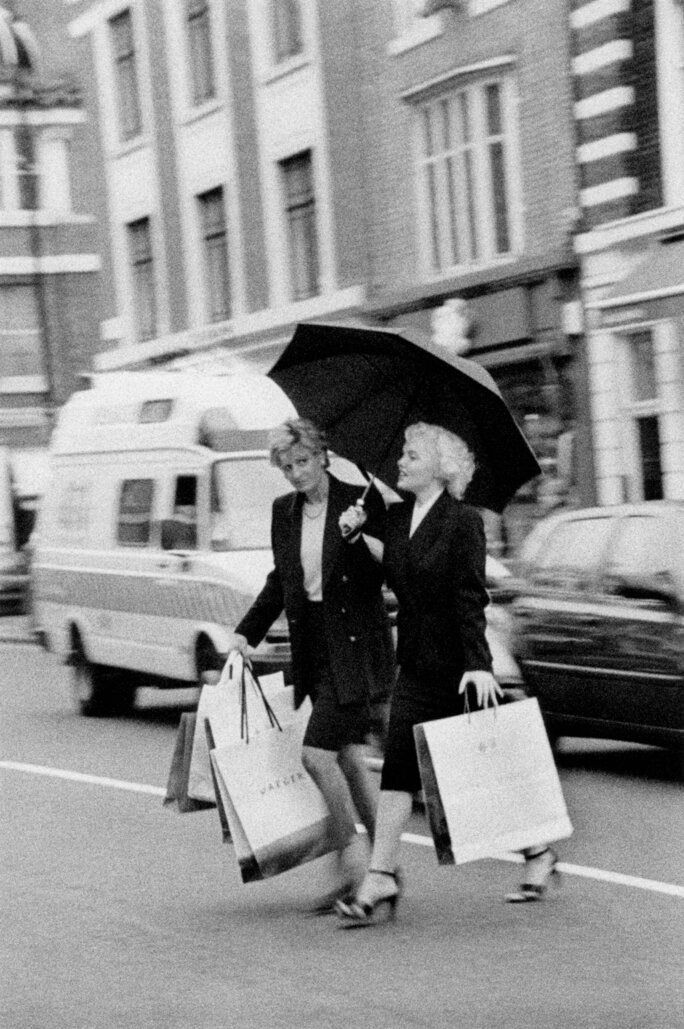
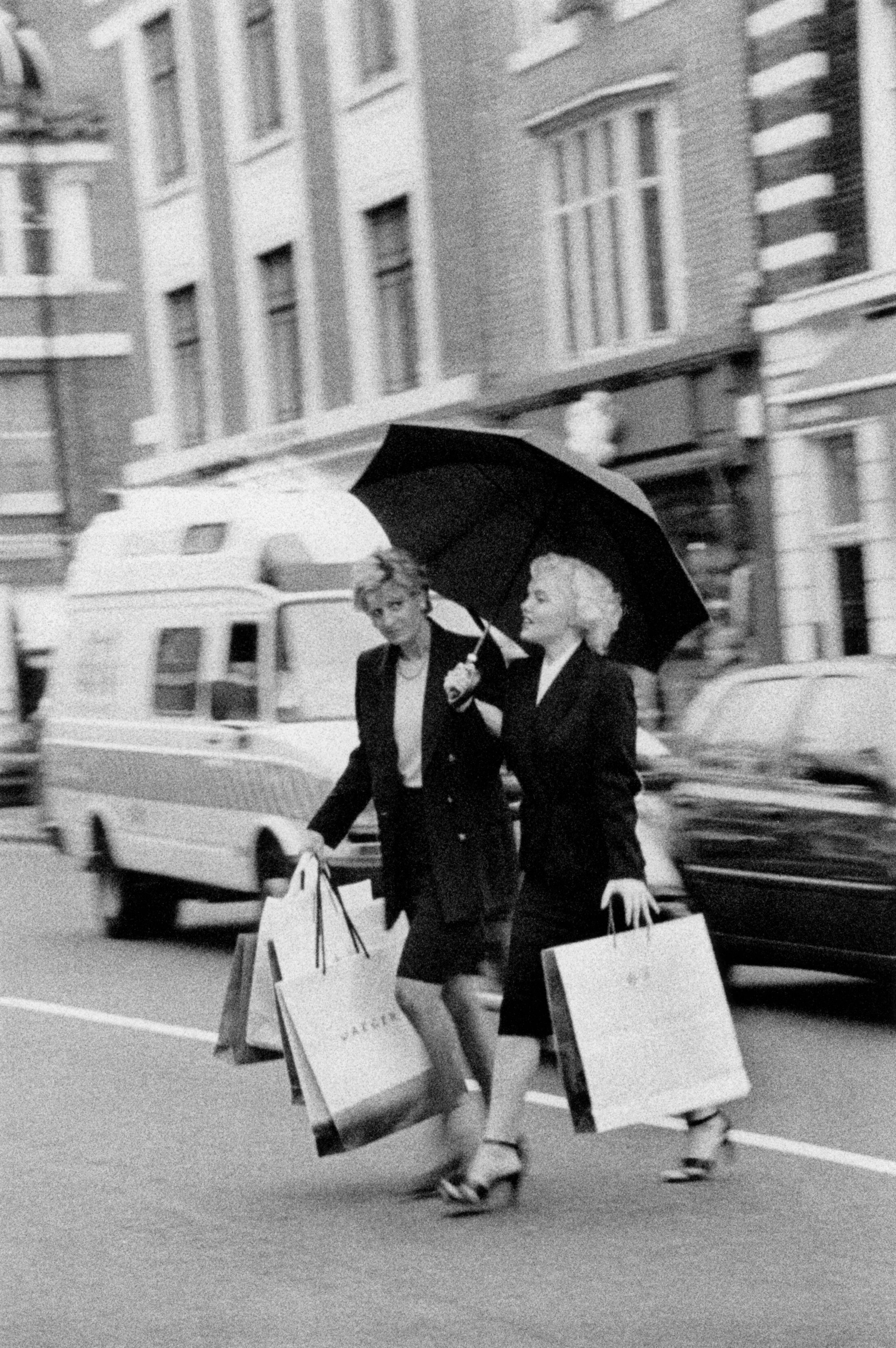
There is also a contribution by British artist Alison Jackson. Shooting in the style of the paparazzi, she uses celebrity lookalikes to create surprisingly convincing scenes that are especially provocative, like Princess Diana and Marylin Monroe shopping together in a London street, or Queen Elizabeth sitting on a toilet.
Enlargement : Illustration 6
The technical evolution of photography is also apparent in the exhibition, notably the advent of digital cameras. The rapidity with which digital photos can be checked now allows a paparazzo to more easily exit a situation without being caught, explained Sébastien Valiela. “With film, we tended to continue with the shoots longer,” he said. “And it also means that we don’t have to change a film after 36 shots. For Mazarine, Mitterrand’s gesture on the shoulder of his daughter came right at the end of the roll of film.”
That shot illustrates another evolution underlined by curator Clément Chéroux. “In the years between 1950 and 1970, paparazzi above all sought out the ‘decisive moment’, to repeat a term used by Cartier-Bresson, the climax, for example the kiss between Liz Taylor and Richard Burton, ” he said. “Today, they practice strolling more, meaning the walkabout, photographing stars who are themselves strolling without doing anything special. It’s more of a photography of ‘weak moments’ as Raymond Depardon’s expression has it.”
Enlargement : Illustration 7
The exhibition inadvertently highlights the legal risks for paparazzi with regard to laws governing a person’s right to privacy. “For legal reasons, there are more of my American photos on the walls of the Pompidou Metz than French ones, because over there you’re not in danger of a trial,” said Valiela. His colleague Pascal Rostain was more scathing: “France is the only democratic country which can send to prison a photographer who photographed the truth.”
It is notably since the death in Paris in 1987 of Princess Diana, who suffered fatal injuries when the car she was travelling in crashed in a tunnel as it was being followed by a horde of photographers, that the name ‘paparazzi’ has widely taken on a negative connotation.
But while some might deride their works as nothing more than the hallmark of the gutter press, Clément Chéroux firmly believes they have a milestone place in the history of photography. “All the major photographers of the 20th century have looked elsewhere,” he said. “Diane Arbus interested herself in family photos, Walker Evans in architectural photos. Today, the role of a museum is obviously to continue to interest itself in artistic photography, but also to record all the aspects of vernacular photography which has ceaselessly nourished photographic art.”
-------------------------
Paparazzi ! Photographes, stars et artistes is on now until June 9th at the Centre Pompidou-Metz. Open every weekday except Tuesday from 11 a.m. until 6 p.m. Open Saturdays from 10 a.m. until 8 p.m. and Sundays from 10 a.m. until 6 p.m.
Address: 1, parvis des Droits-de-l’Homme, Metz.
Tel: 03 87 15 39 39
-------------------------
English version by Graham Tearse