


Argentina is the only country in the world where crimes committed in Spain by the Franco regime are open to prosecution. The South American country’s judicial system bases its competence to investigate and eventually judge such offences under the notion of ‘universal jurisdiction’, whereby of crimes against humanity, which are not subject to a statute of limitations, can be tried outside of the national boundaries within which they were committed.
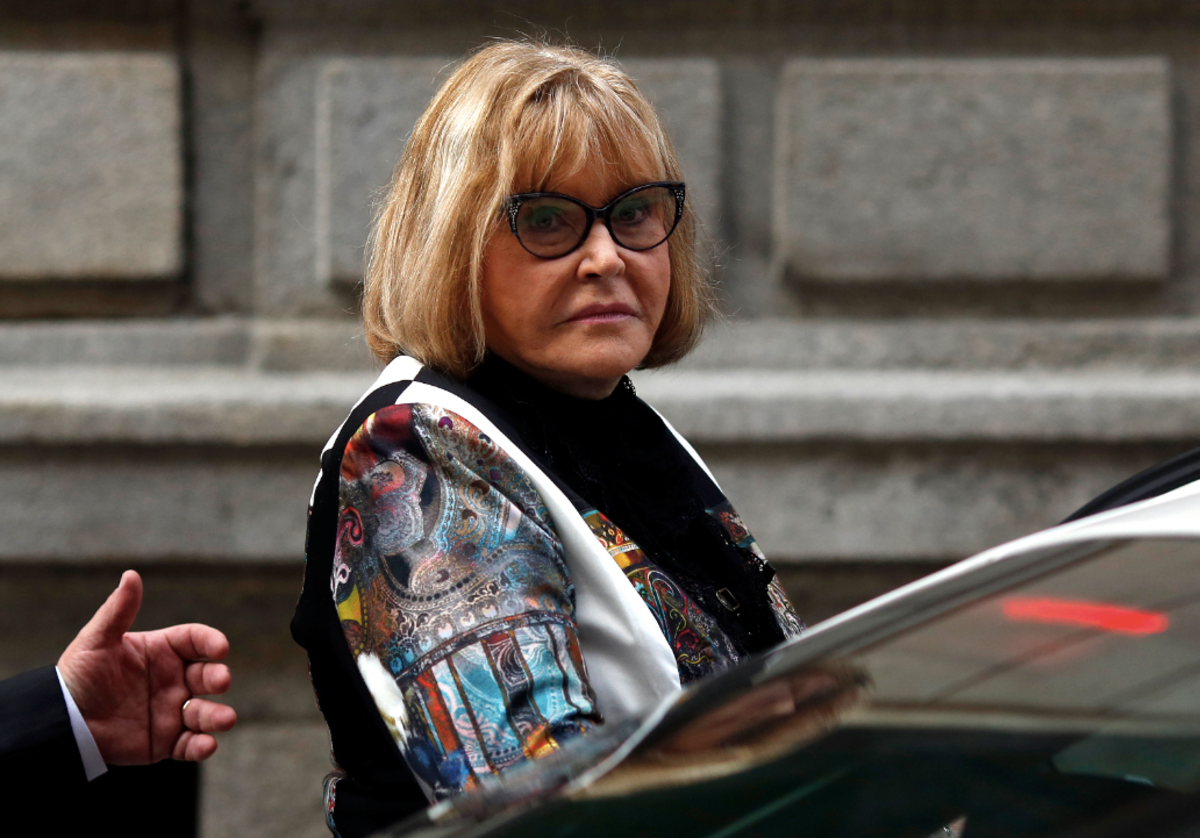
Argentina launched its first investigation into Franco-era crimes in 2010. In October 2014, the federal judge leading that investigation, María Servini de Cubría, issued an international arrest warrant against 20 former Spanish officials, including two of the Franco regime’s ministers, some of whom are accused of genocide.
“We ask that the European Parliament, and the European Commission, demand that the Spanish government lift the obstacles that prevent investigation of Francoist crimes, so that the bodies lying in mass graves can be identified, and that an end is put to the apologies of Francoism found on monuments and squares in Spain,” said Carlos Slepoy, lawyer for CeAQUA, an association created to support the Argentine investigations, speaking at a press conference in Brussels on March 4th.
Enlargement : Illustration 1
Also present was José Maria Galante, spokesman for La Comuna, an association representing former prisoners of the Franco regime. “By coming here, we are seeking a condemnation of the Spanish government,” said Galante. “This government, and those that preceded it, are complicit in the Francoist barbarity. We, the victims, were forced to go and ask for justice outside of our borders […] These accomplices of Francoism today regard themselves as authorised to bypass the texts of international law, by blocking the extradition of those who signed the death sentences of our comrades.”
The Spanish delegation was in Brussels on the invitation of a cross-party group of Spanish Members of the European Parliament (MEPs). One of the MEPs is Marina Albiol Guzmán, a member of the Spanish Izquierda Unida (United Left) party that includes communists and Greens, and which is affiliated in the European Parliament to the Confederal Group of the European United Left - Nordic Green Left. She said the initiative was taken “to denounce the impunity of the crimes of the fascist state, because the Transition led to the sentencing of the victims and the absolving of the executioners”. She said it was necessary that the European Parliament help establish ‘the truth and justice”, and to provide “reparations” for victims.
“It is vital that we talk about these things to the European Parliament,” said another Spanish MEP member of the group, Josu Juarisi, from the Basque left-wing independentist coalition party Bildu, “that we make heard this memory that they deny to us in Madrid.”
Despite repeated demands by the United Nations, Spain has consistently refused to investigate the thousands of deaths from atrocities committed during the 1936-1939 Civil War, and during the ensuing 36-year dictatorship of General Franco. Successive Spanish governments cite a law of amnesty introduced in 1977, two years after Franco’s death during the country’s testing return to a functioning democracy. It was regarded then as a key element to avoiding score-setting during the country’s reconstruction and political transition.
However, in 2008, Spanish investigating magistrate Baltasar Garzón launched an unprecedented investigation into the disappearances of more than 100,000 people under the Franco regime, ordering the excavation of mass graves. But Garzón, a high-profile judge with Spain’s National Court, was accused of overstepping his powers and was forced to withdraw his investigation under heavy official pressure.
Meanwhile, two right-wing rights groups filed lawsuits against him for violating the 1977 amnesty law, which subsequently led to his trial by Madrid’s Supreme Court in February 2012. The court, the only one in Spain that is competent to try magistrates, cleared Garzón of the charges but found him guilty of separate charges of illegally ordering phone taps of conversations between lawyers and their clients. He was sentenced to an 11-year suspension from the bench, effectively ending any hope of reviving his investigation into Franco-era atrocities.
In its refusal to extradite former Franco regime officials to Argentina, the Spanish government argues that the alleged crimes come under a 15-year statute of limitations, while also invoking the principal of preferential jurisdiction by which it reserves the sovereign and priority right to prosecute such crimes. “A country’s membership of Interpol […] in no way demands that it execute a request for a preventive arrest in view of an extradition towards another member of the organization,” read a statement by the Spanish government released earlier this month.
In 2009, the then-ruling socialist party, the PSOE, found agreement with the conservative Partido Popular (People’s Party), the PP, to limit the Spanish judicial system’s scope of interpretation of ‘universal jurisdiction’ regarding crimes committed abroad. The PP succeeded the PSOE as the ruling party in elections in 2011, and last year it introduced further restrictions to the judicial interpretation of universal jurisdiction. But while the socialists have distanced themselves from the move, no PSOE MEPs met with the associations representing Franco-era victims during their visit to Brussels at the beginning of this month. This was despite a call by those same associations last December for support from the PSOE for the Argentine extradition move.
The ‘Law of Historical Memory’, introduced by the socialist government of Prime Minister José Luis Rodriguez Zapatero in December 2007, was a flagship piece of legislation (see the text, in Spanish, here) that recognised the victims of both sides of the Spanish Civil War, but notably also of the 36-year dictatorship of Francisco Franco. Among a raft of measures, ranging from the erasing of Francoist tributes on public monuments and site names to the annulment of trial verdicts under the regime, it also gives rights to the relatives of victims, including the identification and exhumation of the bodies of victims of the repression, often lost under mass graves. But it has since been criticised for its lack of subsequent effectiveness, including a lack of funds initially promised to enact the law’s provisions – and not least the tracing of the mass graves and the exhumations.
“The government busied itself with the most superficial issues, like the removal of statues, changing the names of streets, and also the building of memorial monuments, said Spanish writer Isaac Rosa, one of the law’s critics, in an interview in 2010 published in Mediapart’s French-language pages, just as the Argentine investigation was launched. “But there remains much to do, regarding the reparations for victims, the uncovering of mass graves, the designation of those responsible for the economic spoliation of Republicans.”
Associations representing relatives of victims of Francoism estimate that 150,000 people ‘disappeared’ during both the period of the civil War and the 1936-1975 dictatorship, and that about 2,200 mass graves remain intact. They also estimate that the true identities of more than 30,000 children abducted from parents who were victims of the repression remain unknown.
European Union institutions currently have very little power to pressure Spain to change its position opposing the extraditions requested by Argentina. A motion calling on it to do so has been submitted in the European parliament, and will be examined for possible debate over the coming months. But while this represents only a minor move in support of victims’ relatives, it will nevertheless add to their efforts to keep the issue in the public eye ahead of the next legislative elections in Spain that are due to be held at the end of this year or in January 2016.
-------------------------
- The French version of this article can be found here.
English version by Graham Tearse