


“A grim undertaking” was how Tom Fletcher, the United Nations (UN) Under-Secretary-General for Humanitarian Affairs and Emergency Relief Coordinator, described his task on May 13th when he appeared before the UN Security Council. He was referring to his role in “again” briefing the international community of what he called “the 21st-century atrocity to which we bear daily witness in Gaza”.
What action, he asked the assembled diplomats in New York, will they be able to say they took to stop it? “It is a question we will hear, sometimes incredulous, sometimes furious – but always there – for the rest of our lives,” he said. “Maybe we will say we issued a statement? Or that we trusted that private pressure might work, despite so much evidence to the contrary?”
He added: “Or maybe we will use those empty words: ‘We did all we could’.”
The ensuing description he gave of the situation in Gaza deserves to be quoted at length, if only for the historical record because, as he put it, it is “what we see and are mandated by this Council to report”. Yet the world lets it continue, in a mixture of complicity, indifference and powerlessness.
“Israel is deliberately and unashamedly imposing inhumane conditions on civilians in the Occupied Palestinian Territory,” said Fletcher. “For more than ten weeks, nothing has entered Gaza – no food, medicine, water or tents. Hundreds of thousands of Palestinians have, again, been forcibly displaced and confined into ever-shrinking spaces, as 70 percent of Gaza’s territory is either within Israeli-militarized zones or under displacement orders. As my colleague from the FAO will explain, every single one of the 2.1 million Palestinians in the Gaza Strip face the risk of famine. One in five face starvation, despite the fact that you have funded the food that could save them. The few hospitals that have somehow survived bombardment are overwhelmed. The medics who have somehow survived drone and sniper attacks cannot keep up with the trauma and the spread of disease.”
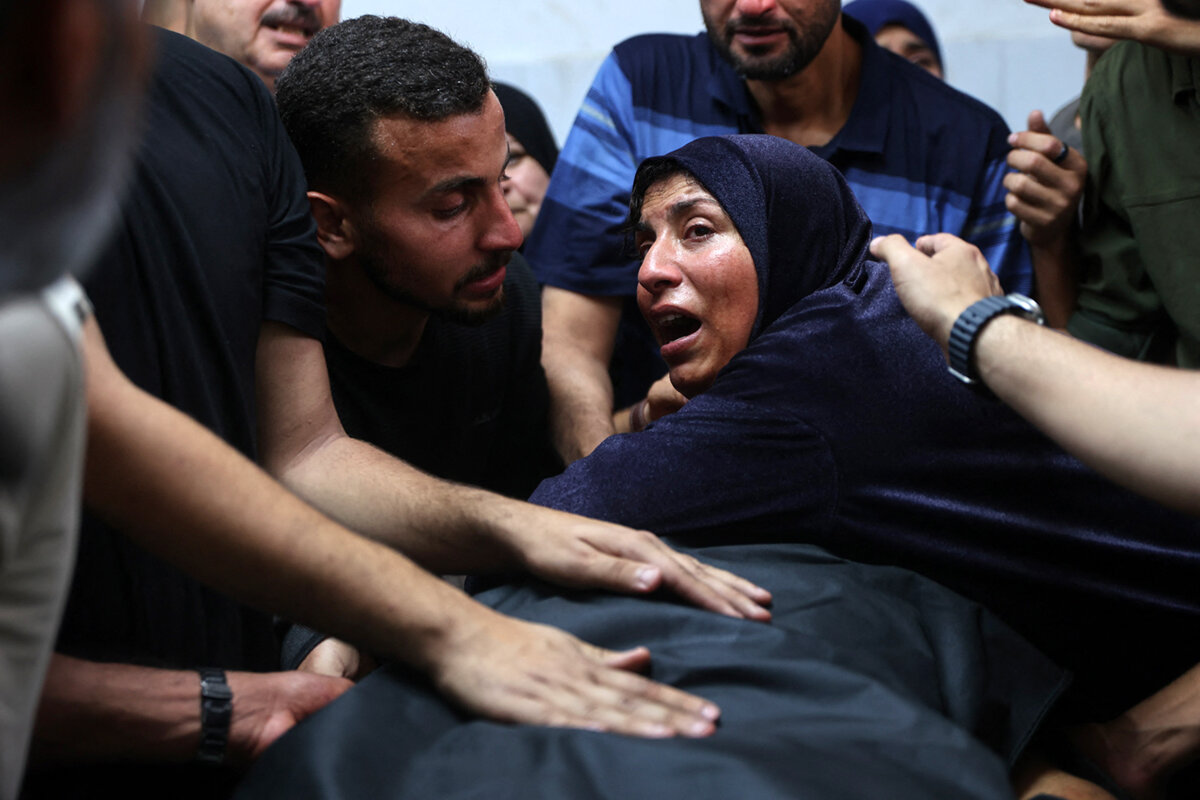
“Even today [Editor’s note: May 13th], the European Gaza Hospital in Khan Younis was bombed, again, with even more civilian casualties reported,” he continued. “I can tell you from having visited what’s left of Gaza’s medical system that death on this scale has a sound and a smell that does not leave you. As one hospital worker described it, “children scream as we peel burnt fabric from their skin…” And yet we hear that ‘we did all we could’.”
Enlargement : Illustration 1
Further into his address, Fletcher warned: “It’s not just Gaza. Appalling violence is also increasing in the West Bank, where the situation is the worst in decades. The use of heavy weaponry, military methods of war, excessive force, forcible displacement, demolitions and movement restrictions. Ongoing, illegal settlement expansion. Entire communities destroyed, refugee camps depopulated.”
“Settlements expanding, and settler violence continuing at alarming levels, sometimes with the support of Israeli forces. Recently, settlers abducted a 13-year-old girl and her three-year-old brother. They were found tied to a tree. Do we also say to them that ‘we did all we could?’”
Fletcher’s address was followed by that of Angélica Jácome, director of the UN Food and Agriculture Organization (FAO), who underlined that “the risk of famine is imminent”, before listing chilling statistics. The following day, the UN Office for the Coordination of Humanitarian Affairs (OCHA) published its latest weekly update on the situation in Gaza and the West Bank.
Every Wednesday, the OCHA issues a toll of the massacre. In its latest publication, it cited figures from the Hamas-run health ministry in Gaza which reported that from May 7th to 14th at midday, 275 Palestinians were killed, and 949 were wounded. According to the same source, between October 7th 2023 and May 14th 2025, at least 52,928 Palestinians were killed and 119,846 others were wounded. Of these, 2,799 people were killed and another 7,805 have been wounded since March 18th 2025, the date when Israel broke the ceasefire agreement.
On May 16th, another UN body, UNICEF, dedicated to providing humanitarian and development aid for the protection of children, reported the deaths “of at least 45 children in the Gaza Strip” over the previous 48 hours. “These past 19 months, Gaza has been deadly for children and there are no safe spaces,” read a statement by the agency’s director for the Middle East and North Africa regions, Edouard Beigbeder. “From North to South, children are being killed and maimed in hospitals, in schools-turned-shelters, in makeshift tents, or in their parents’ arms. Only in the past two months, more than 950 children have reportedly been killed in strikes across the Gaza Strip.”
But these figures, in their cold presentation, say but a part of this ongoing disaster, the destruction not only of lives but also the very existence of a people, of their homes, their neighbourhoods, their land and culture – in sum, their world. In July 2024, a study published in the medical journal The Lancet estimated that since the beginning of the conflict in October 2023, the death toll represented some 8% of the Gazan population, a calculation based not only on the known number of direct deaths, but also of those who died from the effects of the blockade, famine and disease.
Some have belatedly woken up to the situation in the Gaza Strip, a small and overpopulated territory (made up of 365 square kilometres and a population of 2.1 million) which has been under a total siege since March 2nd. But beyond those few, nothing has changed and the inaction of the world remains.
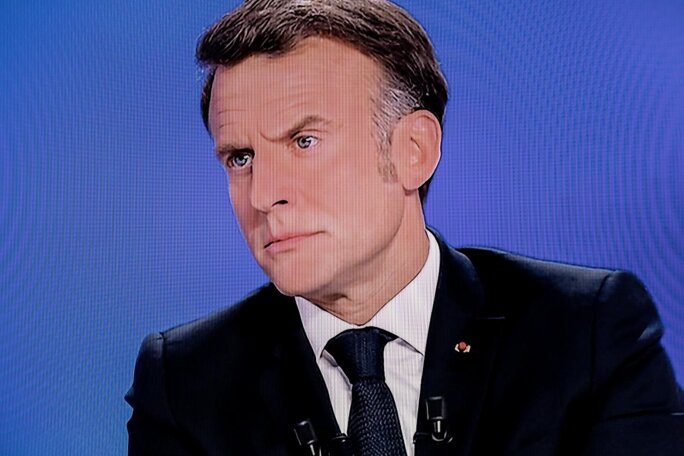
Appearing on May 13th in a television programme debating the “challenges” facing France, the very same day as Tom Fletcher’s address to the UN Security Council, French President Emmanuel Macron, during the six minutes given over to the war in Gaza out of the programme’s interminable total of three hours, said he refused to employ the term “genocide” to describe Israel’s conduct in Gaza. The issue of whether it can be called a genocide, he suggested, is for historians to decide upon,
That of course means once everything is over, when the crime has been committed, when the living are no more. Because we will have done nothing to save them.
Enlargement : Illustration 2
In his address in New York last Tuesday, Fletcher insisted: “And so, we have briefed this Council in great detail on the extensive civilian harm that we witness daily: death, injury, destruction, hunger, disease, torture, other cruel, inhuman or degrading treatment, repeated displacement, on a large scale,” said Fletcher. “We have described the deliberate obstruction of aid operations and the systematic dismantling of Palestinian life, and that which sustains it, in Gaza.”
“So, you have that information. And now, the ICJ [editor’s note: the International Court of Justice] is considering whether a genocide is taking place in Gaza. It will weigh the testimony that we have shared. But it will be too late. Recognizing the urgency, the ICJ has indicated clear provisional measures that must be implemented now, yet they have not. Previous reviews of the UN’s conduct in cases of large-scale violations of international human rights and humanitarian law – reports on Myanmar, 2019; Sri Lanka, 2012; Srebrenica and Rwanda, both in 1999 – pointed to our collective failure to speak to the scale of violations while they were committed.”
He then gave what would later sound as an answer in advance to the French president: “So, for those killed and those whose voices are silenced: what more evidence do you need now? Will you act – decisively – to prevent genocide and to ensure respect for international humanitarian law? Or will you say instead that ‘we did all we could?’.”
Among jurists, humanitarian aid workers, and rights NGOs, the use of the word genocide is no longer a debating point. It is documented in an investigation published on December 5th 2024 by Amnesty International , and in a report published by Médecins sans frontières (Doctors Without Borders) on December 18th, in which the NGO’s secretary general, Christopher Lockyear, commented that, “What our medical teams have witnessed on the ground throughout this conflict is consistent with the descriptions provided by an increasing number of legal experts and organisations concluding that genocide is taking place in Gaza”.
In a news release dated December 19th 2024, Human Rights Watch stated that the Israeli authorities were responsible “for acts of genocide”. Meanwhile, Francesca Albanese, the UN Special Rapporteur “on the situation of human rights in the Palestinian territories occupied since 1967” also concluded as much last year. It is a word that describes the annihilation of a section of the Palestinian people, of destruction, elimination, and disappearance.
It is indissociable from any colonial process, that of appropriating a territory and the expropriation of the people who occupy it.
This past week, on May 14th and 15th, Palestinians commemorated the 77th anniversary of the Nakba, the first of those “catastrophes”, in 1948, and which in truth have never ceased since. “A futuricide in Palestine,” wrote Stéphanie Latte Abdallah in a collective work of essays which she codirected, Gaza, une guerre coloniale (Gaza, a colonial war) published this month by Sindbad-Actes Sud. “Since October 7th 2023, the Gazans and the Palestinians have the feeling that they are living through a new Nakba, because of a genocidal war that directly targets civilians and everything that permits the envisaging of a future in Gaza,” she declared.
On the page dedicated to him by the International Criminal Court in The Hague, the principal perpetrator of these crimes, the subject of an arrest warrant issued on November 21st 2024, is described as being “At large”. He is of course Benjamin Netanyahu, “Prime Minister of Israel at the time of the relevant conduct” details the court, and who is “Allegedly responsible for the war crimes of starvation as a method of warfare and of intentionally directing an attack against the civilian population; and the crimes against humanity of murder, persecution, and other inhumane acts from at least 8 October 2023 until at least 20 May 2024”.
Despite the warrant, this high-ranking suspect “at large” – who is avoiding the justice system of his own country where he is embroiled in a corruption scandal – was able to visit Europe on April 3rd without any bother, fêted by Hungarian prime minister Viktor Orbán. Then, on April 7th, he was received by Donald Trump at the White House. From one continent to another, Netanyahu was even able to fly through French airspace untroubled. Since Israel’s new war in Gaza, when at the same time Russia pursues its war in Europe against Ukraine, one loses count of the “double standards” of the West which are ruining international law.
While European countries, with France in the front row, discuss the application of further sanctions and other retaliations against Vladimir Putin’s regime, nothing is done to target Netanyahu and his government. The range of options however is wide – diplomatic, military and commercial – and indeed the list of countries already the object of sanctions by France is a long one (there are 28 concerning financial and economic sanctions alone).
During his televised debate with union leaders, politicians and activists on May 13th, Emmanuel Macron did not even mention the recognition of a state of Palestine, which he had previously evoked but which, however, would remain symbolic.
“It’s shameful” said the French president about Israel’s actions in Gaza. But it is also shameful to do nothing to stop a genocide and save a people, to do nothing to sanction criminal leaders and defend international law. There is your shame, Mr President.
It is a shame that Macron shares with others and will have to answer for in face of history, as Tom Fletcher prophesised in conclusion to his May 13th address to the UN Security Council.
“Humanity, the law and reason must prevail,” he told the diplomats present. “This Council must prevail. Demand this ends. Stop arming it. Insist on accountability. To the Israeli authorities: stop killing and injuring civilians. Lift this brutal blockade. Let humanitarians save lives. To Hamas and other armed Palestinian groups: release all hostages immediately and unconditionally. Stop putting civilians at risk during military operations.”
“And for those who will not survive what we fear is coming – in plain sight – it will be no consolation to know that future generations will hold us in this chamber to account. But they will, and if we have not seriously done ‘all we could’, then we should fear that judgement.”
-------------------------
The original French version of this op-ed article can be found here.
English version by Graham Tearse