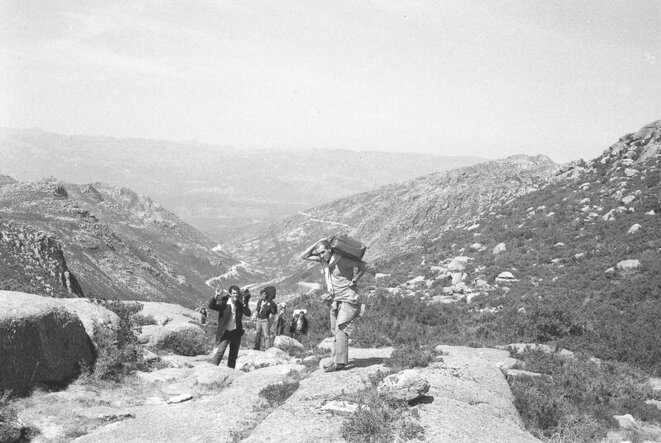
Between 1961 and 1974, an estimated 200,000 young Portuguese fled abroad to escape their call-up to fight in their country’s bloody colonial war in Africa, while around 8,000 serving soldiers, according to some historians, deserted. As part of a summer series in which Mediapart journalists highlight those books published in France over the last 12 months which have particularly caught their eye, Mickaël Correia presents Exils, a compilation of first-hand accounts of draft evaders and deserters who defied Portugal’s dictator António de Oliveira Salazar, and who by doing so were forced into a clandestine and precarious existence far from home.
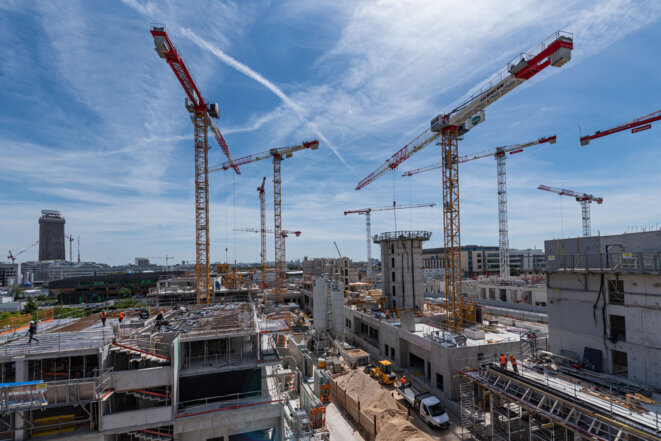
In 2024, Paris will host the Summer Olympics, and the organisers have pledged the games will be “climate positive” because more carbon emissions will be offset than created, while the “environmental excellence” criteria banned the use of tropical timber in the building of the athletes’ village. But, as Jade Lindgaard reports, the tropical timber industry has, after an intensive campaign, now claimed victory.
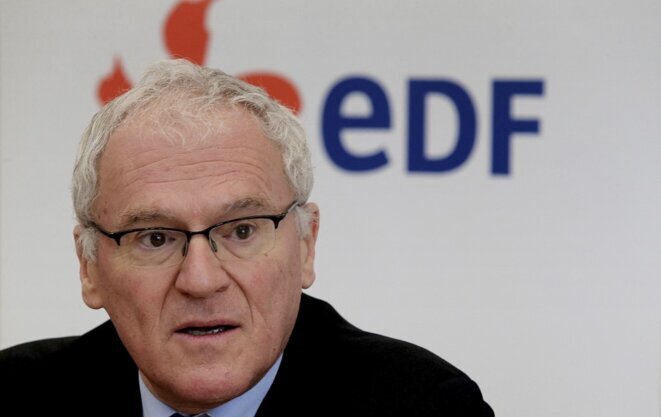
Last month, the French government announced it will re-nationalise utility giant EDF which, also last month, has reported historic first-half losses in 2022 of 5.3 billion euros. EDF’s financial woes are exacerbated by the unprecedented shut-downs due to repairs and maintenance of more than half its fleet of 56 nuclear reactors, and the government’s cap on electricity price rises. Martine Orange reports on the background to what is the most perilous situation the company has known in its 76 years of existence.
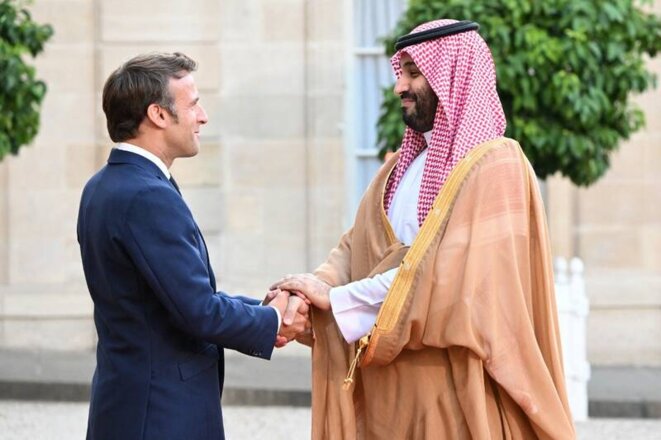
Saudi Arabia's Crown Prince Mohammed bin Salman visited Paris on Thursday for talks with President Emmanuel Macron who later hosted him for dinner at the Élysée Palace, amid outrage from rights activists. In exchange for staging the prince’s comeback on the international diplomatic scene, four years after the murder of Saudi journalist and dissident Jamal Khashoggi, Macron was hoping to obtain a substantial rise in Saudi oil production. But, as René Backmann writes in this analysis of Macron’s dealings with “MBS”, the move may well prove to benefit only he who Amnesty International secretary general Agnès Callamard has dubbed “the murderous prince”.
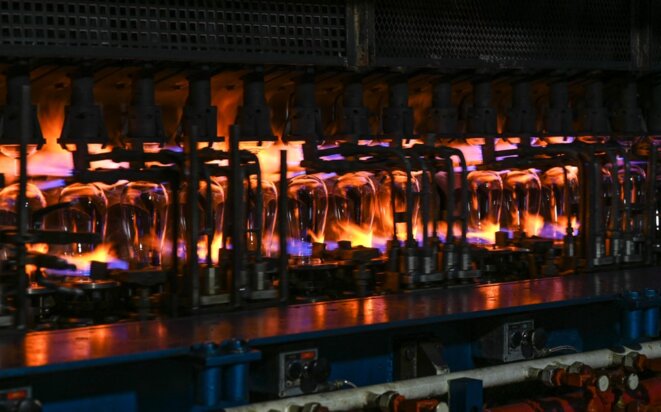
Soaring energy costs have thrown the once flourishing glass-making industry in France into a crisis, and this has notably hit the small- and medium-sized businesses that account for an important part of its estimated 22,000-strong workforce. As glass-makers report a year-on-year quadrupling of their energy bills amid a parallel economic slowdown, some have been forced to shut down their ovens and to place staff on short-time working, and many now face the chilling prospect of not being able to survive the winter. Mathias Thépot reports.
Mediapart has already revealed how a French firm that works for foreign directorships and the bosses of some of the biggest business groups in France, including billionaire Bernard Arnault, has been accused of manipulating information through various blogs, including on our own site. Today that same company, Avisa Partners, is suspected of having modified pages on the online encyclopedia Wikipedia on behalf of its powerful clients. Fabrice Arfi and Antton Rouget report.
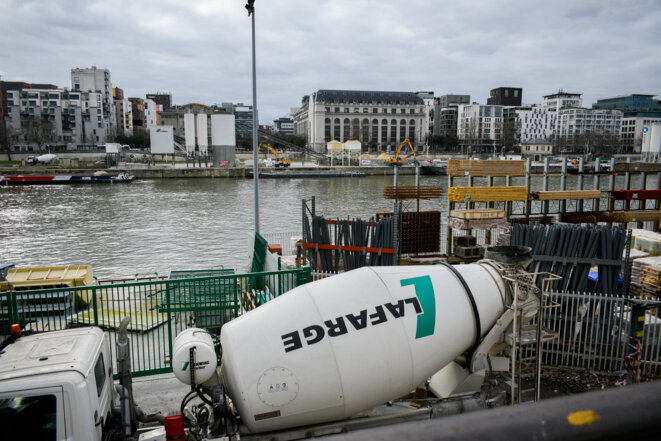
Concrete is the second most consumed product on the planet after water and its environmental impact is huge. As the climate crisis unfolds, major companies in the sector in France and around the world have made repeated promises that they will achieve carbon neutrality. But as Floriane Louison reports, so far this 'greenwashing' has produced very few effective solutions.
A detailed “social autopsy” by sociologist Eric Klinenberg examined the heatwave that killed more than 700 people in the American city during one week in July 1995. According to the American academic it was the existence of strong social ties and urban vibrancy that helped stop more people from dying, and not free phone helplines such as the French authorities are issuing to help people in the heatwave currently suffocating France and other parts of Europe. Mediapart's environment correspondent Jade Lindgaard reports on the lessons for the rest of the world from Chicago's devastating heatwave 27 years ago.
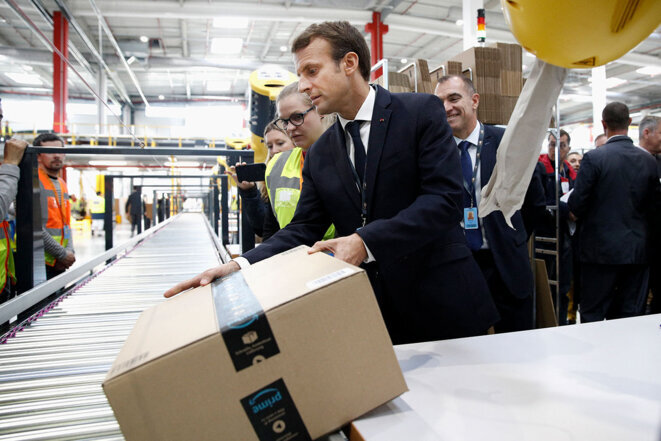
The Élysée cited business confidentiality when it refused to provide Mediapart with correspondence between presidential advisors and Amazon, Google and others giants of the digital world dating from 2017. However, Mediapart pursued the matter and after a lengthy process the administrative court in Paris found in our favour and we now have access to these documents. Like the recent 'Uber Files' controversy, they show just how closely aligned the thinking and approach of these technological groups is with that of Macron and his entourage. And also like the Uber case, they reveal that a business lobbyist from one of the groups – in this case Amazon - took part in Emmanuel Macron's 2017 presidential campaign. Alexandre Léchenet reports.
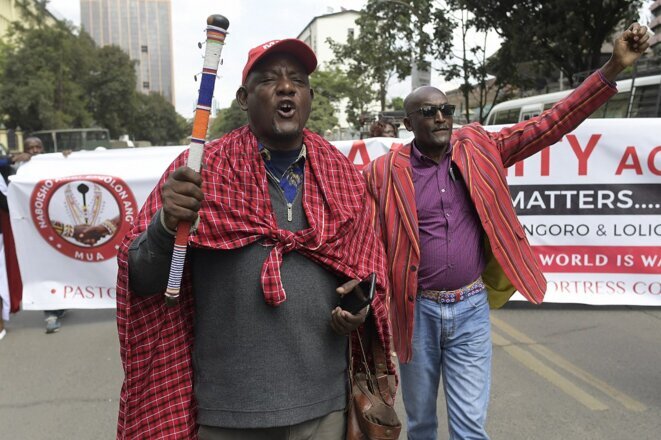
In early June around 30 indigenous Maasai people in the north-east of Tanzania were injured as they protested against being forcibly displaced from their ancestral lands. The authorities say the move is necessary to protect the area's extraordinary landscape and wildlife. But as Michael Pauron reports, lurking in the background to this affair are the interests of a private hunting company that has close ties to the royal family in Dubai.