For nearly twenty years fishermen, residents and environment inspectors have raised the alarm over pollution seeping from an industrial bottling plant owned by the French group Roxane in Normandy. Locals say the organic pollution has caused major harm to the stream, which feeds into the River Sarthe. Roxane, the third largest French bottling company and owner of Cristaline, the most widely-consumed bottled water in the country, also has its headquarters at the site. Mathieu Martiniere of the independent journalists collective 'We Report' investigates.
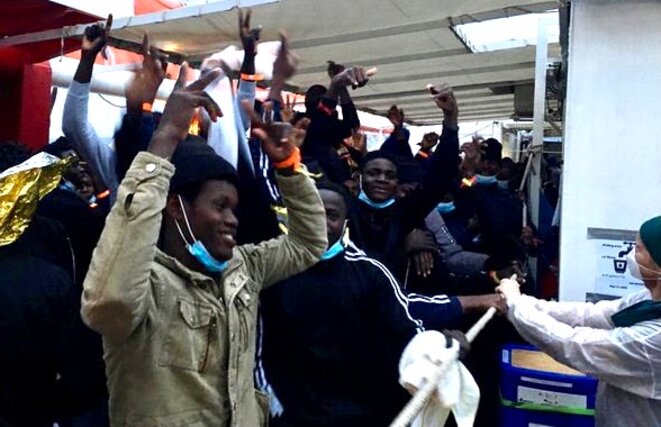
The Ocean Viking, flagship of the French-based maritime humanitarian organisation SOS Méditerranée, was allowed to dock in Sicily on Monday after rescuing 374 migrants attempting, in overcrowded rubber dinghies, the hazardous crossing of the Mediterranean Sea from Libya to Europe. It was the first time the ship had been on a search and rescue operation since it was blocked for five months last year in an Italian port. Mediapart’s Nejma Brahim was aboard the Ocean Viking for its two-week sortie, and reports on the tense last moments of its mission as it battled heavy seas between Malta and Sicily.
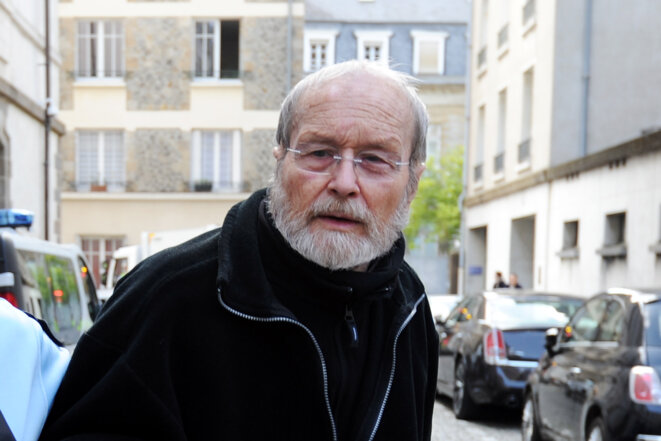
One of the most mysterious, high-profile murder mysteries in France over the past five decades was the disappearance without trace in 1977 of Agnès Le Roux, the 29-year-old heiress of one of the country’s biggest casinos, the Palais de la Méditerranée in the Riviera city of Nice. In an extraordinary legal saga, her former lover, lawyer Maurice Agnelet, was acquitted of murdering her, after an initial case against him had been dropped, and twice found guilty. Last Tuesday, Agnelet, 82, died, apparently of a heart attack, shortly after he was released from prison on medical grounds. His death most certainly removes the last hope of ever knowing the truth of what really happened to Agnès Le Roux. Michel Henry reports on an enduring mystery.
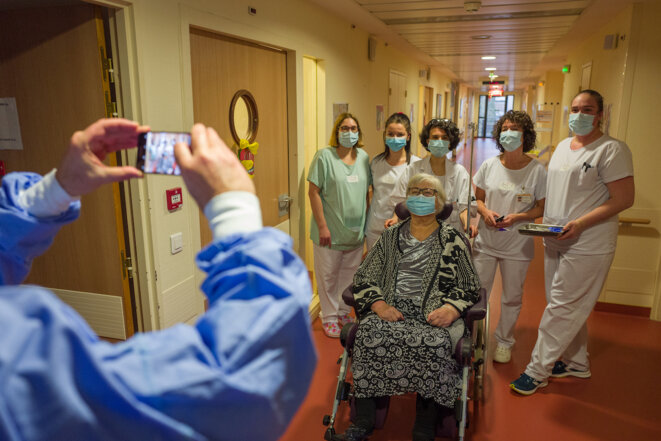
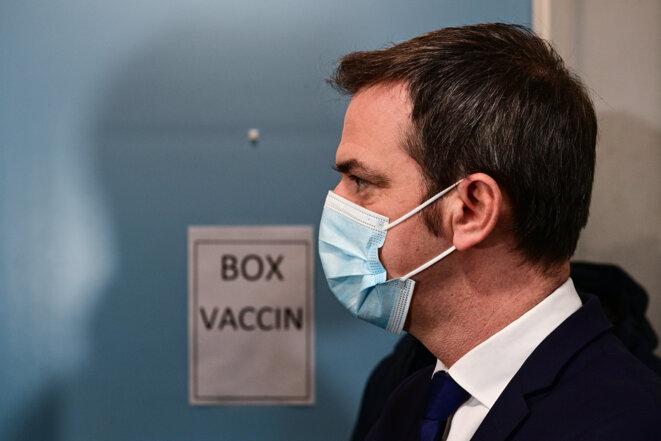
The French government has announced a target of administering one million jabs of the Covid-19 vaccine by the end of January. Priority for the voluntary jab has been given to the elderly and healthcare workers, but it appears that a significant number of staff in the country’s carehomes are refusing to be vaccinated over fears they have of potential side effects. Cécile Andrzejewski has been speaking to carehome workers across France about their scepticism, which they say is based on past incoherencies and U-turns in government policy to the coronavirus epidemic.
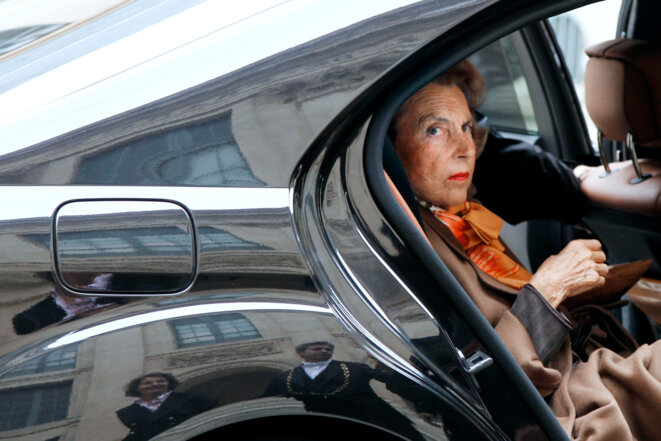
The European Court of Human Rights has found that the French state did not violate the principle of freedom of expression by imposing on Mediapart the censorship, in 2013, of 70 articles which revealed the vast criminal scandal of the so-called “Bettencourt affair”, based on tape recordings made by billionaire Liliane Bettencourt’s major-domo. Fabrice Arfi details the case.
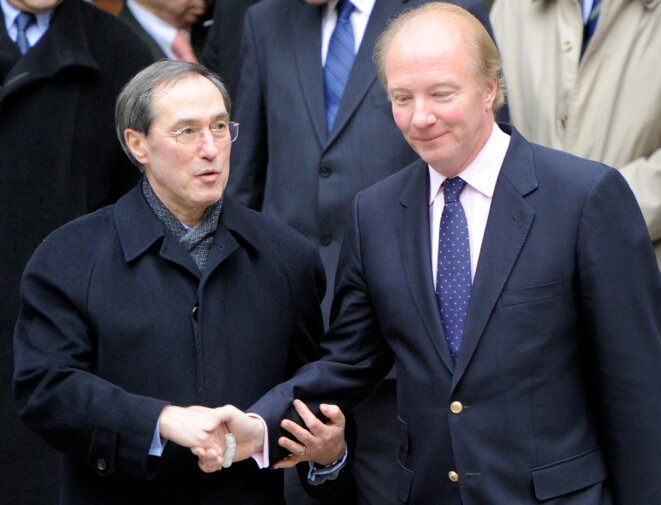
Two of former president Nicolas Sarkozy's closest allies, Brice Hortefeux and Claude Guéant, have recently been placed under formal investigation for “criminal conspiracy” over claims that the ex-head of state's 2007 election was part-funded by the Libyan regime. Mediapart can now reveal that during questioning by judges both men admitted to lapses in judgement in meeting a spy chief from Muammar Gaddafi's regime who was wanted by the French justice system after being convicted of a terrorist attack. Yet they deny there was any deal for the Libyans to help fund the election campaign. Both men also loyally continue to protect their former boss, who himself faces claims of criminal conspiracy and corruption in the case. Fabrice Arfi and Karl Laske report.
The initial slowness in the rollout of its vaccination campaign against Covid-19 has sparked a major political row in France. An investigation by Mediapart can now reveal that a failure of logistics prevented the Pfizer vaccine from being distributed more quickly. As with the earlier debacle over face masks, the Ministry of Health failed to react quickly enough to events and by the end of December had only managed to put in place 38 of the 113 special freezers needed to store the doses at low temperatures. At least three weeks were lost as a result, report Caroline Coq-Chodorge and Antton Rouget.
Adolf Hitler’s notorious, two-volume manifesto Mein Kampf was published in France last month in a scholarly version, heavily annotated by a team of historians, destined as a work of academic reference that analyses and explains the contexts, notably historical and cultural, of the hate-filled text. Olivier Mannoni is the German-to-French translator of this revised version of Hitler’s rantings, and here he tells Santiago Artozqui of the challenges of working for nine years on the “sticky, vile, deceitful, paranoiac and violent text”, and how the rigour of the historians gave a “solidity” and “reassuring stability” to his work.
Mediapart has gathered and analysed hundreds of videos taken during a demonstration staged in Paris on December 12th 2020 against the French government's controversial “global security” law. Our investigation shows the unlawful nature of dozens of police charges carried out that day. It also documents the arbitrary arrests of demonstrators, baton blows given for no reason and the misleading statements made by interior minister Gérald Darmanin, especially over the nature and outcome of the arrests made. Sébastien Bourdon, Camille Polloni, Antton Rouget and Antoine Schirer investigate.
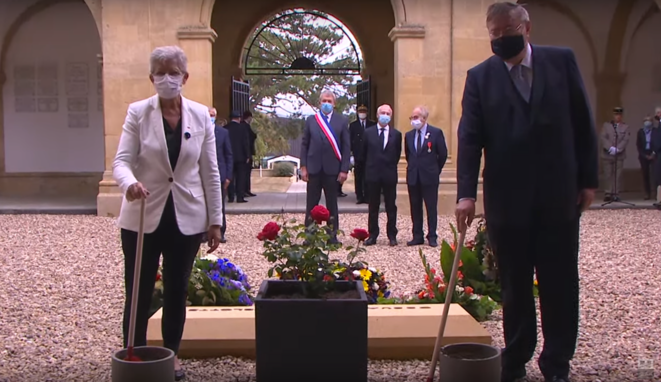
The Franco-Prussian War of 1870-1871 was a dramatic event in both French and German history. In France it led to regime change and, some argue, created a thirst for revenge among some French people in the lead up to World War I. Meanwhile the Prussian-led victory was accompanied by the unification of Germany, which was officially proclaimed on French soil in January 1871. Here Nicolas Chevassus-au-Louis examines first how France has chosen to commemorate the 150th anniversary of this deeply-destructive war, and then interviews a German academic about how the conflict has been largely ignored on the other side of the River Rhine.