


Véronique (last name withheld) recently received a call from the carehome where her elderly father is a resident, asking for her decision on whether or not he should be vaccinated against Covid-19. As France rolls out the vaccination programme, for which the elderly and a section of healthcare staff are made a priority, the regulations for administering the jab stipulate that a person can only be vaccinated with their consent or, if their mental state does not allow for making the choice, that of a guardian or a pre-designated “person of confidence”.
For Véronique, who is her father’s person of confidence and who is wary of the safety of the vaccine, the question was a dilemma. “If he is not vaccinated and he catches the coronavirus, I’ll be angry at myself,” she said. “But if something happens to him because of the vaccine, I’d be angry at myself also.”
Véronique is well aware of the reality of what is at stake, for she herself works in a home for the elderly in western France as a general care assistant for those suffering from a physical or mental handicap. Like others among her colleagues who are aged over 50, or who have underlying health problems, she is also in the priority category to be vaccinated. For her father, she finally decided to agree to his vaccination “given that the virus has already entered the place where he is”. But she herself is refusing the jab.
In France, vaccination against Covid-19 is currently not advised for people who have developed the disease during the previous three months, and before receiving the jab a person must seek the advice of a doctor.
“For a start, I’m much younger than my father – yes, yes, even at 57-years-old,” Véronique explained jokingly, adding, more seriously, that she does not want to become “a guinea pig” and is “not convinced” by the reassurances of the safety of the vaccines. Yet every year, she takes the anti-flu vaccine, despite a powerful allergic reaction on the first occasion. “I work with elderly people, I want to protect them,” she insists.
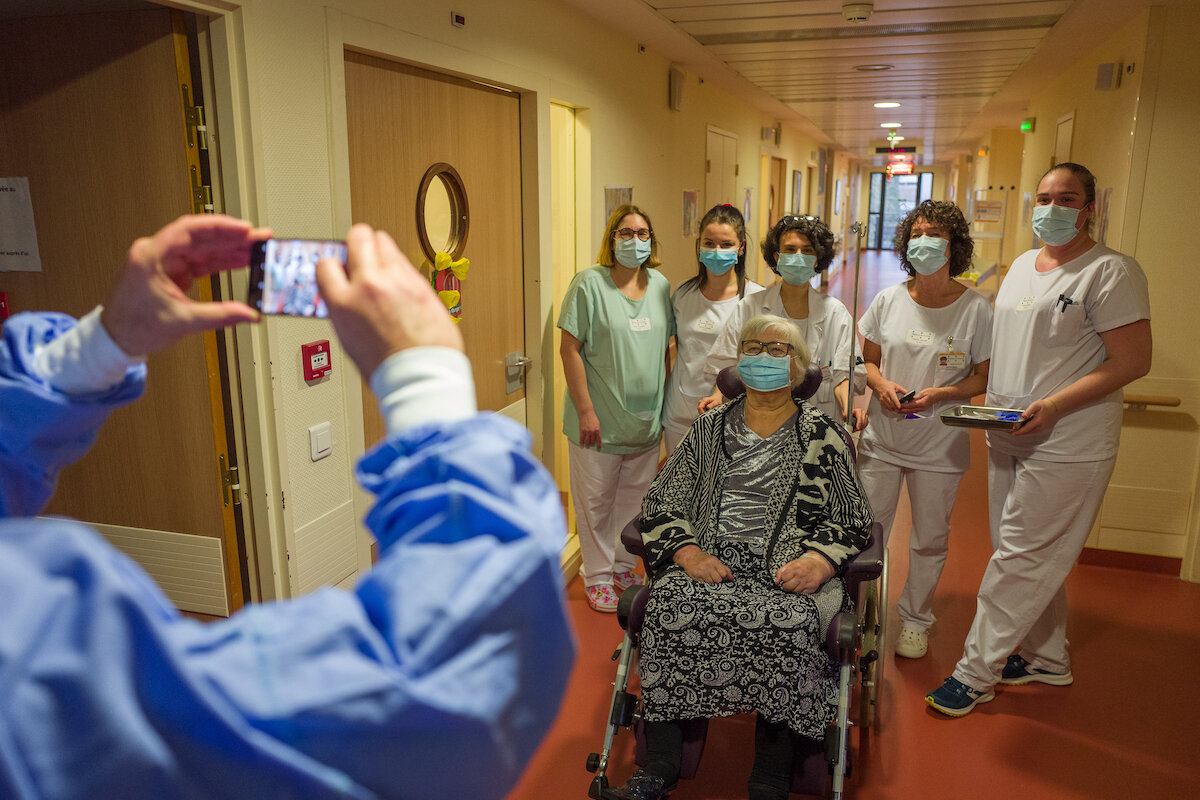
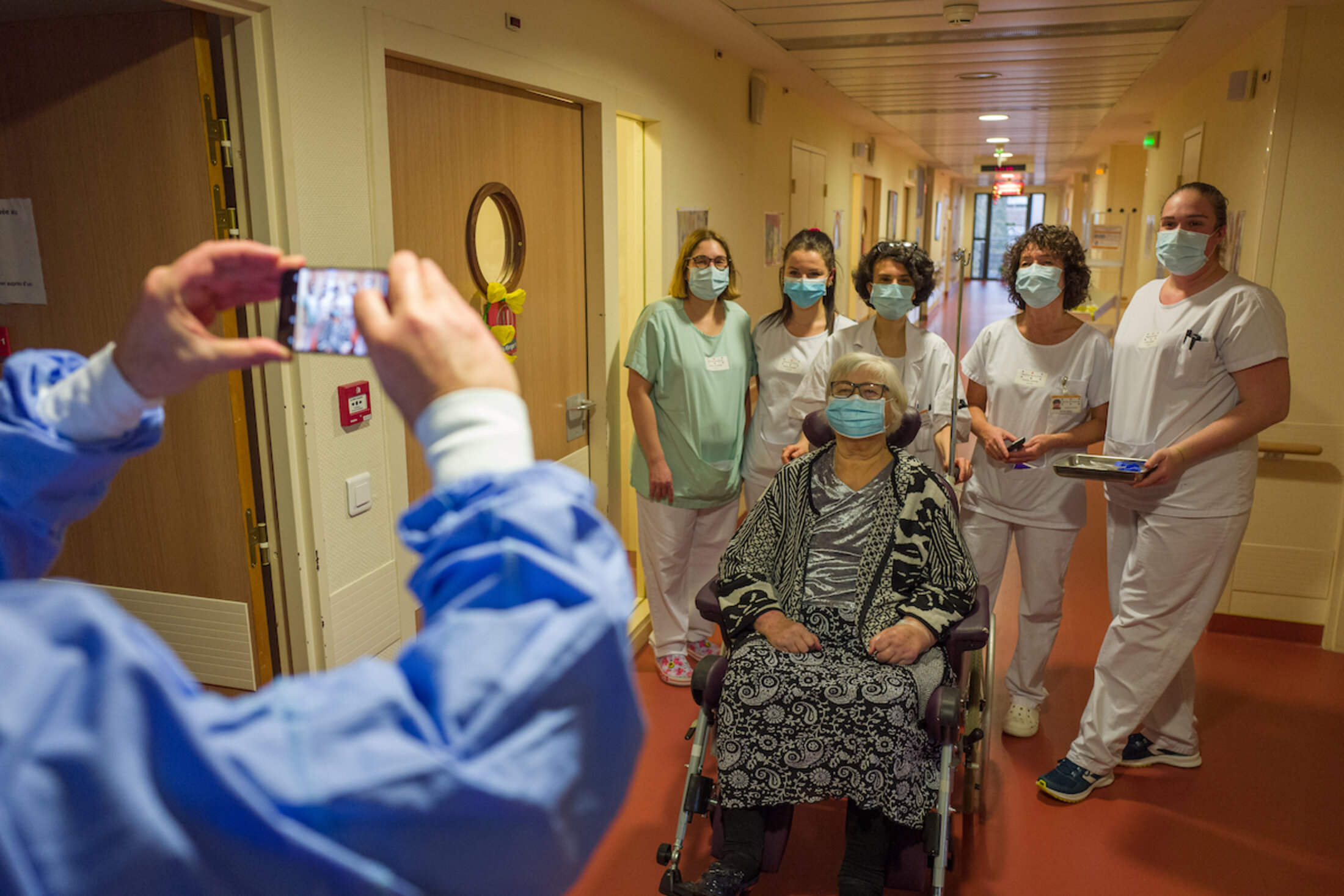
Enlargement : Illustration 1
“We don’t know anything about the reactions to this vaccine,” continued Véronique. “Normally, it takes years to be sure about their effectiveness.” She is also critical about the government’s handling of the virus epidemic and the advice given to her and her colleagues. “There have been too many controversies about what was put in place against this epidemic. Firstly, we were told that [wearing] masks served no purpose, then that they must be changed every four hours without touching them, and now that they can be washed in the machine. We had to go about disinfecting, completely undressing, when we went home from work. Today the supermarkets are packed. If we fell ill [with the virus] we had to stop work for 15 days, now it’s only seven days of stoppage.”
Malika Belarbi works as an auxiliary nurse in a carehome in the Paris region, where she is also a staff representative of the CGT, one of France’s biggest and most militant trades unions. She also underlined that the lack of confidence of carehome staff in the government’s policies towards the epidemic, claiming that among the personnel in her establishment “90 percent refuse to be vaccinated”. She observed that the only workers in her carehome who have asked to be given the anti-Covid 19 jab are those over the age of 60, and those wanting to protect people close to them, while the vast majority are waiting to see what follows.
She said that is chiefly down to three things: “A lack of confidence, not enough distance to take stock of things, and no knowledge about side effects.” Belarbi is not herself against the vaccination programme, but also points to the incoherencies of the advice previously given. “During the first wave [of the epidemic, in the spring of 2020], we were told not to wear masks, that [basic physical] precautionary measures would be sufficient;” she said. “The result is that we lost an enormous number of residents.”
Tatiana Dubuc, another CGT official for staff in a publicly run carehome in the northern French town of Le Havre, spoke of similar reactions to the vaccine programme among personnel in her establishment. “They reckon that the vaccine was brought out very, very fast and ask themselves what they are going to be injected with,” said Dubuc, who, like Véronique, will refuse to be vaccinated. “I’m not confident, all the less so when I see the way in which this crisis has been managed.”
That opinion was shared by Françoise (last name withheld), who works as a cleaning assistant in a private carehome establishment in the southern Bouches-du-Rhône département (equivalent to a county), where she said “85 percent” of staff are refusing to be vaccinated. “I’m maybe right or maybe wrong, I don’t know,” she said. “It’s not that we’re stubbornly against. We also want it [the virus epidemic] to stop. We’re on the frontline. The country is at war and we’re in the trenches. But we’re the little people. Who should be believed? I hear it said that in some countries they won’t be administering the second dose. We don’t understand any of it.” She said that in her service is a nurse who told her that she would refuse to give residents the vaccine, arguing that she didn’t know what she would be injecting and that if the person died she would have to live with that on her conscience.
But for Thierry Amouroux, spokesman for the French national union of professional nurses, the Syndicat national des professionnels infirmiers (SNPI), “That sort of reaction remains anecdotal”. He said the benefits of the vaccines, when weighed up against the possible risks, were indisputable, above all given the mortality rate of the over-75s who develop Covid-19. He admits that there is “a strong rejection of the technocracy and the [health] ministry who have made the choice of sacrificing our elders”. But he insists that the major questioning about the vaccination programme is over the lack of data about the non-transmission of the coronavirus after a person receives the jab. “Also, many healthcare workers have been contaminated during the previous waves. They ask themselves what would happen if they are vaccinated when they already have antibodies,” he said. “They draw a link with the people who have ‘long-Covid’.”
Amouroux said that while his union “believes it is important that healthcare workers are vaccinated, for themselves but also because they are more exposed”, he rejects the idea that the jab should be made a professional requirement. “The very strong notion of exemplarity is founded on voluntary participation. It’s interesting that people show themselves being vaccinated, like Anglo-Saxon heads of state have done.” He believes that scepticism about the jab will dissipate when mass vaccinations have taken place. “The concern will be appeased with the millions of Americans vaccinated and about who we have reassuring information about the side effects.”
That suggestion was echoed by Véronique, the general care assistant for those suffering from a physical or mental handicap in a carehome in western France. “I’m going to let time pass, I’ll see how things work out for others,” she told Mediapart. “Maybe later I’ll get vaccinated.”
Annabelle Vêques is the head of France’s national federation of associations representing directors of carehomes for the elderly, the FNADEPA. “The millions of people vaccinated around the world will contribute to convincing those who are reticent,” she confidently predicted. According to a survey carried out by her federation (which received 330 individual responses from its total membership of 1,200), just 25% of carehome staff are happy to be vaccinated, compared with 65% of residents. “Many are wary about the rapidity with which the product was created,” she said. “Our major role, as management, consists of informing, along with coordinating doctors who heighten awareness among the personnel thanks to scientific data.” The term “coordinating doctors” refers to doctors who are specifically in charge of admissions and ensuring proper medical care structures for the elderly in carehome establishments.
Vêques sees a “collective” interest at stake: “Even if we don’t yet know if the vaccine will prevent transmission of the virus, it remains important to do it, to protect the residents. It concerns a fragile population who represent 40 percent of deaths from Covid-19.”
Speaking on January 5th, Nathalie Maubourguet, president of the French federation of associations of carehome coordinating doctors, told Mediapart of how one of her colleagues had called on a company doctor to carry out a report on attitudes to vaccination. This found that out of 100 healthcare workers questioned, just ten said they would accept vaccination. “The rest are waiting to see how things turn out for the others,” she said. “Many place at the fore the fact that they are young and have no factors of risk. It’s true that in carehomes, at least in the private sector, the staff population remains quite young.”
The FNADEPA passes on to carehomes the most recent available data to emerge from the vaccination programmes, and adopts an approach of highlighting how few side effects have been recorded in comparison to the overall benefits of the jab. The federation is calling for the widening of vaccinations to all carehome health workers, regardless of age. “That would not represent millions of doses, the objective can be met,” said Vêques. For that, there remains the issue of convincing the apparently significant number of doubters.
-------------------------
- The original French version of this report can be found here.
English version by Graham Tearse