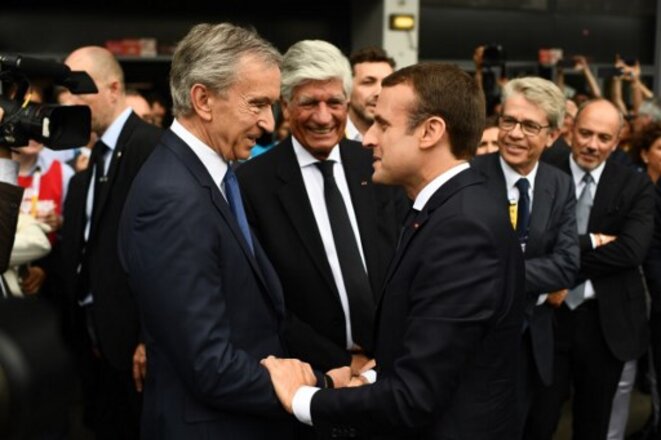
France's foreign minister has written an extraordinary letter that provides 'cover' for the French luxury goods group LVMH to pull out of an expensive deal to buy famous American jewellery firm Tiffany it no longer wanted to complete. That letter came after LVMH chief executive Bernard Arnault reportedly asked foreign minister Jean-Yves Le Drian for help. The affair is now likely to lead to a long and bitter legal battle, one that could even end up with the French state facing claims for compensation from disgruntled shareholders. Mediapart's Martine Orange argues in this op-ed article that no French government has ever gone out on such a limb to support a private company.
There is no way of knowing yet what kind and level of social protests may emerge in France this autumn. But judging by the new books from authors Alice Zeniter, Barbara Stiegler, Émilie Notéris, Sandra Lucbert and Aude Lancelin that have been published at the end of the summer break, one of the themes of the new literary season looks set to be that of political commitment and struggle – and the way in which people get involved. Lise Wajeman looks at a mixture of new fiction and non-fictional accounts of recent social conflicts and workplace disputes in France, and finds that 'hybrid' forms of writing win out over the traditional novel form.
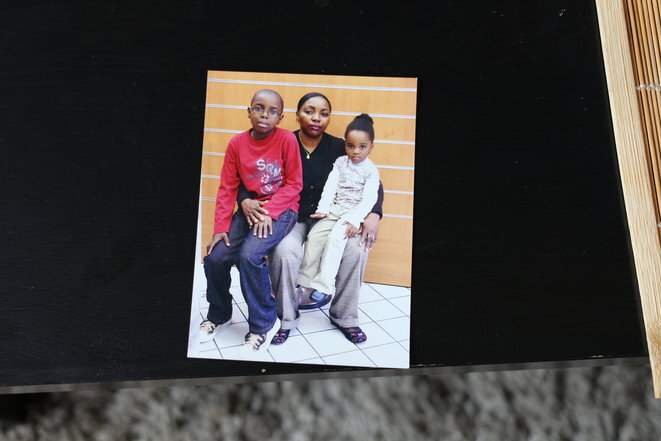
Calixte Songa Mbappé, 54, a single mother of five, worked on temporary contracts in a care home operated by Paris City Hall when the novel coronavirus epidemic began sweeping through France. In close physical contact with the residents, but not issued with a face mask or other protective clothing, she caught the virus in mid-March and died within weeks. Her financially insecure children are now in an uphill fight for official recognition that her illness was caused at her workplace. Mathilde Goanec reports on an emblematic case of the unsung carers who lost their lives to Covid-19, and the plight of the families left behind.
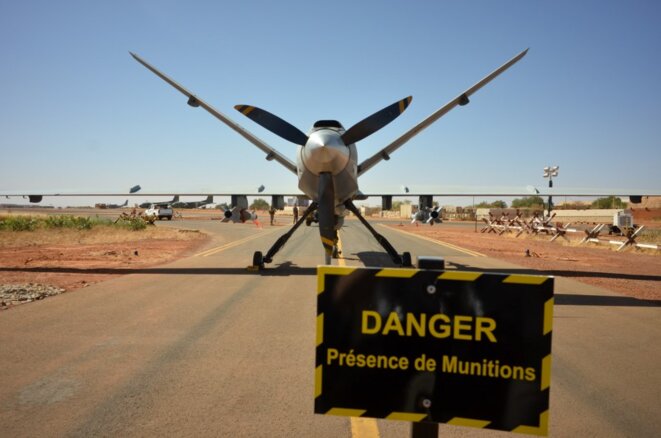
Two French soldiers were killed this weekend in Mali when their vehicle was targeted by an improvised explosive device, in what was a grim reminder of the difficulties the French military face in their campaign to defeat jihadist groups in the Sahel region. To strengthen its operations, France has begun deploying, for the first time anywhere, armed drones. But, as Rémi Carayol reports, while these have apparently reduced the capacity of the jihadists to launch mass attacks, the drone strikes have also made civilians fearful for their own safety, with the potential effect of losing support for the military campaign.
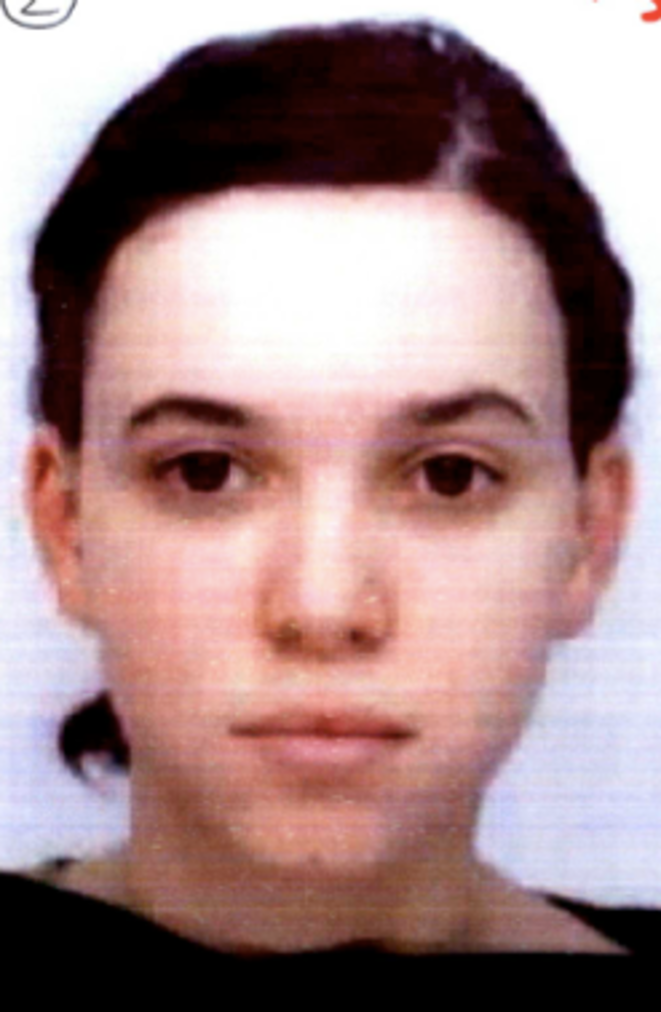
The trial in Paris of 14 people accused of complicity in the separate January 2015 terrorist attacks in the French capital against Charlie Hebdo magazine, a kosher store, and a policewoman, which left 17 victims dead, opened on Wednesday. Absent from the hearings are three defendants whose fate or eventual whereabouts is unknown. In this second of a two-part report, Matthieu Suc details the story of how the three got away, and the evidence that at least one of them is alive and hiding from justice in the Middle East.
Rui Pinto, the whistleblower behind the Football Leaks revelations of corruption and fraud that have rocked the world of professional football, is to stand trial in Portugal on September 4th. The 31-year-old faces 90 charges which carry up to 25 years in prison. But after reaching a cooperation agreement with Portuguese authorities, he is now in a witness protection scheme. Der Spiegel magazine, Mediapart’s partner in the European Investigative Collaborations network which jointly published the Football Leaks investigations, has met with Pinto ahead of his trial.
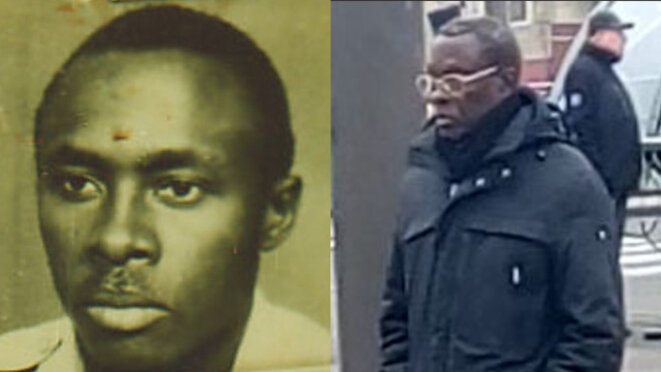
The Rwandan authorities have issued an international warrant for the arrest and extradition of Aloys Ntiwiragabo, a former head of the country’s military intelligence who is accused of playing a key role in the 1994 genocide in which an estimated 800,000 people were slaughtered, after an investigation by Mediapart revealed that he had settled with his wife in the French town of Orléans.
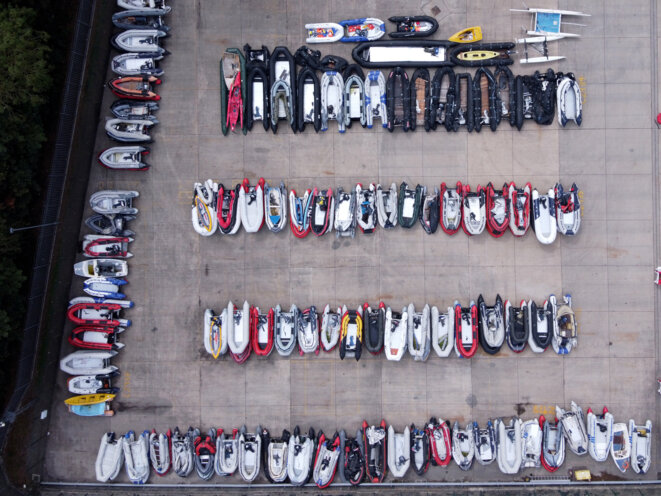
The numbers of migrants attempting hazardous clandestine crossings of the Channel to reach Britain, mostly in overcrowded small dinghies, has soared this year, already reaching well more than double the total of 2019. Now the British government has called on the Royal Navy to assist the country’s Border Force in a move officials say is intended to make the crossings “unviable”. In this interview with Mediapart, François Gemenne, a prominent Belgian political scientist specialised in migratory issues, says that the situation in the Channel is comparable to that in the Mediterranean and warns that “the idea of closing migratory routes is absurd and dangerous” and “will lead to yet more tragedies”.
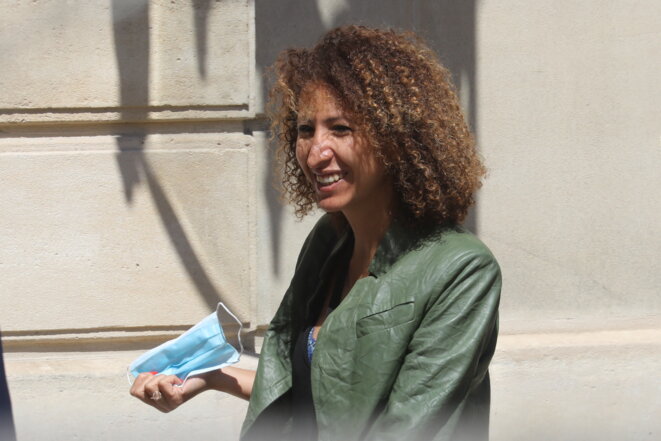
Mayada Boulos, communications advisor to French Prime Minister Jean Castex, was in charge of a PR campaign to promote Saudi Arabian interests during her previous job with advertising and public relations group Havas. The campaign was on behalf of a foundation created and chaired by Saudi Crown Prince Mohammed bin Salman, the de facto ruler of the kingdom who a US intelligence report released last week said had approved the 2018 murder of dissident journalist Jamal Khashoggi. Antton Rouget reports.
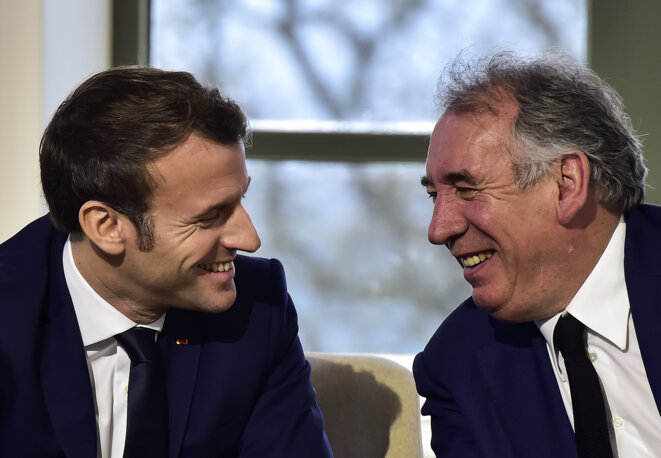
As a presidential candidate Emmanuel Macron insisted he wanted to dispense with the old ways of doing politics. Yet over this summer President Macron has approved a series of appointments of loyal followers and advisers as well as political allies who have faced difficulties but whose support he may need. And as Manuel Jardinaud reports, this form of presidential patronage is exactly what French presidents have always done.