


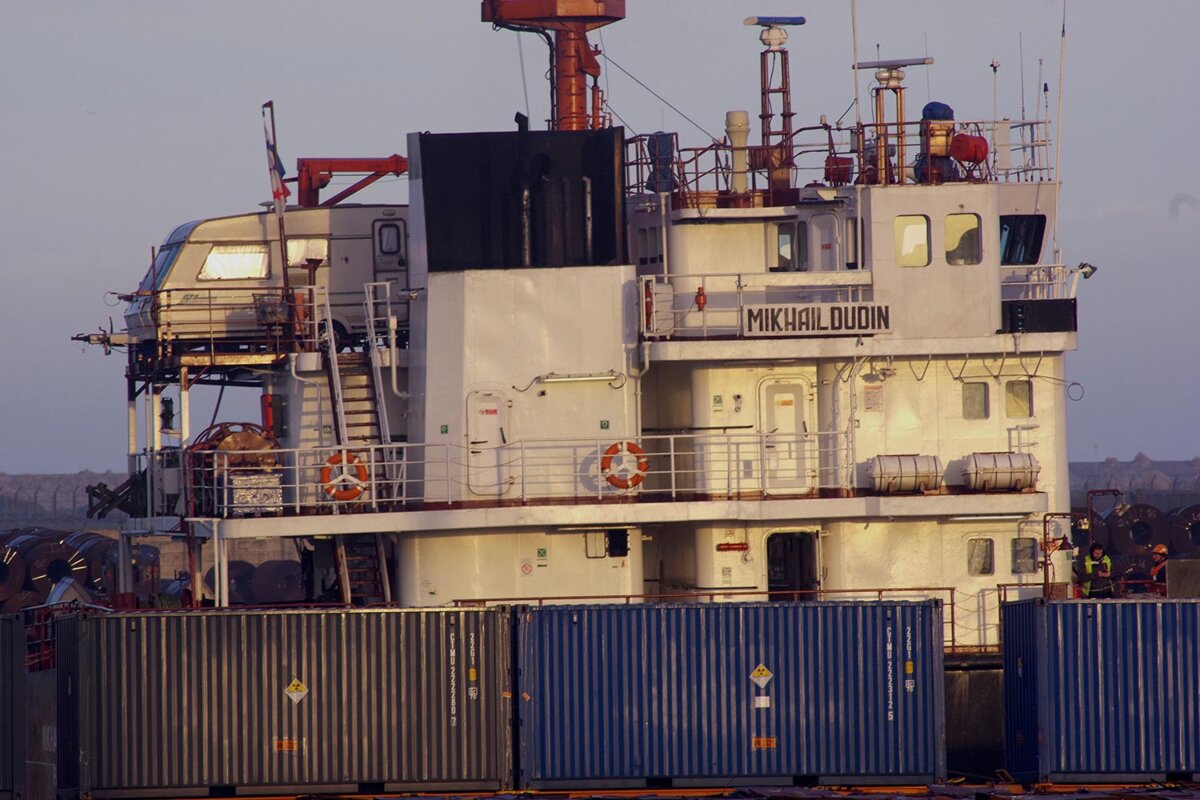
In the early evening of November 18th, the Russian-operated, Panama-registered cargo vessel, the Mikhail Dudin, was continuing on its slow voyage up the North Sea from the Channel, heading to the Danish coastline, which it will round to travel south and east into the Baltic Sea.
It is carrying containers of uranium, loaded aboard in the French port of Dunkirk, in what was until now a closely guarded secret: the dependence of France’s nuclear power industry on Russia for the transformation of its reprocessed fuel, which is enriched for re-use in its electricity-producing plants.
The announced final destination of the Mikhail Dudin is the Russian port of Ust-Luga, lying on the Gulf of Finland and which is one of the main ports used by Russia’s shadow tanker fleets. It is due to reach Ust-Luga on November 25th.
But the final destination of its cargo of spent nuclear fuel is most certainly Seversk in Siberia, at an industrial plant capable of converting reprocessed uranium into enriched reprocessed uranium, a highly polluting operation. The Seversk plant is operated by a company called Tenex, which is a subsidiary of the giant Russian state nuclear activities group Rosatom.
Enlargement : Illustration 1
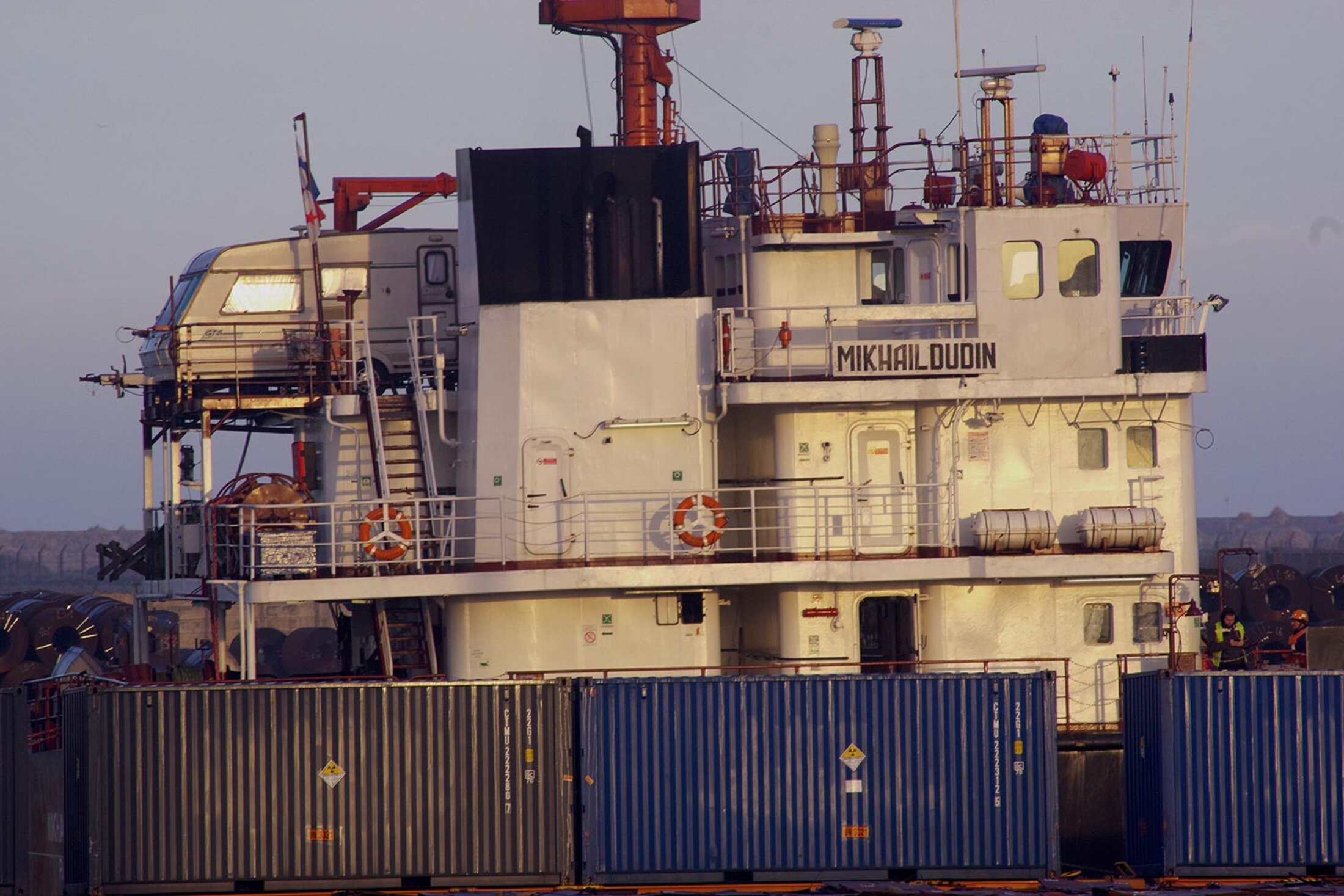
The loading of the Mikhail Dudin in Dunkirk on Saturday was revealed by Greenpeace, which said at least ten containers of the spent fuel was placed aboard. The environmental NGO reported that it was the first known shipment of the sort to Russia since the Kremlin ordered the invasion of Ukraine in 2022. At the time, the French government ordered France’s state-controlled utility giant EDF, which operates the 57 reactors spread across the country’s 18 nuclear power plants, to halt its uranium recycling activities with Rosatom, which were the subject of a 600-million-euro deal signed with Tenex in 2018.
However, a first return batch of uranium enriched in Russia was used by EDF at the end of 2023 for the Cruas 2 reactor, one of four at the Cruas-Meysse nuclear plant in southern France. EDF has reported that since 2024 it has also received other quantities of uranium enriched partly in the Netherlands and in Russia.
The recycling by EDF of its spent fuel in Russia is not illegal because nuclear combustible and other elements necessary for the functioning of the civil nuclear industry are not included in the currently applicable list of European Union sanctions against Russia (the EU commission has since produced a roadmap for the progressive ending of energy-sector importations from Russia).
"France should end its contracts with Rosatom, a state company that has occupied the Ukrainian nuclear power plant at Zaporizhzhia for three years," said Pauline Boyer, head of Greenpeace France's nuclear campaign, in an interview with news agency AFP. She said that while the trade was not illegal, it is “immoral”.
Questioned this week by Mediapart about the shipment, EDF replied that it had “no comment nor particular information on the subject” to give, while Rosatom similarly declined to comment. France’s economy ministry also declined to answer questions from journalists about the shipment.
It was “a disastrous political signal”, said Boyer. “Why continue to send uranium to be treated in Russia whereas not doing so would have no effect on the functioning of the [French nuclear power plant] network?” she asked, adding: “It is really a cargo of shame,” she added. “It is indefensible to intensify trade with Russia at a time when strikes against the energy network in Ukraine intensify.”
EDF reports its annual purchases of uranium worldwide amount to close to 7,000 tonnes, representing around 10% of international demand, to which are added associated transformation services (including enrichment and recycling).
A study of French customs data by Mediapart showed that, between April 2024 and March 2025, France imported 65 tonnes of enriched uranium from Russia, representing 20% of total imports of the nuclear fuel over the same period. That quantity of enriched uranium from Russia is around 5% of the 1,200 tonnes of the nuclear fuel used every year in French power plants. EDF claims to “maximise the diversification of its geographical sources and suppliers”, and insists that it depends on “no site, no company and no country” in order to ensure the security of its supplies.
The utility giant says it is in “discussions with several suppliers” about a project to build an industrial plant in western Europe for the conversion of reprocessed uranium.
-------------------------
- The original French version of this report can be found here.
English version by Graham Tearse