


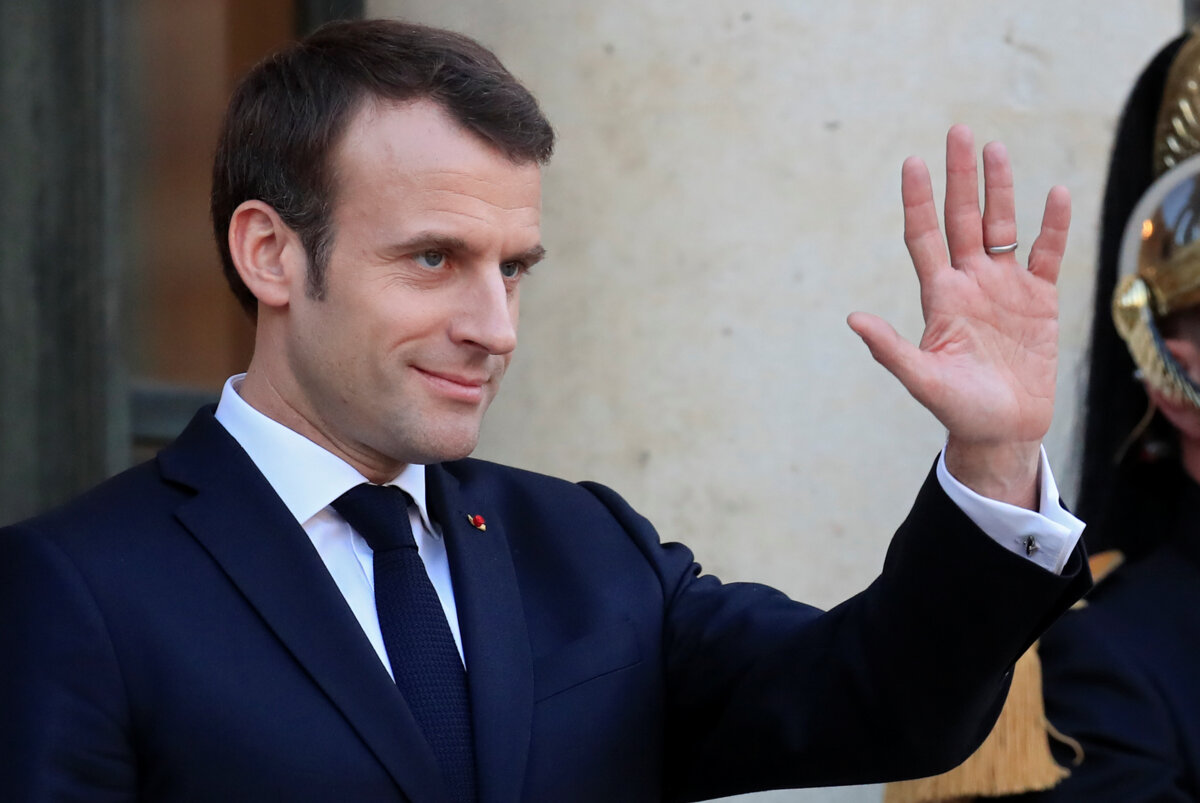
Just last Tuesday, February 26th, President Emmanuel Macron was adamant when he spoke at the Élysée to councillors from the east of France who had come for a meeting; there were not and had not been any plans to repatriate French jihadists from Syria and Iraq.
“France has always had the same doctrine which is that those who, in the context of war, in a theatre of war, have been incarcerated – in this case by the SDF [editor's note, the Syrian Democratic Forces, made up mainly of units from the Kurdish People's Defence Forces or HPG who have been fighting Islamic State in the north of Syria] in Syria and/or by the Iraqi authorities – are first and foremost subject to the judicial authorities in those countries where one recognizes the justice system, when there are actions for which they are responsible and accused of in those countries,” said the French head of state. That much is true.
“Contrary to what I've read and heard, there is no programme for the return of the jihadists that has been drawn up today, we are sticking with the same doctrine,” the president then added. That, however, is not true.
Enlargement : Illustration 1
On Tuesday January 29th 2019 BFM TV news channel stated that 130 jihadists – the figure was later challenged by the authorities – held in Kurdish camps in Syria were going to be repatriated in France in the coming weeks. Later, questioned by BFM TV and RMC radio interviewer Jean-Jacques Bourdin, interior minister Christophe Castener pointed out that “they are French before they are jihadists” and he stated: “All those who return to France will go through the judicial system and be handed over to judges.” Following on from the BFM TV report, Le Monde wrote about a “coordinated international repatriation operation”, citing several different French sources. But according to the French president now, none of those plans ever existed.
Today Mediapart can reveal that, contrary to what the head of state has just said, officials at the ministries of Defence, Foreign Affairs Interior and Justice have indeed been working since the autumn of 2018 on the return of French jihadists held by Kurds in Syria. This was even before the abrupt announcement by President Donald Trump in mid-December of the withdrawal of American troops from the region. “They're all coming back, and they’re coming back now,” declared the United States president, arguing that the Islamic State had been defeated.
During a meeting of the Defence and National Security Council held at the Élysée on November 14th 2018, the need to anticipate the possible repatriation of of French citizens held in prisoners in the north of Syria was already clear. At the time only the principle of repatriating minors had been decided upon. Trump's announcement caught Paris and other European capitals off guard and forced the French authorities to accelerate the moves, fearing that the Turks would take advantage of the American withdrawal to attack Kurdish positions and that the jihadists who were being held would just be let go.
The General Secretariat for Defence and National Security (SGDSN) - Secrétariat Général de la Défense et de la Sécurité Nationale (SGDSN) – then worked on plans for the “repatriation of detained French citizens” and coordinated inter-ministerial work on this. Among its duties, the SGDSN has to prepare for each defence council meeting a dossier that goes to the president and which sets out the various options which exist to tackle the current issue of the day. On this occasion the situation was urgent and the schedule was hurried up.
According to Mediapart's information, following President Trump's remarks the SGDSN sent the Élysée a report in late December which set out the different options of various government departments. It involved finding the best solutions faced with a twin threat: on the one hand, to avoid repatriating known dangerous terrorists among the group French prisoners and also those against whom evidence might might prove insufficient and who might then have to be set free once they returned. On the other hand the challenge was to stop those same men from reaching safe havens in the Middle East where they could prepare attacks on French soil.
In particular the French intelligence services have been worried about French citizens being in the hands of the regime in Damascus, which could use them for media propaganda purposes or, more insidiously, encourage them to return to France and carry out attacks. The agencies have not forgotten the murky role played by Syrian leader Bashar Al-Assad in the emergence of Islamic State. In 2011 the Syrian dictator emptied the country's prisons of jihadist prisoners, gambling that they would then join the rebellion and that this would allow him to be able to tell the world that the rebellion had been taken over by terrorists and that he, the Butcher of Damascus, was the lesser of two evils.
To avoid such a scenario, and in agreement with the ministries involved, the SGDSN came up with three options.
The first, the most simple and the most appealing option was a repatriation carried out “from start to finish” by the Americans who would gather up the French citizens in Syria and deliver them in handcuffs and leg irons onto French soil.
The second option was a repatriation managed by France itself. This method has the advantage of not making France dependent on a third country, even a friendly one, but has the disadvantage, according to France's Ministry of Justice, of creating a risk in relation to the subsequent criminal proceedings against those repatriated. Judges fear that the presence of French officials during the questioning in Syria of the jihadists held in camps or in escorting them during their expulsion would extend the delays in handing them over to the French justice system - and that this could this lead to appeals to have the cases quashed. At the end of a legal battle the jihadists could thus find themselves free in France.
The third option was the more complex one. It involved having thirteen men whom it has been established committed abuses in Iraq being tried in that country. The other jihadists would be sent to Iraq – a state recognised by France – from where they would be expelled to France. This operation is the most complicated because at both stages, the transit and the expulsion, it involves French intervention and thus once again leaves open the possibility of challenges to criminal proceedings because of the delay in handing over the suspects.
'It's being blocked at the Elysée and we don't know why'
Alongside this repatriation – which the French president now says was never planned - the SGDSN and the different ministries involved also assessed whether the various state institutions were able to cope with a return of batches of jihadists and their families. The verdict was that they could. First of all because the repatriation that was planned was not huge, and involved around a hundred people, a large majority of them children. Secondly, though they are themselves clogged up, the courts and prisons believe they are able to deal with an extra few dozen or so people going before the courts and, if required, being placed in custody.
The repatriation plans involving 73 children of practically all ages up to 13 are more problematic. The measures that are in place to deal with returning minors at a centre based in Seine-Saint-Denis département or county north of Paris – and which include Roissy Airport, the court at Bobigny near Paris, the local state prefect, the education authority and the regional health authority – are already swamped. Using the educational and family benefits system these measures allow those children who are not handed over to members of their family – families which are not involved in “jihadist networks” - to get individual help.
In a very critical report on the measures put in place for the “de-radicalisation and the re-integration of jihadists in France and Europe”, the senators Esther Benbassa, of the green Europe Écologie-Les Verts), who has a blog on Mediapart, and Catherine Troendlé of the conservative Les Républicains praised the existing programme in Seine-Saint-Denis. Here radicalised children live alone in permanent contact with a therapist and child worker.
The SGDSN considers that the cost of taking in 73 new children would cost the state close to a million euros a year. That would be enough to set up a second centre in the nearby départements of the Val-de-Marne or Yveslines, as they are close to the airports of Orly and Villacoublay.
In short, the repatriation of the French jihadists and their families is considered “bearable” from a logistical point of view by the different government departments. “We were able to manage it...” says one irritated official. Meanwhile there was a growing consensus that the American option was the best one, being the most realistic, the easiest to implement and the one that posed fewer legal risks.
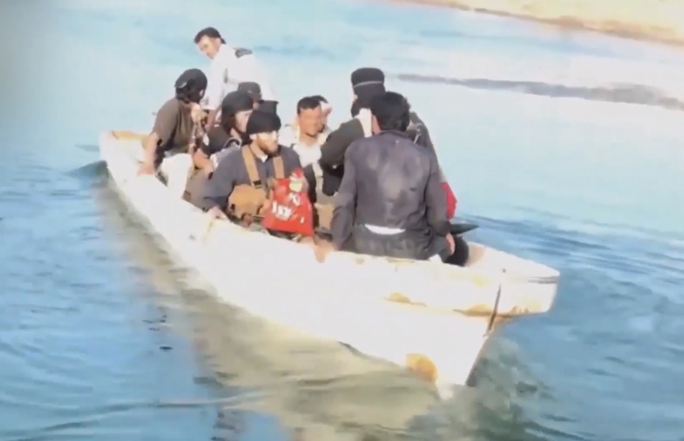
Mediapart understands that the Élysée and the prime minister's office gave the go ahead for the ministries of Foreign Affairs and Defence to make contact with the United States to discuss the programme of return for the French jihadists. The Americans responded favourably. The operation was due to be led by the Joint Special Operations Command (JSOC) which coordinates different units of US special forces who proposed chartering two planes on condition that they could land at a military airport. The one at Villacoublay was earmarked for this. JSOC also offered to send the results of the debriefing of the French jihadists the day after they were questioned, which could then be used as evidence and become part of any legal proceedings in France against the individuals concerned.
Enlargement : Illustration 2
Mediapart was in the process of investigating the circumstances of the jihadists' return – which was seen as a done deal by various sources – when in the first half of February concern swept through the ministries involved. Suddenly there was no longer any question of repatriating the jihadists. “The PR is blocking it,” said one senior official, with 'PR' referring to the president of the Republic himself. Another official said: “It's being blocked at the Élysée and we don't know why.”
So what changed Emmanuel Macron's mind and made him go against the recommendations of his own departments? The Élysée did not reply to Mediapart's requests for information.
Meanwhile, and unsurprisingly, BFM TV's revelations at the end of January about an imminent repatriation of French jihadists sparked a lively debate. This included some bizarre suggestions such as one from the nationalist politician Nicolas Dupont-Aignan, who put forward a “common sense” idea of sending the individuals to an “isolated place such as the Kerguelen Islands”, referring to the French islands in the Antarctic whose other name is the Desolation islands. Le Monde highlighted fears among some in the administration that the return of these fighters and their children could provoke a strong reaction in public opinion. Was this the reason why the president back-pedalled?
When he visited Paris on Monday February 25th, the Iraqi president Barham Salih announced that 13 French jihadists were to go on trial in his country. Alongside him President Macron made no reference to the nationality of the accused, but made clear that in his view Baghdad had the “sovereign” right to make such decisions on criminal proceedings. A little earlier in the day two Iraqi military sources had told AFP and Reuters news agencies that the Syrian Democratic Forces (SDF) had handed over more than 20 foreign jihadists, including 13 French citizens.
In their recommendation to the head of state the SGDSN said that whichever option was used for the repatriation, it should be done “without the visible intervention of France”. In the end that is the only recommendation that President Macron has followed. Meanwhile the 73 children and a hundred or so men and women remain detained in camps in the north of Syria. France has washed its hands of them.
On Thursday February 28th the lawyers William Bourdon, Marie Dosé and Martin Pradel made a formal complaint on behalf of the grandparents, uncles and aunts of the French jihadists' children in Syria to the United Nations Committee on the Rights of the Child and against the French state. “Although the repatriation of close to 70 children and several dozen mothers was announced at the start of February, the French authorities have back-pedalled without any explanation,” the lawyers say in their deposition. Contacted by Mediapart Martin Pradel said he was saddened about the “abdication of the French government” which “once again” was reacting to events rather than anticipating them, which he says results in the “abandonment of a certain number of our principles, in this case by allowing children to die there...”
In this case the lofty principles spoken of by the lawyers have come face to face with the realities of national interests. But up until just 15 days ago the various relevant French government departments had been virtually unanimous that maintaining the status quo was in fact the most dangerous option for ensuring France's safety.
-------------------------
If you have information of public interest you would like to pass on to Mediapart for investigation you can contact us at this email address: enquete@mediapart.fr. If you wish to send us documents for our scrutiny via our highly secure platform please go to https://www.frenchleaks.fr/ which is presented in both English and French.
-------------------------------------------------------------------------
- The French version of this article can be found here.
English version by Michael Streeter