


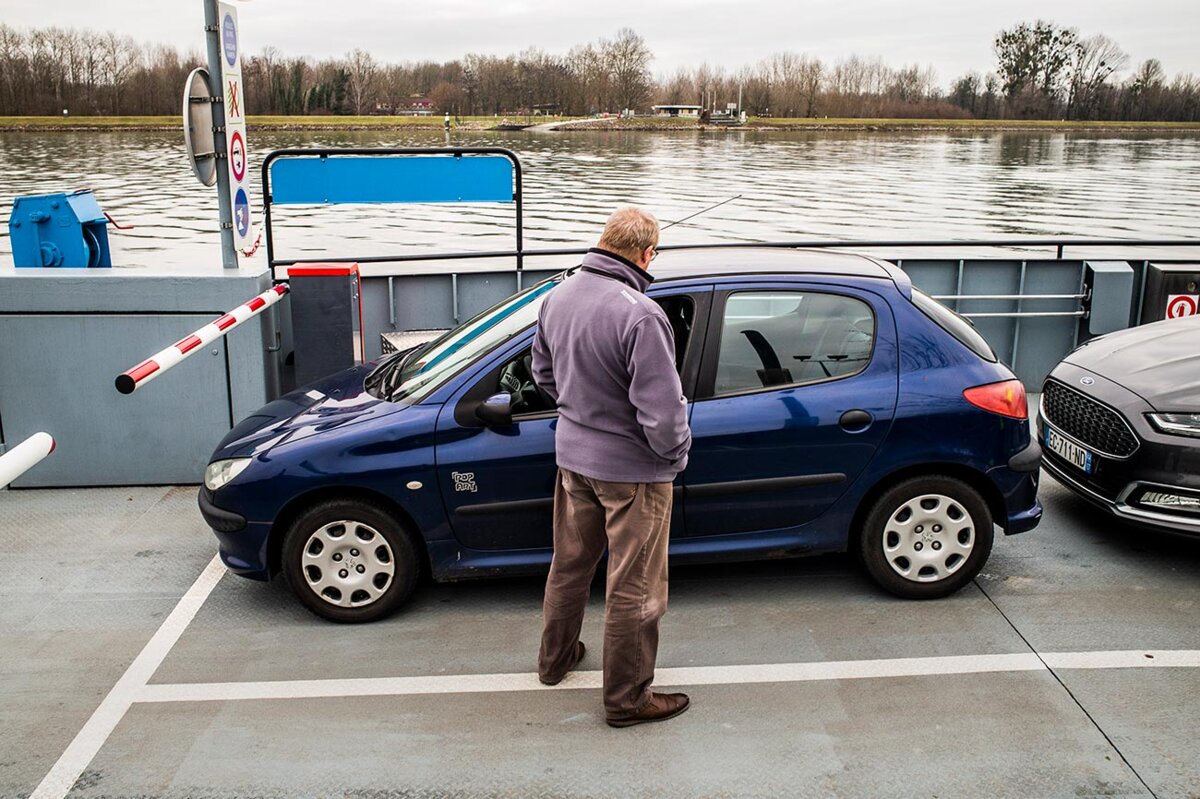
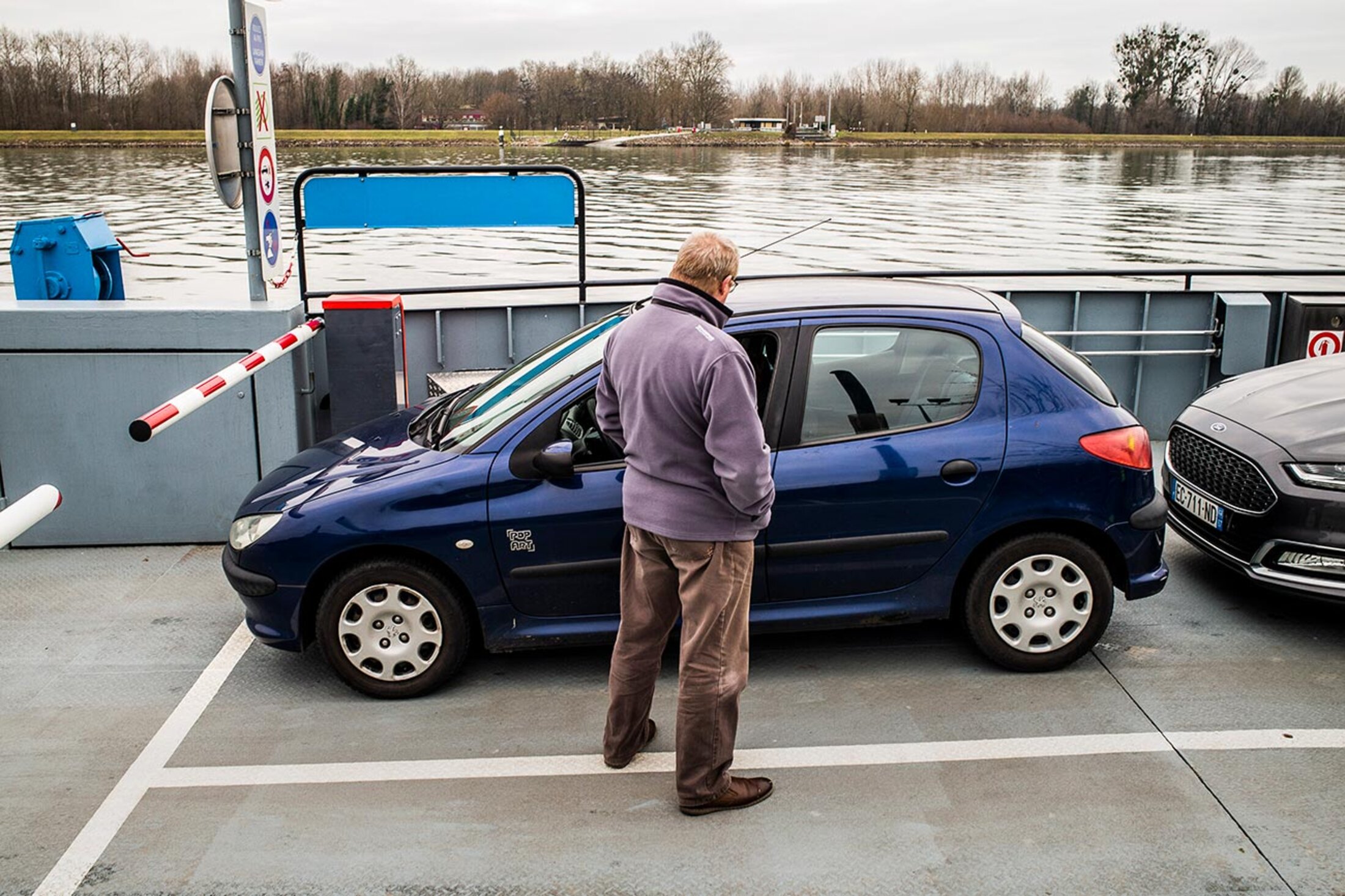
On the banks of the River Rhine, it is not unusual for passengers to confide in each other as they wait for the Drusus ferry to carry both cars and people to the other side. Whether it is in the coolness of the early morning or the gathering gloom of dusk, ferry regulars unburden themselves about affairs of the heart, their children's problems at school or work issues.
There are many French citizens in the east of the Bas-Rhin département or county who cross this river border each day to work in the factories that flourish in neighbouring Germany. Some do their shopping in the German closest towns, while in the summer families make the most of the lakes to be found in the state of Baden-Württemberg.
Politics features prominently in these onboard conversations. In Alsace, the region that includes Bas-Rhin and which is dominated by the vote of the Right and far-right, many electors will doubtless share the views of logistics employee Michel, who was on the ferry on the evening of December 14th. “I'm 58 years old, I've voted for 40 years and it's still a mess,” he said, as he looks ahead to the two rounds of voting in April's forthcoming presidential election in France. “France isn't a dumping ground and I'll give my vote to [far-right polemicist Éric] Zemmour in the first round and to Marine Le Pen [editor's note, president of the far-right Rassemblement National] in the second.”
That is exactly the point of view that depresses one of the rare supporters of the radical-left Jean-Luc Mélenchon to be found in the town of Drusenheim in Bas-Rhin, a railway worker from Strasbourg who moved here to live away from the city. “At times the people from here are real Krauts!” the railway worker, who wished to remain anonymous, told Mediapart.
Enlargement : Illustration 1
Careful scrutiny of the most recent elections in the Alsace shows that people in this corner of north-east France are not just supporters of the Right or far-right; slowly but surely they are becoming more inclined to abstain from voting at all. The Grand Est region, which includes Alsace, came top of the list of areas with the lowest voting rate in the regional and departmental elections held in June 2021. It was a similar tale a few months earlier in the local elections, in a part of the country which has also been very badly hit by the Covid-19 epidemic.
Drusenheim, a town of 5,000 inhabitants in the Outre-Forêt natural area of woodlands about 20 miles from Strasbourg, is no exception when it comes to a disinclination to vote. Nathan, 26, who is Franco-German, is returning to his dental practice via the ferry. “I hear nothing that's going to make me vote,” he said. “That doesn't mean that I'm not involved, I'm a rescue diver, and a believer and I get involved in my church, and often I even help to staff the voting stations on election evenings.” But there is no question, he said, of him filling in a voting slip himself.
“There's a phenomenon here that I can't really explain,” said the right-wing mayor of Drusenheim, Jacky Keller, who was re-elected in 2020, with no opposition, for a fourth term of office. “Unemployment here is much lower than elsewhere, the workers who work in Germany have a higher standard of living than their counterparts in France, and we're in a calm, peaceful and comfortable region,” he said. In other words, it is a town that has none of the normal indicators for abstentionism, other than the fact that it is a rural area.
In an attempt to sum up the mindset, Jacky Keller refers to a children's song from Alsace called D'r Hans im Schnòckeloch, which literally means 'John from the Mosquito Hole'. It starts:
“John from the mosquito hole has all he wants,
And what he has, he doesn't want,
And what he wants he doesn't have …”
The mayor explained: “People from here are not delighted about the government, but at the same they're not ready for the chaos like you had with the yellow vests [editor's note, the protest movement in 2018 and 2019], and so perhaps they just don't opt for anyone.”
Belinda, 37, who grew up in Drusenheim and who still lives here, is part of a family in which almost no one votes. Her father used to do so back in the days of François Mitterrand, who became president in 1981, up until the days of Nicolas Sarkozy, who was head of state from 2007 to 2012, but these days he gazes upon the world of politics with some bitterness. “They give you a 100-euro inflation bonus at Christmas, and then grab back 300 euros in the gas bill,” he said.
It's not the presidents who decide, you know that.
Belinda's stepmother, who works for a cleaning company, used to vote ten years ago but is now “fed up with their lies”. Belinda's partner Yannick, 32, does not vote either, having been appalled by what happened after the 2005 referendum in France on a European Constitution, when the no vote by the public was, in the eyes of many observers, effectively ignored. Only Belinda herself still votes, even though she still does not know if she will vote in the presidential election in April and, if so, for whom she will vote.
“We don't speak about politics otherwise we end up arguing!” jokes Belinda, who is currently on maternity leave. The truth of this light-hearted observation is soon apparent as the conversation quickly becomes heated. After her father complains about foreigners and “those who don't work, get lots of help and mess around”, Belinda retorts: “They speak to us about immigration and Muslims all the time on the television when there are other problems in this country! If we hadn't gone to steal their wealth they wouldn't come!”
Yannick, who would also like to hear more discussion about the environment, pensions and those forced to live on the streets, holds back from saying anything more for fear of “causing a shock”. Nonetheless he added: “It's not the presidents who decide, you know that.” By now it is nearly 2pm, and Belinda's father gets up from his rocking chair opposite the wood-burner to “go and earn some money!”, pulling on his work jacket.
Enlargement : Illustration 2
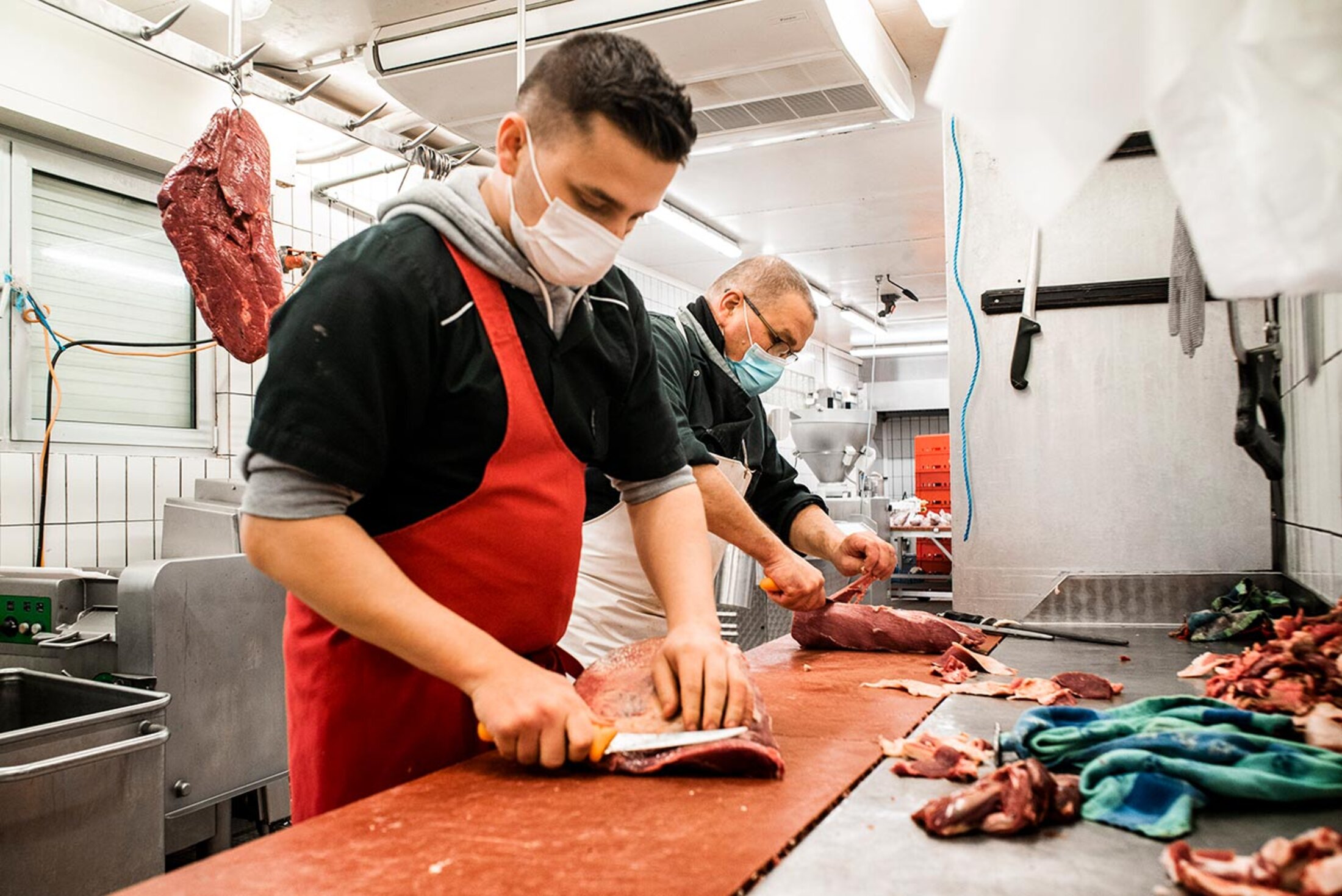
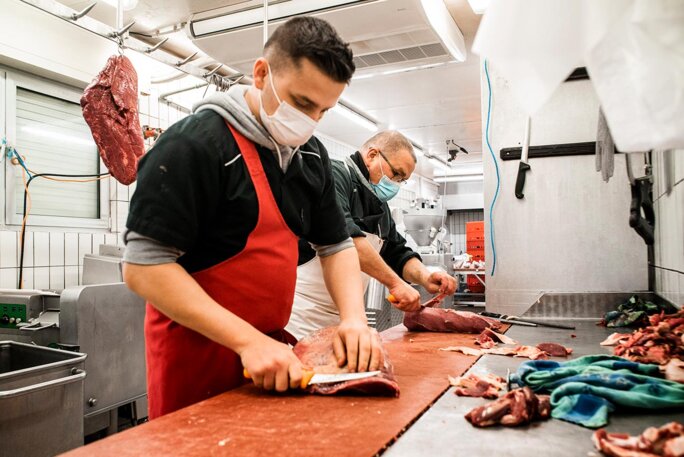
Sometimes the reality on the ground belies the statistics. Martin Diebold, a young butcher aged 19 who has won several awards for his work as an apprentice, will vote for the first time in 2022. Following on in the footsteps of his grandfather and father, both also butchers, this young resident of Drusenheim was “surrounded by adults” during his entire childhood and adolescence. “I think that gives you a kind of maturity and an interest in politics, even if I haven't yet made my decision,” he said.
Marlyse Willinger, 64, taught humanities and history for many years at a further education college in the neighbouring town of Haguenau some 13 or so miles to the west. “The young people that we saw in class seemed to me to be very far removed from the world of politics,” she said. “When I brought up the subject they complained that I was making their heads spin, and they had a very vague knowledge of the different governments.”
The former teacher is well aware of what she owes to her family heritage and to her father in particular. He was a “Malgre-nous” (“Against our will”), the name given to young people from the Alsace region and neighbouring areas who were forcibly enlisted into the German Army during World War II, and was also militantly anticlerical and a trade unionist. Having hesitated about whether to get involved in local politics, Marlyse in the end started to help out with the local community grocery store Bou'sol. It sells food and basic items at low cost and provides social support for around 90 families from the town, some 600 adults and children in all a year.
They make the decisions over there in Paris, but do the people from here think that it relates to them?
This charitable and campaign association indicates the gulf that has grown in relation to a section of the population, even here in prosperous Bas-Rhin. “If you're having to ask whether you can restock the fridge then politics already seems secondary,” Marlyse said. “The families who we're helping suffer from the digital divide, they are shunted around between the different parts of social services who are very hard to contact, and some have problems reading and writing. What energy do they have left to think about elections?”
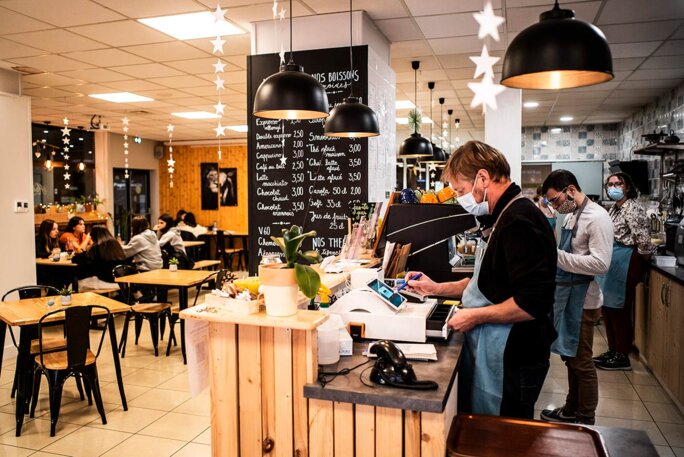
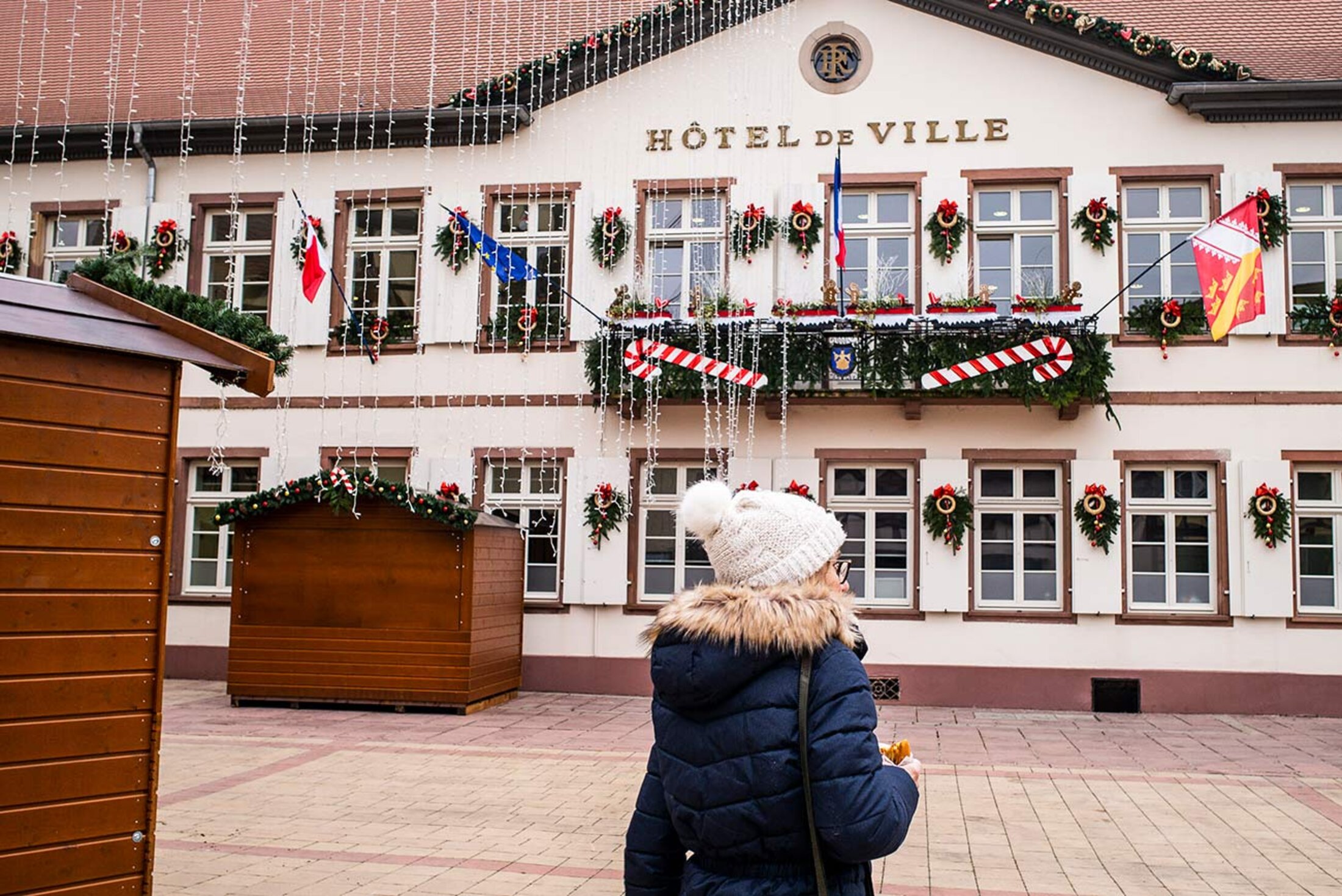
When Mediapart visited, the Christmas market was in full swing in the centre of Haguenau, and a little distance away the community cafe Safe Haven offered the same snug ambience. It was set up in 2018 by teacher Emmanuelle Muller and her husband Hubert, a former manager in a large store, and is based on a Protestant family association. It was originally set up to provide a place where the youth of Haguenau could meet, and young people still use it as a place to do their homework, heat up a meal for lunchtime or celebrate birthdays.
Enlargement : Illustration 3
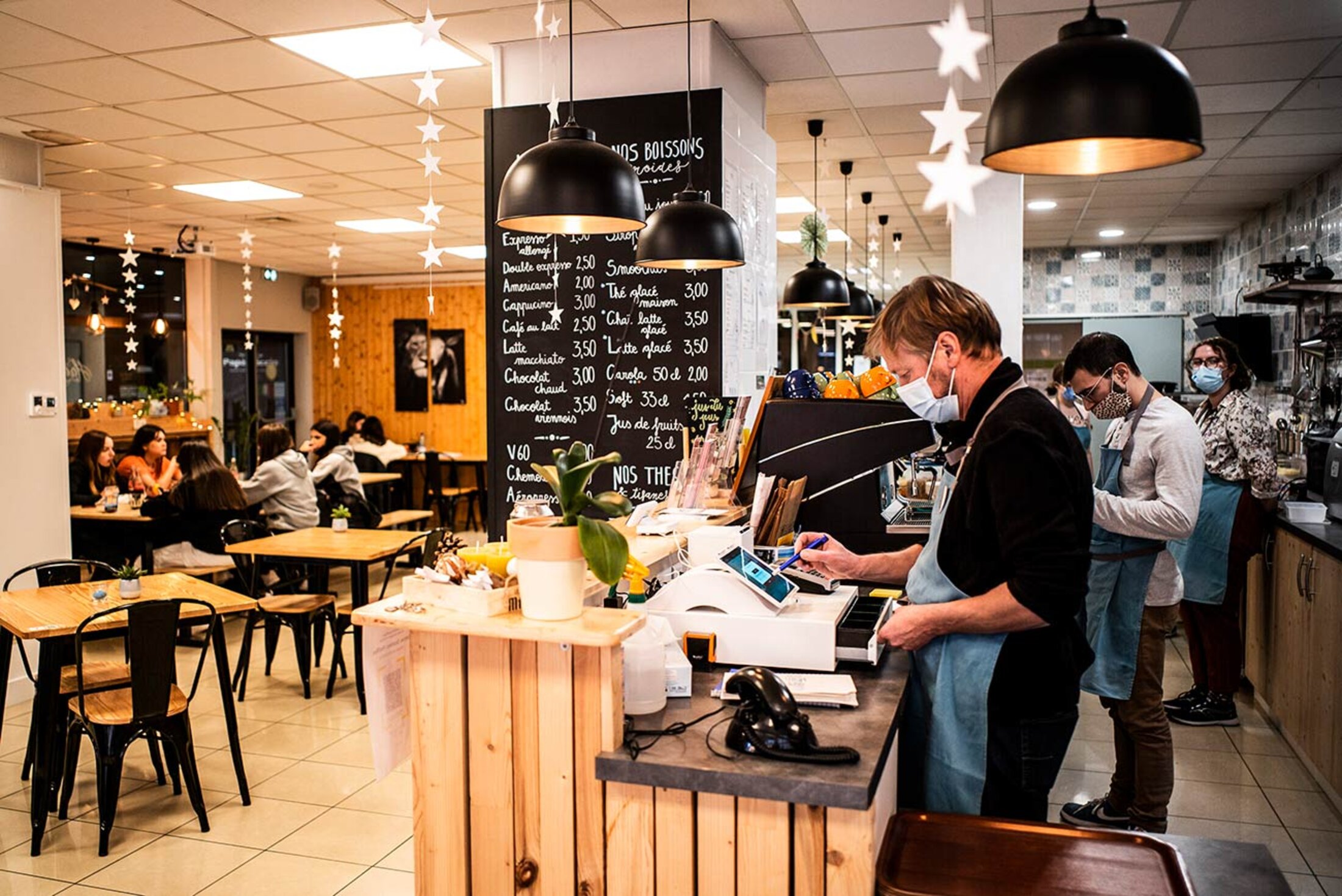
But bit by bit the place has changed into a venue for activities for all age groups, where anyone can meet. When Mediapart visited some secondary school pupils were sitting around the large central table, getting themselves a drink and counting out their coins one by one. Elsewhere a woman was getting down to some work with pearls while another was in the workshop at the back, away from the clamour, with bits of tissue paper in her hands. It is almost like the cafés of old, somewhere which is not just a “place of consumption”. Emmanuelle Muller said: “It's not strictly speaking politics that we're about here. But we are concerned about caring for people, thinking about them and welcoming them.”
Sitting a few metres apart with a hot drink and a slice of cake, two pairs of friends are doing the same thing at the same time: making the most of a little moment of calm to have a chat, before the whirlwind of the end of year festivities commences. The youngest two, Manon and Marrie, have both voted since they were 18.
“It's not because I'm enthusiastic about it, but it's the least you can do,” explained Marie. Manon, who is involved with a support group for the Primaire Populaire – which is working for a single candidate for the Left in the presidential election – noted: “That said, I don't really like this divide, between those who abstain and the rest. Each of them is a respectable choice. And anyway, the blank ballot paper should be counted, it's a good indicator.”
Marie talks about a process that is getting ever more “desperate”. “I vote Left, even far-left, and you feel very alone here … often it's the Front National [editor's note, the far-right party now called Rassemblement National] which wins in the end, that makes you feel sick.” Both women point to “regional identity” and the identity of Alsace in particular as being a factor. “They make the decisions over there in Paris, but do the people from here think that it relates to them?” asked Marie.

Enlargement : Illustration 4
Sitting on the café's sofa Martine, a nurse from nearby Bouxwiller, and Isabelle, who is from the village of Saverne, both love walking. They are constantly trekking through the forests in the area, and prefer to have a cup of tea in the peaceful town of Haguenau rather than much larger Strasbourg.
Isabelle agrees that she has “no appetite at all” for politics, that she “understands nothing” about it and thus she refuses to “vote without knowing”. As a result she has withheld her vote in election after election. Martine, too, is also likely to abstain in 2022, having regularly voted “out of duty” in the last five years, apart from the recent regional polls.
Exasperated, Martine has chosen to shut out information from the outside world. “I no longer listen to the news, I've had enough of terrorist attacks, Covid and all these negative things,” she said. “I focus on the simple little things in life, such as drinking tea with a friend this afternoon.” It is a quiet tiptoeing away from the electoral fray; a silent farewell to politics.
---------------------------------------------------------------------------
- The original French version of this article can be found here.
English version by Michael Streeter