


In the summer of 2007, shortly after Nicolas Sarkozy was elected to the French presidency, the government launched a wide-ranging review of the functions of the state and public services known as the Révision générale des politiques publiques (RGPP) or General Review of Public Policies.
Its avowed aim was to reduce state spending and improve efficiency. But the reforms remain a bitter pill to swallow for the entire public service system. Some 80,000 posts were slashed in the national education system, hundreds of local courts were wiped off the map and maternity hospitals were closed. Although the stated purpose of the RGPP was "doing better with less", the measures often translate in the field as "doing less" or "doing less well". The effects of the reforms on education and public services are well-documented but the actual savings to the State are less clear.
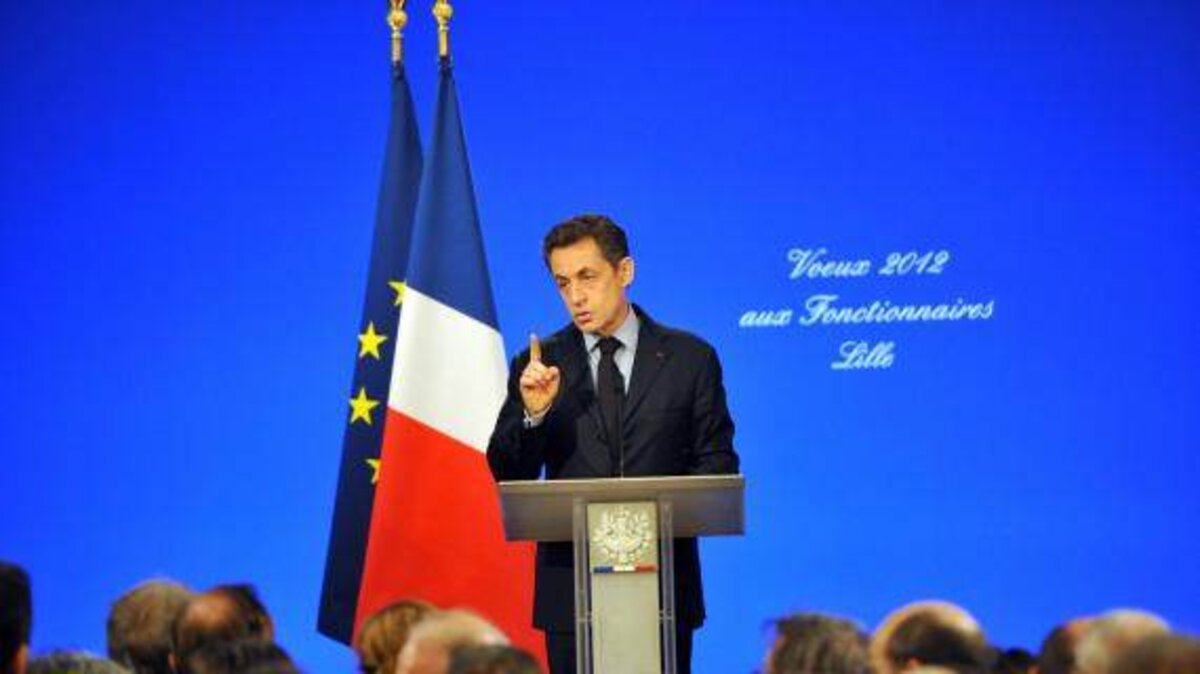
As Sarkozy explained when he presented his New Year's wishes to the civil service corps earlier this year, the effort required of the entire public service was necessary if France was going to avoid "Greece's fate" or the fate of other debt-choked countries. Yet, despite the reforms, French debt has soared to a record high, at nearly 85% of gross domestic product (GDP). Furthermore, last autumn France's credit status was downgraded by financial rating agencies. So what savings exactly have been produced by this far-reaching reform – one too often glibly summed up as the replacement of one civil servant for each two leaving the service?
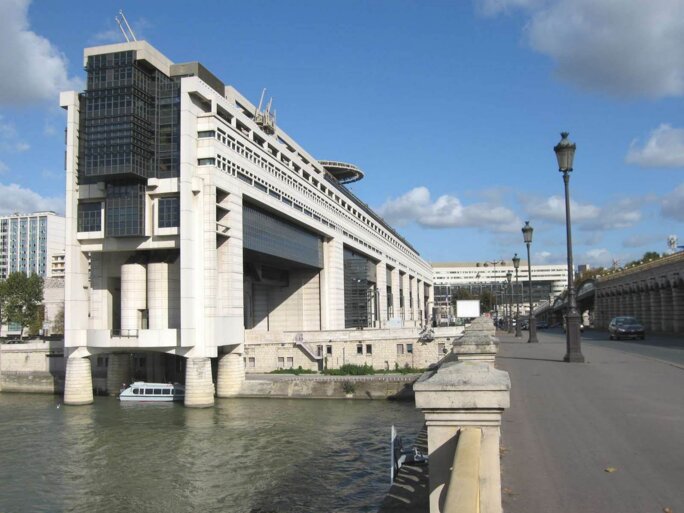
Things are pretty simple for the Budget Office at the finance ministry which provided an appraisal of the reforms during an elaborate ceremony on November 29th, 2011. The RGPP is said to have shaved 15 billion euros off the State's budget, and, argued budget minister Valérie Pécresse, will cut "200 billion euros off the debt in the long-term". Pécresse went on to provide a dramatic example of the stakes involved. "To create a civil service post means investing, on average, 1.5 million euros per civil servant, pension included," she said solemnly.
According to someone present, her comments triggered a few telling smiles in the audience. And when a well-placed source at the budget and finance ministry, who is very familiar with the reforms, was recently asked about the real savings for public finances he immediately put his index finger and thumb together to form a zero. This last appraisal may be a little blunt, but privately everyone at the budget ministry agrees that the reforms have not yielded the billions forecast by the government. As to figuring out just what the savings are, that promises to be a difficult task.
The first hurdle is getting through the ministry's persistent lack of transparency on a subject that it clearly views as highly sensitive. It turns out that the much touted 15 billion euros figure includes the second phase of the RGPP, which began in 2011 and will end in 2013. The figures are largely based on forecasts, as is the case with the very abstract 200 billion euros in savings over 40 years, mentioned by the budget minister. Based on savings already implemented, the figure is estimated closer to 7 billion euros – half the official figure. But even this estimate must be treated with caution.
"The budgetary results of the RGPP remain an overall mystery because information, which is hard to obtain on this issue, appears questionable and fragmentary," says a parliamentary report evaluating the results of the reforms, written by Socialist MP Christian Eckert and MP François Cornut-Gentille of the conservative UMP. "The integrity of the budgetary results is infected by a will to justify the originally-posted overall figures and to shirk the cost associated with the reforms," Christian Eckert told Mediapart.
Varnishing the truth
After questioning the budget ministry on the savings produced by the reforms, ministry by ministry, the MPs discovered that it has almost systematically overvalued them. Concerning the environment ministry, for example, the budget ministry is claiming savings of 540 million euros more than that ministry itself reports. The pattern is repeated with the Ministry of Defence and with the social services ministries. In each case there is an enormous difference in the figures.
Enlargement : Illustration 2

The MPs note that the budget ministry "in order to attain the goals set by the government for the RGPP," has a tendency – when calculating savings induced by the reforms - to include measures that have nothing to do with the RGPP itself. The parliamentary report found twenty-two measures of "uncertain status". These include "the maximising of the financing for the Agence nationale pour la rénovation urbaine (ANRU) [National Agency for Urban Renewal]," calculated at 635 million euros by the budget ministry but with no details about what this "maximising" entails. In another example, changes in hospital fees mandated by a bill to provide health care for illegal immigrants - unrelated to reforms to modernise the state - were included in the calculations.
This raises the question of whether the budget ministry is trying, by every means possible, to justify a reform plan that has over time become very unpopular. Why is there so much varnishing of the figures? And how could such a painful reform fall so short in strictly financial terms?
President Sarkozy has already explained that part of the savings generated was returned to the civil servants themselves. And it is true that, to make the bitter pill of job cuts easier to swallow, a number of bonuses and even some salary increases were handed out to reward those implementing the reforms. The example of the national education system is the most revealing and shows a sometimes questionable sense of fairness. The reform eliminated a one-year, in-class internship in the teacher training curriculum. Instead, working staff were asked to provide on-the-job training to the in-coming teachers.
To compensate for the additional burden, local senior officials of the national education system were awarded an annual bonus of 6,800 euros, while those teachers providing the training got a bonus of only 500 euros. A large part of the sums saved by the huge cutbacks in education posts is used to fill the glaring gaps in personnel. Remaining teachers are asked – sometimes required – to work overtime, although, as a sweetener, this extra income is often untaxed.
But the compensation awarded to the remaining civil servants does not explain the entire shortfall. Some of the reforms have been found to be totally counterproductive from a strictly budgetary point of view. Introducing a biometric passport, for example, was supposed to lead to productivity gains. Instead it generated cost overruns "financed by passport holders," notes the parliamentary report. Administrative fees for services have increased by 48% in order to fund the new Agence nationale des titres sécurisés (ANTS) [the National Agency for Secure Documents] that is responsible for documents such as biometric passports.
It is the same story with vehicle registration which is now performed by the motor industry, rather than by police personnel, and overseen by ANTS. Despite this partial privatisation of the motor vehicles department, the cost of vehicle registration has gone up.
Simply stocktaking before clearance?
Neither have structural reforms all reaped the monetary results expected. "There is a dogma: pooling resources is good, it results in savings," says a high-level civil servant in the public works ministry. "Why not, if we make sure that what is pooled is not done better on another scale. But, in my ministry, reorganising was conducted in a rough and ready way and not in the most intelligent manner. As a result there is overlapping everywhere. For example, in the case where, in spite of pooled support functions, there are still local requirements [...] A new workforce is created alongside. At the end of the day, the result for public finances is the exact opposite of what was anticipated,” he adds.
The jobs eliminated through the RGPP concern mostly C-category civil servants, at the bottom of the salary scale. From a financial standpoint, this is not the most efficient strategy for down-sizing public spending. It is explained, says MP Christian Eckert, by the fact that "in the higher echelons of the administration, there seems to be a reflex of self-preservation".
Other savings attributed to the reforms are nothing more than a shift of the financial burden onto local governments. For example, the State used to provide civil engineering services for work concerning road maintenance and sanitation services. These are now privatised and it is up to local governments to pay private consulting firms to carry out the work. Not everyone agrees that this represents a true gain for public finances.
The real end-result of the RGPP is probably to be found elsewhere. For conservative MP François Cornut-Gentille, co-author of the scathing evaluation of the reforms, "the most significant part of the RGPP cannot be quantified. It caused an unprecedented mobilisation in the ministries. That is a given. Five years ago, the ministries were not ready to re-assess their function, today they are more capable of it". This powering up of the entire civil service may have, if some of the projects which the budget ministry is studying are any indication, served as the initial steps towards abandoning a number of functions previously provided by the State.
Perhaps this was just stocktaking before the clearance sale. "We are told that we will have to abandon the functions in which the State is not cost-effective. But the RGPP contributed to making the State deficient in certain of its functions. Is that," queries a high-level civil servant at a major ministry, "a reason to abandon them?"
-------------------------
English Version: Patricia Brett
(Editing by Michael Streeter)