


“You youngsters who are waiting for the bus there, make the most of it and come and see us! Come and take shelter with us!” Marko Mayerl, who has a stand-up comedian-style microphone taped to his cheek and is standing in a large tent in the colours of the European Union flag, is deploying all his energy to attract passers-by. Several pupils from a local middle school have taken refuge there to escape the torrents of rain that are falling from the Strasbourg sky on the afternoon of Tuesday September 18th. In all around 15 people are sat on the plastic chairs inside the tent.
Mayerl, an actor by profession, is standing in front of a large television screen where he is explaining the principles of this “linked up, digital European forum” to his new recruits. “You connect to the internet site, you answer questions on Europe, the results are displayed live on the screen and we discuss them!” he declares. But he does not have time to convince the middle school pupils to get out their smartphones as they have already got up and are heading back out into the downpour. Their bus has just come.
This was the city of Strasbourg's second digital “Citizens consultation” and it chose to stage it in the Poteries area of the north-eastern city, which is where the tramway line ends and which is a working class area which has not become ghettoised. The tent itself had been put up on the side of the road next to the park which gives this district its name. On the other side of the road stands the imposing Marcel Rudloff secondary school. Watched by a handful of onlookers, the compère urges his participants to reply to the first question: “Which decisions taken at European Union level would make you most proud of belonging to the Union?”
One of the participants is staring at his phone, immersed in WhatsApp. “It was the football chairman who asked us to come,” he explains, in between two polite but absent-minded glances at the large screen. The chairman in question is Fayçal Amroune, head of Sporting Strasbourg Futsal, who is also an educationalist and a prominent figure in local associations and who at one time was involved in the local branch of the anti-racist association LICRA. Amroune explains why Europe matters to him: he hopes to send some of his youths on the Erasmus exchange programme and points to the “cross-border integration through sport projects” that he runs.
Enlargement : Illustration 1
Like him, most of those taking part in the debate have links with city hall or the local branch of President Macron's ruling La République en Marche (LREM) party – or both. The young man in a suit and tie who is scrolling through the questions is employed by the city's European and international relations unit and also co-runs a LREM branch in Strasbourg. The young man who speaks about the education situation in Italy is an intern in the same city hall unit.
A woman turns to the young man who plays futsal – football on a hard surface, usually indoors – to encourage him to talk about male-female equality. She is Nawel Rafik-Elmrini, an assistant mayor in charge of European and international relations in the city and co-president of the LREM Strasbourg group. “I'm shy, I don't really want to speak,” the young man eventually declares. As for the four youths who are studiously answering the questions from the back of the room, two are members of the European youth group Jeunesses Européennes – a group which city hall asked to help organise the forum – and two are Germans carrying out civic service in Strasbourg.
City hall paid a theatre company to help attract an audience. Two actresses from the Inédit theatre group are carrying flyers and approaching school pupils, passengers on the nearby tramway and locals strolling on the edge of the park. Some pause and then continue on their way after a few minutes. “The rain doesn't help,” says one of the actresses. The rain and, perhaps, the way the forum is organised. “Sitting down, taking part, speaking into a microphone, that can be intimidating,” admits Fayçal Amroune. “Perhaps they could have done more to work with the local associations or organise something directly in a middle school if they wanted to speak to young people.”
In front of his screen, actor Marko Mayerl is doing his best to keep the discussion going. The small gathering discusses views on renewable energies, the resources given to health services, and how to kickstart the economy. In view of the nature of the audience it is no surprise than no one seems to want radical change on the part of Europe. “Yes, the discussions are very pro-European, but we're in Strasbourg which is in any case a pro-European city!” argues Nawel Rafik-Elmrini.
Alberto Lacchia, the intern at City Hall who has helped organise the debate, does not entirely agree. In recent weeks he has come to the Poteries area twice to explain what the forum was about and to encourage young people in the area to come to the debates. “In the beginning they were wondering who these guys in suits and ties were who were coming to hand out some leaflets,” smiles the young Italian. “Then they responded to us with passion. They told us both that 'no one cares about us' and 'we don't need you and your Europe'. In the end it was the most honest meeting that we have had.”
'It's a bit of a gimmick'
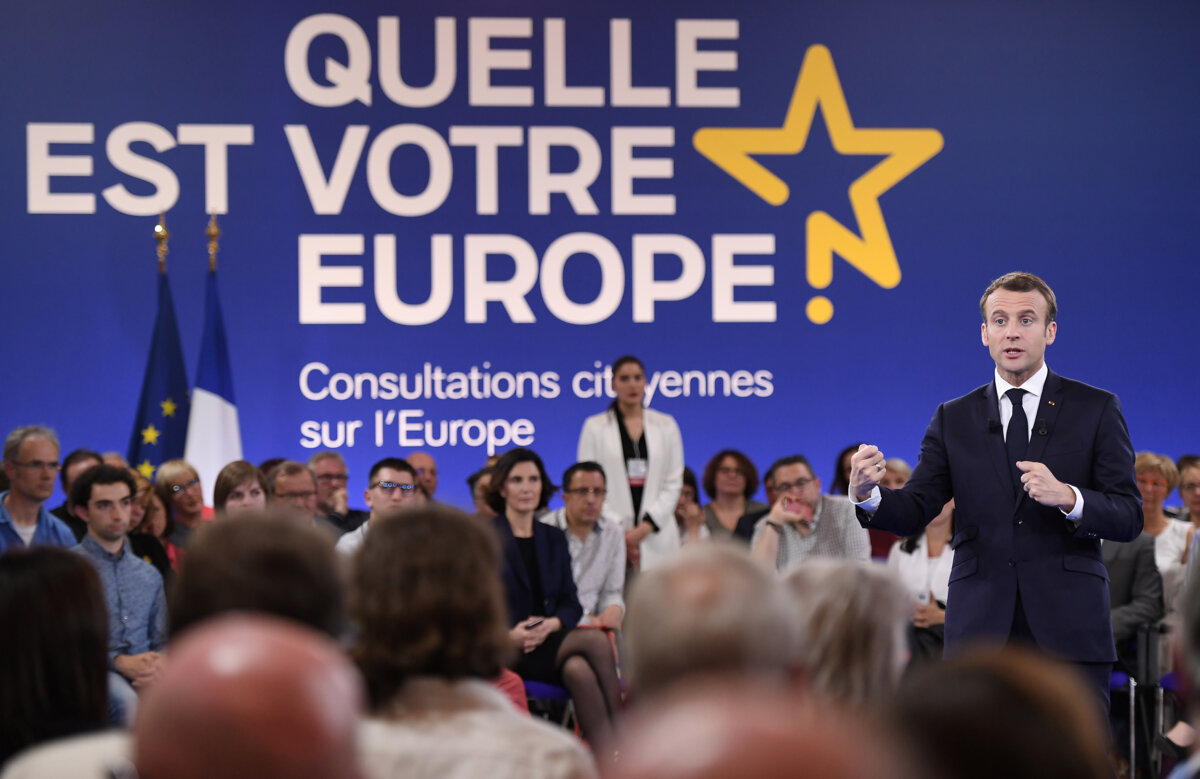
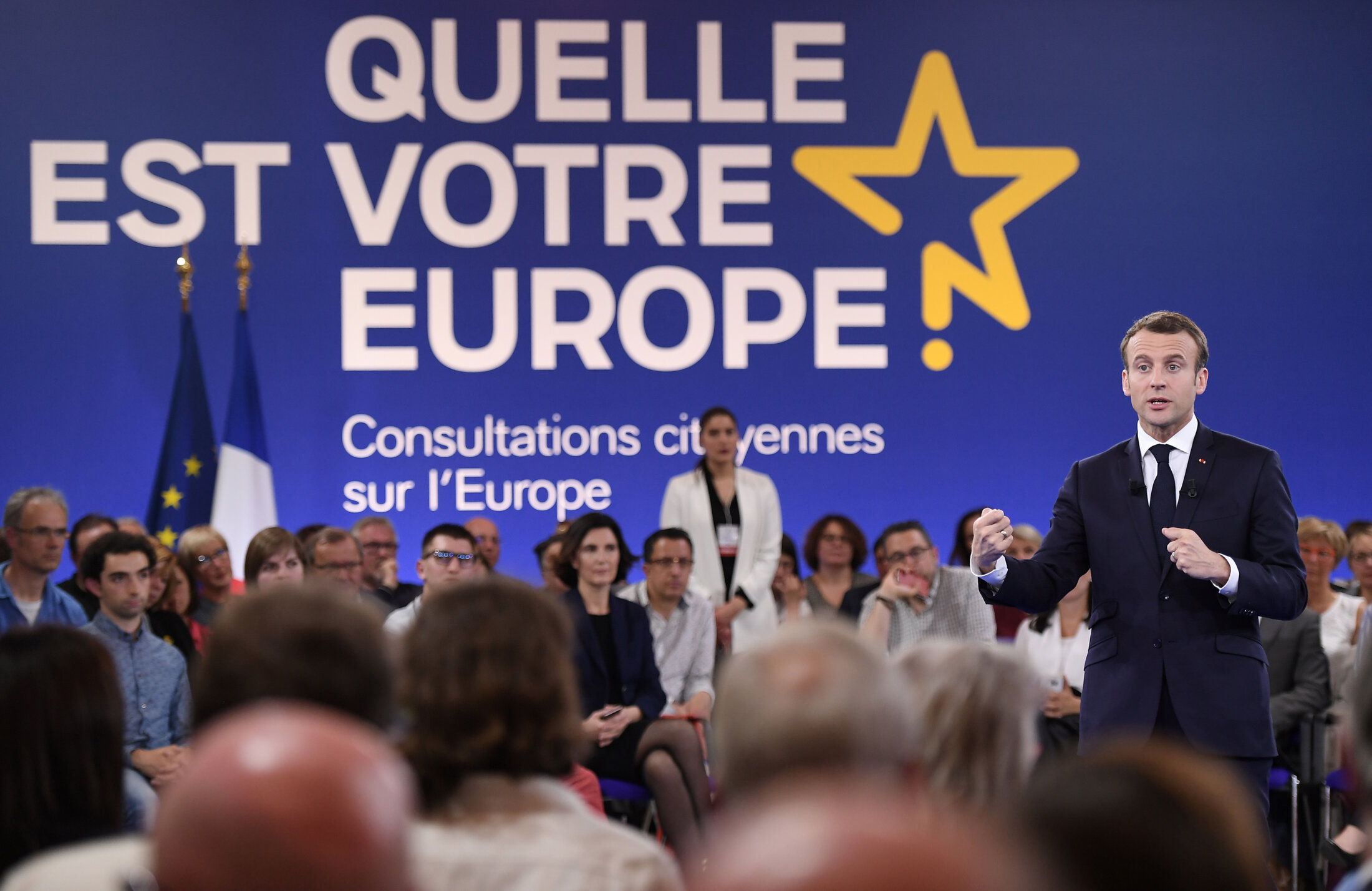
The gathering in Strasbourg was one of 800 events that have been organised across France since April this year. If the Élysée is to be believed, more than 20,000 people have already taken part in these “Citizen consultations on Europe”. The debates will resume between now and the end of the year as a prelude to a discussion between the leaders of the EU at the next Brussels summit in December.
During his speech at the Sorbonne in Paris the autumn of 2017, Emmanuel Macron set out his ambition: “To organize a huge debate on the same issues and identify the priorities, concerns and ideas that will fuel our roadmap for tomorrow’s Europe.” He also made reference to the trauma surrounding France's 2005 referendum on plans for an EU constitution, saying that what was needed was to “Restore proper order to things instead of asking at the last minute – gripped by fantasies and incomprehension – whether it's 'yes' or 'no' to an opaque text written in secret ...”
France's European affairs minister, Nathalie Loiseau, refers to the “pluralist and cross-partisan” nature of the initiative. She has taken part in 53 such meetings since April. “With just a few exceptions, including the launch [meeting] at Épinal [editor's note, in north-east France] in the presence of Emmanuel Macron, these consultations have been organised by local figures, local elected representatives, associations, chambers of commerce,” she told Mediapart. She cites the example of a meeting with jobless people at an unemployment centre, of one at Baumettes prison in Marseille and of another held by volunteers from the food and hot meals charity Restos du Coeur about social policy in Europe.
Some observers, however, are more sceptical. “To put it bluntly, it's a bit of a gimmick,” says Nicolas Hubé, a political specialist at Paris I university. “The European Commission itself started this kind of measure in 2005 and after. But it stopped it because it realised that it was an expensive measure which served little purpose.”
The academic continued: “People don't turn up. And when they do come they are rather pro-European. The big problem with European debates is that the majority of people don't have an opinion on Europe.” For many people the EU remains a distant phenomenon and occupies little or no space in daily discourse. “The Union is a supranational institution which is built upon technocratic principles and the law,” says Hubé. “It's difficult to get a handle on Europe in everyday life.”
On June 20th, 2018, barely 20 people, most of them in their sixties, turned up to sit in a smart upstairs room at the Partouche casino in Dieppe in northern France. Those who were not paying attention could gaze out at the pebble beach and grey cliffs clearly visible from the windows. Bernard Deladerrière, a 70-year-old former German teacher and a vice-president of the European Movement, had made the trip from Rouen to run this debate on migration and fishing.
It was a studious discussion with the contributions noted on a screen and then projected on a wall as the meeting went on. At that time scallop fishermen in Dieppe were embroiled in a dispute with British fishermen over fishing in waters off the French coast. At no point was the EU blamed for this, instead individual countries were criticised for not having followed Commission directives to the letter. One of those taking part in the debate, apparently an ardent supporter of federalism, even suggested that there should be tougher sanctions against countries who are reluctant to follow directives. There was not a single fisherman in the room.
In relation to the so-called Dublin Regulation, under which the responsibility for dealing with an asylum claim is on the EU country where the migrant first sets foot – in other words Italy, Greece or Spain – there was a unanimous view in favour of a wholesale reform of the regulation as soon as possible. It was a position similar to Macron's own views on the issue. After a discussion of just under two hours the gathering adjourned for dinner in the casino's restaurant on the same floor.
“It's true that often these consultations involve people who are sympathetic to the European Movement and there are few people from outside,” notes Bernard Deladerrière. But this committed European, who attacks the “laziness of journalists on Europe”, insists that since the start of the process he has chaired some more lively debates, for example in schools, where there have been more varied opinions.
The Europe minister Nathalie Loiseau rejects the criticism that in most of the meetings the discussions have been taking place in an echo chamber. “We wanted to avoid handing the organisation exccusively to pro-European associations, even if sometimes that has been the case. It's certainly the case that a meeting with 20 grey-haired ultra-federalists is not really representative of society, We're aware of that,” she says.
At Issy-les-Moulineaux, in the south-west suburbs of Paris, a meeting took place on the evening of September 16th in the basement of the town hall run by mayor André Santini from the right-wing Les Républicains, in an area which is the political stronghold of the new junior education minister Gabriel Attal. This gathering occurred in the same muted atmosphere as the one at Dieppe. However, there were a few more people and here there were representatives of all the generations, including young students.
It was organised by the think tank Europa Nova who had gathered three experts – three men, including a German all the way from Bavaria – to debate nutritional health. The audience very quickly divided into three working groups, each person armed with a notebook and pen, to discuss the virtues of food traceability at European level.
Nathalie Loiseau insists that the final report of the hundreds of contributions (available online in French here) will not directly guide LREM's manifesto for the European elections next spring. Each party can pick from it what they want. But she claims: “I see the evidence here that we're talking a lot about Europe before the European elections, which hasn't always been the case in the past.”
Jean-Luc Mélenchon of the radical left La France Insoumise wants to make those elections next May an “anti-Macron referendum” and will thus focus part of the campaign on national issues. Meanwhile Louis Aliot, vice-president of Rassemblement National – the new name for the Front National – who is seen as the party figure who will probably spearhead those elections, has stated quite openly that his preference is for winning control of the town hall at Perpignan in southern France. Nathalie Loiseau, meanwhile, says that the LREM will talk primarily about Europe. “People are concerned about European issues,” she insists. Given Macron's record on reforming the EU after more than a year in office, with those reforms held back in part by opposition in Berlin, it seems a rather risky gamble.
---------------------------------------------------------------------------------------------
- The French version of this article can be found here.
English version by Michael Streeter