


As with the climate, so it is with the issue of biodiversity. Conferences and summits attract thousands of people who arrive and leave by plane, their announcements are ever-more alarming, pious wishes multiply in number ... and yet governments and large corporations barely lift a finger in response.
The latest big gathering is being held by the non-governmental conservation organisation the International Union for Conservation of Nature (IUCN) whose annual conference is taking place in the French Mediterranean city of Marseille until September 11th. As the conference got under way last Saturday the IUCN made headlines around the world with its warning that nearly 30% of the 138,374 species on the Red List for Threatened Species are now at risk of vanishing in the wild forever. Under particular threat is the world's largest lizard, the Komodo Dragon, plus many species of sharks and rays.
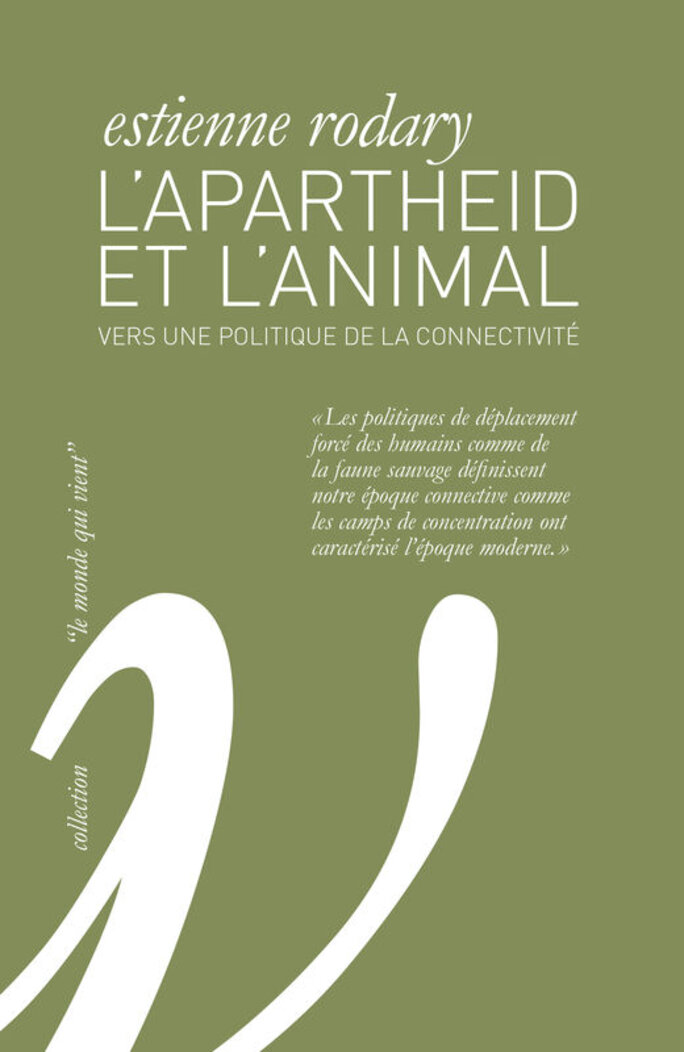
To respond to what is called the sixth mass extinction – this one caused by humans - the IUCN has long favoured the policy of setting up “protected areas” such as natural parks. Yet according to French geographer Estienne Rodary this approach has shown its limitations. Two years ago, in an essay called 'L’Apartheid et l’Animal' published by Wildproject, the academic used a study of national parks in southern Africa to show that these enclaves have become symbols of a modernist and colonial approach to ecology. And Rodary, who is the research director at France's Institut de Recherche pour le Développement (IRD) – the French National Research Institute for Sustainable Development – argues that this approach no longer meets the demands of an inter-connected world. So is it still possible to halt a massive fall in biodiversity on the planet? And if so, what kind of changes in approach are needed? Mediapart interviewed Estienne Rodary to find out.
--------------------
Mediapart: In what way is the IUCN important in preserving biodiversity?
Estienne Rodary: The IUCN is an NGO that represents 1,400 different structures including states, which sets it apart from other non-governmental organisations. It has commissions made up of researchers and acknowledged specialists on animal and plant species, and who in particular establish the red list of threatened species in the world which was updated last Saturday [September 4th].
Another important commission at the IUCN is the one on “protected areas”. These have been the main tool in nature conservation policies for more than a century. The IUCN has had a leading role in this, in particular by setting the classification that standardises the degree of protection offered between one area and another. This enables a comparison to be made between the different national legal names that are used. Today the IUCN has defined six categories, ranging from areas that are fully protected where humans can't go, apart from some managers and scientists – such as the Sept-Îles archipelago off Brittany [in western France] - to very open zones. That's the case in France with the natural marine parks or the regional natural parks where you can do just about anything, including building a nuclear power station.
The IUCN's agenda is based on continuing with this tool. From that point of view the Marseille conference will not bring about any change.
Enlargement : Illustration 1
Mediapart: So can this conference, which was postponed once because of the Covid epidemic – it was originally due to be held in May 2020 – deal with the new issues at stake?
E.R.: In terms of its internal functioning, a major motion should be voted through to bring in local authorities – for the first time they could become full members of the general assembly.
In substantive terms, this conference is guided by a concern to link the ideas of biodiversity and pandemic, through in particular the 'One Health' initiative, which tackles ideas of human, animal and ecosystem health all together. We have seen with the Covid-19 epidemic, as shown by the latest report from the IPBES (Intergovernmental Science-Policy Platform on Biodiversity and Ecosystem Services), that there has been a very clear and dynamic link between the emergence of pandemics, the state of our ecosystems and the role of socio-technical infrastructures such as industrial farms.
However, a major trend has interfered with this development: the world of conservation was particularly insular in the 20th century in its management of protected areas. At the time it was hard to get across the message about environmental issues, and conservation professionals, scientists and [natural park] managers took refuge in their reserves. Outside these areas you could do absolutely anything, with no consideration for the environment.
So the focus of conservationists was on very specific spaces in which they wanted to intervene to protect this or that species. This approach still very much permeates the whole issue of conservation: should conservation be interested in precise locations and, in doing so, abandon other areas?
The COP15 conference on biodiversity which takes place in China next year operates using this approach: its objective will be to increase the proportion of protected maritime and land surface to 30% of the globe – currently we're at 17% of land and 7% of maritime areas. For years the objective has been to increase these protected areas. Yet this approach has serious limitations.
Mediapart: What are they?
E.R.: For a start, we should reflect upon the link between the growing number of protected areas and the environmental conditions of non-protected areas. With climate change and pollution we can see that damage to the environment can't be contained within geographical barriers. So we have to reflect upon an environmental transformation that is more structural than a simple increase in the number of one-off protected areas that are limited in size.
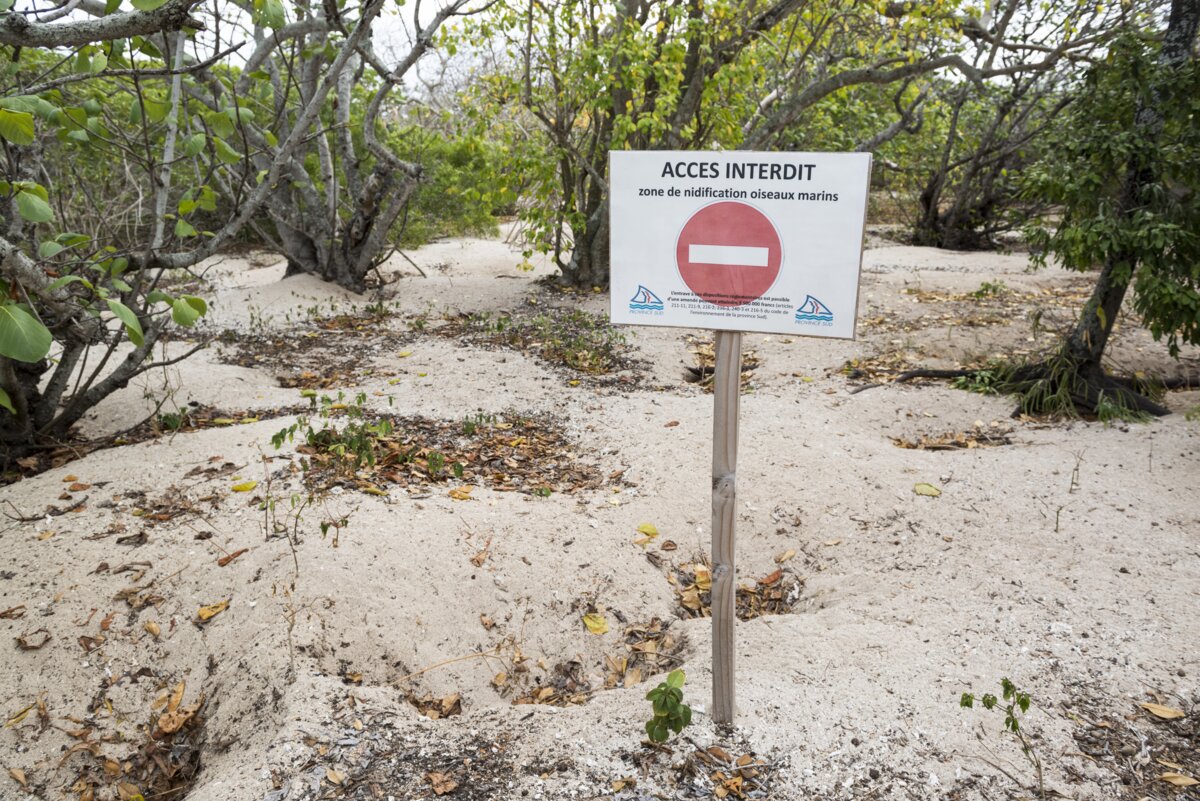
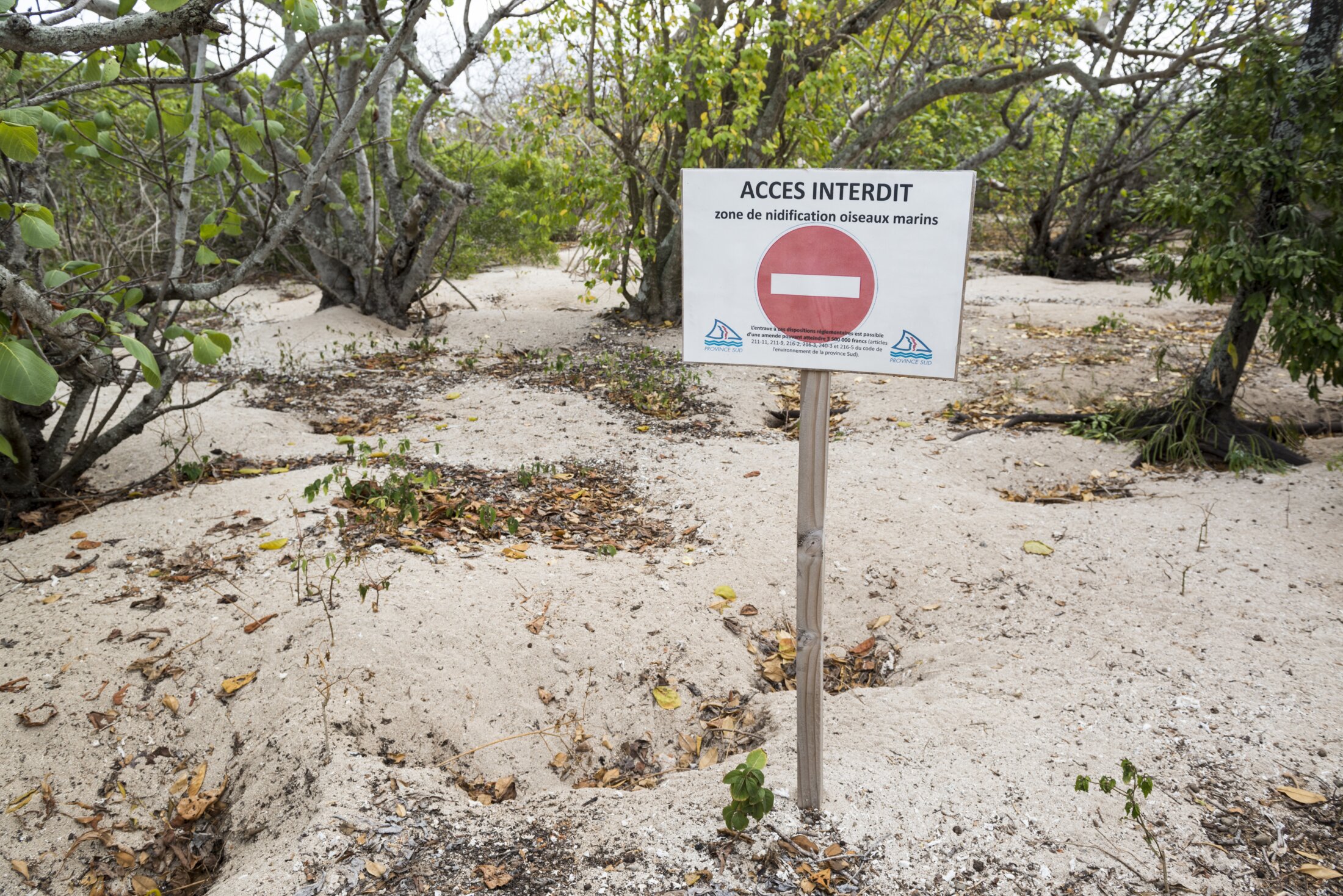
The other objection to this approach is that the levels of protection are often quite low. France, for example, looks to have a high level of protected areas (27% of land area in Metropolitan France). But in these figures you find the regional natural parks, the marine natural parks … and the figures also include New Caledonia [editor's note, a French collectivity in the South Pacific]! The Coral Sea Natural Park there is 1.3 million km2, which is 2.5 times the surface of [mainland] France. Yet at the current time virtually no human or financial resources have been allocated to the management of this gigantic area. It's a park on paper only.
Beyond the issue of resources and the reality on the ground, what do we do with non-protected areas? Does protecting 30% of the planet's surface allow us to blithely concrete over the remaining 70%? That's a fundamental issue. To respond to it, nature conservation must permeate all sectors of activity, not just isolated spots. When you see that China has in four years made as much concrete as the United States did throughout the entire twentieth century, to use historian Jean-Baptiste Fressoz's figures, you can't help but worry. There's a tension between exploitation and protection that we need to get beyond.
Mediapart: Isn't it also an illusion to believe that growth and technology can provide 'solutions' to ecological problems? Geoffroy Roux de Bézieux, head of the French employers' federation MEDEF, spoke recently about “inventing decarbonised capitalism” … inside the IUCN some favour the NGO financing environmental policies or working with banks.
E.R.: It's difficult to believe that capitalism can succeed in resolving the problems that it has generated from the way it itself functions. To think that using economic incentives you can transform an economy that up to now has destroyed nature seems to me to be specious. This tendency can be explained by the fact that the big conservation NGOs are all, to a greater or lesser extent, backed by massive funding from large industrial groups. As regards the IUCN, however, there's quite a wide range of positions: in the last 20 years or so, a more social and more integrated approach to conservation has emerged.
Mediapart: Isn't the 'protected areas' approach also a problem from the point of view of the people who live in these areas?
E.R.: This issue of local populations is a central one. Under the pretext of conserving nature, conservation policies have had tragic social effects, in particular for those peoples who were already marginalised; peasants, those hunting or fishing for their food, livestock farmers … The focus on the protected areas has meant that we've asked the local people to make enormous efforts to change their lifestyles, while the changes asked of societies as a whole have been minimal. Historically, conservation policies have been revolutionary at a local level, but reformist - at best - at a global level.
The denigration of local practices has been a constant feature in the history of conservation.
In reality, what's lacking is what one could call the 'carbon cost' of conservation policies. Including this would enable us to get out of this localist vision of protected areas and to link them to the carbon footprint of the managers, tourists and scientists who work in these zones. That would allow for a complete re-evaluation of the place and of the impact of the 'local peoples' on whom we ask for restrictions to be placed.
I'm thinking, for example, of the Banc d'Arguin National Park off the coast of Mauritania where the Imraguen people, who fish for their livelihood, are limited in the use they can make of engines [for their fishing boats] at the same time as Spanish or Chinese trawlers sail past the park's coastline. We intervene inside these areas and ask the people who inhabit them to restrict their way of life or even exclude them from places, yet it's not them who have the biggest environmental impact...
This denigration of local practices has been a constant feature in the history of conservation. It has obviously affected colonised countries but also Western countries. For example, in France the restoration of land at altitude in the second half of the twentieth century, which was supposed to limit the erosion caused by mountain farming, was based on management by the state, to the detriment of local knowledge and practices.
It was only in the 1970s that we became concerned once more about the knowledge of local populations in the management of protected spaces as part of a wider interest in 'sustainable development'.
Among these practices are what is known as the 'commons', a notion popularised by American political economist Elinor Ostrom, who in 2009 won the Nobel Prize for economics. The commons describes a management of natural spaces and resources based not on private property but on collective forms of access to and usage of those resources. The awareness of these practices, from the 1980s onwards, enabled an element of diversity to be reintroduced into conservation policies – a diversity that was itself reinforced by biodiversity, which was then emerging as a biological concept. It would be difficult to go back to these systems in a generalised way but they are alternative forms of conservation that should be rehabilitated.
Enlargement : Illustration 3
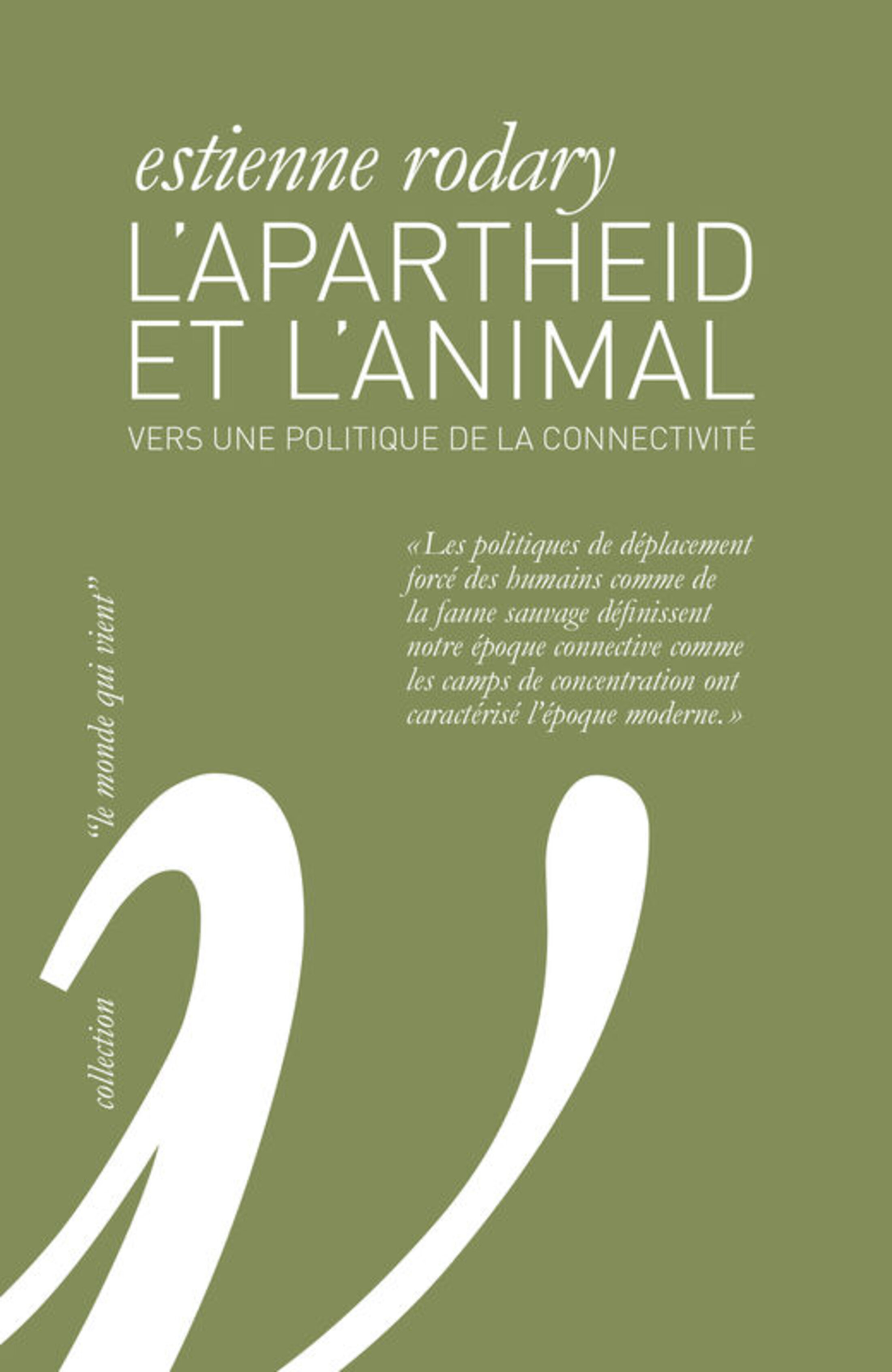
In my book 'L’Apartheid et l’Animal' I also show that we need to move away from the enclosing of protected areas because that relates to the idea of an isolated ecosystem. In reality ecosystems are dynamic, they're always in a state of disequilibrium. Biodiversity is indeed the concept that challenges the idea of a stable system.
In this respect, there was a strong movement in favour of participative conservation in the 1990s, with an interest in local populations. But in the following decade the large NGOs took the view that this approach wasn't working and preferred to go back to strict and authoritarian forms of protection. Today we hope the trend is changing again, with many of the people involved trying to use the pandemic to show that things are deeply inter-connected and that you can't just limit conservation to the establishment of protected areas.
Mediapart: What steps do you recommend for preserving biodiversity better at a global level?
E.R.: An effective policy would be to put in place restrictive measures across different sectors of public policy and to end this idea that we can limit our actions to a few locations. One example: in Wales in the United Kingdom they have halted the construction of new roads while they wait for an audit on the need to have new main roads.
French policy is very timid and limited to measures that are all too often temporary. For example, policies on compensation for biodiversity – replacing one destroyed space by the conservation of another - are still in their infancy. In the way it's currently being developed, this compensation policy has a short-sighted vision which doesn't take into account impacts at a global level. If, for example, you compensate five hectares involved in the building of an oil well by protecting five other hectares, you're not taking into account the damage caused at a global level by exploiting the oil.
Another example in France, which is a champion when it comes to using pesticides: if one day the Beauce [editor's note, a region in northern France noted for its extensive arable farming] had to compensate for all the biodiversity that it's destroyed in its fields with equivalent space, you'd have to protect some enormous areas, which are not available – that perhaps explains why this compensation idea has developed so little in the farming sector. The problem is that in France biodiversity has never been seen as a legitimate policy objective.
Mediapart: Is it the case that the prominence given in recent years in the media and social movements to the climate question has eclipsed the equally urgent issue of halting the collapse of biodiversity?
E.R.: You cannot separate climate and biodiversity. Many researchers have worked on this question for a long time, especially over the issue of forests; how can the sequestration of carbon, which has an impact on climate, have a positive impact on protecting biodiversity?
As far as I'm concerned, these two ideas are not in competition. But the way they are treated does diverge, because on the one hand the climate immediately became a global objective, with a call for “ready to use” solutions, while biodiversity, because of its specific nature which depends very much on the local context, is generally dealt with by specific examples. That's tended to reduce its importance. But the issue of preserving biodiversity is just as crucial as limiting global warming. I hope that the pandemic we're going through will allow them to be linked together once again.
----------------------------------------------------------------------------
- The original French version of this interview can be found here.
English version by Michael Streeter