


In Mosul in northern Iraq, nine months after the defeat of the Islamic State (IS) group’s three-year occupation of the city, the relief of the liberation has now given way to anger for thousands of people among the population whose close family disappeared under the rule of the jihadist occupiers and who complain of being abandoned by the Iraqi authorities in their quest for the truth.
“The Iraqi state has done nothing for the families of those who disappeared,” said Laila, whose son Adnan vanished more than three years ago. He was taken away from her home by a special unit of IS after the jihadists took control of Mosul, Iraq’s second-largest city, in early June 2014. “My son is called Adnan Basel Raïs,” she said, “he was born in 1987.” Laila, a neatly dressed woman in her forties and wearing a yellow headscarf, was speaking in March in the small courtyard of a house in the Karama neighbourhood of the city, where she was joined by other relatives of people who have disappeared without trace under the IS regime.
Before IS arrived in the city, Adnan worked as an electrician, and one of his jobs was to install CCTV cameras at military checkpoints. “On July 26th 2014, three white all-wheel-drive vehicles parked in front of our place,” recalled Laila of the events when she last saw her son alive. “Masked men presented themselves as being from the Amniyat [Editor’s note: the IS security services] of the Islamic State. I was barefoot but I followed them into the street, I begged them.”
What has become of Adnan remains a total mystery. Laila first sought news of his fate from IS officials, but they provided none. On two occasions she was told by former prisoners of IS that they had seen Adnan in jail. “As a mother, I feel in my heart that he is still alive,” she added, breaking into tears. Latterly, she has found hope in a rumour circulating among other families of the disappeared that there are former prisoners of IS, detained inside the Amniyat HQ in Mosul, who were freed after the defeat of the jihadists last July, but who were transferred to government prisons in Baghdad and the south of Iraq on suspicion that they may have been IS members in disguise. “I cling on to everything I hear,” said Laila.
While there is no official confirmation of the rumoured transfer of prisoners of IS, Mediapart was told by the respective families of two of the missing that they had received confirmation from Iraqi army officers that they were being held in detention. One man recently released from detention said he had been taken prisoner by IS in Mosul and after the rout of the jihadists was transferred to a jail situated at a Baghdad airport.
But however many former captives of IS are now in turn kept in government jails, their numbers can reasonably be assumed to be far less than the many thousands of people who vanished under the IS regime.

Enlargement : Illustration 1
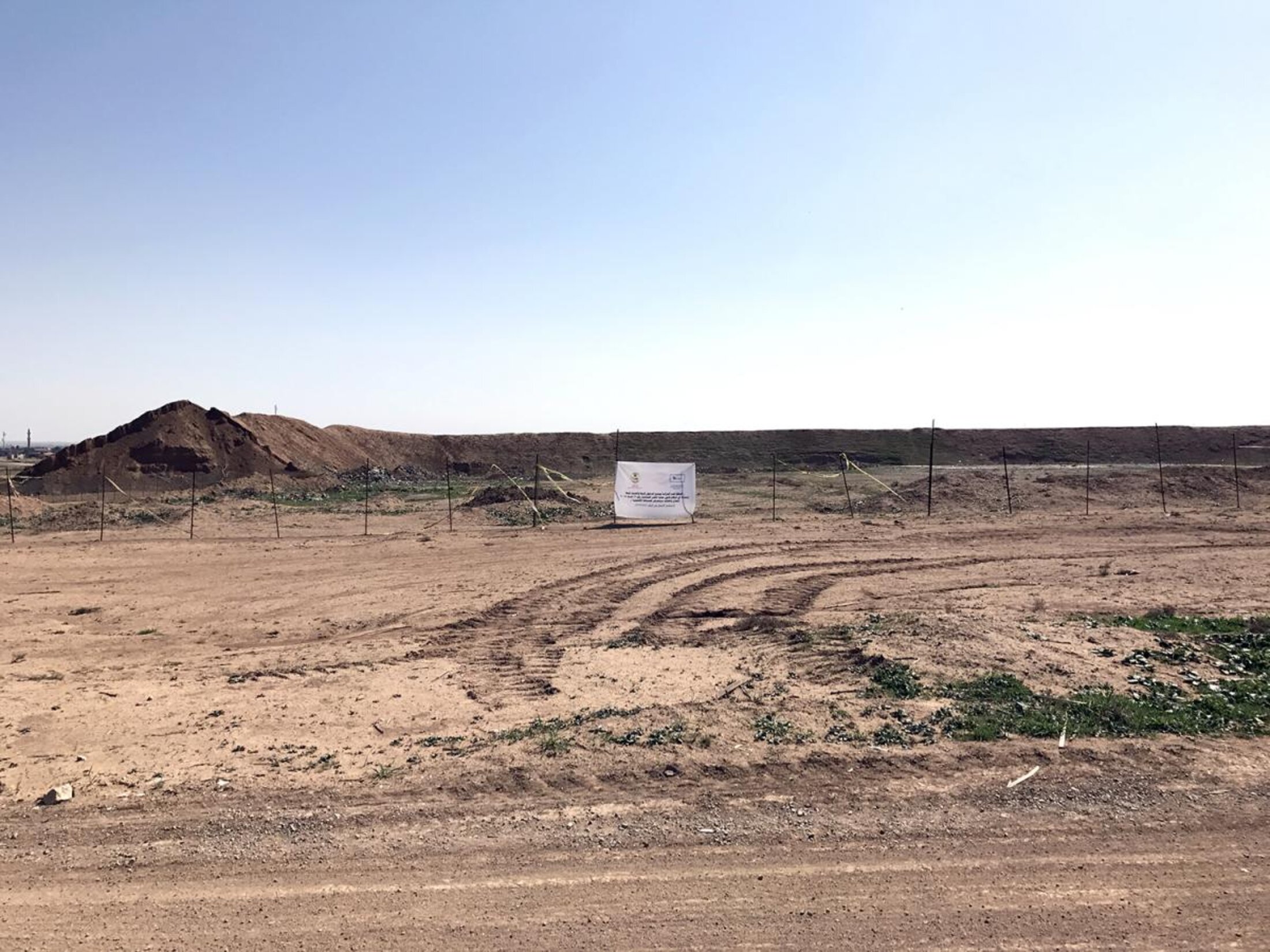
In a report earlier this year by The Associated Press (AP), Ali Khoudier, a member of the Nineveh provincial council which includes Mosul, said more than 3,000 missing-persons reports have been submitted by the local population since the liberation of the city last summer.
“We simply ask the government to give us a list of those who are detained in prisons belonging to the Iraqi state,” said a woman present alongside Laila and who asked for her name to be withheld. Her daughter Naïma vanished, like Adnan, after she was arrested by IS. Naïma’s father, Mohammed, 58, recalled the events: “Two cars from the Amniyat took her on November 15th 2016. They told me ‘She has a mobile phone’.” Apparently IS believed she used her mobile to pass information on to the Iraqi army which had just begun its offensive to recapture Mosul. Mohammed insisted “she hadn’t done anything”, although his wife added, “She was very courageous”.
IS carried out mass roundups of people in two main waves, at the beginning and towards the end of the jihadists’ occupation of Mosul. Like Adnan, thousands of people were taken prisoner in the second half of 2014, principally Iraqi police officers and soldiers, civil servants (and also retired civil servants) mostly from the interior and defence ministries, along with local village leaders and politicians. Naïma was among several hundreds of people rounded up at the beginning of the offensive to recapture Mosul from IS in the autumn of 2016.
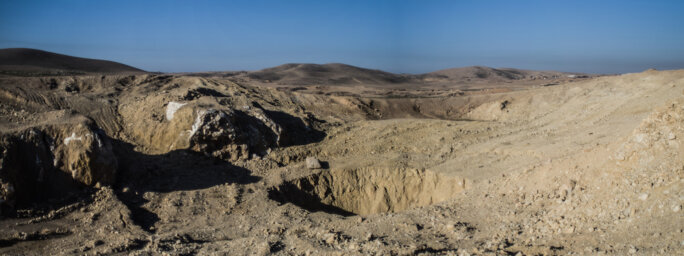
Most of those who disappeared in the roundups were subsequently murdered, either tortured to death in IS prisons or victims of mass executions carried out at deserted locations. Unlike those victims of IS who were executed in public, sometimes filmed for IS propaganda and posted on the internet, and whose fate was known to their families. The region around Mosul in north-weast Iraq is dotted with mass graves, some of them vast like that in Khasfa, a desert sinkhole about ten kilometres south of Mosul and close to a main road. It is believed to be the biggest mass grave in Iraq and where NGO Human Rights Watch estimates – based on a study of satellite photos and the accounts of witness statements – that about 4,000 corpses are buried.
Enlargement : Illustration 2
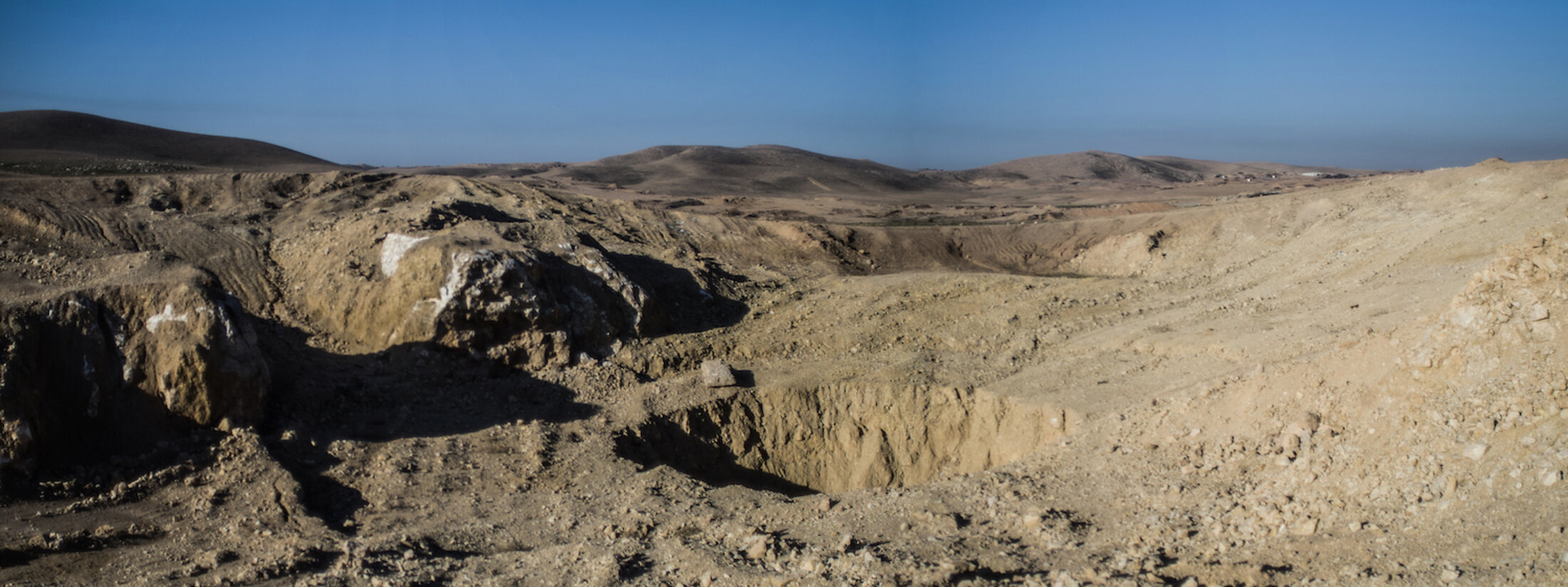
The natural sinkhole on the desert plateau was originally about 50 metres wide and 400 metres deep. It was gradually filled by the corpses of IS prisoners, many of whom were brought to the site for execution. After the mass of bodies had piled up, the remainder of the sinkhole cavity was covered over. “They attached chains to [freight] containers and then dropped them in,” recounted Walid Wissam, who said he took part in the operation. “The containers fell one after the other, then bulldozers pushed in the earth on the ground around. They paid day-workers to do that.” Along with the covering rubble and debris, apparently a crude attempt to hide the massacres, it is reported that IS also lay explosive boobytraps close to the cavity.
“I’m afraid that it will never be excavated,” said an NGO official, whose name is withheld, who acts as an advisor to the Iraqi government for investigations of mass graves. “Nobody has the means. The area is mined and at the bottom of the hole there was an underground landslide,” he explained, adding that many of the human remains at that level were probably broken up as a result.
'They kept my brother and then decapitated him'
Fawaz Abdulabbas, deputy head of the International Committee on Missing Persons in Iraq (ICMP), insists exhumations at Khasfa must be carried out, however difficult. “We cannot say it’s mission impossible when there are thousands of people inside there,” he insisted. “I am sure that the ICMP will find a solution, but we need the help of the international community for that.”
But other, smaller mass grave sites around Mosul and elsewhere also remain unexplored, despite an initial evaluation of them by the ICMP. “The situation is complicated,” said Abdulabbas. “Meanwhile, we are losing evidence and the remains disappear. One of the problems is that the Iraqi state says it doesn’t have the budget.”
Over the past almost four decades, beginning with the arrival in power of Saddam Hussein in 1979, between 250,000 and 1 million Iraqis have disappeared without any account of their fate, according to ICMP estimates. The huge margin of that estimation reflects the country’s tragic recent history, including the repression under the Hussein regime, the 1980-1988 Iran-Iraq war, the US-led invasion of the country in 2003 and subsequent civil war, the occupation of swathes of Iraq by IS, and the reported summary executions by Iraqi government forces and their allies in their offensive against the jihadists. The latter may, it is speculated by some, in part explain the lack of financial support for the current exhumation projects.
There exists in Iraq just one morgue where DNA identification of human remains can be carried out, based in Baghdad. According to a report last month in The Wall Street Journal, the country has just 25 qualified forensic examination experts trained in scientific exhumation techniques, while more than 300 mass grave sites have been identified around Iraq.
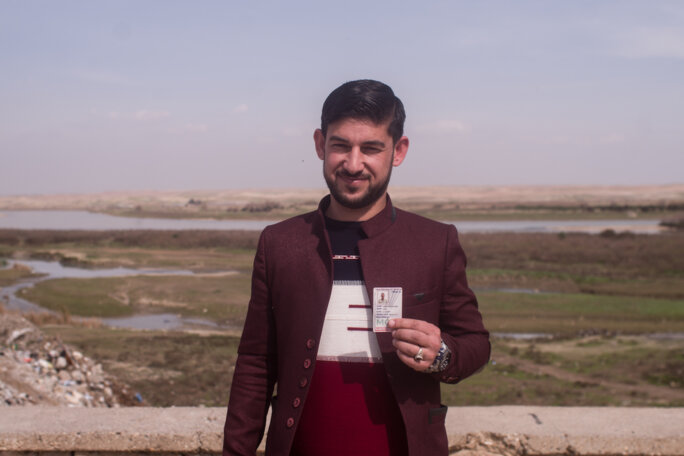
At Hamam al-Alil, a town 30 kilometres south of Mosul that sits on the west bank of the river Tigris, the corpses of about 300 people, believed to be mostly former local police officers, were discovered in a mass grave in early November last year as Iraqi government forces advanced towards Mosul. The corpses, according to Human Rights Watch, were not buried but covered in waste deposits or even left lying on the surface of the site on the outskirts of the town. But after the rout of IS, the site remained largely untouched. Riyad Ahmed Saaer, a 32-year-old English teacher from the town, said he even saw a dog mauling one of the abandoned corpses. “Nobody cares about it,” he commented.
Enlargement : Illustration 3
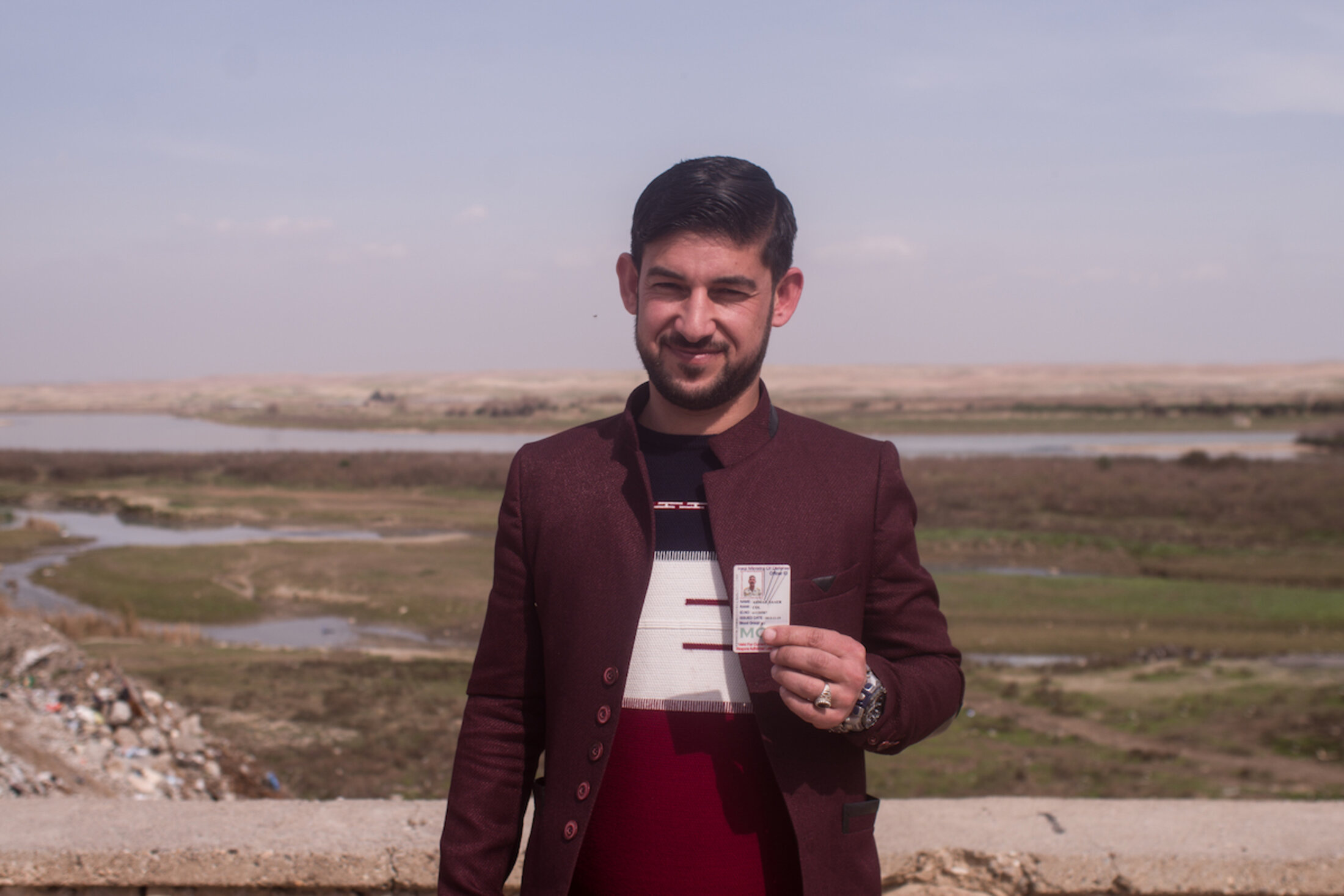
Riyad’s father Ahmed was a bomb disposal expert in the Iraqi army with the rank of colonel. When IS took control over the region around Mosul in June 2014, his army division became scattered. He went into hiding, initially believing that IS would soon be pushed back out of the region, and kept his army-issue weapon. He eventually joined his family in Hamam al-Alil. “At dawn on October 27th 2014, men jumped over the wall of our house and rushed into our rooms,” recalled Riyad. “They had arrived in five cars, about 20 of them. They searched the house and found my father and an AK47 [Kalashnikov assault rifle]. Then they took him away. I did not leave them alone, I forced them to take me too. But on the road to Qayara [a town about 60 kilometres south of Mosul] they made me to get out.”
Riyad spent the following weeks trying to find out what became of his father, and after a month was told by IS members that he was dead. He was given what amounted to a death certificate, in the form of a document recording his father’s execution. “One of them told us that all those they executed were in Khasfa,” said Ryad, referring to the desert sinkhole site.
Today he is trying to obtain official recognition of his father’s death by the Iraqi authorities. “You can’t imagine the hell this is,” he recounted. “I went to Baghdad, for the first time in my life, to receive a document from the Ministry of Defence. If there is no body, you must declare a disappearance. The state only accepts to provide a death certificate if the family [still] has no news four years after the declaration.”
Families like those of Ryad could only register such declarations after the liberation of the region from IS rule in 2017, meaning that in the case of Ryad’s father Ahmed his death can only be recognised officially as of 2021. Not only is such procedure a very testing one for those without privileged contacts in the administration services, and notably for those who are poorly educated, but it is also an expensive exercise, requiring lawyers’ fees, the often-required payment of bribes to officials, not forgetting publication of a notice in the press. Any one of these obstacles can become a reason to prevent families from completing the process.
Mohammed Abdelkarim is also from Hamam al-Alil. He and his brother Omar were arrested by the IS security service, the Amniyat, in March 2015. “They accused us of being [Iraqi] army informers,” he said. He recounted that during his detention over the following days, he was attached to, and hung from, a ceiling and beaten. “They let me go after 13 days, but they kept my brother and they decapitated him after one month.” In 2013, Mohammed’s father was murdered by cousins who had joined the ranks of IS, killing him in front of his mother. She later died of a heart attack during the IS occupation.
Since the liberation of the region from IS rule, Mohammed has sought to have his brother’s murder officially recognised, but an official file on the subject of his brother has recorded him as a member of IS, and not a victim of IS.
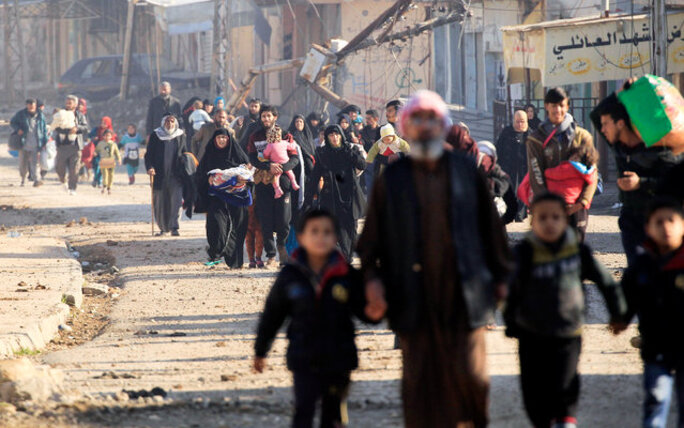
Enlargement : Illustration 4
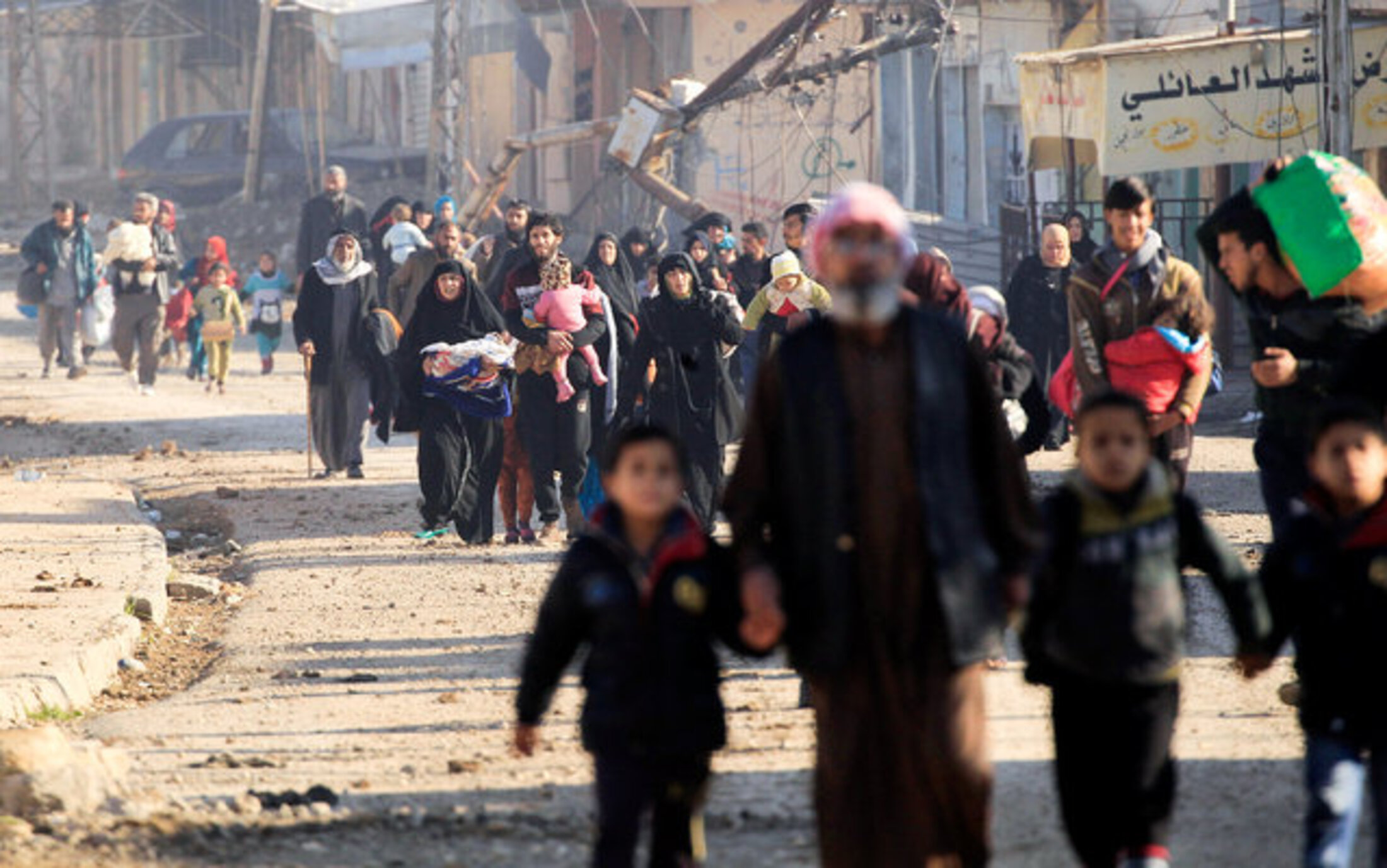
According to an investigation published in March by the AP news agency, at least 19,000 people are detained or imprisoned in Iraq on the basis of membership or links with IS, or other terrorism-related crimes. “Thousands more also are believed to be held in detention by other bodies, including the Federal Police, military intelligence and Kurdish forces,” reported AP, which underlined that the identities of those detained are not officially available.
During the offensive against IS, various Iraqi government security services arrested people among civilian refugees, and the populations of liberated regions, who were suspected of belonging to IS on the basis of denunciations and ‘wanted’ lists – a process described in a report by the IRIN news agency, specialised in covering humanitarian crises, as “an inexact science”.
Meanwhile, an investigation by Human Rights Watch, published last December, concluded that “thousands” of people, including children, detained for alleged links with IS were often prosecuted for being members of the jihadist group “with no distinction made for the severity of the charges brought against suspects and no effort to prioritize the prosecution of the worst offenses”.
“Human Rights Watch is concerned that the quality of the incriminating information and the opacity of the process used to identify ISIS [Islamic State] suspects, based on wanted lists or accusations by community members with no further evidence, may result in the misidentification and detention of boys and men who are or were not actually affiliated with ISIS,” reads the opening summary of the report. “As our research shows, those wrongfully identified in the screening process as ISIS suspects may spend months in mass arbitrary detention during the course of their judicial investigation.”
The rapidity of the trials of those accused of IS-related crimes, which press and NGO observers have reported are often heard in the space of 30 minutes, raises fears about errors of justice. In its March report, news agency AP found that since 2013, a total of 3,130 death sentences had been pronounced by Iraqi courts against people held on terror charges.
In July 2017, AP reported from a crowded detention centre with 370 inmates set up on the outskirts of Mosul just after the city was liberated. The news agency questioned one of the prisoners, interviewed out of earshot of guards, who said he was a civil servant and had not been told why he was detained. "You won't find 10 real [IS members] among these guys,” he told AP. Another said: "None of us have received any visitors, relatives, family members. They don't even know where we are."
'Families appreciate what we've done, and will vote for me'
Bribery is often the only means with which relatives can find news of those who have disappeared. Mohammed Hayali says he spent the equivalent of 20,000 dollars (about 16,000 euros) to find out what became of his son, Fahrad, who was arrested in Mosul by IS in 2014 and who he now believes has become lost in the labyrinths of the Iraqi justice system. “He had helped a Yazidi woman escape and killed a member of IS,” Mohammed recounted. “In the end, he was detained at Jamhouri Hospital.”
Mosul’s Jamhouri Hospital was one of the last locations used as headquarters for IS before it was overrun by an elite Iraqi interior ministry intervention force in July 2017. While it was reported that the IS security services, the Amniyat, held several hundred prisoners in the building none were reported to have been found at the end of the fighting, nor has any mass grave been discovered there.
Mohammed, believing his son was transferred to another prison in Iraq, paid officials and Iraqi army staff for information, and at one point in his search he received an audio recording which was supposedly of Fahrad, whose voice Mohammed believes was authentic. His hopes were raised again when his neighbours put him in touch with Ahmed al-Abassi, a man living in a village in the region close to Mosul, who said he too had been detained by IS at Jamhouri Hospital, where he said he saw Fahrad, and was transferred to Baghdad after the hospital building was liberated.
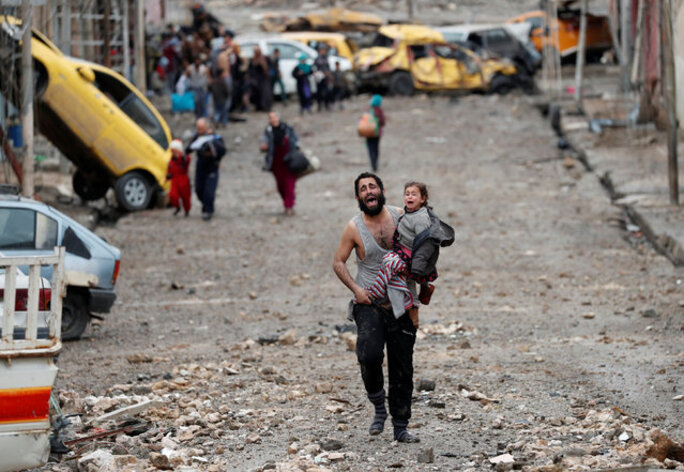
Enlargement : Illustration 5
Interviewed by phone, Ahmed al-Abassi said he was taken prisoner by IS, along with 14 others, on November 17th 2015. He said he and those arrested with him had been providing information to the anti-IS coalition on jihadist positions in the city. “I met Fahrad in a cell in the Jamhouri Hospital,” he said, “and we were [after the building was overrun] taken together to wharehouses at the Al Muthana airport in Baghdad. This prison is managed by the coalition. They detained us and gave us medical attention.”
Mohammed Hayali believes that the reason other former IS prisoners are still detained by the Iraqi authorities is because some IS militants hid among them just before the hospital was freed. “The Iraqis discovered that and accuses all of them of being members of IS,” he said.
Ahmed al-Abassi was freed from detention at the end of last year. “I think the innocent will be freed, but the procedure is very slow,” he said. He added that among his fellow prisoners at Jamhouri Hospital were Peshmerga fighters (Iraqi Kurds), who were captured by IS in 2015. Contacted by Mediapart, the office of the prime minister of Iraqi Kurdistan, a territory which lies close to Mosul in north-east Iraq, confirmed that it had requested information from the Iraqi government about any of its combatants who might be detained by Baghdad, but had so far received no news.
On January 31st 2015, about 20 Peshmerga fighters were captured by IS forces close to the Iraqi city of Kirkuk, which lies about 100 kilometres south of the Iraqi Kurdistan capital of Erbil. Four of those captured were decapitated in October 2015. The others were eventually transferred by IS to Mosul between June and July 2016. Tareq Rafiq Fariq Zaynal is the father of one of the captured Peshmerga and claims that nine of them were held by IS in Jamhouri Hospital up until it was liberated last year. “All of them are since being prosecuted for terrorism,” he said.
Against a backdrop of widespread mistrust of the Iraqi administration, the distraught families of those who vanished are courted by some politicians eager to please ahead of legislative elections to be held in the country this weekend, the first such ballot since the rout of IS and the fourth since the overthrow of the Saddam Hussein regime.
Saeed Zaedan is a parliamentary candidate standing for the Wataniya Alliance party of Salim al-Jabouri, president of the Iraqi parliament and a leading Sunni politician. Zaedan organised a meeting earlier this year in Mosul, whose population is mostly Sunni Muslim, of families seeking news of lost relatives, when Salim al-Jabouri made a surprise appearance.
“The media showed pictures of the meeting saying he was in Mosul and that ten thousand families welcomed him to show him support,” said Mohammed Hayali. “But they weren’t supporters, just people who wanted to know what happened to their relatives.”
“The president of parliament and his candidates use the families of the disappeared,” added Hayali. “They say they will help them, they take down the names of the families, but in reality they don’t do anything.”
Zaedan began contacting the families of the disappeared and offering his help in the summer of 2017. “My intention was not just to get myself elected,” he said. “But of course, these people appreciate what we have done, and that will lead families to vote for me.” Younes Issam al-Bawab is a co-founder of a Facebook account set up to bring together families of the disappeared. “Of course, it’s an opportunity for these politicians,” he said. “We know that, but we hope all the same that they will help us.”
Iraqi Prime Minister Haider al-Abadi also raised the subject of the disappeared during an election campaign meeting in Mosul on April 25th. The Shiite politician, whose post is on the line in the election, is hoping his Islamic Dawa Party can fight off the many challengers from both pro-Iranian Shiites and powerful Sunnis with connections to Turkey and Gulf States. On the eve of his visit to Mosul, Al-Abadi’s campaign staff briefed the media that he would raise the subject of the disappeared. During the meeting, held at the University of Mosul stadium, dozens of people could be seen holding up images of lost family members. “As for the disappeared,” pronounced Al-Abadi, “I have not forgotten them.” But he made no mention of the mass graves, the issue of the unidentified prisoners detained since the fall of IS, nor even the need to change the bureaucratic difficulties for families seeking to register the deaths of relatives in IS-occupied territories.
-------------------------
If you have information of public interest you would like to pass on to Mediapart for investigation you can contact us at this email address: enquete@mediapart.fr. If you wish to send us documents for our scrutiny via our highly secure platform please go to https://www.frenchleaks.fr/ which is presented in both English and French.
-------------------------
- The French version of this article can be found here.