


International Monetary Fund (IMF) chief Dominique Strauss-Kahn is to remain in police custody in New York after a Manhattan court on Monday denied him $1 million bail on sex assault charges after the judge considered he could attempt to flee.
Strauss-Kahn, who until this weekend was tipped by opinion polls as the likely winner of next year's French presidential elections, has denied the charges of perpetrating a criminal sexual act, attempted rape and unlawful imprisonment of a chambermaid at a luxury New York hotel on Saturday (click here for full official text of complaints filed). He faces up to 25 years in jail if found guilty.
The 62 year-old IMF Managing Director will remain in detention at least until his next court appearance due on May 20th.
Prosecutors told judge Melissa C. Jackson they opposed the bail request on the grounds of the lack of an extradition treaty between France and the US, the resources at Strauss-Kahn's disposal and his character background (click here for video report of the hearing).
"This battle has just begun," Strauss-Kahn's defence lawyer Benjamin Brafman told the court.
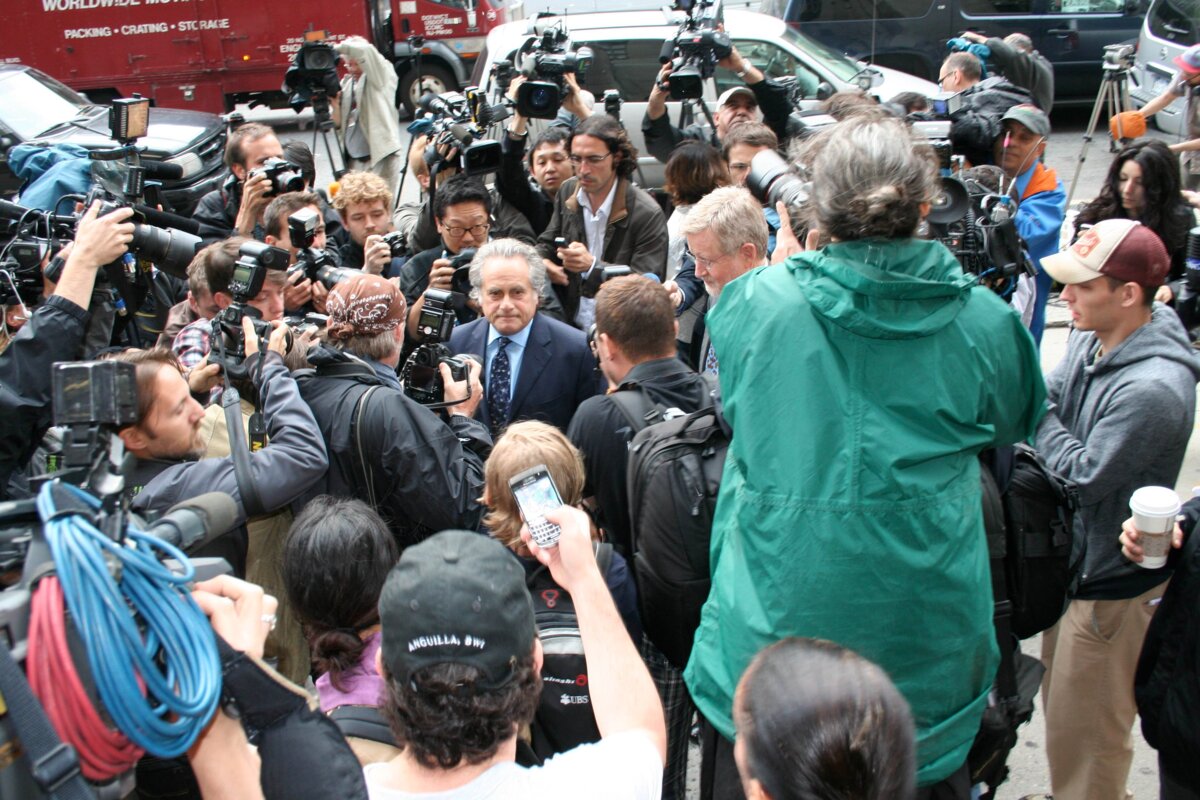
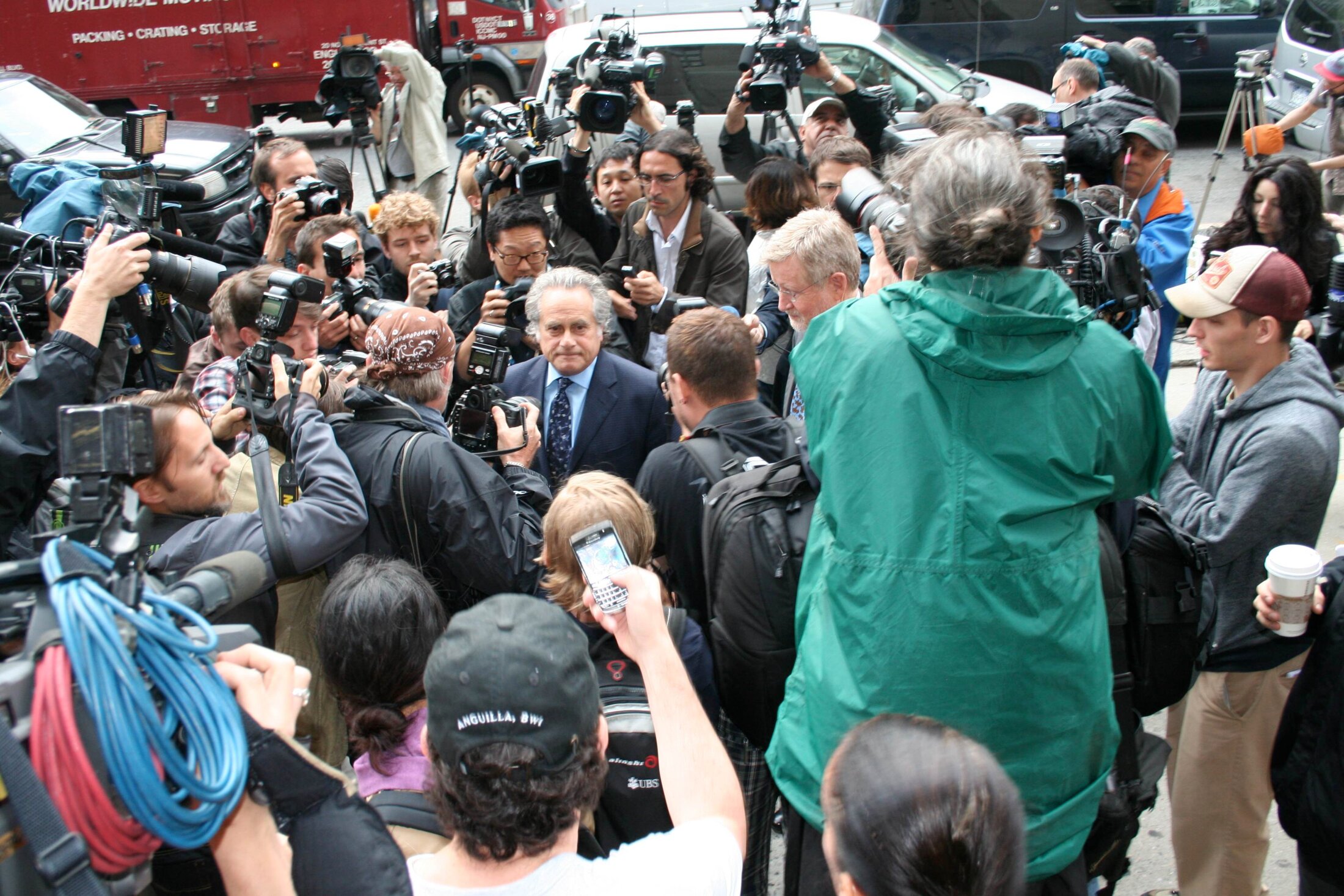
Enlargement : Illustration 1
The extraordinary chain of events that began Saturday now appear to make Strauss-Kahn's position as IMF Managing Director untenable, at least in any active role, and have undoubtedly destroyed his chances of standing in France's presidential elections next year, which until this weekend he was widely tipped to win.
He was as removed from a Paris-bound Air France plane by New York Port Authority agents minutes before it was due to take off from Kennedy International Airport on Saturday afternoon, after a chambermaid at the Sofitel hotel near Times Square had complained Strauss-Kahn had earlier that day assaulted her in his luxury suite (see Mediapart's report on the events here). She reportedly told detectives that she entered the $3,000 per night suite believing it to be unoccupied when Strauss-Kahn, she alleges, rushed at her naked from the bathroom, locking the entrance door that she had left open according to regular policy.
Strauss-Kahn was charged by New York Police Department (NYPD) detectives early Sunday morning. Later Sunday, the 32 year-old chambermaid formerly identified him out of a lineup as her attacker.
The New York Times on Monday reported that she is an African immigrant who has worked for the Sofitel for three years. Accor, which owns the Sofitel chain, on Sunday said she had never previously been involved in an incident with a client.
Throughout Monday, amid emerging details of the case and resurfacing allegations of previous incidents of sexual abuse committed by Strauss-Kahn in France (see page 4 of our previous report), the French political establishment was reeling. French foreign minister Alain Juppé on Monday described Strauss-Kahn's arrest as "a very far-reaching event for Dominique Strauss-Kahn and his family, then for the Socialist Party, and also for the image of France at the International Monetary Fund."
Supporters and critics of the former French finance minister spent Monday trading statements that depicted him variously villain or martyr.
'It's a drama, it's a nightmare'
One of Strauss-Kahn's staunchest supporters within the French Socialist party, Member of Parliament Christophe Cambadélis, insisted Monday that the FMI chief was the innocent victim of a conspiracy. "There are lots of contradictions in the case, beginning with [Strauss-Kahn's] escape," he told reporters at Socialist Party headquarters in central Paris. "It turns out that it didn't exist. I am not an adept of conspiracy theories, far from it, but I have in mind that DSK was promised he'd meet with nuclear fire as soon as became a [presidential] candidate."
"We cannot believe in his guilt," he continued. "He will soon be amongst us [...] After the period of speculation, emotion and accusation will come the time of defence and friendship," he added.
But French ecology and transport minister Nathalie Kosciusko-Morizet deplored the manner in which the political establishment and media have largely focused attention solely on Strauss-Kahn. "There is a presumed victim, the chambermaid, who has the right to be respected, no-one talks of her," said the minister. "And there is a proven victim, France, it's disastrous. "
According to a report published in French daily Le Monde, Strauss-Kahn's wife Anne Sinclair, who was in Paris at the time of her husband's arrest, received a phone call from him after lunching with his daughter on Saturday and again during his trip to the airport. Citing sources close to Sinclair, Le Monde said he mentioned "a serious problem", but that he did not talk of an incident at the Sofitel.
Meanwhile, French diplomats have confirmed that a medical examination of Strauss-Kahn discovered scratch marks on his body, according to French news website Atlantico.fr. The website cited a French embassy report sent to Paris, which stated "scratches were identified on the torso of the suspect. The latter gave his agreement that further examinations be carried out." Those exams were completed Sunday.
Television footage of a haggard-looking Strauss-Kahn leaving Harlem police buildings in handcuffs late Sunday - the first pictures of him since his arrest - clearly shocked many in France, where such treatment for non-violent suspects is largely unknown, especially regarding politicians.
Leading Socialist Party MP Manuel Vals said the pictures were a scene of "insupportable cruelty". Speaking on French radio station RTL he said: "Dominique Strauss-Kahn is a friend who I know since a long time, this morning's pictures were of an insupportable cruelty. I had tears in my eyes."
Even Eva Joly, former French examining magistrate and now a hopeful to become Green party candidate in next year's presidential race, whose hallmark as a magistrate was an uncompromising approach to corruption and abuse among politicians, crtiicised "the violence" of the images. "It's certain that the American justice [system] is much more violent," she said. "It's also a much more violent judicial system because they don't recognize attenuating circumstances like we do and so if you choose to plead not guilty and you are convicted you receive the maximum sentence."
"It is a drama, it's a nightmare, and I hope that we're going to wake up from this nightmare," she added. She called for "great caution" regarding the accusations leveled at Strauss-Kahn, because "for the moment we haven't heard from DSK himself."
'DSK his own worst enemy'
During a press conference late Monday morning, Socialist Party (PS) spokesman Benoît Hamon announced that all the dates for its primary elections to decide a candidate for the 2012 presidential elections would be maintained. With candidatures to be submitted by mid-June at the latest, this now excludes Strauss-Kahn from entering the race even if charges against him were eventually to be dropped .
Strauss-Kahn's position immediately became untenable because he himself set the precedent of resignation in response to a judicial enquiry. It was in 1999 and he resigned as Minister of Finance and Economy after being investigated for - though not charged with - corruption, for which he was later cleared. "Morals and a sense of responsibility require it. For me, it is inconceivable that a minister could continue to exercise his function while any kind of doubt leading to a judicial procedure exists against him, as this might reflect badly on the entire government," he explained when he resigned.
Hamon said the party would on Tuesday hold an extraordinary meeting of party leaders, presided by First Secretary Martine Aubry. The party has been rocked by the events, losing what many saw as the candidate who would have, as opinion polls regularly predicted, trounced conservative-right incumbent Nicolas Sarkozy. Strauss-Kahn had not openly declared his intention of running, but few doubted that he would.
An editorial in French daily Libération on Monday said the Socialist Party had now "lost the only candidate who had, in every possible scenario, the favour of opinion polls. The one best able to beat Nicolas Sarkozy. Perhaps the one best-placed to answer the concerns of the French people. This promising political dynamic has collapsed even before the campaign has begun. That is, in fact, the only good piece of news: imagine for one moment such an affair happening three weeks before the elections [...] Dominique Strauss-Kahn knew he was his own worst enemy."
For Socialist Party First Secretary Martine Aubry, the party must quickly find a way out of the imbroglio. Speculation that Aubry will now declare herself a runner for party candidature has heightened, while the declared candidature of former Socialist party leader François Hollande has strengthened.
But for the time being, her supporters are avoiding any open gloating over the surprise turn of events. "I've always called for [Aubry's] candidature, I was perhaps the only one yesterday to think that she would be a candidate," said Pouria Amirshahi, the party's National Secretary for Human Rights. "She's directed the [campaign] platform and she's united the left within the Socialist Party and the other left forces. But if there are those who now play around saying that now it's Martine [Aubry] or that now it's François [Hollande], they are jackals and I won't take part in that."
"It would serve neither justice, nor the honour of the man, if all this is false, nor that of a woman if it is true. Our line is this is a shock, we are waiting for the truth, we go on," she added.
Aubry more likely to stand
A member of the left fringe of the party, speaking anonymously, said "I'm getting text messages rejoicing over an Aubry candidacy, but frankly if she's going for it because she doesn't have a choice, that won't make for a very dynamic campaign. Frankly, this story doesn't benefit anyone here and it hasn't created a good atmosphere at the PS."
Hollande supporters have been quick to point out that he, unlike Aubry, had not sealed any pact with Strauss-Kahn whereby the least well-placed of the two would step down in favour of the other.They are sticking to their original campaign strategy established months ago. "For us, we had a strategy of not worrying about the strategies of the others. For us, this changes nothing, we will keep this strategy," explained Stéphane le Foll, a close aide to Hollande.
But Le Foll said he doesn't want to see the party destabilised by the accusations against Strauss-Kahn: "There are different personalities at the PS. You can't put everybody in the same bag. We are cautious and correct because for now we don't know. But for the primary, we were never positioned against anyone. This strategy continues to be valid, it's even more valid now," he added.
Aubry's candidature in the party primaries to be held in October now appears likely. Because she stands on the left of the party, by default, Hollande will represent the social-democrats. The likeliehood id that either the primary will be wide open because a multitude of candidates - including erstwhile Strauss-Kahn supporters - would stand, or Aubry will emerge from the rubble as the candidate of unity.
-------------------------
English version: Patricia Brett and Graham Tearse
(Additional reporting and editing by Graham Tearse)