


Following the fall of Islamic State's self-styled caliphate across parts of Iraq and Syria back in 2018 the French intelligence services took the view that there was no other jihad zone at the time that had the “characteristics” of a “sanctuary” that could take in a mass flow of new jihadists. The Taliban's capture of Kabul just a week ago, on Sunday August 15th, inevitably arouses fears that Afghanistan could once again become a sanctuary for terrorist groups with international targets, as it was in the 1990s.
Mediapart has spoken to different members of the French intelligence community and an academic to try to evaluate what the Taliban's return to power will change in terms of the terrorism threat.
Enlargement : Illustration 1
Clearly, with events still unfolding, there is some caution about assessing the likely implications. One thing, however, seems pretty clear: the new Taliban regime will not benefit Islamic State (IS). Wilayah Khorasan, the IS branch operating in central Asia, including Afghanistan, is at war with the Taliban. The former reproaches the latter for having negotiated with the Americans in order to get them to leave. The latter criticises the former's attacks on the Shiite community. These differences have lead to gunfights, suicide attacks and, perhaps most seriously in their eyes, accusations of apostasy.
Closeness to Al Qaeda
The same is not true of Al Qaeda, whose leader Ayman al-Zawahiri has sworn allegiance to the Taliban's mullah Haibatullah Akhundzada, placing it under the Taliban's de facto protection. Back in the autumn of 2000 the old Taliban regime even went so far as to issue a communiqué swearing that the then head of Al Qaeda Osama Bin Laden had played no role in the suicide attack against the US Navy ship USS Cole in the Yemen port of Aden in October that year. This was despite the fact that Bin Laden had indeed ordered the attack, which killed 17 American sailors. The Taliban have also never condemned the September 11th 2001 attacks in the United States, and to this day have not acknowledged Al Qaeda's role in those mass killings.
“The links between the two organisations have been maintained,” said Marc Hecker, research directer at the Institut Français des Relations Internationales and co-author with Élie Tenenbaum of La Guerre de vingt ans, a comprehensive book on jihadism published in April 2021 by publishers Robert Laffont. The academic noted that when Afghan and American special forces led a raid in the autumn of 2019 against a Taliban hideout in Musa Qala in Helmand Province, various Al Qaeda senior figures were there too, including Asim Omar, the head of its “Indian subcontinent” group.
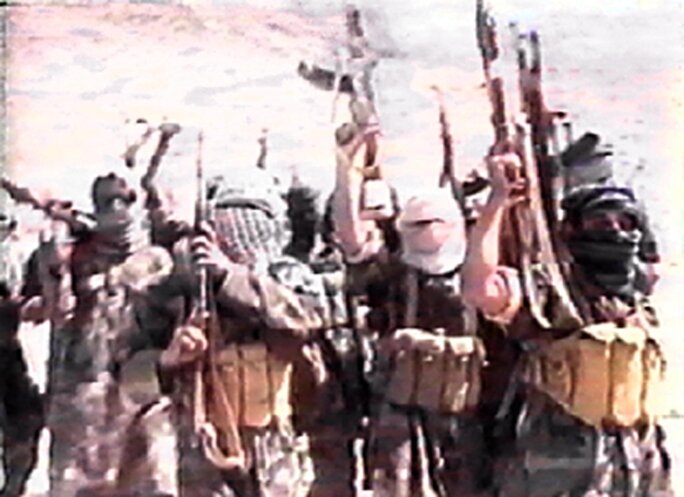
The closeness between the groups is made more disturbing by the fact that on July 15th 2021 Al Qaeda, via its media mouthpiece As-Sahab, broadcast a video condemning the blasphemous nature of caricatures of Muhammed. France was targeted throughout the video.
Enlargement : Illustration 2
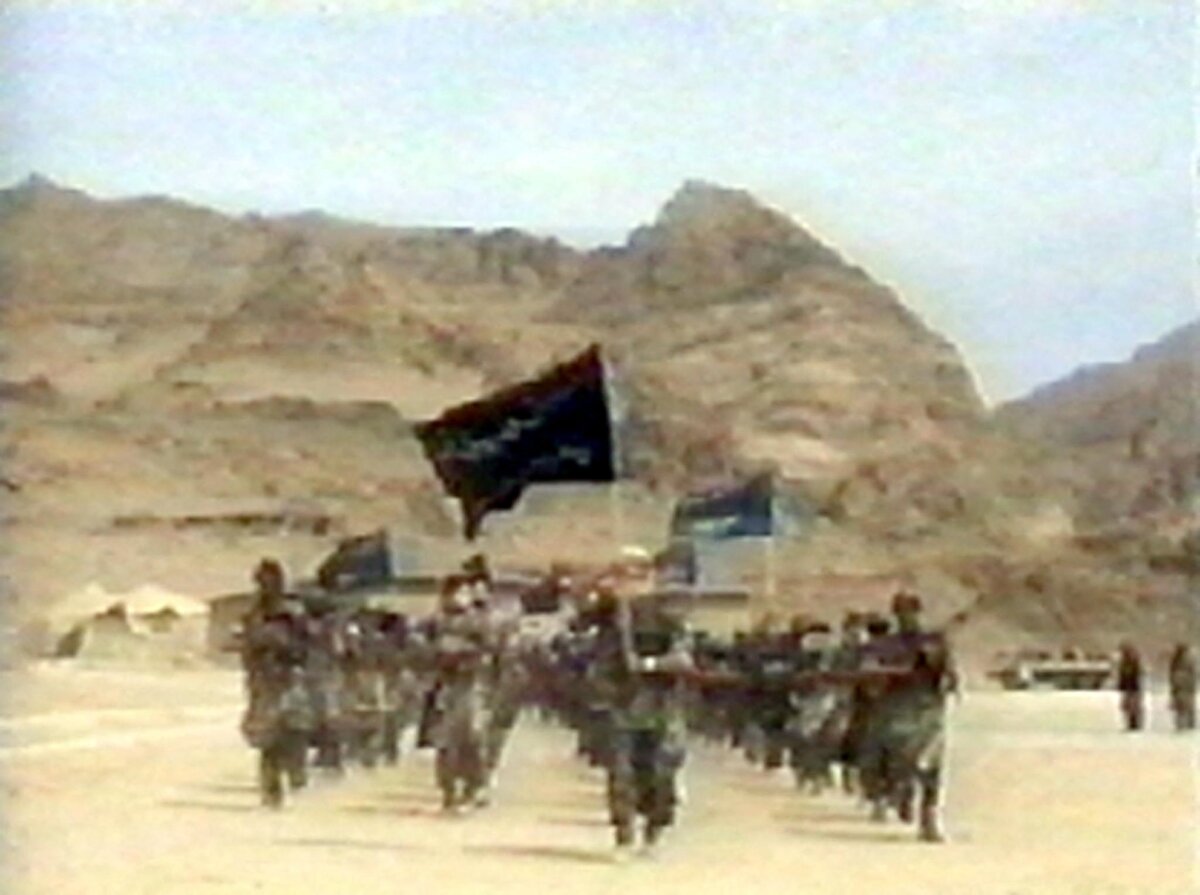
Yet no one to whom Mediapart has spoken thinks that the Taliban will harbour Al Qaeda or other terrorist organisations as openly as they did 20 years ago. Back then the Darunta training camp in eastern Afghanistan was used to train apprentice Al Qaeda terrorists in making explosives and handling toxic products, and it was based next to the headquarters of a Taliban army division whose soldiers guarded the camp. So well was this camp guarded, in fact, that several months before the 9/11 attacks in 2001 France's external intelligence agency the DGSE was forced to admit its powerlessness in relation to the camp's activities. Its reports from the time conceded that the level of security inside the Darunta complex was so tight there was no chance of identifying any “potential terrorists coming out of these structures”.
Fear of reprisals
The Doha Agreement of February 29th 2020 changed things. Under this deal the Americans agreed to the withdrawal of its troops from Afghanistan in exchange for a commitment from the Taliban that they would no longer allow terrorist organisations such as Al Qaeda to operate from the country. “The Taliban are aware of the red line,” said Marc Hecker. “If they try supporting [terrorist organisations], even passively, they are exposing themselves to massive reprisals, bombings. And indeed you can see in recent days that they're making pledges to the international community. Now one has to stay watchful, because between what they say and what they do....”
There is a similar feeling within the intelligence services. “There shouldn't be any major operational structure with training camps as there may have been up to 2005-2006. On the other hand, Afghanistan could become an 'intellectual' sanctuary where wanted jihadist figures would take refuge and have the time to reflect on what they had done, and would plan their next attacks,” said one worried intelligence analyst.
While the latest reports from the United Nations estimate the number of foreign fighters in Afghanistan as 10,000, not all of these have joined terrorist organisations but have instead joined the Taliban itself. They are mostly Uzbeks, Tajiks and Pakistanis. “The initial threat posed by the return of the Taliban is more than anything to regional order,” said Marc Hecker.
In 2017 the DGSE estimated that while some terrorist channels already existed across Turkey and Iran, and that they had been used by Uzbek jihadists returning from Syria, these channels were only accessible to a limited number of jihadists. This was because of “difficult circumstances in terms of being accepted and adapting in the Afghan insurrectional network”. A number of sources said this still remains true today.
You can be sure that there will be a propaganda effect, it's going to boost the morale of terrorist groups.
Meanwhile, the risk that French jihadists will set off for Afghanistan is seen as low. Even when the Islamic State caliphate collapsed, the French intelligence services thought that it was unlikely there would be a mass exodus to central Asia; the French contingent had already found it hard to integrate within the Syrian and Iraqi communities after four years.
Since then only three French nationals, two men and a woman, are thought to have gone to Afghanistan, and that was in October 2017. They joined Wilayah Khorasan and played no active role military, though this did not help keep the two men safe; they are currently “presumed dead” by the intelligence services.
As for the 160 or so French jihadists, both men and women, who are still moving freely in parts of Syria and Iraqi, it is thought unlikely they will now head for Afghanistan. There is no network to help organise such a move, for example to supply travel documents, or pay for their journey or accommodation.
In the end the biggest risk posed by the return of the Taliban to power – at least in the short term - is from the elation felt by jihadists all over the world. “You can be sure that there will be a propaganda effect, it's going to boost the morale of terrorist groups,” said Marc Hecker.
As Wassim Nasr, a journalist on FRANCE 24 television who monitors the jihadist movement, has noted: the Firqat al-Ghuraba group run by Senegalese-born Omar Diaby, also known as 'Omar Omsen' and who had been a leading figure in radical Islamic circles in Nice in southern France, has already congratulated the Taliban from its enclave at Idlib in Syria.
#France le groupe jihadiste d’Omar Omsen félicite les #Taliban pour leur victoire depuis #Idleb #Syrie pic.twitter.com/UxhAVt44sG
— Wassim Nasr (@SimNasr) August 17, 2021
“We mustn't interpret what's happening as being about the myth of Afghanistan the slayer of empires,” said academic Hecker, “but rather about the jihadist myth of the mujahideen being able, with god's help, to defeat powers such as the United States. This belief in victory facilitated by Allah can cause a strategic slant and lead some to take action.” One antiterrorism source meanwhile said: “You can't exclude the possibility that what is being seen as a success for radical Islam drums up support within our borders. It's worrying and we're paying very close attention to it, but it doesn't fundamentally change the nature of the homegrown threat that we already know about.”
The terrorism that has hit France in recent years has certainly been of the homegrown variety. The terrorists involved have been residents, first-time terrorists often frustrated by the fact that they cannot go to Syria and Iraq, and carrying out their crimes with limited resources, often a knife. The Taliban victory, coupled with the emotion and symbolism that will be present in France with the opening of the trial on September 8th into suspects behind the Paris terror attacks of November 13th 2015, raises fears of a new wave of attacks.
On top of that, a number of people from the first wave of jihadists in France have now served their time in prison. This includes members of the so-called 'Camel network' who left France to go to the border area between Pakistan and Afghanistan between the end of August and December 2008 and who have recently been freed. Having fought in Afghanistan, three of them were arrested as they returned to France. The first, who was arrested in Naples, had an encryption table for coded messages on his person. The two others, who were detained in Turkey and Bulgaria, had micro-memory cards hidden in the dials of their watches which explained how to devise “war weapons (mines, shells), to booby trap vehicles, create explosive belts … make detonators from mobile phones or alarm clocks”.
After this trio was arrested a man called Moez Garsallaoui, an influential member of Al Qaeda who was in charge of looking after and training European volunteers aiming to carry out terrorist acts in the West, messaged someone: “It's been chaos in France … We were on the point of dealing them a blow that they'd never have forgotten!” He himself was caught the following year having encountered a man called Mohammed Merah during the latter's time in parts of central Asia. Merah went on to kill soldiers at Montauban and Jewish children at Toulouse in south-west France in 2012. What is clear, from the words of those involved, is that this prior meeting between the two men took place at a training camp run by a Pakistani Taliban group.
-------------------------
If you have information of public interest you would like to pass on to Mediapart for investigation you can contact us at this email address: enquete@mediapart.fr. If you wish to send us documents for our scrutiny via our highly secure platform please go to https://www.frenchleaks.fr/ which is presented in both English and French.
-------------------------
- The original French version of this article can be found here.
English version by Michael Streeter