


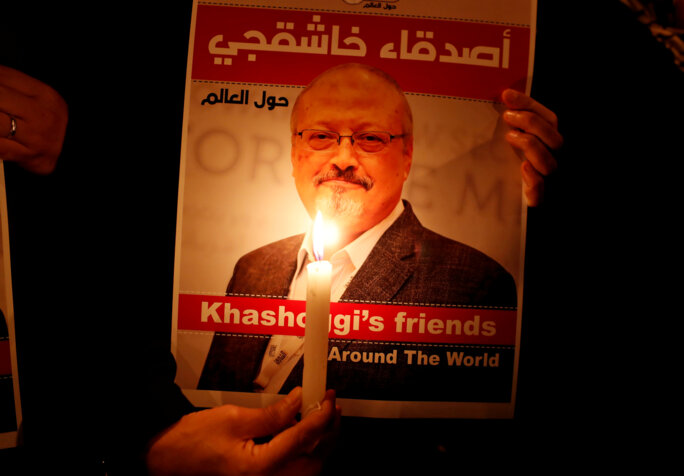
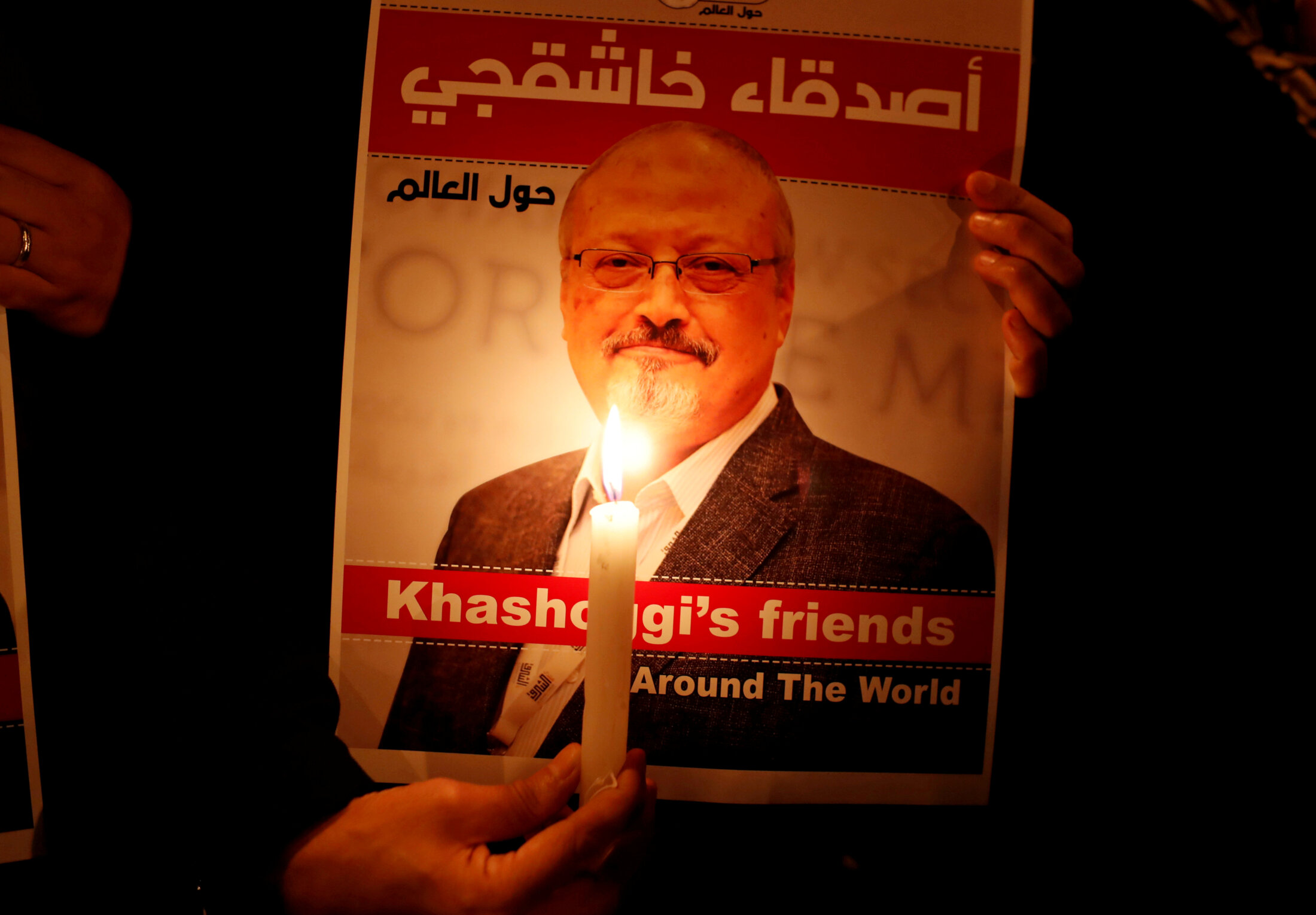
It was on October 2nd 2018 when Jamal Khashoggi, 59, a US-based Saudi dissident journalist and columnist for The Washington Post, entered the consulate of Saudi Arabia in the Turkish city of Istanbul. He had gone there to collect papers needed for his planned marriage to his Turkish fiancée, Hatice Cengiz. He would never again be seen alive.
Khashoggi had already visited the consulate four days earlier, when he was told he would have to return to collect the documents, which were to attest that he was previously divorced.
In the following weeks, the Saudi authorities at first denied Turkish claims that he was murdered and his body dismembered inside the consulate by a group of assassins sent by Riyadh. The Saudis even claimed that Kashoggi had left the consulate alive. But they eventually admitted the killing did take place there, officially blaming a rogue operation by agents whose brief was to convince him to return to the kingdom.
According to the varying accounts from the Saudis, Kashoggi died in a fight with the agents, while it was later claimed that his murder was ordered by the head of the team sent to Istanbul. "This was an operation where individuals ended up exceeding the authorities and responsibilities they had”, said the then-Saudi foreign minister Adel al-Jubeir on October 21st. “They made the mistake when they killed Jamal Khashoggi in the consulate and they tried to cover up for it.”
Enlargement : Illustration 1
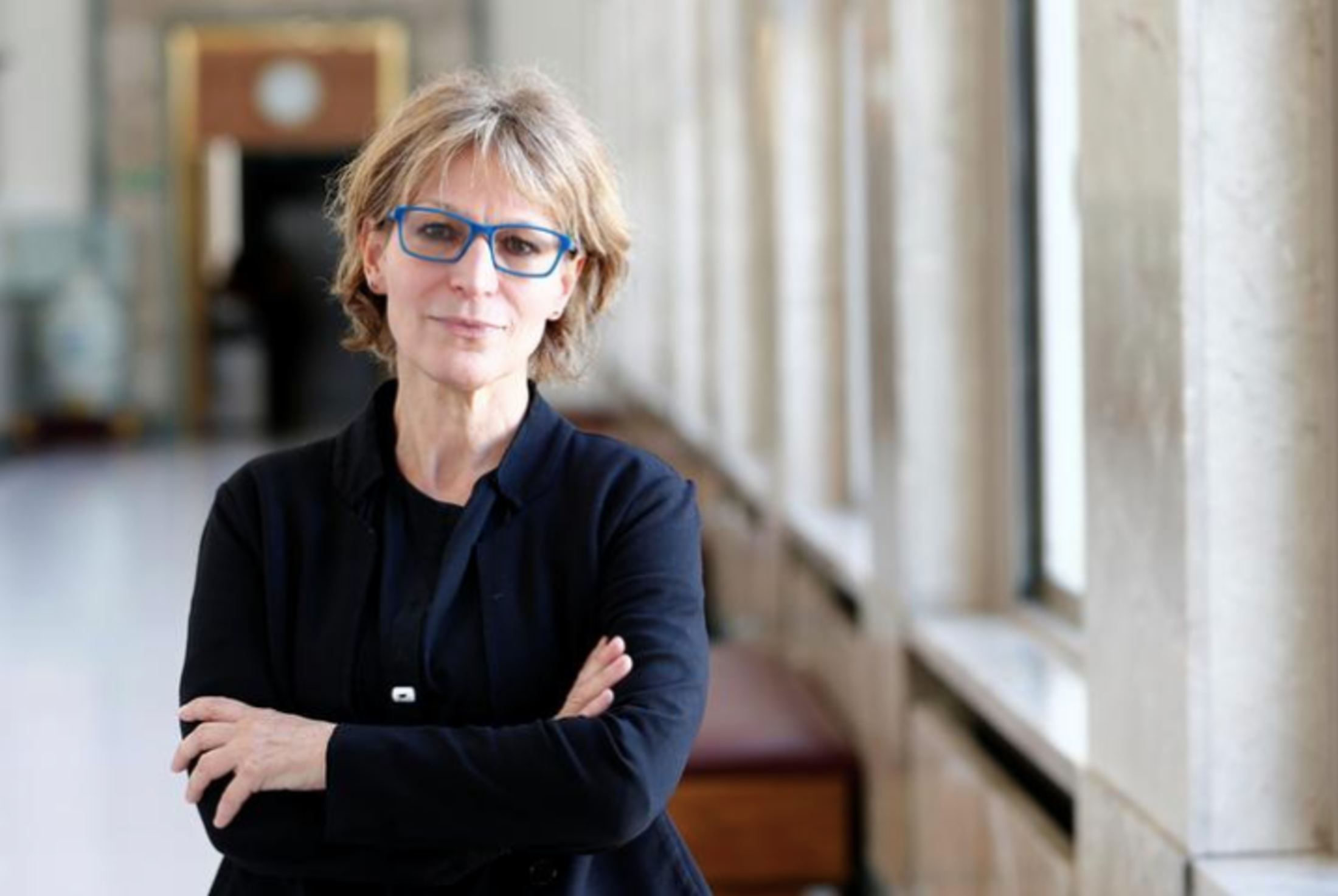
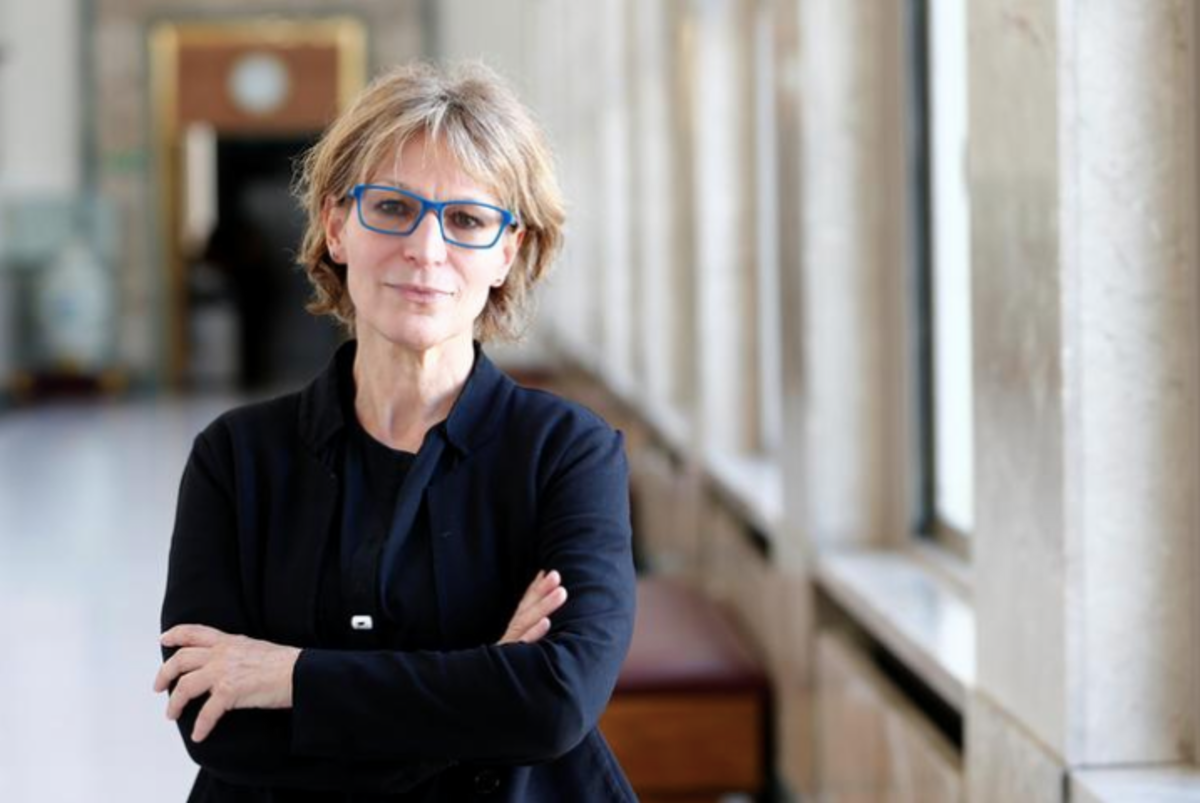
In January this year the United Nations human rights office launched an investigation into the killing of Khashoggi, whose remains have never been found. The investigation was led by the UN Special Rapporteur on extrajudicial, summary or arbitrary executions, Agnès Callamard, assisted by British barrister Helena Kennedy and Duarte Nuno Vieira, a Portuguese pathology expert and professor at the department of legal and forensic medicine at Coimbra University.
The report of their investigations was presented last Wednesday by Callamard, who concluded there was “credible evidence” that Saudi Arabia’s ruler, Crown Prince Mohammed bin Salman, and senior Saudi officials were liable for the murder and that this should be further investigated. “Saudi state agents, 15 of them, acted under cover of their official status and used state means to execute Mr. Khashoggi,” she detailed. “His killing was the result of elaborate planning involving extensive coordination and significant human and financial resources. It was overseen, planned and endorsed by high-level officials. It was premeditated.”
“The killing of Mr Khashoggi thus constitutes an international crime over which other States should claim universal jurisdiction,” Callamard added. “I call on those States to take the necessary measures to establish their competence to exercise jurisdiction under international law over this crime of extrajudicial execution.”
In this interview with Cécile Andrzejewski for Mediapart, Callamard details her investigation, what she believes should happen next, and why the international community must take a stand over “the threats that weigh on press freedom and journalists”.
-------------------------
Mediapart: How did you go about this investigation?
Agnès Callamard: This is an unusual mission because it lasted six months. I travelled twice to Turkey, three times to Washington, and also Paris, London and Berlin. Unfortunately, I was unable to go to Saudi Arabia. I talked to 120 people. I decided to quote them only in an anonymous capacity, in order to protect them, so a large number of my sources are not mentioned. They were very cooperative, including Turkish officials. The only limits that I came across concerned information about sensitive subjects, because they were based on the work of intelligence services, and in general the intelligence agencies are reluctant to cooperate.
Mediapart: On that point, how does one work with information that comes from intelligence? It is sensitive material.
A.C.: In the report I am very clear about this issue. I say honestly when I was not able to identify certain information. For example, I was unable to obtain a copy of some recordings, so I was not able to authenticate them. In such cases, I wrote this in order to be the most transparent as possible. I tried to triangulate information, by seeking other data that didn’t come from the intelligence services, or by asking other experts to analyse for me or to confirm if my interpretation was just. By using the experience of certain intelligence heads I came to my own conclusions, in order not to depend upon those that, for example, the Turks might have had.
Mediapart: Did you expect not to be able to travel to Saudi Arabia?
A.C.: In fact, I was hoping that the Saudi authorities would talk to me. I thought I would be able to meet the prosecutor, at least to compare our information. I began with confidence. I had really examined their hypotheses regarding an operation hatched by uncontrolled elements, or an accident. I did my best to study them.
Mediapart: And you finally concluded that the Saudi state was responsible for the murder of Jamal Khashoggi.
A.C.: I looked at the two hypotheses put forward by the Saudi authorities to explain the death of Jamal Khashoggi, that of an operation conceived by uncontrolled elements and that of an accident. But it is impossible to conclude that there was a solitary operation if one refers to international standards. Some of those who led the mission were using diplomatic passports, they were given diplomatic authorisations to travel, the crime took place at the consulate, the consul himself is implicated, people in Riyadh covered the costs. In no case can one conclude that it involved a solitary operation.
The idea of an accident also poses a problem. From the start, a pathologist was part of the team. One hour before the murder he raised the dismemberment of the body. What had to be done with the body was organised, all that was planned. Moreover, we still don’t know where it is. Similarly, in the recordings, there is no surprise to be heard when Jamal Khashoggi dies, no-one tries to revive him, no-one panics.
Mediapart: Who had access to these recordings?
A.C.: Turkey, obviously. The United States, even if they were unable to obtain a copy. The British, the Canadians and the French [editor’s note: despite claims to the contrary by French foreign affairs minister Jean-Yves Le Drian]. Perhaps also the Germans. And I imagine the Saudis were also able to listen to them.
Mediapart: You have called for a detailed investigation into the role played by [Saudi Crown Prince] Mohammed bin Salman.
A.C.: I have established the responsibility of the Saudi state. The next stage consists of asking the question: who is responsible within the state. As United Nations special rapporteur, it is no longer my brief. I do not conclude upon Mohammed bin Salman’s responsibility. But on the basis of the information that we now have, and with regard to international law, I deduce that there is sufficient evidence and questions raised to call for a supplementary investigation into into his responsibility and that of other high-ranking people.
Mediapart: How?
A.C.: By referring to international law. Beyond the question of direct responsibility, there are also other legal possibilities. For example, that of incitement. Did Mohammed bin Salman encourage this murder? Or was he aware of the operation and its possibilities without being able to prevent them? That is a different form of responsibility.
A third possibility is linked to the fact that he was in possession of elements proving that people could die because of their detention conditions, like that could have happened at the Ritz-Carlton, and that an end should be put to this situation.
The acts in question are so important that there is a need for an international criminal investigation. The best option remains that the United Nations secretary-general brings together a panel of experts to examine the evidence and to determine the responsibility of Mohammed bin Salman. That would be the best scenario. Because to ask other countries to carry out this investigation, even though that remains a possibility, could prove to be complicated. The criminal procedure could also be led by the United States. The CIA should have to make its findings public.
But I am also realistic. To render justice in the form of a court appears difficult, and there is a need to involve other mechanisms to achieve it, whether they be financial, symbolic, or of another kind.
Mediapart: Do you believe that the United Nations secretary-general will open a criminal investigation into the murder of Jamal Khashoggi, as recommended by you?
A.C.: Up until now, he has rejected this recommendation. He insists on the fact that, to open an investigation, he needs a resolution on the question at the security council. But in my opinion that is not necessary. On this issue one finds oneself in a sort of grey area, and he envisages things in a really conservative and very prudent manner.
Mediapart: You also suggest the possibility of financial sanctions concerning the personal assets of Crown Prince Mohammed bin Salman.
A.C.: It is my role to find a balance between realism and principles of justice. I could not abstain from suggesting that he be included in sanctions. Others are targeted, why not him? Even though I am realistic about the possibility of applying those sanctions.
Mediapart: What were the Saudi reactions to the publication of your report?
A.C.: Up until now, very negative and aggressive. The Saudi Minister of Foreign Affairs has publicly rejected the report. According to the Saudi authorities, I contradict myself, I don’t cite my sources, and so on. But these criticisms remain very general, there is nothing precise. It is a usual way of reacting on the part of a government that does not like to be criticised. Nothing surprising.
Mediapart: What is the next stage for you?
A.C.: I am going to present my findings to the Unites Nations Human Rights Council, to then discuss them with member states. And I will continue to engage myself so that a follow-up is given to this investigation. In the report, I suggest that there should be created grants in the name of Jamal Khashoggi for press freedom in the Middle East, because that is what he fought for and why he died. That also constitutes a manner of ensuring that this kind of thing be no longer possible in the future. I call for international support for journalists.
Mediapart: This is quite a unique affair.
A.C.: Killing journalists, unfortunately, remains a commonplace event. But in this case, several elements are unusual. It involves a mission of 15 people, carried out within a consulate. We still don’t know where the body parts are. It is a violation against forced disappearances, of that of the Vienna convention on international relations and that concerning the use of extra-territorial force. All of that is out of the ordinary, which is why we demand a response that corresponds to that.
Mediapart: You have also called for an immediate moratorium on the granting of export licences for surveillance technology equipment intended for Saudi Arabia.
A.C.: I borrowed that recommendation from another rapporteur – the United Nations special rapporteur for freedom of expression, David Kaye. He makes this recommendation because he came to the conclusion that it would be difficult to make exports of surveillance technologies respectful of human rights. Obviously, that resonates all the more when one is talking of exports to Saudi Arabia, which has already used such surveillance equipment against human rights activists and journalists, for example. [Editor’s note: in her report, Agnès Callamard established that the mobile phone of an acquaintance of Jamal Khashoggi had been hacked to install spyware which may have been used to monitor their exchanges].
Enlargement : Illustration 2
Mediapart: In your report you give the example of Germany, the only Western country to have suspended its arms sales to Saudi Arabia immediately after the death of Jamal Khashoggi. The US Senate voted on June 20th to block weapons sales to the Saudi authorities in order to send a clear message over the death of the journalist and on human rights. In reference to the war in Yemen, a British court of appeal ruled, also on June 20th, that the UK’s arms sales to Saudi Arabia were unlawful. France meanwhile continues with its deadly trade. Do you think that weapons sales to Saudi Arabia should be halted?
A.C.: In the report I don’t point directly in this direction, because it doesn’t seem to me to be the most obvious decision regarding the murder of Jamal Khashoggi. To suspend arms sales would not have prevented his death. In other work I have led on the situation in Yemen, I have called on several occasions for arms sales to be halted. There, what I say is that the responsibility of the Saudi state in this crime is engaged, so there must be sanctions that target the state, not only individuals. With regard to international reactions over the death of Jamal Khashoggi, France should very seriously take into account what the German government did, what the American Senate has just voted, and what the British justice system has decided.
What would be effective in order for Saudi Arabia to change? What I want is that the death of Jamal Khashoggi is made accountable, but also that such a murder cannot happen again, that it be no longer possible to violate thus the right to live.
What can France do to convince Saudi Arabia to stop that? I don’t say the Saudi authorities are not doing anything. They sacked officials and engaged in a reconstruction of the intelligence services, under the leadership of Mohammed bin Salman. But that remains very insufficient. What exactly was restructured? Who is responsible? What are the formations?
What’s more, proof exists that human rights violations continue, people who have peacefully expressed their opinion are still in detention. There are allegations of threats made towards people living in exile.
The determination of the Saudis to stop such events [the murder of Jamal Khashoggi] from re-occurring has not been demonstrated. France and other countries should ask themselves how they can use their influence, whether that be in halting arms sales or by whatever other means. I am not naïve but, for the moment, the decisions taken appear quite timid with regard to what happened to Jamal Khashoggi.
Mediapart: You underline also that France, like other countries, has taken sanctions against individuals whose identities we are unaware of.
A.C.: I imagine they based themselves on names that have been made public. But individual sanctions have their limits. Here, we don’t know what proof the authorities have,the identities are not public. These are not the conditions in which we wish sanctions to be applied. At the present time, we absolutely do not know why the people targeted find themselves on this list. We need transparency. All the more so in that these sanctions do not appear to concern high-placed officials.
It's a smokescreen. The governments suit themselves with the Saudi theory according to which this murder is a solitary operation, which is false with regard to the evidence. The international community must recognise that it is a state crime, implicating officials at a high level, who should be included in these sanctions. They could also respond in a more symbolic manner, by taking seriously the threats that weigh upon press freedom and journalists.
-------------------------
- This is a translation of the interview which was originally conducted in French, and which can be found here.
English version by Graham Tearse