


It is with an unfaded anger that Tetiana Bondarieva speaks of former colleagues at the secondary school where she once taught Ukrainian. “They are my personal enemies,” she said, “they betrayed me, they’ve betrayed the country.”
When the Russian invasion of Ukraine began on February 24th 2022, her home was in Hatyshche, a village north-east of Kharkiv, beside the border with Russia. “We were occupied within minutes,” she recalled. She said it was in April, just before Easter, when Russian soldiers burst into her house, began searching it and questioned her about her husband, a professional soldier with the Ukrainian army, who was away fighting. “They wanted to find his badge, to know if he was part of the Azov Regiment,” said the 36-year-old.
Tetiana was certain it was a neighbour, a policeman who now lives in Russia with his wife and children, who had denounced them. In the frontier region, family and professional relationships between Ukrainians and Russians were frequently criss-crossed. “Many people willingly collaborated,” she recounted.
Enlargement : Illustration 1
During the first weeks of the Russian occupation, amid constant shelling, school teaching was transferred online. But the instructions of the new local authorities, allied to the Russians, were unclear, and the teachers, who continued to be paid their Ukrainian salaries, were in the dark about how to proceed. “Lots of our pupils had fled, we didn’t know where they were, we didn’t know what to do,” she said.
In April, internet connections were shut down, ending any possibility of online teaching. Tetiana and her colleagues held weekly meetings to review the situation. While in May they were still being paid in hryvnia, the Ukrainian national currency since 1996, the payments stopped in June. It was then that they were instructed to teach in Russian, and to follow the Russian school curriculum, at the end of which the pupils would receive Russian diplomas.
She said that was when she received another unpleasant visit to her home, this time by members of the Russian-backed separatist movement of the Donetsk Oblast, who took possession of the phones and computers of all the family, including those of her children. Threatening her with a gun, they took her to “a prison” where she was submitted to a violent interrogation, when she said they used an electroshock weapon against her and threatened her with rape. “They wanted information about the movement of our armed forces,” she explained.
She was eventually released on the condition that she would contact her husband to obtain such information. She was warned that she was under surveillance and, she said, that “we’ll be back to get you”.
Again, Tetiana was sure about who this time had denounced her: her former schoolteacher colleagues: “Two hours before they [the separatists] came to get me we [the teachers] were together at a meeting. It was turbulent. The majority wanted to collaborate. Some were happy. Others said that there was no choice, that the instructions must be followed, accept the manuals and switch to the Russian school course. The discussions became rancorous. I didn’t agree, I said that it was treason.” Out of the teaching team of 25, seven refused to collaborate.
Tetiana said that after she was released by the separatists, she went home and in less than ten minutes packed a few things and fled with her children. Because she would have been blocked by the fighting westwards, she had no choice but to try to cross into Russia, which she succeeded in doing after telling the border guards she was making a visit to her sick grandmother. She then headed on the long journey north to Estonia. Leaving Russian territory to cross into the Baltic country was a more complicated process, and even a frightening experience, but she succeeded and at last found herself in security. It would be six months before she returned to Ukraine.
The dilemma in dealing with collaboration
From the beginning of the invasion, half of the towns and villages of the Kharkiv Oblast, a vast industrial region of north-east Ukraine whose administrative centre is the city of Kharkiv, were occupied by Russia up until September 2022, when they were freed by a Ukrainian counter-offensive. For six months, their inhabitants lived under foreign rule.
All of them were confronted, to one degree or another, with the terrible question of collaboration, just as the grandparents of many of them had been during the seven-month occupation of the region by Nazi Germany between 1942 and 1943. Should one go over to the Russian enemy, whose forces appeared invincible and whose presence appeared destined to endure, or, on the contrary, should one resist like tetiana, whatever the cost, including losing one’s job and other reprisals?
While in those towns and villages now back under Ukrainian governance people are examining their own consciences, it is for the country’s courts to concretely decide on the legal consequences of acts of collaboration. Guiding that process is article 111-1 of the country’s criminal code, an article adopted by the Rada, the Ukrainian parliament, shortly after the Russian invasion. It sets out that crimes of collaboration include public denials of the Russian army’s aggression, support for the decisions taken by the aggressor country, and providing the enemy with strategic information. These are punishable by a prison term of up to 15 years together with a ban on working in the public service sector.
Enlargement : Illustration 2
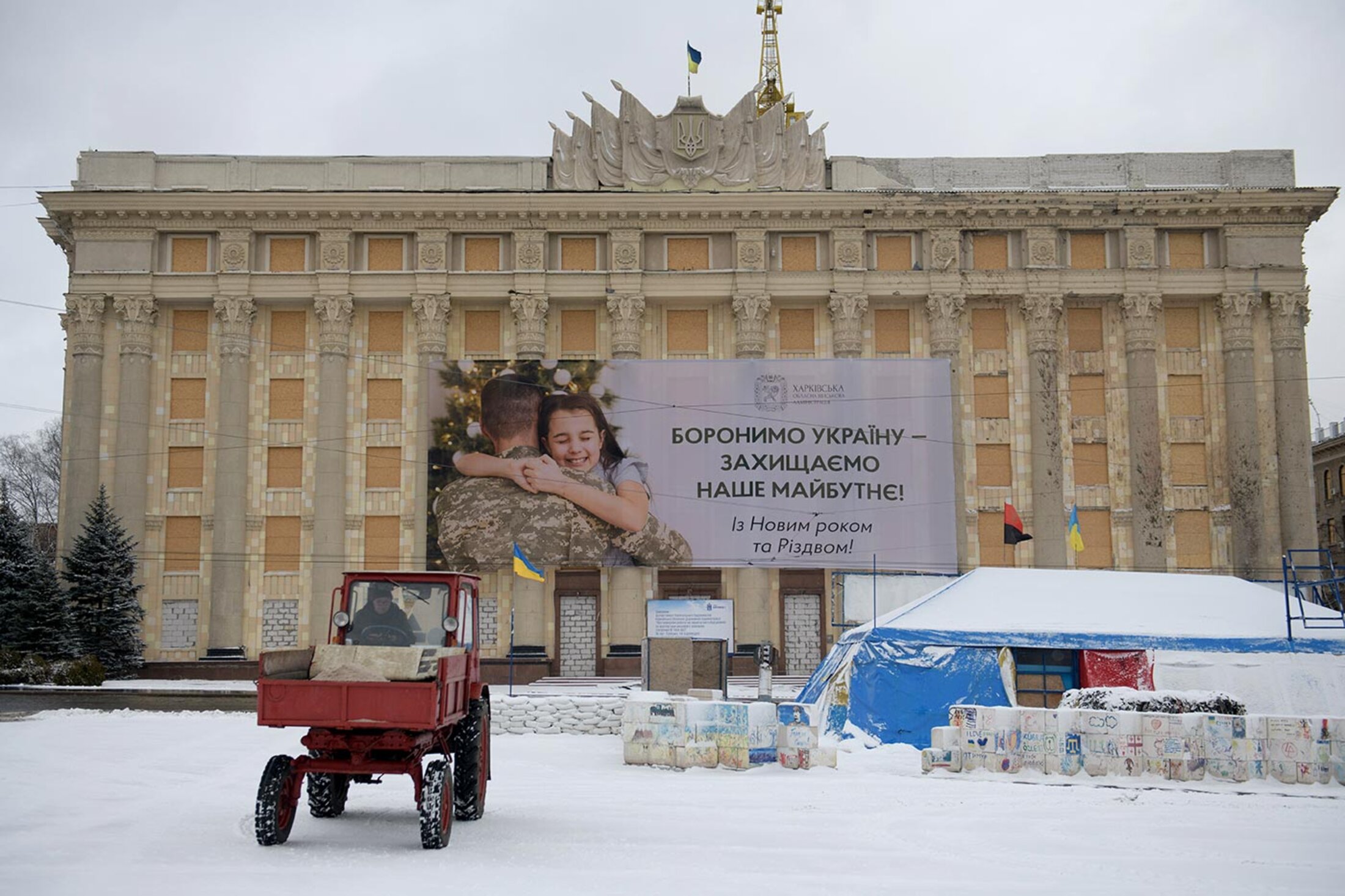
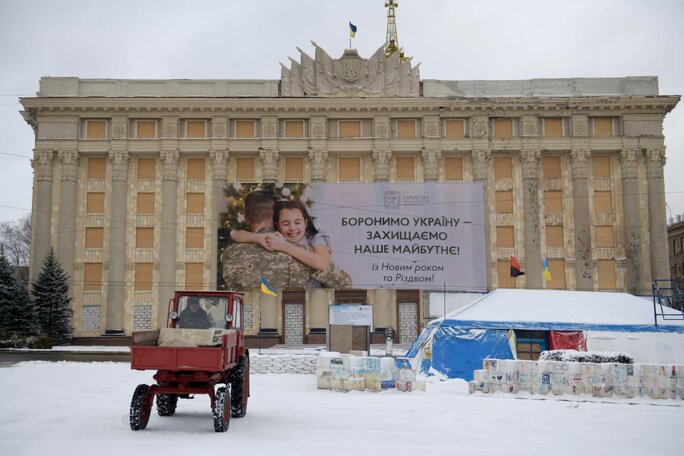
Following the successful Ukrainian counter-offensive last September, those openly pro-Russian mayors, politicians, magistrates, priests and media personalities of the oblast who had not already fled were rapidly arrested, making newspaper headlines.
But for the more ordinary citizens in occupied territories, those who accepted employment or professional promotion, money or food parcels, the defining lines are somewhat blurred. All the more so given that not all professions are regarded in the same manner; those whose posts are considered to be essential, like firefighters, medical staff or the employees of public railways and electricity companies, are excluded from being prosecuted for collaboration. Those who are not excluded include teaching staff, police officers and most of those who hold a post in civil administration services.
In 2022, according to figures released by the Ukrainian public prosecution services, there were, at a national level, 4,053 cases opened into alleged collaboration, and another 2,046 for treason. About 15% of the total have so far gone to trial. In the Kharkiv region alone, 850 individuals were prosecuted, resulting in 71 convictions, said Dmytro Chubenko, spokesman for the Kharkiv Oblast’s public prosecution services. He told Mediapart that most of the cases concern Ukrainians who handed over information about the Ukrainian military, or who accepted administrative posts in occupied areas, or who had helped with propagating Russian media reports.
The prosecutors in charge of investigating the cases work with information provided to them by the police, the SBU security and intelligence agency and also ordinary citizens. It is only after their verifications and when supporting evidence is found that a case will go to trial, when the defence arguments will be heard.
“These teams relentlessly work to identify and prosecute people who have willingly worked for, or helped, the occupant,” insisted Oleh Synyehubov, governor of Kharkiv Oblast, and as such head of the region’s civil and military administration. “However, I would like to make clear that cases of collaboration among the inhabitants of the region are rather the exception. Most of them refused, despite the intimidations and acts of torture and murders perpetrated by the invaders.”
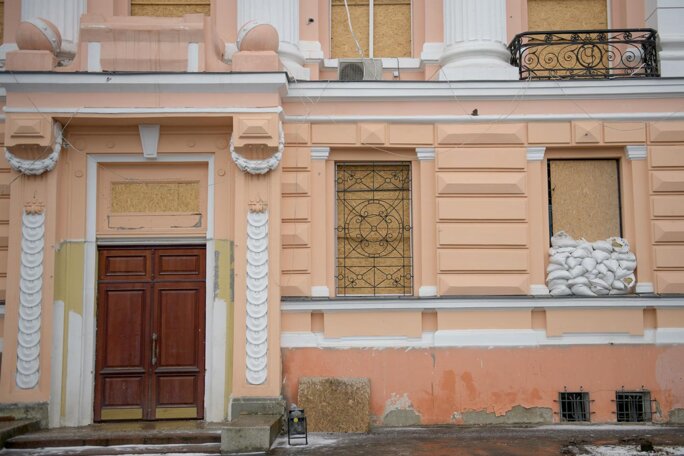
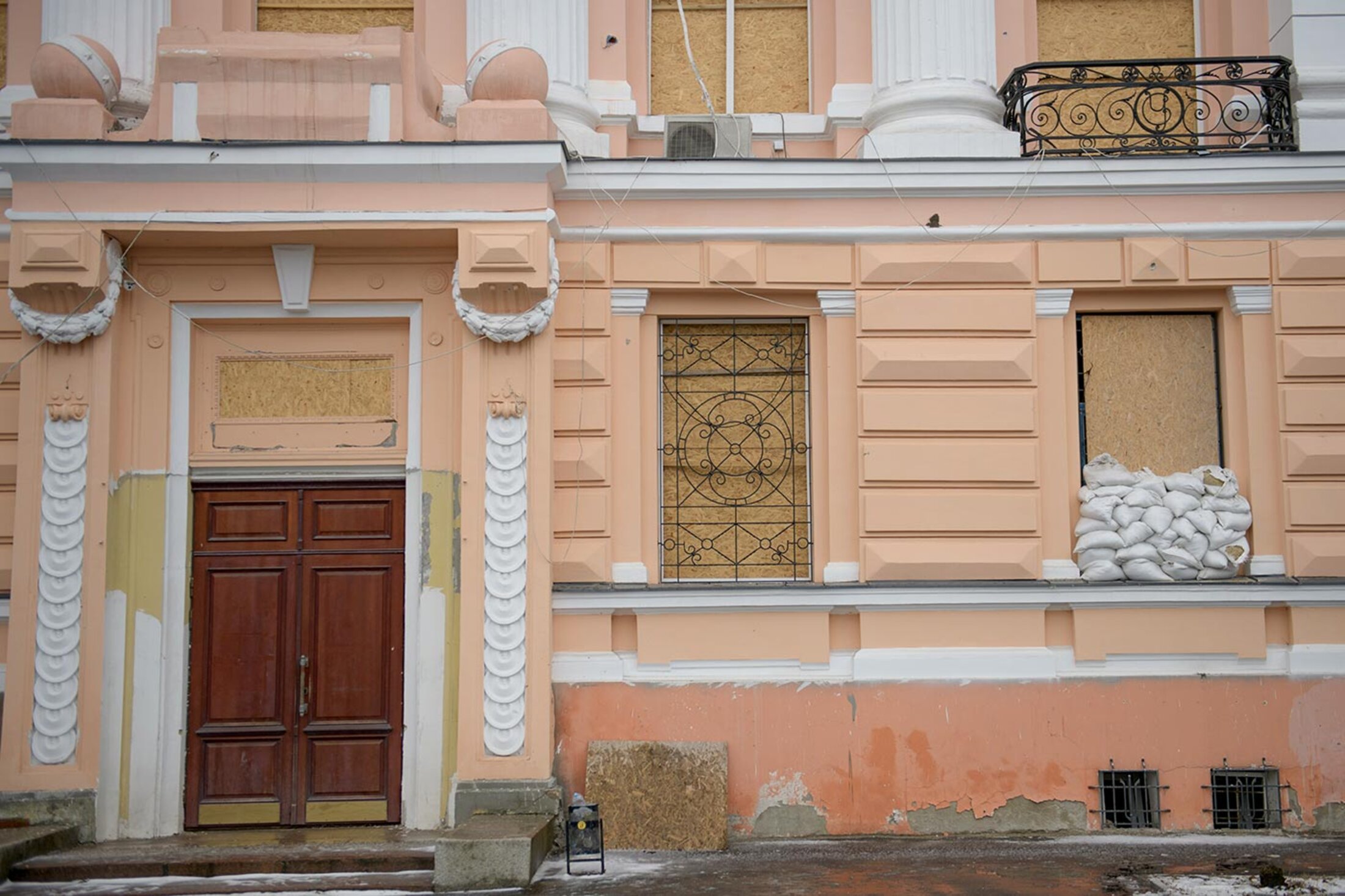
Enlargement : Illustration 3
Since the beginning of the war, Kyiv-based NGO Chesno, founded in 2011 and which acts as a pressure group for transparency in political and public affairs, has concentrated its activities on hunting down those culpable of what it calls “treason and collaborationism”, and ensuring that the authorities properly pursue collaborators despite the complexity of the task. It has created an open-source database containing the names and details of around 1,000 alleged collaborators, for the most part public figures.
Members of the public contact Chesno to denounce alleged collaborators, ranging from local bigwigs to neighbours. Vita Dumanska, one of the founders of Chesno, told Mediapart they were well aware of the risks involved of bias and a settling of scores. “Which is why we ask for tangible proof, like signed documents showing a true collaboration, or videos demonstrating a pro-Russian commitment during the occupation,” she said.
“The expectation of public opinion is very strong,” she insisted. “Ukrainians want the traitors and collaborators to be tried and to pay for their faults. We believe that the number of trials is still largely insufficient. In the south-east of Ukraine, we see that numerous municipal councillors who colluded with the enemy are still in post. It’s intolerable.”
“Some political figures have simply renamed their party to make invisible their wrongdoings,” Dumanska added. “In parliament, we have examples of representatives of Russian nationality [who are] members of committees in which they have access to strategic information, like troop movements or shipments of weapons. There is even one former collaborator who now finances the Ukrainian army, to clear their name. Our responsibility is to ban these people from holding any public office.”
She admits that in the case of less high-profile professions, such as teachers or civil administration staff, it can be complicated to tell what is true or false in the allegations of collaboration, and to decide on what is a just outcome. “It is certain that one cannot judge in the same way a teacher accused of having helped the Russians deport Ukrainian children and a teacher forced to continue to carry out their job under pressure,” Dumanska said.
To provide clarity to such issues, Chesno is preparing a proposal, which Dumanska wants to submit before the Rada, aimed at establishing the criteria for bringing criminal charges. “We must be irreproachable, but punishment must be brought,” she warned. “If that is not the case, citizens will take the law into their own hands, and we risk allowing acts of revenge to spread.”
The challenges facing Ukraine's magistrates
Like magistrates in all democratic countries, those in Ukraine must follow a path of establishing the intentionality of criminal acts and handing down proportionate sentences. But their mission is a delicate one given the difficulties in collecting evidence in places where the Russian occupation has left little written traces of collaboration behind it.
“From public prosecutors to lawyers to magistrates, they are all faced with the same interrogations – were the acts of the accused carried out in a voluntary or involuntary manner? Were they paid for? And what were their consequences?” outlined Anna Adamska-Gallant, a Polish former lawyer and judge who is now a member of the European Union-funded project Pravo-Justice advising on judicial reform in Ukraine.
“Taking photos of a Ukrainian military camp on one’s own initiative to send them to Russian forces is not the same as being forced under threat to reveal information,” she said. “To obtain a post in exchange for intelligence is an aggravating factor, as also if the delivered information has helped the Russians target civilians.”
Adamska-Gallant recognises the weight of the responsibility for Ukrainian judges. “They are under such pressure from public opinion that they can have difficulty in working in all calm and independence, all the more so given that they are themselves Ukrainian citizens, victims of this war. Lawyers face the same problem. When they are appointed by the court, some may be reluctant to defend collaborators, while the fighting continues.”
Enlargement : Illustration 4
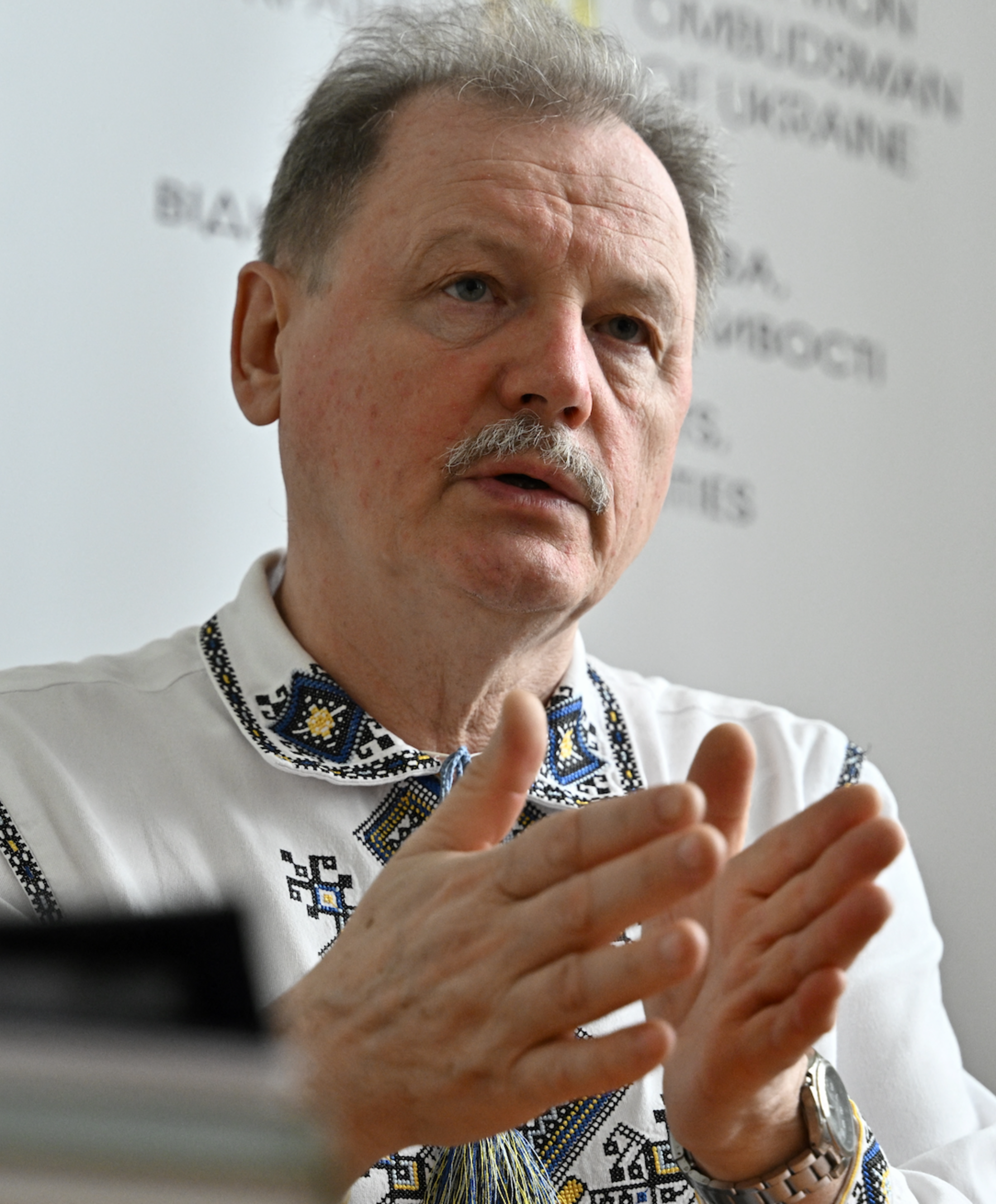
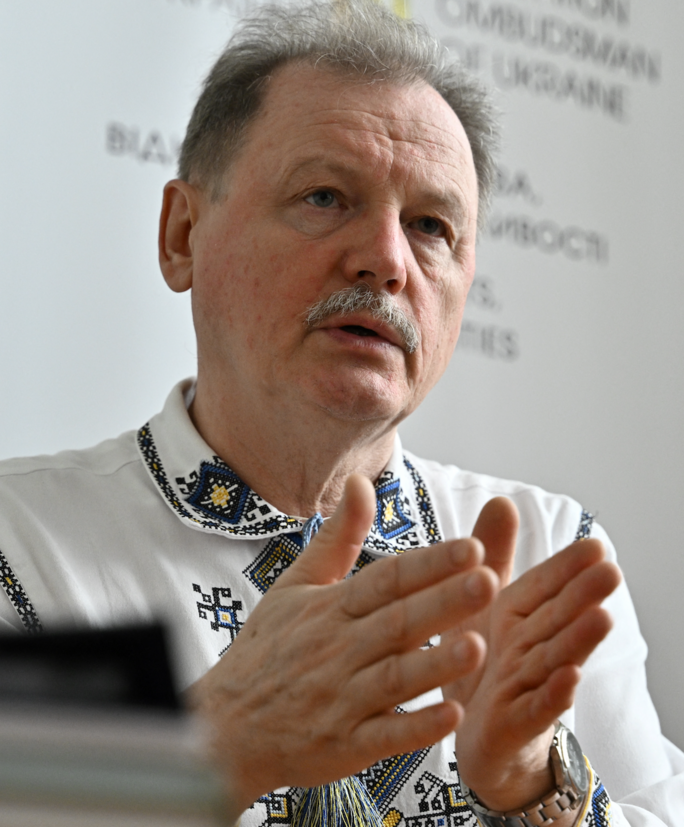
Ukraine’s ombudsman for education, Sergii Gorbachov, has last December publicly called for a reform of existing legislation in order to better determine the variety of situations involving teachers. Meanwhile, he has attempted to set out the guidelines for heads of schools who are uncertain about how to deal with cases of teachers who continued to hold classes during the Russian occupation.
Gorbachov said he “resolutely supports the necessity to clean out of the Ukrainian educative system [those] traitors who voluntarily cooperated with the occupiers”, and underlines that existing legislation requires teaching staff “to protect the sovereignty of Ukraine, to respect its language and the symbols of the state, and to educate pupils in patriotism and respect for the cultural values of the Ukrainian people”.
But he also insisted that any proceedings to punish collaboration “must be carried out within the legal framework”, adding: “We have to ensure the unconditional respect of the rights of our fellow citizens who had been forced by the occupiers to undertake certain actions under the threat of expulsion, imprisonment and even death.” He also advised school administrators that no staff should be fired before their case had been judged in court. However, because of the current state of martial law, legal judgements are delayed, as Gorbachov himself admits.
The epilogue (until now) in Tetiana's story
While Tetiana Bondarieva was living in exile, those among her colleagues who continued to teach were, as of July 2022, paid double their previous salaries, in roubles and in cash. That was also when new Russian school books began being delivered. Some of the teachers agreed to undergo new training, across the border in the Russian city of Kursk, during the summer. Teaching for the following new school term began in Russian, up until Kharkiv was liberated in mid-September. Today, all the teachers who took part have been suspended.
Tetiana is particularly bitter about one of them, a male colleague who accepted to teach Russian whereas previously he had been a teacher of Ukrainian like herself. “Some of them fled to Russia,” she said. “Others, we don’t know where they are, they’re hiding somewhere in Ukraine. I gave my account to the judge, I want justice to be done, that there is a trial and that they are tried for what they did.” She said that those fellow teachers who resisted, like her, have become teachers again in Ukraine, except for one who now teaches in Germany.
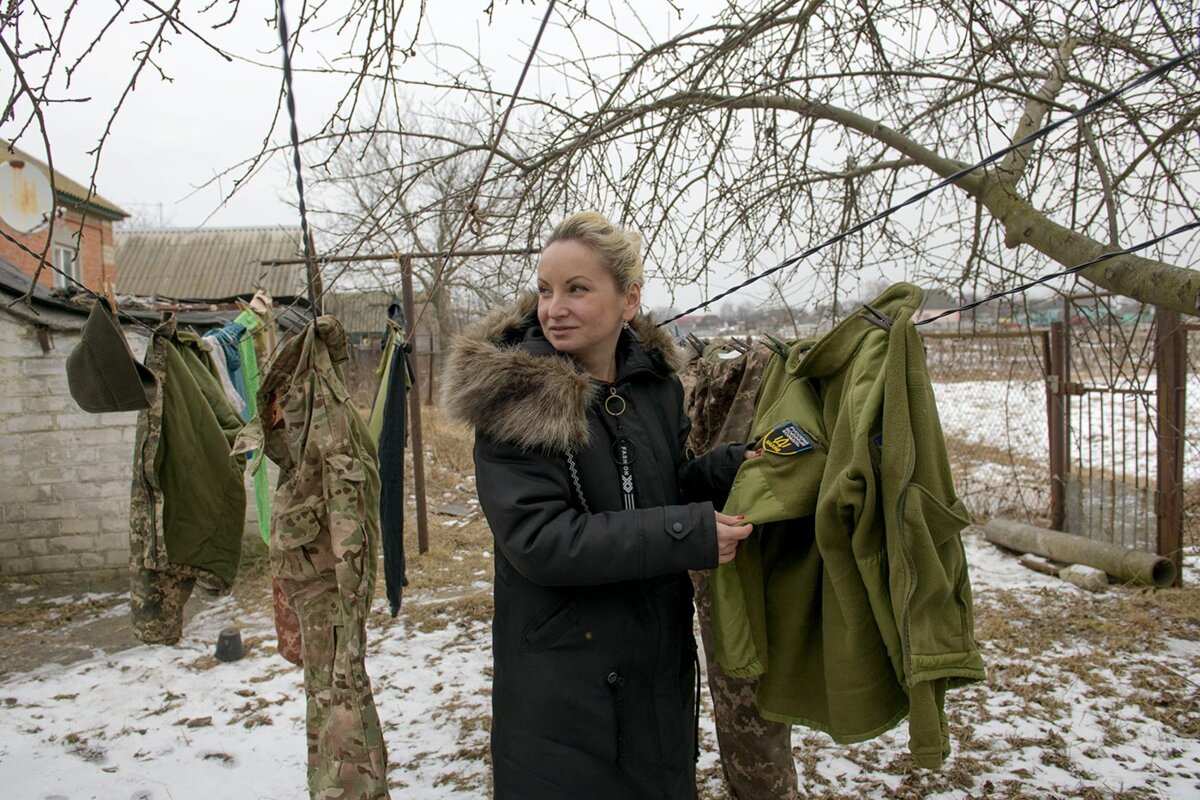
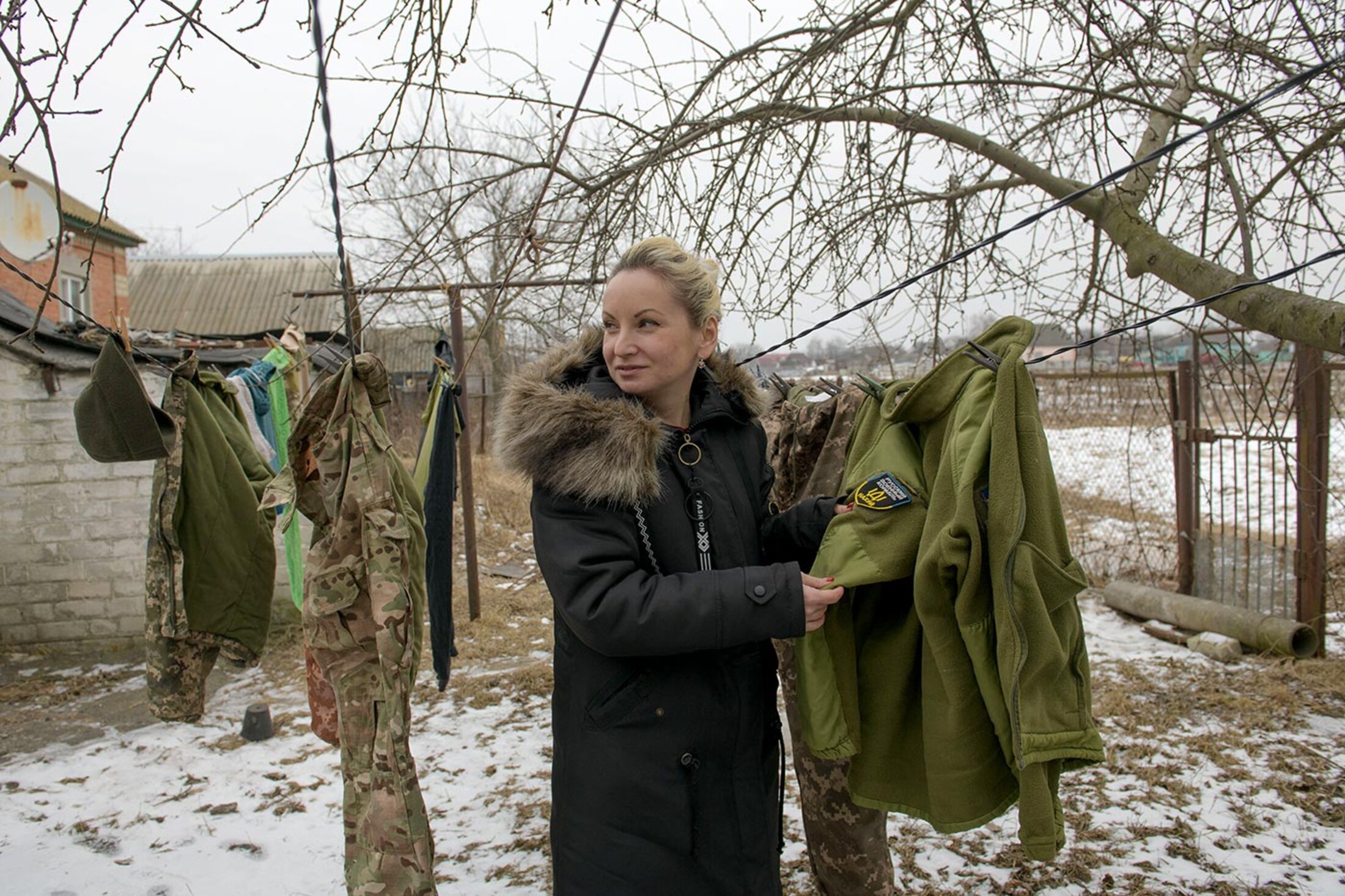
After spending six months in Estonia, where she found work milking cows on a farm, Tetiana decided to return to Ukraine in December. Today she lives in another area, about 60 kilometres south-west of the city of Kharkiv, and works as deputy to the head of a local school. Her husband is still engaged in the fighting. He sometimes brings back to their new home the blood-stained battle dress and clothes of fallen comrades so that they can be washed.
She has a remarkably resilient view of her experiences of the invasion. “I don’t regret anything,” she told Mediapart. “On the opposite, all of that has made me stronger.” As for the outcome of the war: “I am sure that we are going to win. We have more than weapons, we have the determination to win. We are ready for anything to protect our native land, even to die. The Russians don’t have that.” Was she tired after a year of fighting? “What doesn’t kill, makes stronger,” she replied, in a nod to Nietzsche’s famous aphorism. But the tormenting question that continues to trouble her is why her former colleagues chose to collaborate.
-------------------------
- The original French version of this report can be found here.
English version by Graham Tearse