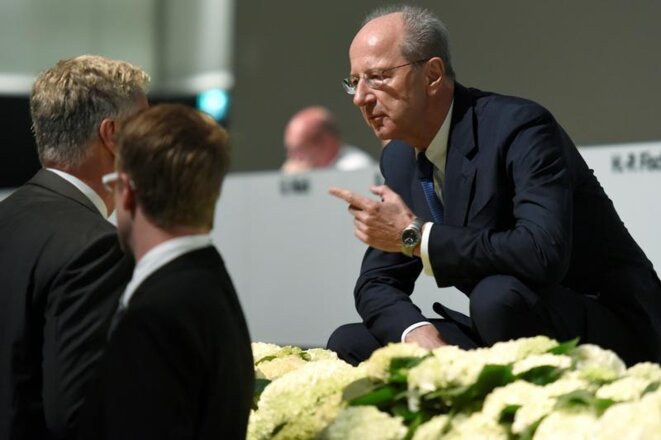
Between 2014 and 2016, German carmaker Volkswagen placed 5.8 billion euros into a financial structure, run by a staff of five, it registered in Luxembourg, and which paid just 1.7 million euros in taxes on the sum. It is one example of an elaborate system of ‘tax optimisation’ created by the giant group in 2012, despite assurances by its supervisory board chairman, Hans Dieter Pötsch, when he was financial director, that “we have never played such games”. Yann Philippin, Martin Hesse, Simon Hage and Blaz Zgaga report.
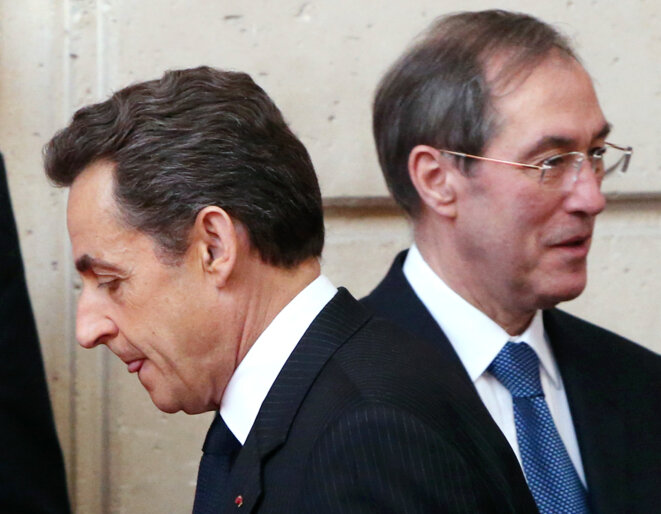
Police officers from France's anti-corruption squad, the OCLCIFF, have produced a preliminary and damning report into the claims that the Libyan regime under Muammar Gaddafi funded the 2007 presidential election campaign of Nicolas Sarkozy. It raises questions about the role of Éric Woerth who at the time was treasurer of Sarkozy's campaign, later became a minister and is now president of the finance committee at the National Assembly. Meanwhile judges have ordered the seizure of properties belonging to Sarkozy's former chief-of-staff and right-hand man, Claude Guéant. Fabrice Arfi and Karl Laske report.
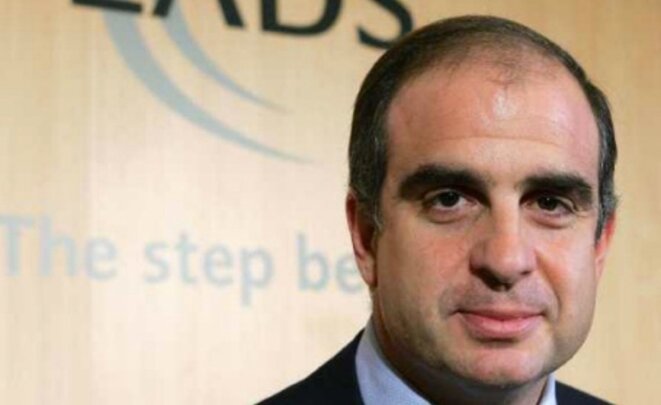
The former commercial director of EADS – now Airbus – Jean-Paul Gut, who set up the commercial and marketing system that is now at the centre of parallel corruption investigations by French and British police, received a 'golden parachute' of around 80 million euros, it can be revealed. A joint investigation by Mediapart and German weekly Der Spiegel also shows that the European aerospace group was willing to continue using Gut as a highly-paid consultant even after he left his lucrative post in 2007.
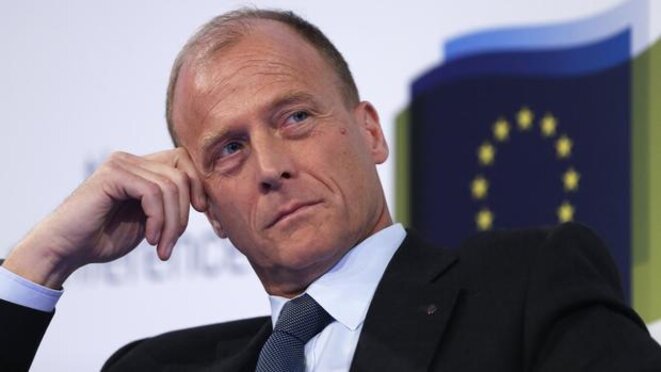
A joint investigation by Mediapart and German weekly Der Spiegel reveals here how Airbus Group chief executive Thomas Enders has become personally implicated in allegations that the aerospace giant created a slush fund to pay intermediaries secret commissions, and “sweeteners” to politicians, in order to obtain a contract for the sale of 18 Eurofighter Typhoon jets to Austria. Martine Orange, Yann Philippin and Lea Fauth report.
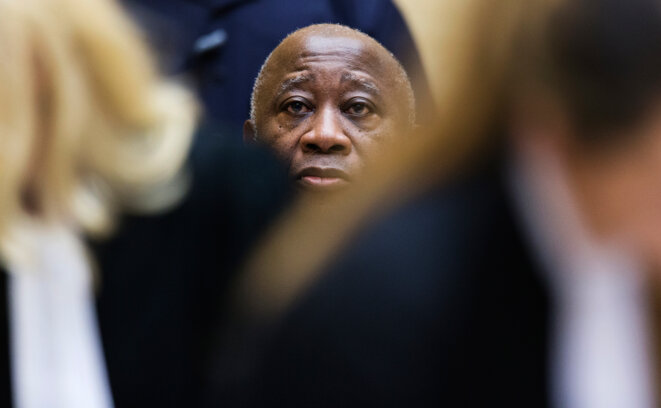
In April 2011, former Ivory Coast president Laurent Gbagbo, at the centre of a political crisis that followed disputed elections in the country five months earlier, was captured with French help by militiamen acting for his rival, Alassane Ouattara, the country’s current leader. A confidential French foreign ministry document obtained by Mediapart reveals how International Criminal Court (ICC) chief prosecutor Luis Moreno Ocampo, without any legal basis, was involved in an operation to keep Gbagbo prisoner – five months before the ICC had even opened an investigation into his alleged crimes against humanity, for which he is now on trial in The Hague. Fanny Pigeaud reports on a covert operation in which the ICC appears to have played a key role France’s political manoeuvring in its former West African colony.
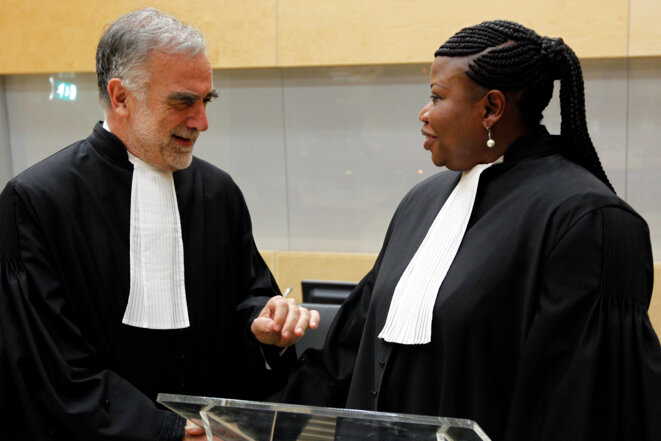
In 2010, the International Criminal Court began proceedings against six Kenyan officials, including the country’s current president, Uhuru Kenyatta, of crimes against humanity over their responsibility in the deaths of more than 1,100 people, the displacement of an estimated 350,000 others, and rapes and persecutions which followed contested presidential election results in late 2007. But, as revealed by confidential documents obtained by Mediapart and analysed together with its media partners in the European Investigative Collaborations consortium, the ICC cases fell apart due in large part to the weakness of the investigation led by chief prosecutor Luis Moreno Ocampo who, after bringing charges against Kenyatta, subsequently campaigned behind the scenes for the Kenyan leader to escape prosecution. Stéphanie Maupas reports.
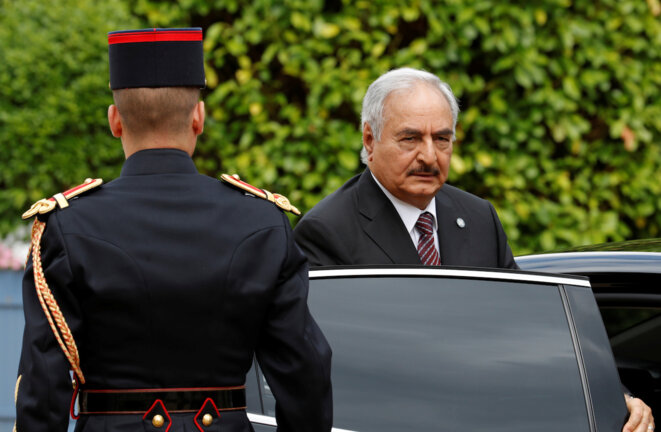
In 2015 the former chief prosecutor for the International Criminal Court defended the interests of a billionaire businessman with links to the former Gaddafi regime and who was a supporter of potential war criminals in Libya. Luis Moreno Ocampo, who had left the ICC in The Hague just three years before, was paid a total of 750,000 dollars for his work, Mediapart and European Investigative Collaborations (EIC) can reveal in their 'The Secrets of the Court' investigation. Moreno Ocampo denies any wrongdoing and says he was simply advising the businessman, Hassan Tatanaki, to be cautious in his dealings with a faction involved in the Libyan civil war. Stéphanie Maupas and Hanneke Chin-A-Fo, from NRC Handelsblad in Holland, report.
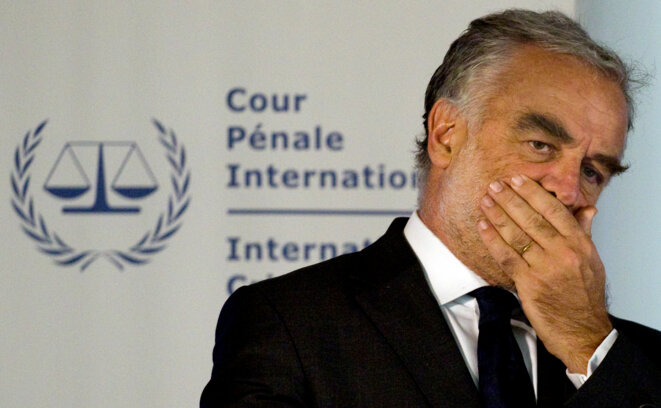
Luis Moreno Ocampo managed companies based in some of the most notorious tax havens in the world while serving as chief prosecutor at the International Criminal Court in The Hague, documents obtained by Mediapart and analysed by the European Investigative Collaborations (EIC) reveal. When challenged about his offshore financial activities the former star prosecutor said that his salary at the ICC “was not enough”. Mediapart's head of investigations Fabrice Arfi and Sven Becker of German publication Der Spiegel report.
It is the largest ever leak of information about the workings of the International Criminal Court, the body tasked with bringing perpetrators of crimes against humanity and genocide to justice. More than 40,000 confidential documents – including diplomatic cables, correspondence and bank information – have been obtained by Mediapart and analysed by the European Investigative Collaborations (EIC). They shine a stark light on the work of the ICC and in particular the role of its first chief prosecutor Luis Moreno Ocampo, his dreams, his actions and his offshore companies. Fabrice Arfi and Stéphanie Maupas report on 'The Secrets of the Court'.
This third Mediapart investigation into the workings of the Islamic State group’s secretive “Amniyat” branch – in effect its intelligence and foreign operations unit –details the often quite sophisticated, and sometimes very amateurish, methods it employs. Here Matthieu Suc charts the development of the IS terrorist operations against European countries, its preparations for the massacres of civilians in Paris and Brussels, and the reconnaissance it carried out for attacks in the Netherlands and in Britain.