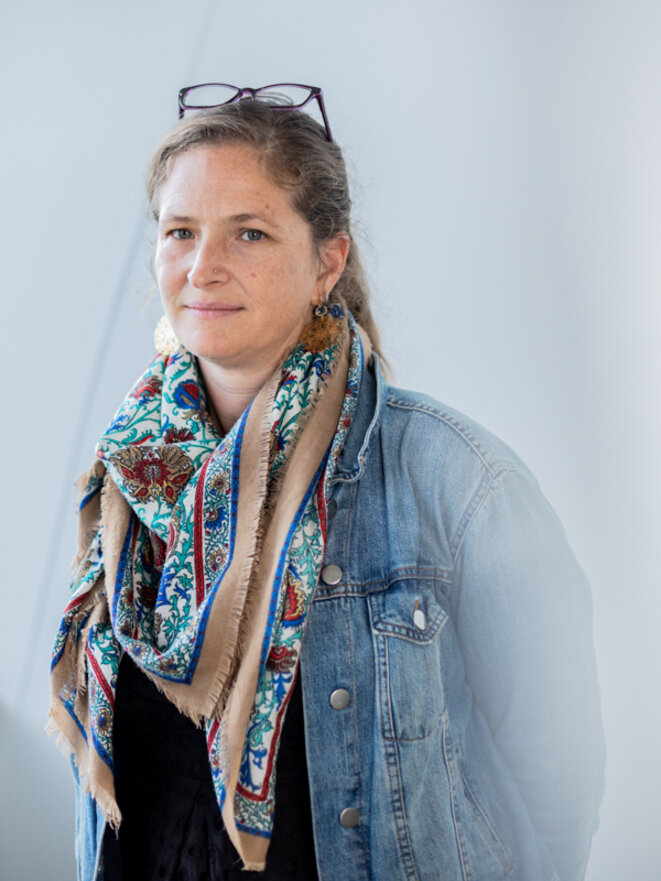
Journaliste à Mediapart depuis novembre 2010. J'ai longtemps écrit sur la politique française, avant de me consacrer aux enquêtes sur les violences sexistes et sexuelles. Je suis responsable éditoriale aux questions de genre depuis 2020. Et, depuis le 1er octobre 2023, je suis codirectrice éditoriale aux côtés de Valentine Oberti.
Avant, j'ai passé plusieurs années à m'occuper d'économie (à l'AFP) et de social (à l'Huma). Coauteure de Tunis Connection, enquête sur les réseaux franco-tunisiens sous Ben Ali (Seuil, 2012). J'ai aussi dirigé l’ouvrage collectif #MeToo, le combat continue (Seuil, 2023).
Declaration of interest
In the interest of transparency towards its readers, Mediapart’s journalists fill out and make public since 2018 a declaration of interests on the model of the one filled out by members of parliament and senior civil servants with the High Authority for Transparency and Public Life (HATVP), a body created in 2014 after Mediapart’s revelations on the Cahuzac affair.
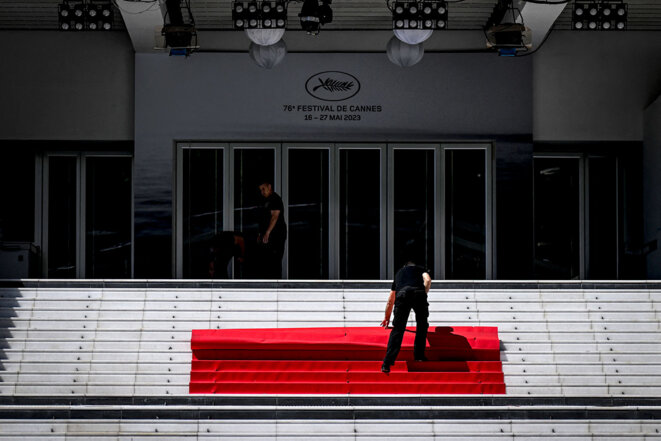
The 76th Cannes Film Festival opened on Tuesday amid controversy over two films presented at the annual cinema event – one marking the return of Johnny Depp, the other dogged by accusations of on-set harassment and abuse – and silence over recent sexual violence allegations against actor Gérard Depardieu. In this co-authored op-ed article, Lénaïg Bredoux and Marine Turchi argue that the festival is a further illustration of how the French cinema industry obstinately continues to resist feminist struggles.
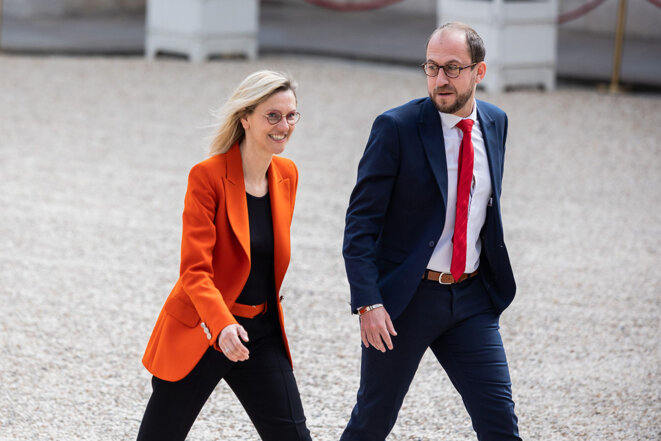
A number of officials at the Ministry for Energy Transition, which is headed by Agnès Pannier-Runacher, are said to be at the end of their tether. The minister's partner Nicolas Bays, who has no title or role there, is reported to have constantly intervened to give orders or put pressure on ministerial staff. In addition, several former Parliamentary staff have told Mediapart that they were victims of inappropriate gestures made by Nicolas Bays at the National Assembly several years ago when he was a Member of Parliament. He denies the allegations. Lénaïg Bredoux, Antton Rouget and Ellen Salvi report.
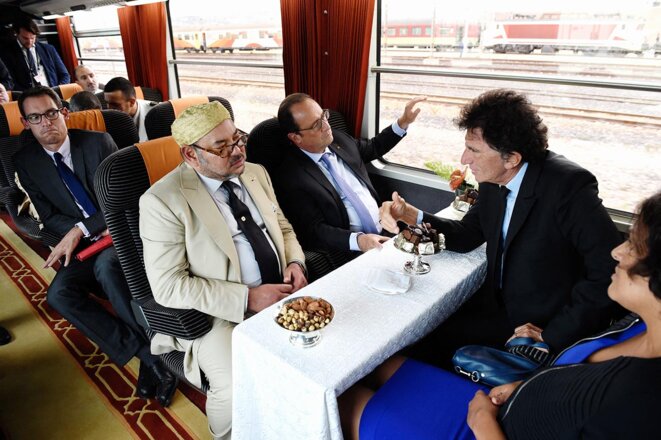
The Pegasus spyware revelations show how Morocco has targeted at least 10,000 mobile phones in recent years. These include the phones of several dozen French citizens, including journalists, the president of the Republic Emmanuel Macron and government ministers and senior opposition figures. Yet for the last thirty years the political, media and cultural elites here in France have closed their eyes to the repressive behaviour of the North African monarchy. Lénaïg Bredoux and Iyes Ramdani report.
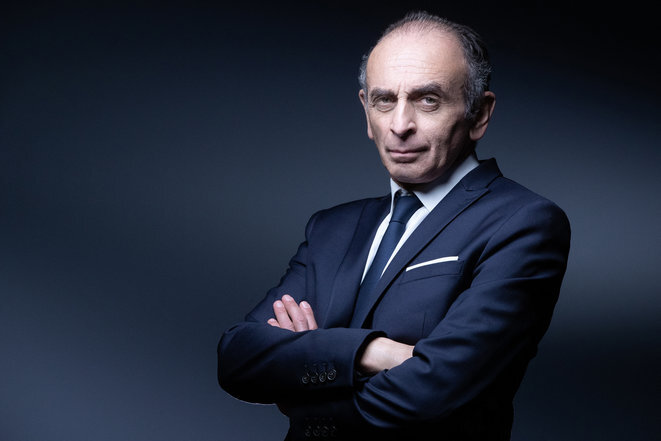
On April 24th 2021 a female councillor publicly accused French journalist and polemicist Éric Zemmour of having forcibly kissed her. Mediapart has gathered the accounts of several other women who have also condemned the actions and behaviour of the journalist from Le Figaro newspaper and CNews news channel, whom some on the far-right want to be a candidate in next year's presidential election in France. When approached by Mediapart, Zemmour declined to respond to the allegations. Lénaïg Bredoux, David Perrotin and Marine Turchi report.
France’s highest appeal court, the Cour de cassation, on Wednesday examined the case of Julie, a young woman who accuses 22 Paris firemen of raping her over a two-year period when she was aged between 13 and 15. The accused claim the child consented to the sexual relations, and at the end of a ten-year investigation just three of them face trial for sexual abuse after criminal charges of rape were dropped. The Cour de cassation will announce its ruling on March 17th when Julie, and the feminist and child protection associations supporting her cause, hope the case against the accused will be amended to rape. For Julie, who agreed to be interviewed by Mediapart, the future decision of the Cour de cassation represents her last chance to seek justice.
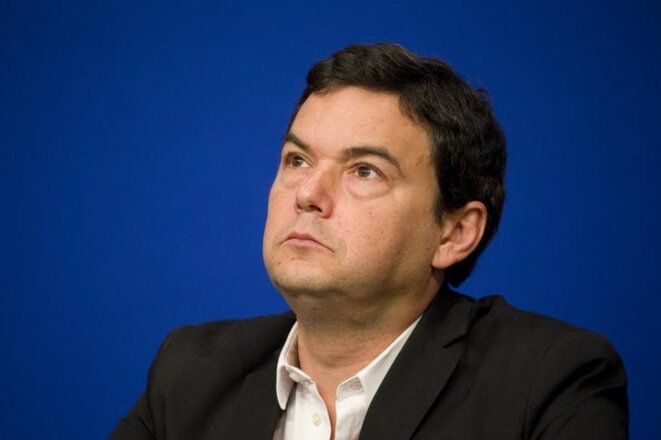
Late last year, the acclaimed French economist Thomas Piketty, a best-selling author for his work centred on wealth and income gaps, hailed by the Left and spurned by the Right, gave a conference at the university of Toulouse, south-west France, when he was surprised by a question from a student. It concerned a complaint for domestic violence filed against him in 2009 by his former partner, then a socialist MP and later culture minister, Aurélie Filippetti. His response prompted Filippetti to lodge a new complaint, this time for defamation, which has had the effect of breaking a decade-long taboo among the French media and political circles. Lénaïg Bredoux reports.
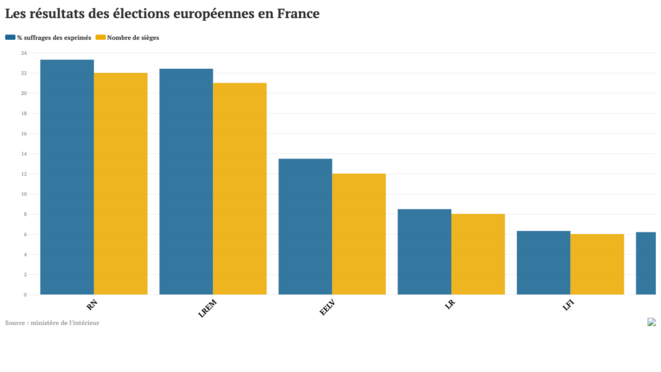
The European Election results in France have confirmed that Marine Le Pen's Rassemblement National – the former Front National – is once again the main opposition in the country to President Emmanuel Macron and his ruling La République en Marche. But outside of that polarised duel the rest of the French political landscape has been shattered,with an abstention rate of 49%. On the Left the environmentalists came top with 13% while on the Right the conservative Les Républicains – the party of former president Nicolas Sarkozy – has collapsed, picking up just 8% of the vote. Stéphane Alliès and Lénaïg Bredoux analyse the results in France.
The head of communications at the Élysée has just announced that he is to leave his post by the end of January. Sylvain Fort, who is close to Emmanuel Macron having worked alongside him for more than two years, proclaimed his “total loyalty” to the French president. But this and reports of other possible departures from the president's inner circle have further weakened a presidency which is embroiled in the affair involving former security aide Alexandre Benalla and the ongoing social movement carried out by the so-called from the yellow vest protestors. Lénaïg Bredoux reports.
A woman who formerly worked as a casting director for French filmmaker Luc Besson and who has accused him of sexually assaulting her on several occasions has been questioned by Paris police investigating allegations of sex crimes by the 59-year-old producer and director, Mediapart can reveal. The investigations were launched in May by the Paris prosecution services after Belgian-Dutch actress Sand Van Roy accused Besson of raping her in a Paris hotel, which he has firmly denied.
The unfolding scandal prompted by videos of the vicious assault of a man during May Day disturbances by President Emmanuel Macron’s private security aide Alexandre Benalla now includes the revelation that confidential police CCTV footage of the events in a Paris square were published on Twitter by supporters of Macron’s party in an attempt to denigrate Benalla’s victim. Screenshots obtained by Mediapart show the images, apparently from a CD copy of the footage given to Benalla by police officers, and which Benalla said he immediately handed to the Élysée Palace, were posted on social media just after Benalla’s thuggish behaviour was revealed by French daily Le Monde – before being removed just hours later.Karl Laske, Pascale Pascariello and Lénaïg Bredoux report.
On July 6th 2018, a former casting director wrote to the Paris public prosecutor claiming she had been 'sexually assaulted' by the acclaimed French film director and producer Luc Besson. This follows allegations of rape detailed in a formal complaint on May 18th by the actress Sand Van Roy against Besson, and a further complaint by Van Roy on July 6th. After an investigation lasting several months, Mediapart can reveal the stories of several women who describe sexually inappropriate behaviour by Besson, best known for blockbuster films such as 'Nikita', ‘The Big Blue’, 'Leon', ‘The Fifth Element’, and more recently 'Lucy', and who has vehemently denied all the allegations against him. Marine Turchi, Lénaig Bredoux and Geoffrey Le Guilcher report.
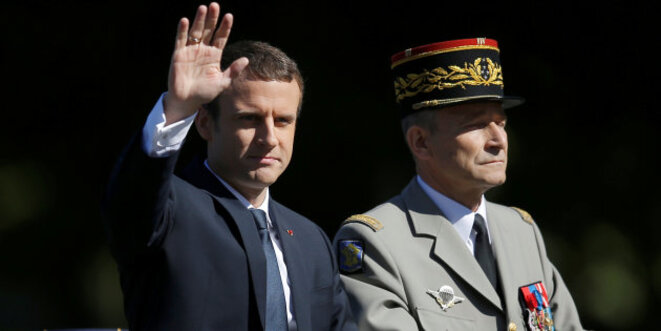
After a glowing political honeymoon on the international stage, President Emmanuel Macron was on Wednesday engulfed in his first crisis since his election in May after the chief-of-staff of France’s armed forces, General Pierre de Villiers, resigned amid a row between the two men over defence budget cuts. But while there is widespread outrage from the Left and Right at Macron’s humiliating treatment of de Villiers, who he rebuked in public over opposition to the cuts for a military the general says is at “breaking point”, the controversy has widened to the new president’s apparent contempt for parliament’s right to information. Lénaïg Bredoux reports.
All his blog posts
The Mediapart Club
Join the discussion
Mediapart’s journalists also use their blogs, and participate in their own name to this space of debates, by confiding behind the scenes of investigations or reports, doubts or personal reactions to the news.
L’essayiste publie un nouvel ouvrage consacré à #MeToo dans lequel elle met gravement en cause le travail de Mediapart sur les violences sexistes et sexuelles. Au mépris des faits, et sans nous avoir contactés au préalable.
Plusieurs journalistes ou militants des droits humains, tous critiques du régime marocain, ont été graciés par le roi du Maroc. Pour Omar Radi, Soulaimane Raissouni, Taoufik Bouachrine, Imad Stitou, Hicham Mansouri, Maâti Monjib et Saïda El Alami, notre soulagement est immense.
Dans un long entretien complaisant au Journal du dimanche, paru le 11 juin, la réalisatrice et comédienne s’en prend, sans point de vue contradictoire, au travail de notre journal sur les violences sexistes et sexuelles, et croit pouvoir justifier ainsi l’agression du président de Mediapart. Nous ne sommes pas dupes.
Le célèbre youtubeur a dénoncé dans une vidéo diffusée le 19 novembre l’enquête que nous avons publiée le 23 juin à propos des violences sexistes, sexuelles et psychologiques qu’il aurait commises. Explications sur nos méthodes d’enquête, qui ont permis la publication d’un nouveau volet.
« Cot cot cot codec. » C’est le caquètement d’un député de droite contre une élue écologiste qui a suscité la création de notre « Machoscope » en 2013. Depuis, Mediapart, recense le sexisme subi par les femmes en politique. Après une décennie de bons et loyaux services, la formule disparaît. Pour mieux s’imposer dans nos pages.