


In the photo a huge chandelier dominates the middle of the table. Emmanuel Macron and his wife Brigitte are sitting either side of King Mohammed VI, who is dressed in red with gold embroidery. Behind them the agapanthuses are in full bloom. In front of them on the table is expensive crockery and some refined typical Ramadan food dishes. This is June 2017 and the new French president has chosen Morocco for his first visit outside Europe after his recent election.
The visit was described by the Élysée as a “private” trip so as not to annoy Algeria - which since 1995 has been the first non-European destination of new presidents - and also to highlight the personal relationship between the French presidency and the monarchy in Morocco. It is a connection that France cherishes, one in which Paris looks after its own interests in terms of trade and the economy and over issues such as intelligence sharing and the control of immigration. In return France effectively turns a blind eye to the human rights violations which the kingdom has grown accustomed to committing, and also supports Morocco over the sensitive and controversial issue of the sovereignty of the Western Sahara.

Enlargement : Illustration 1
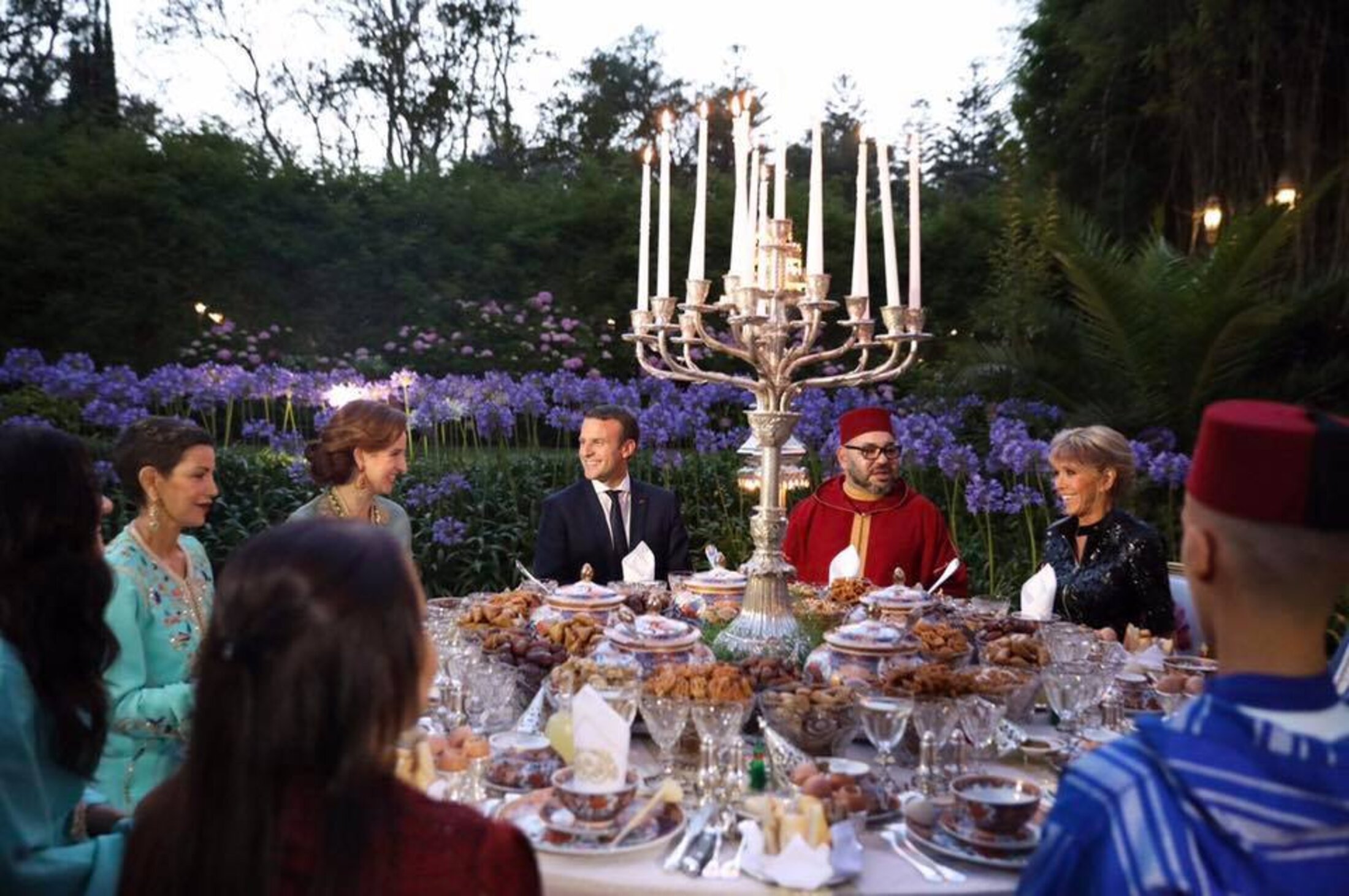
Macron's trip fitted into this long tradition and demonstrated what the Moroccan king expects of a French head of state: unwavering support despite the kingdom's repression of dissident voices. At the time the two men shared the Ramadan meal, Morocco was being rocked by one of the biggest social protests since Mohammed VI acceded to the throne in 1999, and more and more arrests were being carried out.
Speaking to journalists that day the French president was effectively Mohammed VI's spokesperson, as he praised Morocco's “desire” to “respond long-term to the deep causes” of the protests. A few hours earlier, on the tarmac of the airport at the Moroccan capital Rabat, President Macron had been greeted by one of the key figures in the repression of those protests: the head of the kingdom's intelligence services Abdellatif Hammouchi.
On Monday July 19th the revelations by the non-profit journalism organisation Forbidden Stories with the support of Amnesty International’s Security Lab and its media partners showed how the Moroccan secret services, in which Hammouchi is the key figure, targeted and spied on a thousand French citizens including journalists (among them, Mediapart journalists) using the powerful Pegasus spyware from the Israeli company NSO Group. It has also emerged that Emmanuel Macron's own phone was targeted in 2019.
The Élysée itself has still not reacted. Instead, the government's official spokesperson Gabriel Attal attacked the “extremely shocking” details and promised investigations and demands for clarification.
But since his election Emmanuel Macron's position has not wavered. The detention of several Moroccan journalists has failed to produce any major response from France. So while on July 12th this year the United States State Department publicly condemned the five-year prison sentence handed out to Moroccan journalist Soulaimane Raissouni, editor of the now defunct daily newspaper Akhbar El-Yaoum, there was a deafening silence from the French Ministry of Foreign affairs on the matter.
Relations between Paris and Rabat have not always been smooth since the former French Protectorate of Morocco gained its independence back in 1956. President Charles de Gaulle was occupied by events in Algeria and kept his distance from a Moroccan monarchy that was also keen to free itself from French tutelage. In 1965 the “disappearance” of the Moroccan opposition figure Mehdi Ben Barka in Paris saw the relationship between the two countries deteriorate rapidly. “Our relations with Morocco have become an issue,” De Gaulle said at the time.
The frosty relations did not last long, though, especially after the election of Georges Pompidou as president in 1969 after which he forgave King Hassan II – Mohammed VI's father – and the kingdom's strongmen. Under the next French president, Valéry Giscard d’Estaing, the rapprochement went even further and set the trend for future presidents. The new French head of state proclaimed his love for Morocco where he stayed regularly with his family. Hassan II even called him his “pal”.

Enlargement : Illustration 2
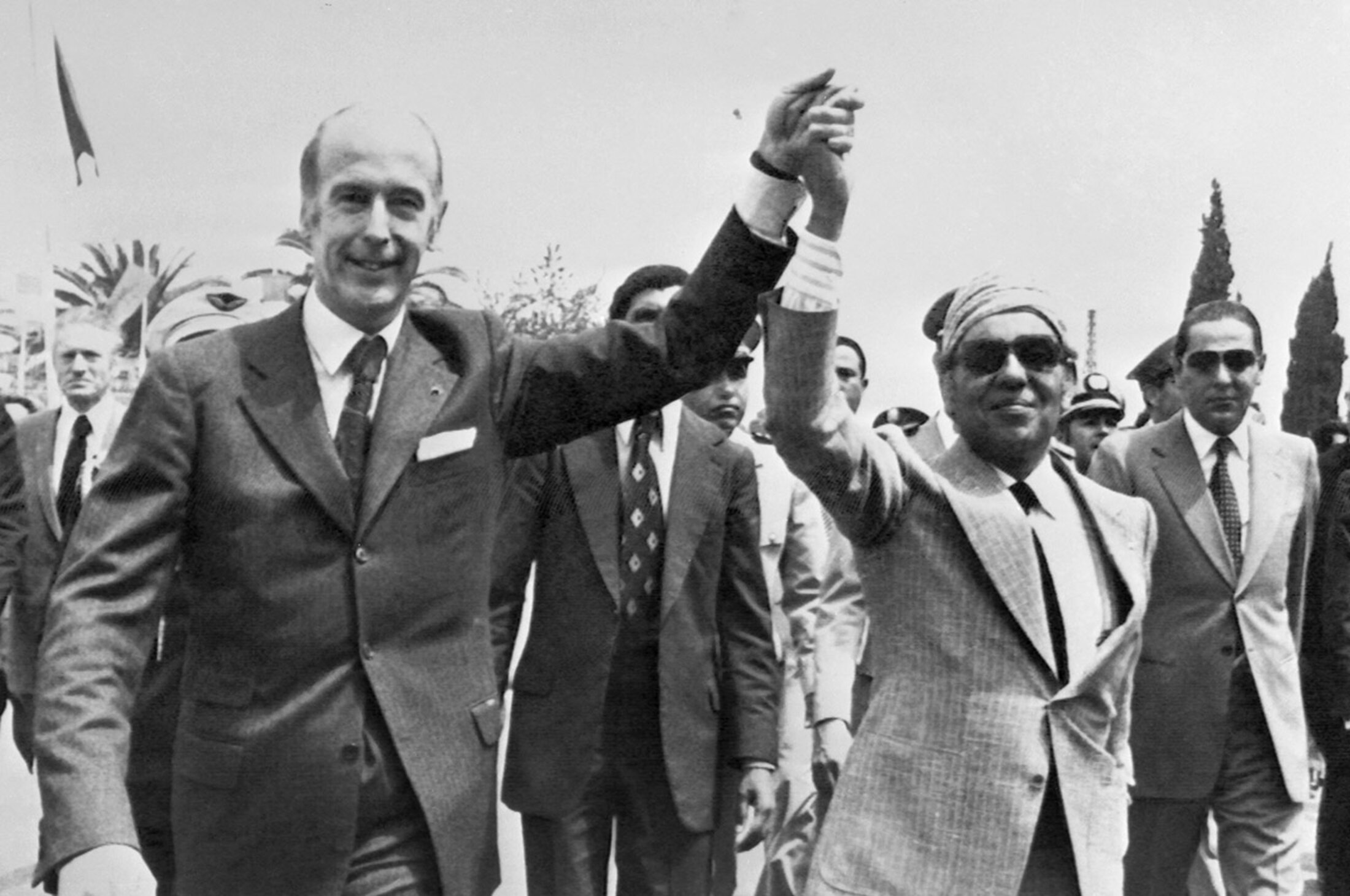
Even the 1981 election of socialist president François Mitterrand, who in opposition had been very critical of the Moroccan regime, did little to change anything. France continued to cling on to a friendship which served its own geopolitical and economic interests. Another key element in bilateral relations has been the fight against terrorism, which became particularity important after 2015 and the wave of terror attacks that hit France. Morocco claims that it was its intelligence that enabled France to locate the suspected leader of the jihadists who attacked Paris and Saint-Denis on November 13th 2015, Abdelhamid Abaaoud.
Nonetheless, there been some tensions between the countries in recent years. In 1990 the publication of the book 'Notre ami le roi' ('Our friend the king'), an investigation by journalist Gilles Perrault into the regime of Hassan II (and published by Edwy Plenel, now publishing editor of Mediapart) sparked a diplomatic crisis between the two capitals.
In the space of a few days France and the rest of the world discovered the other face of a regime that was considered stable and blessed with a charismatic king. Gilles Perrault's book described the large-scale imprisonment of political opponents at Tazmamart secret prison in the Atlas Mountains and the torture and political assassinations of those “violent years”. Forced into a corner, Hassan II released a large number of political prisoners and closed Tazmamart prison.
But after these revelations the king decided to strengthen and extend his links with France. According to the journalist Omar Brouksy, author of the 2017 book 'La République de Sa Majesté' ('His Majesty's Republic'), and himself spied upon with the Pegasus spyware, the king had noted how “the monarchy doesn't have an effective network in Parisian circles, where a powerful political and media elite formulate opinion” (read Mediapart's interview here).
Connections that pass from presidency to presidency
The subsequent period saw ever-closer diplomatic ties between the two nations. In 1995 President Jacques Chirac visited Rabat in the summer following his election. He spoke there of his “deep feeling of personal affection for this country and its sovereign” and his desire to “turn over for good the page of disagreements and misunderstandings”. Twelve years later his successor President Nicolas Sarkozy also chose Rabat as the venue to proclaim his support for Franco-Moroccan friendship. He paid tribute to the “democratic” and “pluralist” kingdom under Hassan's son Mohammed VI, and to the work that had been undertaken to “confront” the “violence of the past”. The French president asked: “What country has done as much on this as Morocco?”
The next president, François Hollande, continued in similar vein. Mohammed VI was the first foreign head of state to visit the Élysée after the socialist was elected in May 2012. During his later visit to Rabat in April 2013 the French president delighted his hosts by saluting the “stability” of the country faced with the “risks” brought about by the Arab Spring in the Middle East and North Africa.
One event in particular shocked human rights activists. This was in 2014; on February 20th a Paris-based judge summoned the powerful figure of Abdellatif Hammouchi to appear before her. The Moroccan intelligence boss, who was passing through Paris, was the target of several allegations of torture, complicity in torture and failure to help a person in danger. The judge sent police officers to hand him the summons. But he did not show up for the hearing and that same evening he returned to Morocco.
The episode caused a diplomatic rift between the two countries that lasted a year. During that period Morocco ceased judicial and security cooperation with France. Hundreds of cases involving issues as diverse as drug trafficking, commercial litigation and child kidnapping were held up as a result. According to several sources, overnight the Moroccan state services stopped sending any more information to their French counterparts.

Enlargement : Illustration 3
Yet François Hollande himself picked up the phone to Mohammed VI to “clear up any misunderstanding”. The French Ministry of Foreign Affairs meanwhile spoke of a “regrettable incident” and reportedly got involved in the judicial investigation “in response to a request from the Moroccan authorities”.
It took many diplomatic exchanges, both official and unofficial, carried out in particular by former French socialist minister Élisabeth Guigou - who was born in Marrakesh and has close ties to the kingdom – and the signing of a new judicial co-operation agreement between the two countries before the disagreement subsided. This accord was strongly criticised by human rights groups, judges' unions and the human rights consultative body the Commission Nationale Consultative des Droits de l’Homme (CNCDH), who all complained it gave in to much to Rabat's demands. It was approved by the French Parliament in the summer of 2015.
The French authorities even went as far as publicly rehabilitating the image of Abdellatif Hammouchi by promising to raise him to the level of officer of the Légion d'Honneur.
Like Élisabeth Guigou, a number of political figures of all hues have forged close ties with the Moroccan monarchy over the last 30 years. They have become favoured intermediaries, looked after by Rabat in order to help smooth the diplomatic paths. “Mohammed VI rebuilt the French elite that had been close to the Royal Palace, one that had grown old by the death of Hassan II,” Omar Brousky told Libération newspaper in 2017.
On the Left socialist Dominique-Strauss Kahn was part of this elite. The former minister under François Mitterrand – and later managing director of the International Monetary Fund - grew up in Agadir and has lived in Marrakesh for several years. The former politician has chosen Morocco to locate Parnasse, his flourishing business providing consulting services for governments and large corporations around the world. The king of Morocco himself has taken advantage of the former IMF boss's advice.
As French political figures have come and gone, so the Makhzen – the Moroccan state apparatus – has maintained and tightened its grip inside the corridors of French power. The French justice minister from 2007 to 2009, Rachida Dati, whose father was from Morocco, often spoke out in support of the kingdom. Indeed, Mohammed VI made her a grand officer of the Order of Ouissam Alaouite – the Moroccan equivalent to France's Légion d'Honneur - not long after she left office. “Each time she's had the opportunity, Rachida Dati has contributed to closer ties between France and Morocco,” the number two at the Moroccan Embassy in Paris, Redouane Adghoughi, said approvingly at the time.
Between 2012 and 2017 Morocco also benefited from its relationsip with Najat Vallaud-Belkacem, one of the most high-profile members of the Hollande administration. The former spokesperson for the government, who is Franco-Moroccan and who was born in the Rif region, did not just have family ties with the kingdom. In 2007 she was appointed by “His Majesty” to the council for overseas Moroccans the Conseil de la Communauté Marocaine à l’Étranger (CCME). She gave up this post in December 2011, just after being made spokesperson for François Hollande's election campaign. In 2020 she became an affiliate professor at the Mohammed VI Polytechnic University in Ben Guerir, Morocco, an institution established by the king himself.
Éric Dupond-Moretti, the king's lawyer
However, the election of Emmanuel Macron as French president in 2017 potentially marked a setback in this long tradition of Moroccan influence with Paris. “All the usual connections have been turned off,” historian Pierre Vermeren told Mediapart at the time. “[The kingdom] no longer seems to have 'intimate friends' there, as one says in Morocco. It's a huge change in relation to other presidencies.”
Yet once again the networks were rebuilt with the help of lavish receptions and self-serving trips. In 2018 the French education minister Jean-Michel Blanquer attended a reception at the Moroccan Embassy in Paris for the Fête du Trône, held to mark the anniversary of Mohammed VI's accession to the throne. In 2020 the occasion was limited by the epidemic to several videos recorded in honour of the king. In them one can see the French government's spokesperson Gabriel Attal describe himself proudly as a “friend of Morocco and the Moroccan people”.
Other figures involved included the former socialist minister Hubert Védrine, the French senator Christian Cambon from the right-wing Les Républicains (LR), who spoke of his best wishes “for His Majesty”, and the Member of Parliament for the ruling La République en Marche (LREM) party Mustapha Laabid who talked of his “friendship and … deep respect for His Majesty the king Mohammed VI and his people” and spoke of a “glorious day”. The veteran economist, senior civil servant and advisor Jacques Attali also made an appearance, sending his best wishes to “this kingdom that's so essential to the dialogue of civilisations”, as did the boss of the aeronautical group Safran, Ross McInnes.
Yet one figure who did not feature in the recordings was current justice minister Éric Dupond-Moretti, despite the fact that he is currently one of the main links between Mohammed VI and the Macron administration. This is because he was the monarch's personal lawyer until being appointed justice minister in July 2020. Back in 2015 the high-profile lawyer did the rounds of the television studios in France to attack the blackmail that the king was apparently subjected to by two French journalists. In the summer of 2019 the lawyer denied – in the king's name – rumours about the royal family before announcing, a month later, the divorce between Mohammed VI and his wife Salma Bennani. This divorce has still not been officially confirmed, though Salma Bennani has not been seen in public since late 2017.
In December 2020 Éric Dupond-Moretti spent two days in Rabat in his capacity as justice minister. Part of his trip included bilateral talks with the Moroccan ministers of the interior and justice. The former lawyer signed a joint declaration with his Moroccan counterpart aimed at better coordination in the handling of unaccompanied Moroccan minors in France. According to the website Jeune Afrique the issues of intelligence cooperation and anti-terrorism were also raised.
Morocco is also the place where another former close advisor to the president, Alexandre Benalla, decided to set up in business following his enforced departure from the Élysée after he was caught on video in 2018 beating up protestors. He has created a security consultation business there called Comya. During a meeting of entrepreneurs in the Moroccan city of Tangiers in November 2019, Emmanuel Macron's former personal security advisor praised Morocco's “perfectly-conceived state structure” and called it the “safest country in Africa”. He said: “The Moroccan intelligence services are very able, both on the human and also technological level...”
The Moroccan authorities do not just have close ties with French politicians but also with media, cultural and intellectual elites in Paris. The high-profile philosopher Bernard-Henri Lévy spends a part of the year in his riad or house in Marrakesh. This link with the country has clearly made him fond of the regime. In September 2016 the title of his editorial in Le Point news magazine was: “Long live the king!” In it the intellectual expressed delight over a recent speech by the Moroccan king. “This head of state is not like any other head of state,” he wrote, noting that his position as a “monarch”, “leader of the faithful” and a “descendant of the Prophet” gave his words “a reach that they would not have in the mouth of anyone else”.
Several figures from the world of culture are also close to Mohammed VI. That is the case with the actor and humorist Jamel Debbouze, a Franco-Moroccan who is an avowed friend of the king. “I'm very proud of this friendship and of the esteem that the king has for me,” he declared in 2019. The comedian has organised the comic festival the Festival du rire in Marrakesh for the past decade. “Thank god that were are lucky to have an open, tolerant monarch who likes culture. We are incredibly lucky and we must support him as he supports us,” said the actor.

The singer Maître Gims, who lives in Marrakesh, is no less full of praise. “I met the king of Morocco, we became friends and that's how the story started,” the singer told Paris Match magazine in December 2020. Both artists have posted images on social media with them next to Mohammed VI. For example, in 2017 Maître Gims posted a photo with the caption “long live the king!” in Arabic.
Such cultural figures are regularly held up on both sides of the Mediterranean as a sign of the relaxed relations between the two countries. For example, Emmanuel Macron invited the Franco-Moroccan author Leïla Slimani to accompany him to Rabat in 2017. As she is involved in a number of social campaigns the writer is quite discreet when it comes to the Moroccan monarchy. Questioned by RTL radio about the protest movements in the Rif region of the country in 2018 she evaded the issue. “Unfortunately I don't know the ins and outs of these protests,” said the author, who has had a blog on the website Le360.ma, which is known for its links with the Moroccan government.
It is through cultivating this kind of “soft power” that Morocco has established close links with France. But there is also the economic aspect too, which has huge importance in a country where the king is also a businessman at the head of a colossal financial empire. French companies relish links with Morocco, which is home to some 750 subsidiaries of businesses based in France and which provides them with some of their biggest contracts.
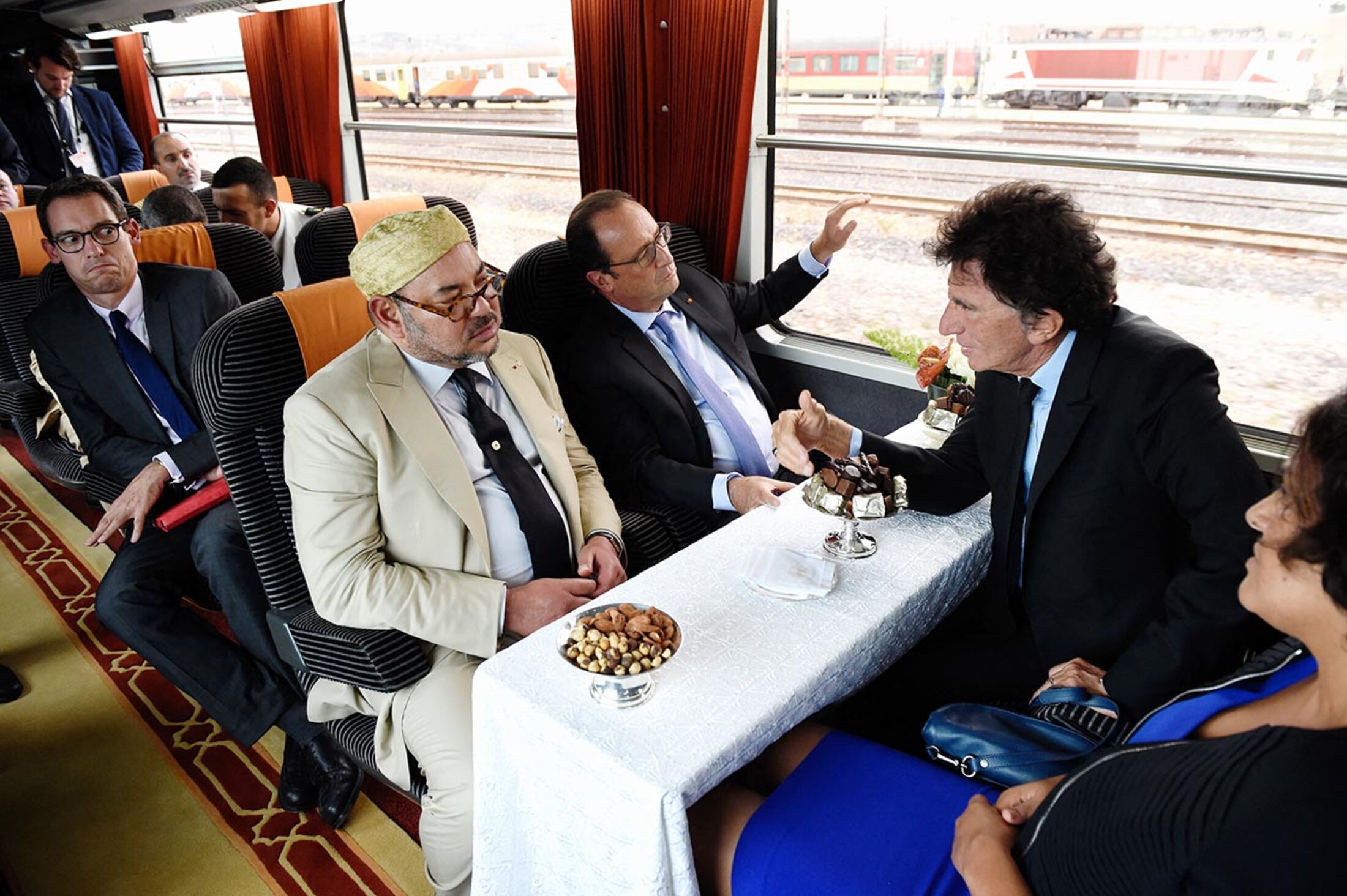
Indeed, Emmanuel Macron's second – and so far last – visit to the kingdom was in 2018 to inaugurate the first high-speed railway in Africa, between Tangiers and Kenitra in the north west of Morocco. The trains on the new line were built by French company Alstom and 50% of the project funding came from France as a method of showcasing French technology on the continent. The French president was accompanied on his trip by several executives and heads of French businesses including a representative from Alstom. The French multinational is also making and delivering tramways in Casablanca and Rabat in contracts worth several hundred million euros.
Yet at the same time as the two countries were developing what the French ambassador in Rabat Hélène Le Gal called last Friday July 16th a “passionate” relationship, the Moroccans were busy keeping surveillance on dozens of French citizens, including journalists and media bosses.
When asked by Forbidden Stories and its media partners, the NSO Group and the Moroccan authorities denied the revelations. The monarchy itself insisted that they were “unfounded allegations”.
------------------------------------------------------------
- The original French version of this article can be found here.
English version by Michael Streeter