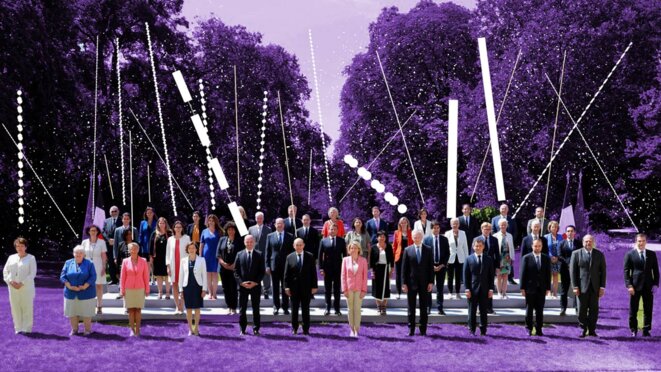
The mobile phones of five French government ministers were targeted by the Pegasus spyware sold to states worldwide by Israeli surveillance technology firm NSO Group, Mediapart can reveal. The presence of “markers” left by the spyware were discovered by an official French probe involving technical analyses of the devices. The development follows on revelations, first published in July, which found evidence that the surveillance tool was notably employed by NSO clients around the globe to target journalists, including two from Mediapart, politicians and regime opponents. Fabrice Arfi and Ellen Salvi report.
The state penitentiary at Huntsville in Texas is a “regional release site” for discharged and paroled prisoners. Every day, small groups of inmates walk free from the prison, most gathering at the town’s Greyhound bus station to begin their journey back into the wider world. In this award-winning short documentary (in English with French subtitles), which Mediapart presents here in partnership with VOD platform Tënk, US filmmakers Jamie Meltzer and Chris Filippone capture the released prisoners’ first moments of quiet reflection and freedom.
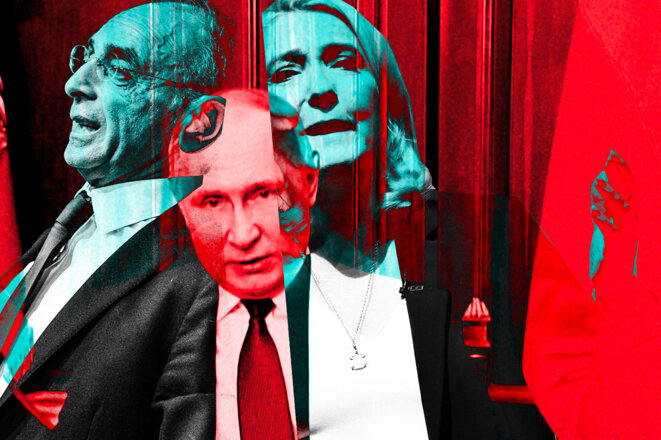
The French presidential election is about to get underway in earnest with President Emmanuel Macron finally set to announce his candidature ahead of the elections in April. According to opinion polls his two main rivals are both from the far-right: the Rassemblement National president Marine Le Pen and maverick polemicist Éric Zemmour. Yet both are set to be embarrassed by the far-right's long-held support of Vladimir Putin at a time when Russia has just sparked outrage around the world by invading Ukraine. As historian Nicolas Lebourg reports, the two candidates will find it hard to reconcile the far-right's general support for Putin's regime and the risk of being seen as traitors to French national interests.
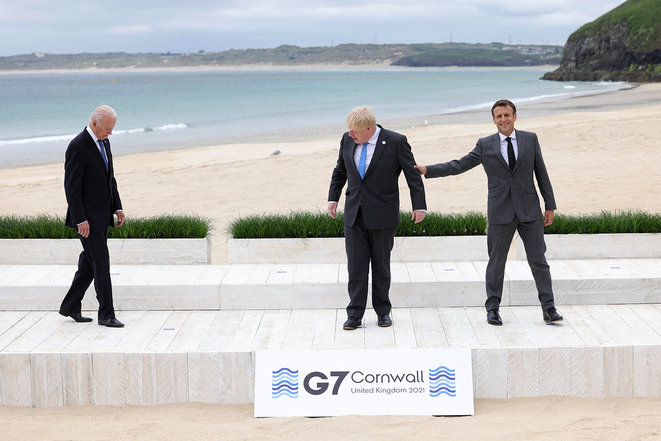
After a phone conversation on Wednesday, US President Joe Biden and his French counterpart Emmanuel Macron appeared to have at least partly defused tensions over the new military pact between Australia, the UK and the US which entailed the cancellation of Australia’s purchase of 12 French submarines worth 56 billion euros. In this op-ed article, Mediapart’s international affairs specialist François Bougon argues that the diplomatic crisis of recent days should prompt a re-think of France’s global role and an end to the notion of its grandeur and exceptionalism, a heritage handed down from Charles de Gaulle.
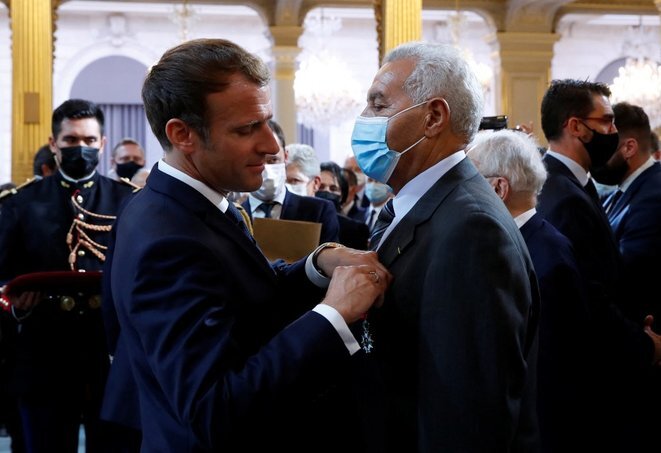
French President Emmanuel Macron has announced his government will soon present draft legislation to allow for the payment of compensation to the Harki community, in recognition of “the dereliction” of the French state’s duty towards them. The Harkis were the Algerian paramilitary who fought under the orders of the French army during the Algerian War of Independence. About 90,000 of the auxiliaries and family members fled to France to escape imprisonment and executions after Algeria gained independence in 1962. More than half of them were kept for decades in camps in dire conditions, abandoned by successive governments. Rachida El Azzouzi reports.
The medical profession has been on a steep learning curve about the consequences, notably long-term, of infection by the SARS-CoV-2 virus and the Covid-19 disease it causes. But mystery remains over many aspects of the virus, and in particular about its effects, and true infection rates, among the very young. Caroline Coq-Chodorge reports from the south-east French city of Lyon, where paediatricians with the country’s second-largest teaching hospital group recount their findings.
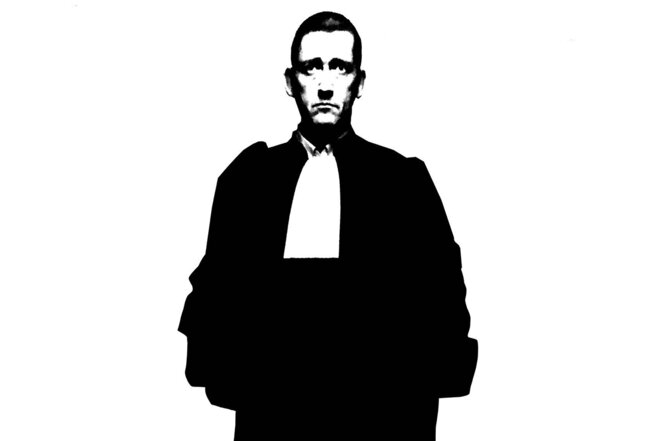
French lawyer Jean-Yves Moyart attracted tens of thousands of regular readers to a blog he ran, beginning in 2008, in which he detailed his experiences of the everyday functioning and failings of the justice system in France, the often severe treatment meted out to the socially modest, and the difficulties of his job. The runaway success of his blog led to the publication of extracts in a book released in 2011. Now, following his death from cancer earlier this year, a new selection of his writings appear in a book published this month, reviewed here by Mediapart’s legal affairs correspondent Michel Deléan.
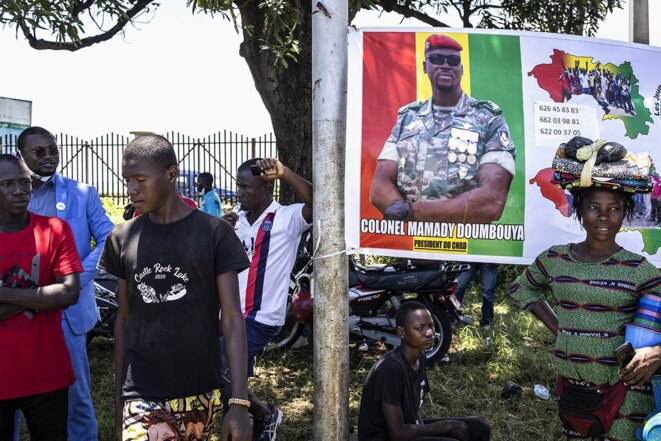
The military coup in Guinea earlier this month was the latest of eight over recent years in West Africa, and notably in countries that are former French colonies. Meanwhile, regimes in the region are introducing ever tighter restrictions on public freedoms, and the divide between populations and their governments is growing. African affairs correspondent Rémi Carayol reports.
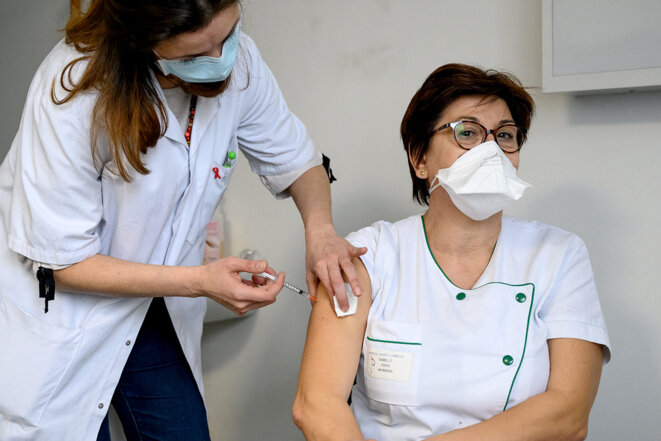
September 15th 2021 was the deadline for all healthcare professionals and many other workers in France to be fully vaccinated against Covid-19. The list of those subject to mandatory vaccination includes non-medical staff in hospitals, gendarmes, firefighters, ambulance staff and home carers. Those who fail to comply by the deadline will face being suspended without pay. As today's deadline loomed, hospitals were trying to persuade the last remaining reluctant staff members to get their vaccinations. Many in the medical profession, while fully supporting vaccination, see the obligatory nature of the injections as a major policy failure. Caroline Coq-Chodorge spoke to some involved in this last-minute race for vaccination.
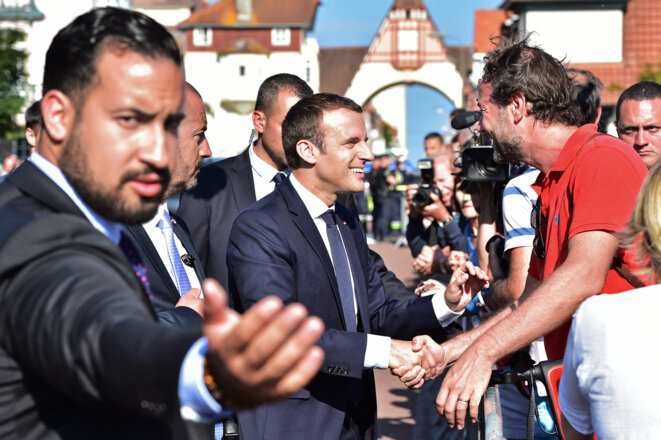
On Monday September 13th 2021 President Emmanuel Macron's former bodyguard and security adviser Alexandre Benalla stood trial following an incident in 2018 when he was filmed assaulting protestors at a demonstration. In addition to assault, Benalla is also accused of interfering in the operation of the police without lawful excuse, of forgery and using a false instrument in relation to a diplomatic passport and unlawfully carrying a firearm. In this op-ed article Mediapart's Fabrice Arfi argues that the importance of the Benalla case goes beyond the conduct of the president's trusted bodyguard and adviser. He says that the high-profile affair, and in particular a speech that the president gave just one week after it was revealed in the press, showed the world there is something quite illiberal about Emmanuel Macron.