


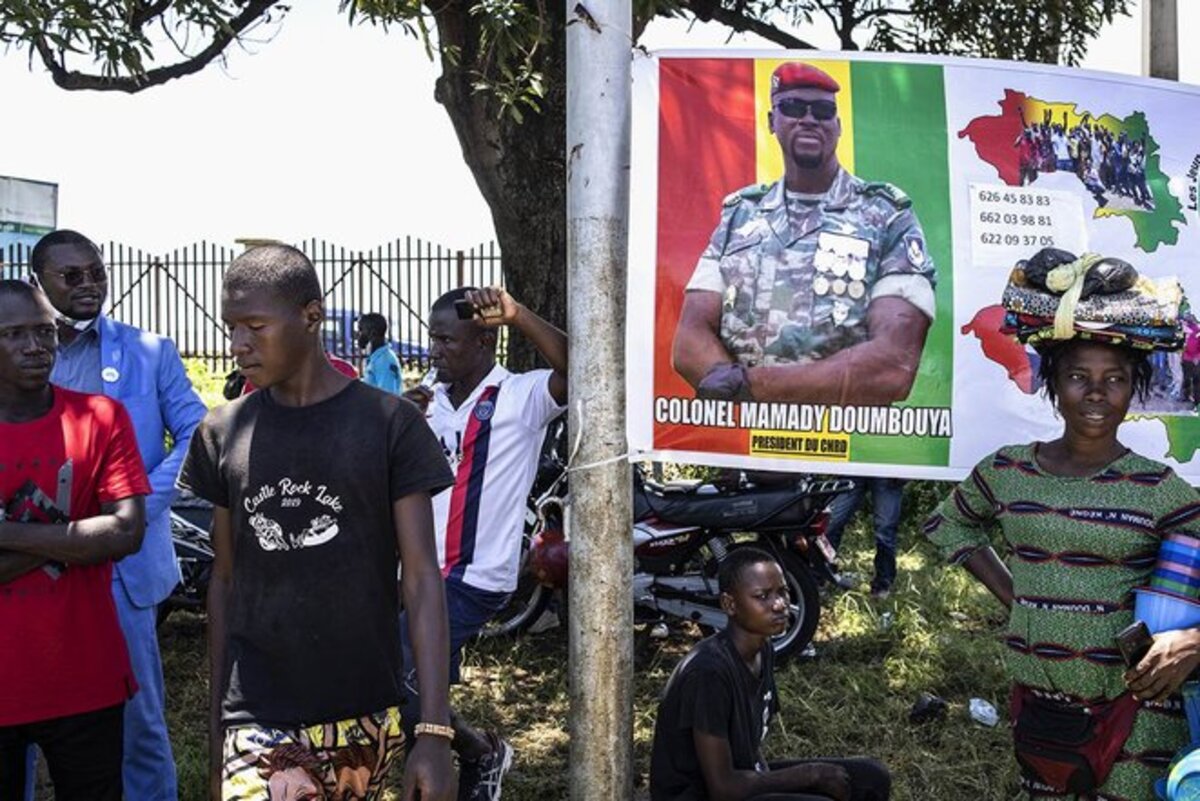
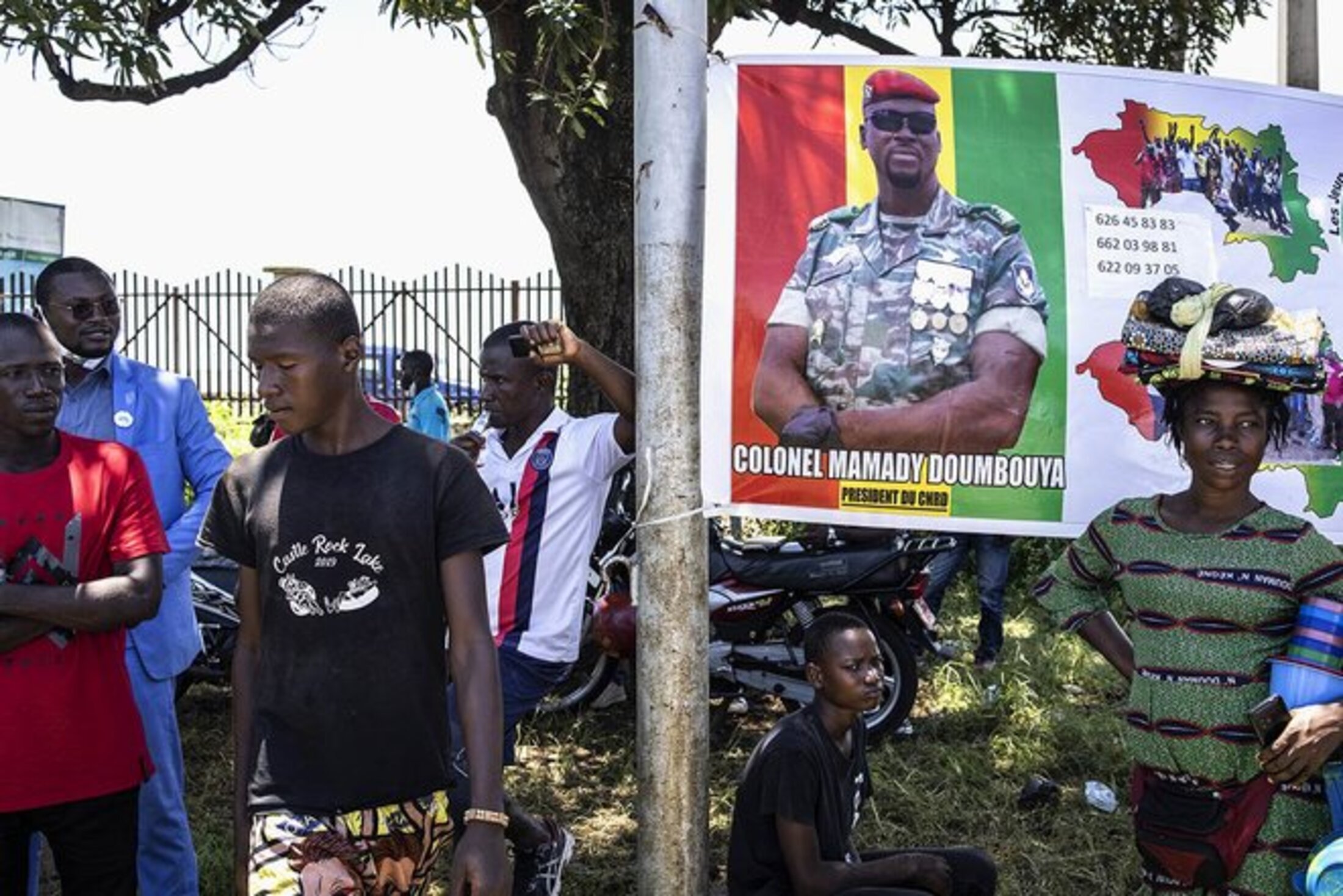
On the morning of September 5th, Guinea’s president Alpha Condé, who had been in office since 2010, was overthrown in a military coup and taken into detention. The coup was led by Guinean special forces leader, colonel Mamady Doumbouya, 41, a former member of France’s Foreign Legion.
During his arrest, his anger barely contained, Condé spoke not a word as his captors, while addressing him roughly, recorded the scene on smartphone cameras before soon posting the videos on social media.
Condé, 83, who had been a militant opponent of the post-independence dictatorships of Guinea’s first two presidents, Ahmed Sékou Touré (1958-1984) and Lansana Conté (1984-2008), had promised to introduce democracy to Guinea, but it was as an autocrat that he was finally toppled from power.
This month’s putsch was the latest in a spate of eight coups since 2008 in West Africa, and more particularly among those countries which were former French colonies. It marks a winter that has closed in over democracy in the region, ten years after the contrasting, so-called "Arab Spring" popular revolts against dictatorships in North Africa and in the Middle East.
In Mali, Guinea’s northern neighbour, there have been two military coups over the past 13 months – one in August 2021 and another in May this year – while in north-central Chad, following the death this April of the country’s strongman leader Idriss Déby, in power since 1991, a successful putsch was led by his son Mahamat.
Apart from the coups d’état, democracy has dwindled in some countries through the tampering with constitutions to remove the limits, adopted by a number of West African countries in the 1990s and 2000s, on the number of successive presidential mandates a leader can exercise. Added to this, there has been a wave of repression meted out against dissidents in Niger, Togo, Chad and Guinea, and to a lesser extent in Senegal and Ivory Coast.
The events largely escape the attention of international media, including the growing number of laws restricting freedoms. “It’s a tidal wave that worries us much more than the coups d’état,” said Laurent Duarte, an activist with Tournons la page (for ‘Let’s turn the page’), a France-based umbrella group for associations defending rights and democratic practices in ten francophone African countries. “For some years now, laws on cybercriminality, or anti-terrorist legislation, whose scope of application is very wide, have restrained public freedoms in numerous countries.”
Senegal-based Gilles Yabi is a former journalist with magazine France Afrique, who spent several years as a political analyst for the NGO International Crisis Group and who is the founder of a think tank focussed on societal issues in West Africa. “One observes a tendency to use the law to restrict public freedoms and to limit political competition,” he commented. “Now, once it’s inscribed into law, it’s difficult to oppose.” He noted, meanwhile, that this trend is true of some European countries, including France.
Enlargement : Illustration 1
For Alioune Tine, a retired regional director in West Africa for Amnesty International, now an independent expert on human rights issues in Mali, and the founder of rights-promoting NGO Afrikajom Center, the curtain falling on democracy in the region is all the harder to live with given the wave of democratisation that began building in the early 1990s, and which prompted popular hope for the future. “We spoke of a constitutional state, and we believed in the elections, but since several years now we are witnessing a shift and one sees that members of oppositions are once more treated like criminals,” he said.
There are numerous causes for the current situation. Some are longstanding – the importation of a democratic model that is little adapted to local realities; economic fragility; failing public services; endemic corruption, and increasing inequalities – while others are more linked to current pressures; West African governments have to fit in with the rules of the international economic system and the conditions imposed by lenders.
The fight against terrorism, which is made a priority over all other considerations, is often the justification cited for introducing legislation that reduces public freedoms, and which is used in turn to crack down on regime opponents. Meanwhile, the three latest coups carried out in Mali, Chad and Guinea were perpetrated by elite military units who are trained and financed (notably by the European Union) to combat jihadist groups. The Western allies of West African countries, including France, appear happy to maintain relations with authoritarian regimes as long as the latter keep the fight against terrorism as their priority.
In a report published in 2020, the Niger branch of the pro-rights movement Tournons la page recorded 24 orders issued by the authorities prohibiting demonstrations during the period 2018, 2019 and the first quarter of 2020. On each occasion, the bans were declared for reasons of a supposed terrorist threat.
For Alioune Tine, “the multiple crises – economic, about security, about the climate, health – create a total disenchantment among citizens and a crisis of confidence between leaders and their peoples”. The largely positive popular reaction to the putschists in Mali and Guinea illustrates the divide he refers to, whereas previously a coup was regarded almost always as a regressive event. Today, a power grab by the military is seen by some as the only way of putting an end to chaos.
Tine also criticises what he calls “hyper-presidentialism”, meaning the over-dominant exercise of power by a head of state, which he says turns other institutions into “subservient powers”.
He suggests that the many past efforts to ensure political alternance in governance, such as measures limiting the number of presidential mandates a person can exercise, has led to losing sight of the alternative. Indeed, in Burkina Faso, “The alternative rather than alternance” became the slogan of opponents of Blaise Compaoré, president from 1987 until 2014 (and who arrived in power thanks to a coup) when he was ousted in a popular revolt. For the protestors, elections – mapped out by the military and political elite – served little purpose if the “alternance” was to be a clone of the exiled Compaoré. History proved them right, when in 2015 Compaoré’s former prime minister, French-educated Roch Marc Christian Kaboré, was elected president (and re-elected in 2020), changing little in the system of governance employed by Compaoré during his 27 years in office.
Meanwhile, in 2012 in Senegal, Macky Sall succeeded his political mentor Abdoulaye Wade as president. Sall, who was re-elected in 2019, had served as Wade’s prime minister between 2004 and 2007, before founding his own party in 2008. In Mali, since the fall of the country’s dictator Moussa Traoré in 1991, every president has emerged from the same political party, the pan-African, centre-left Adéma.
Jean-Hervé Jezequel, project director for the Sahel at the International Crisis Group, a Brussels-based think tank of research and analysis into major global crises, believes that popular disillusion towards governments in West African states is notably fuelled by their limited scope of action. “The states have less and less capacity to offer services to populations,” he said of countries in the region. “They simply don’t have the means. We observe that there are ever fewer teachers or healthcare workers per number of inhabitants […] One gets the impression that, in West Africa, the post-colonial state is reaching the end of the road.”
For Gilles Yabi, this regression needs to be viewed through a historical perspective; the path to democratisation is a long one he says, and in West Africa the democratic systems are young. “One often forgets that, in old democracies, social and political advancements were not always the work of democratic states,” he commented.
He also agrees with Tine and Jezequel who argue that focussing on elections alone is a major mistake. “We see that an election does not always produce leaders who are preoccupied with the public interest,” said Yabi. “One must take an interest in other dimensions of democracy – stable institutions, solid counter powers [to challenge established authority].”
That is illustrated by the case of Niger, where in February this year Mohamed Bazoum, the right-hand man and minister of outgoing president Mahamadou Issoufou, was elected as head of state. Issoufou was applauded for his supposed good governance by haning over to Bazoum and not contravening the limit imposed by the constitution of a maximum two presidential terms. Yet during the ten years of Issoufou’s presidency, public freedoms were constantly eroded. This included the detentions of opponents and activists, the banning of demonstrations, interference in the justice system, buried corruption scandals, and media censorship. Niger became a prime example of what have been dubbed “democratures”.
“Not content to lead anti-social policies in the service of the most powerful, this government accepts no criticism,” exclaimed Ali Idrissa, a high-profile militant for a Nigerien transparency group, speaking three years ago. Idrissa spent several months in prison under the Issoufou regime. While, since his election and the beginning of his mandate in April, Bazoum has made certain moves to ease tensions with the opposition, rights violations continue apace. On September 9th, Nigerien investigative journalist Moussa Aksar was summoned for questioning by the justice authorities, along with Samira Sabou, a popular local blogger, following their separate relaying of a report published by anti-organised crime NGO Global Initiative, and which underlined the established links between drugs traffickers and the ruling political party, the PNDS, which is headed by Bazoum.
-------------------------
- The original French versionof this report can be found here.
English version by Graham Tearse