


“We must now be tough with the bad guys and nice to the good guys.” That is the line recently announced by France's minister of the interior, Gérald Darmanin, who has been churning out statements against “foreign criminals”, and promising to “make life impossible” for anyone who is the subject of an official order requiring them to leave the country. These orders are known in French as an 'obligation de quitter le territoire français' or 'OQTF'.
How would Gérald Darmanin describe an Algerian doctor who has been living in France since 2015, who works at a cash-strapped public hospital, who volunteered to help on a Covid unit at the height of the pandemic and who has since been working with cancer patients, all while obtaining a new medical qualification every year? Would the minister be inclined to describe him as 'good' or 'bad'? And is there a pressing need to make this doctor's life 'impossible'?
In June 2022 the state prefecture in the south-east département or county of Rhône issued a OQTF against the doctor, whom we shall call 'Karim' as he does not want his real name to be published. “If I'm going to be well-known, I'd rather it was for scientific reasons,” he explained to Mediapart, somewhat surprised that anyone was interested in his case.
Stripped of his residency permit for the last four months, Karim has no longer been allowed to work at the Centre Hospitalier Universitaire (CHU) teaching hospital at Saint-Étienne in the neighbouring Loire département. He had been there as an intern, a temporary status given to foreign doctors while they wait to be accepted as fully-qualified within the French health system. Most recently he worked in the oncology department, which treats cancer patients.
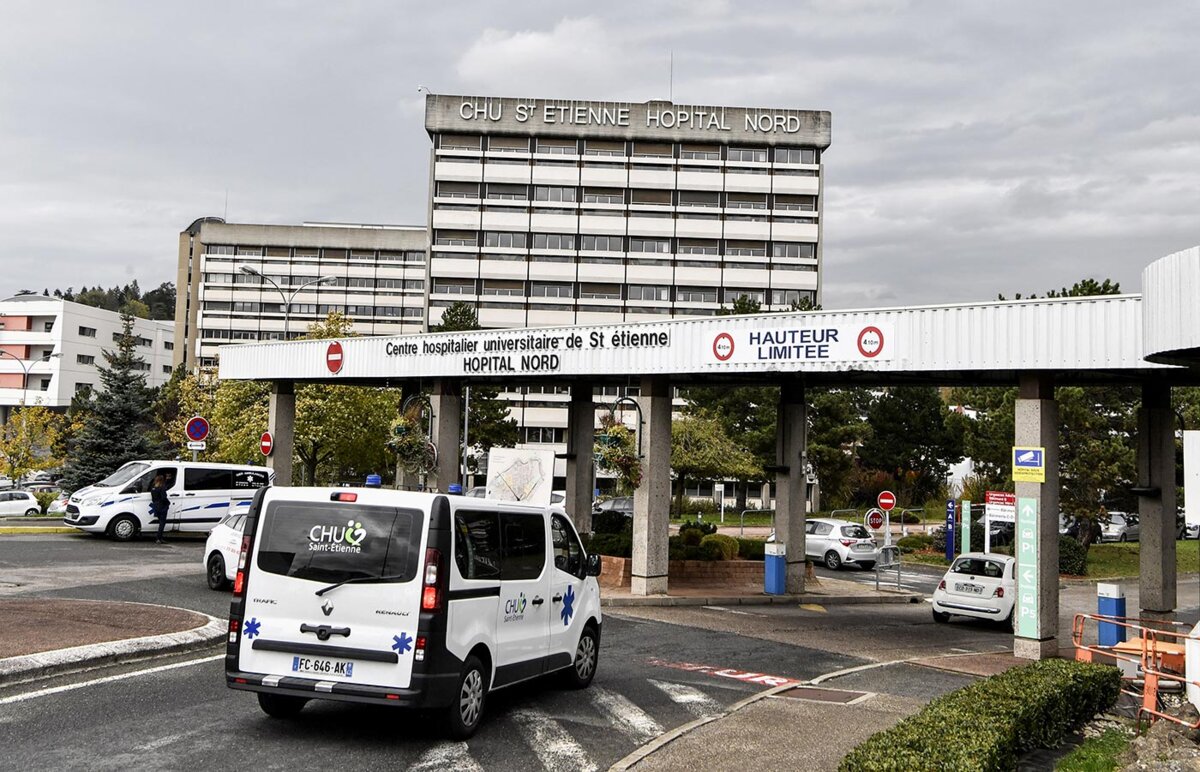
Enlargement : Illustration 1
On September 20th an administrative court in the city of Lyon annulled the OQTF against Karim, an order which had been based on a hasty reading and mistaken interpretation of the documentation he had given the authorities. Taking account of the “serious nature of his studies” and the “consistency between his academic course and his professional plans”, the court ordered the prefecture to issue him a new residency permit within two months. Karim is still waiting for it to arrive.
Over the summer Karim's enforced absence posed serious problems for the hospital's oncology department. In a statement sent to the administrative court at the beginning of July, the head of the department said the “abrupt suspension of his work … means the safety of hospitalised patients and continuity of care can no longer be properly guaranteed, especially as the current period is very tough and it's impossible to recruit a replacement doctor quickly”. The cancer specialist said it was “indispensable” for this doctor, who had shown “great professionalism”, to resume his work. “...[O]therwise it will be necessary to markedly reduce capacity for cancer patients, with very harmful consequences,” the head of department wrote.
In another statement a colleague, who described himself as Karim's “partner” in the unit, said that the “current impossibility of him pursuing his professional activities [because of his administrative situation] has hampered the proper operation of our department as we are planning to close prematurely nine of the 34 beds in the unit on July 15th 2022, whereas this temporary closure had initially only been planned between August 5th 2022 and September 5th 2022”.
Residency permit renewed each year
How could such a situation have occurred? Karim's lawyer, Youcef Idchar, attributes the failings to the fact that prefectures handle residency permit applications like an “assembly line”, against the backdrop of a “migrant policy which is focussed on hitting targets and increasing the number of OQTFs”, and amid an associated risk of “overzealousness”.
Yet with his profile as a well-qualified doctor, Karim is part of a small minority of the immigrant population who is – in theory anyway – less exposed to such administrative hiccups than most. Each year the French authorities issue more than 100,000 OQTFs but do not disclose the proportion of them that are overturned by the administrative courts.
“It's a very regrettable case for this gentleman, who is paying the price for a major administrative error, but also for the hospital where his ability is acknowledged and appreciated,” said Quentin Bataillon, a Member of Parliament for Emmanuel Macron's ruling Renaissance party (formerly La République en Marche) for the Loire département and who has kept a close eye on the case. “I can only hope for a quick resolution to a situation that my team and I have been monitoring for several months.”
After graduating with a medical degree at an Algerian university in 2013, Karim worked in a biomedical laboratory for two years before coming to France to “deepen his knowledge”. This is the case with thousands of foreign medical practitioners to whom the public hospital system in France owes a debt of gratitude.
Since the start of the 2015 academic year the doctor has renewed his 'student' residency permit every year without any problem. The status of intern obliges him to take a university course in which he alternates between theory and practical training. Over the last seven years Karim has thus picked up six different qualifications from universities in Montpellier and Lyon, covering cancer biology, clinical trials for medicines and cytogenetics. In parallel he has worked at the hospital, officially as a “trainee” under the supervision of qualified doctors.
Ideal candidate for naturalisation
In December 2020 after a year working in a Covid unit – which should have helped the application for naturalisation that he had begun – Karim tried to get his residency permit renewed again at the Rhône prefecture. To his surprise, work on processing his application was constantly postponed. Then the bad news dropped on June 3rd 2022: his residency renewal application had been turned down and he was told that he had to leave the country. Karim was given 30 days to return voluntarily to Algeria or risk being expelled.
In its decision the prefecture said that Karim could “not reasonably be described as a student”. According to the regional state office he was taking online courses for his qualification and could do this from Algeria, getting a “short-term visa” when he needed to do an internship at the hospital. However, the prefecture had made a mistake: the lessons were, with a few exceptions, held in person in Lyon but had then moved to “distance learning” at times during the Covid pandemic.
The prefecture also contended that Karim had failed to complete his studies in the academic year 2020-2021, because he had not finished his thesis. This again was an error on the prefecture's part, based on a misreading of a temporary statement of grades supplied in September 2021, when his thesis had not even been assessed. The prefecture never asked for further documents proving that Karim had indeed received his diploma.
However, when confronted with the case of this “illegal immigrant doctor” the administrative court quickly grasped the true situation. By chance, one of the three judges who overturned the prefecture's decision was Caroline Collomb, wife of the former interior minister Gérard Collomb. She had also been La République en Marche's representative in the Rhône département from October 2017 to July 2019, a period when the government's 'asylum and immigration' law came into force and signalled a toughening of migration policy.
The day after the court's judgement Karim went to the prefecture in the Rhône to “present them with the verdict and find out if it would be possible to have an official receipt, which offered the same rights as a residency permit, in order to be able to resume work”. He was not given one. “I was told that I'd be contacted when the permit was ready,” he said.
In the meantime he has gone back to the hospital but as a volunteer and thus not permitted to look after anyone. “And I don't wear a tunic!” he said. “I'm not legally insured. I know that I'm going to resume my position so I'm trying to get ahead with some administrative and logistical jobs. I looked after greeting the new interns to give my colleagues a break. It's hard for the doctors, the nurses, for everyone.”
------------------------------------------------------------------------
- The original French version of this article can be found here.
English version by Michael Streeter