


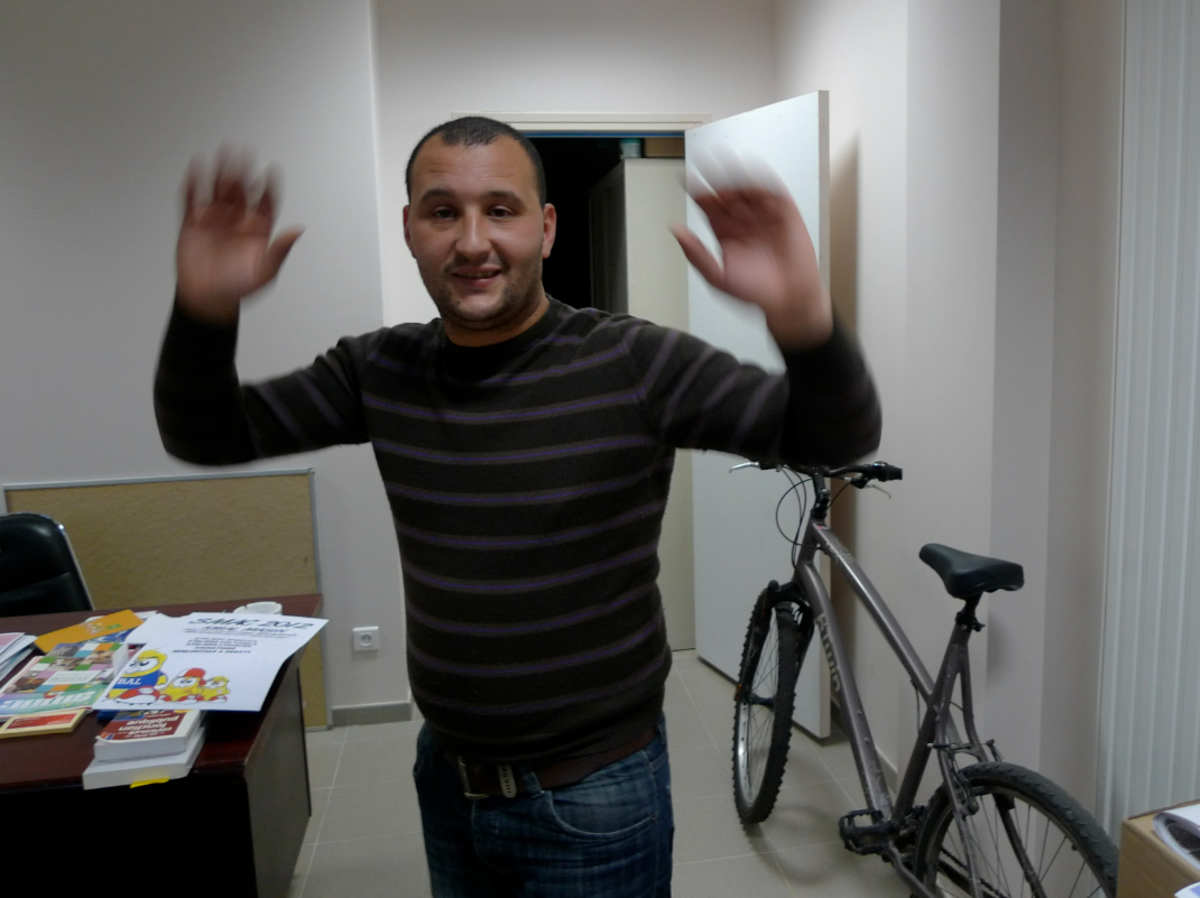
On December 8th, the Left majority in the French Senate passed a bill to give non-EU nationals the right to vote and to stand as candidates for the position of councilor in local, municipal elections. The bill stands no chance of becoming law before the 2012 presidential and legislative elections, as it would require adoption by the current Right-majority in parliament's lower house, and the approval of President Nicolas Sarkozy. But a Socialist Party victory in next year's polls could see the bill finally introduced as law, after decades of campaigning. Carine Fouteau met with Hocine Taleb, a 32 year-old Algerian who runs a youth association in a Paris suburb, who explains his anger and frustration at being excluded from local decision-making.
-------------------------
Hocine Taleb is angry at "all those guys who don't vote". He compares their attitude to those watching the popular French TV music talent contest Star Academy, where viewers would vote for the best singer. "It's like watching Star Academy, I like, I don't like, he's badly dressed, it's raining, I'm not going," he complains. "The Star Academy vote, it revolts me."
For him, political designation and representation are important. "It's the last space of freedom, the only one that remains," he says.
EU nationals, by virtue of the 1992 Maastricht Treaty, can vote and stand for election in municipal elections. Hocine, 32, has no voting rights. He is Algerian, with a wife he describes as "half-Breton, half-Caribbean", and has lived in France for 25 years, all of them in La Plaine, a district of the town of Saint-Denis in the Seine-Saint-Denis département (county) north-east of Paris.
Enlargement : Illustration 1
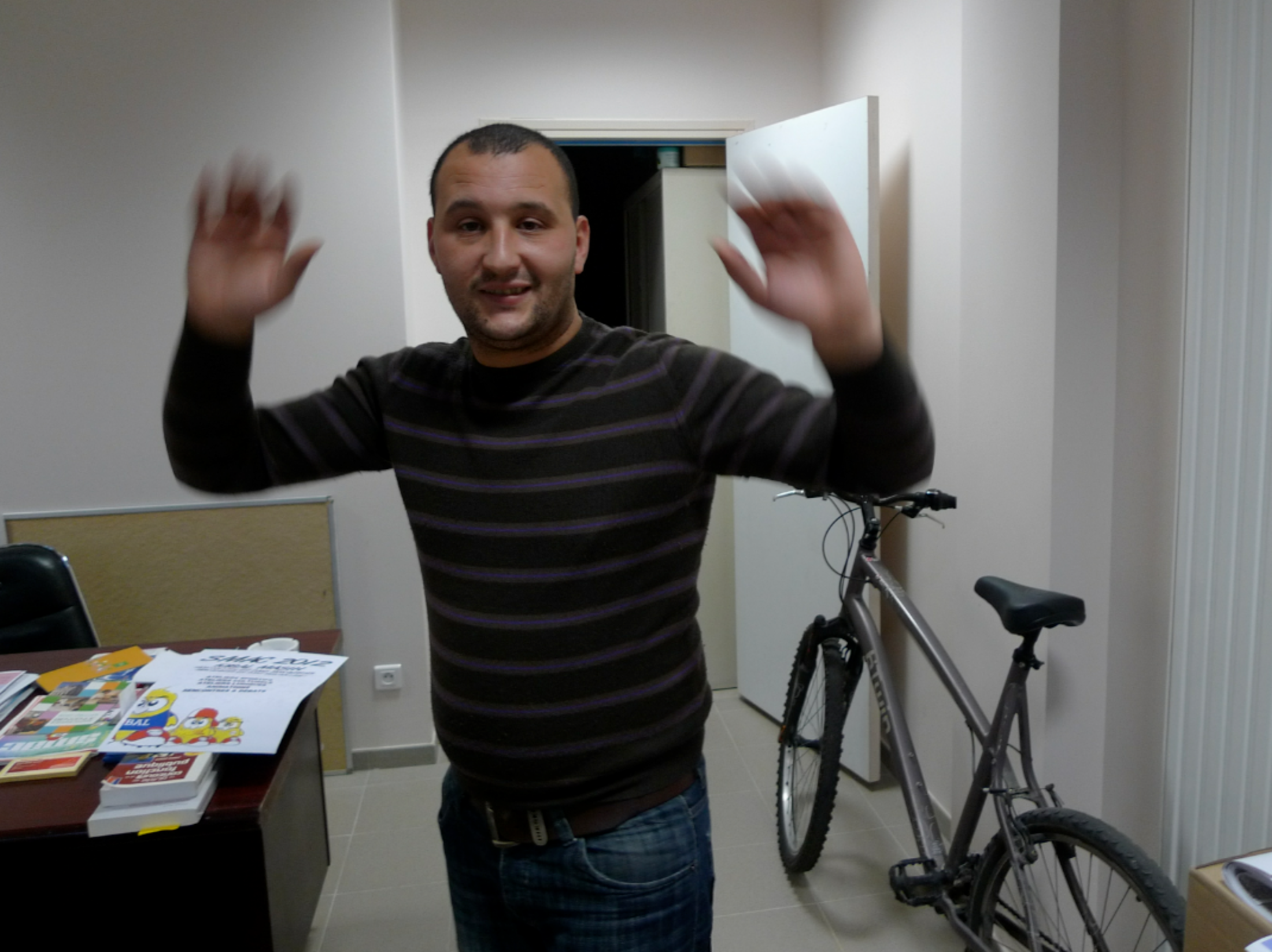
Asked why, if gaining access to voting rights is so important for him, has he not adopted French nationality, Hocine answers: "You are young, you go to school, you are never invited to become French. At 18 years-old, I applied for a ten-year residency card. I could have become naturalized. Do you think that the person behind the desk would have told me so?" Over the passing years, the administrative procedures have become more complex. "It's such an obstacle course that it's discouraging. French nationality is no longer a right, it's a favour, a favour that you are given. There comes a time when you can't take the disdain any longer, this paternalistic and infantile tone."
La Plaine, with a population of about 20,000, is a largely run-down area, long home to generations of immigrant families, made up of a mix of tatty, early 20th-century housing, wastelands and modern urban architecture. In the district's poorest neighbourhood, Landy, the unemployment rate has reached 33%, compared with the French national average of around 9.5%, and an average 21.3% for Saint-Denis town as a whole.
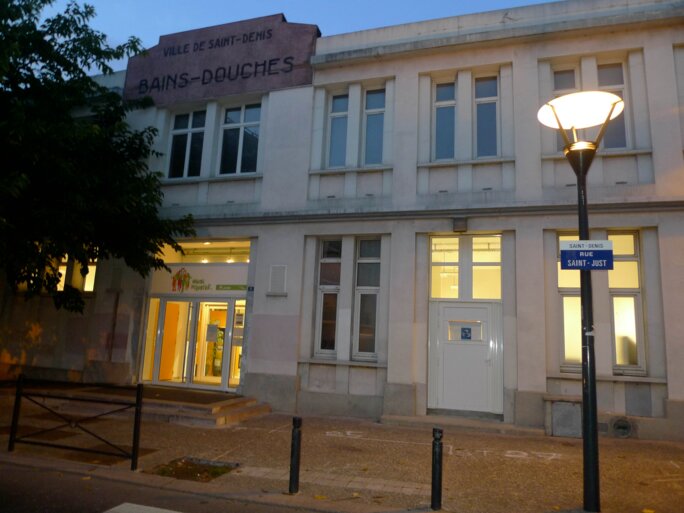
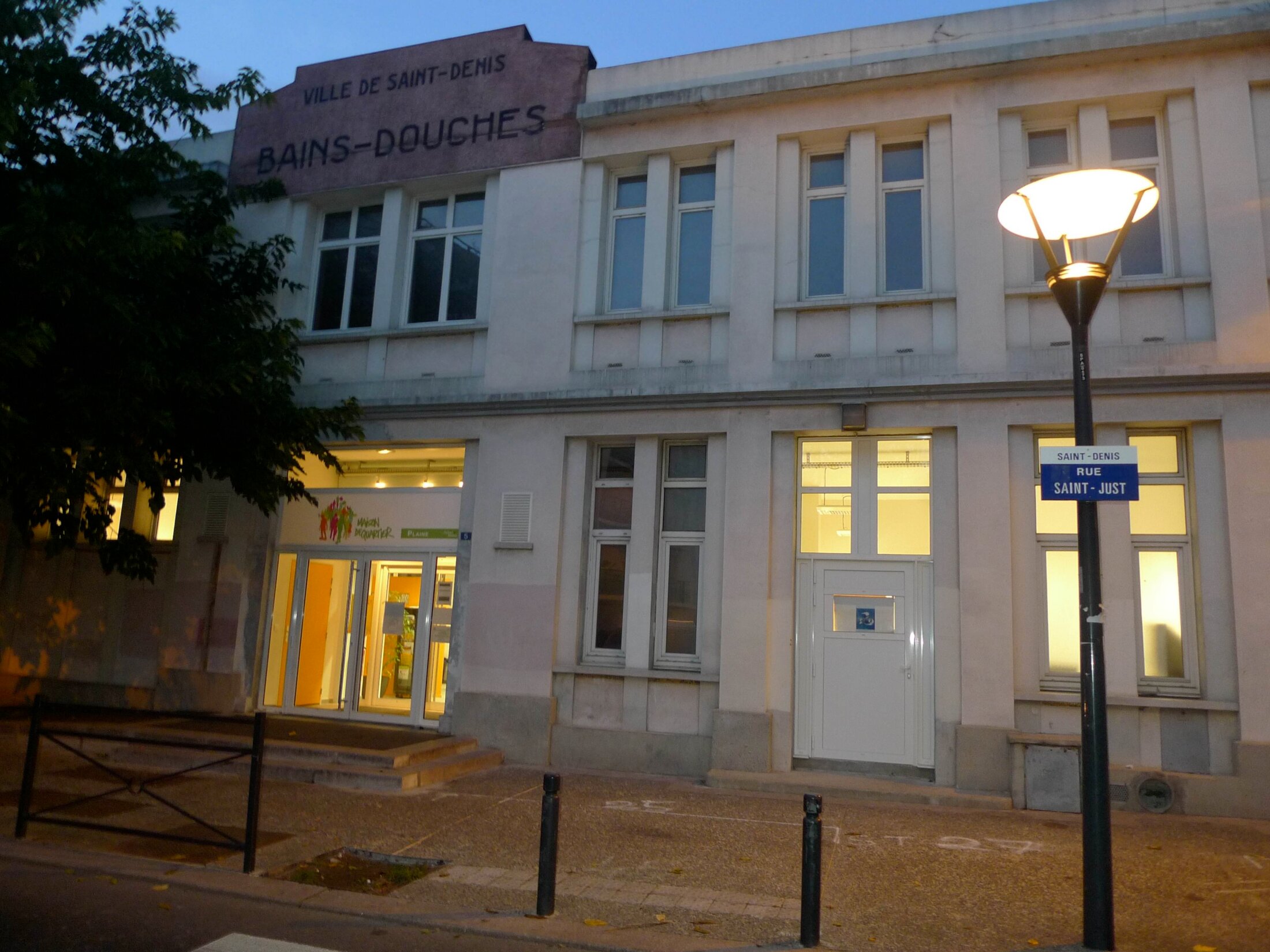
Hocine works for a local youth association called Rackham, named after a pirate in the Tintin comic books, which attempts to keep youngsters, mostly teenagers, from dropping out of society, through activities like sport, painting and excursions, and help with school homework. The Communist-run Saint-Denis Town Hall has leant it space in the Maison de quartier de La Plaine, a meeting space transformed from what were once public baths.
Enlargement : Illustration 2
Just beyond a wall beside the centre sit the offices of international satellite TV channel company AB Sat. Hocine says he has nothing against the changes happening in some parts of the area, with the arrival of large corporations and some groups of wealthier inhabitants. But he fondly remembers and regrets La Plaine of his childhood.
He grew up in the family flat on the Avenue du Président-Wilson, in a classic, turn of the 20th century Haussmann-period apartment building. "We were six, sometimes more, in 53 square metres," recalls Hocine, who now lives in a nearby modern block rental, which he says is "expensive".
"If only you knew how we used to have fun here," he says. "There was nothing, just wasteland, it was an adventure, we built cabins, we did what we wanted, the adults left us to get on with it, that's where the [association's] pirate name came from."
Because he was not born in France, any request Hocine might make to become a naturalized French citizen is submitted to administration services who are empowered to refuse his application, as they feel fit, whether or not it is legally in order. The requirements for naturalization include a legal period of residency over five years immediately preceding the application, and an interview in which the applicant must demonstrate that he or she is "assimilated" by proving their "adhesion" to the values of the French republic, their competence in the French language and knowledge of the country's history, its culture and society.
The candidate must also be of "good lifestyle and morals", decided by an investigation into their "conduct" and "civic behaviour", which can be complimented by information from consular and social services. Any criminal record in France and abroad is also examined. In all, this series of verifications can sometimes take more than a year to complete.
'I was schooled in France, I know what I owe'
Meanwhile, French interior minister Claude Guéant, who has publicly declared that the number of "legal" immigrants in France is too high, recently announced the toughening of French language tests for candidates for naturalization, who will sit exams for a diploma, and be required to sign up to a charter of rights and duties.
"I don't see why nationality and citizenship would be linked," says Hocine. "Some Algerians don't want to become naturalized French. They fought for their flag, for their identity. And yet, they live here and will stay until they die. Why would their vote not count?"
"As long as I'm not asked to show my identity card I am [treated as] a citizen, active, engaged," he adds. "As soon as there's a question of documents, I am a foreigner. During the elections, I have no place. Of course, there are lots of foreigners who couldn't care less, just like a majority of the French. They don't care about the politics or the construction of their town. But I began working in social associations when I was 14 years-old."
In March 2006, Saint-Denis mayor, Didier Paillard, a member of the French Communist Party, organized a referendum among local residents proposing that non-EU nationals should be given the right to vote and to stand as candidates in municipal elections. The vote was symbolic and had no legal repercussion, but Hocine played an active part in campaigning for the proposition, for which 64% of those polled were in favour of.
Two years later he was appointed as a member of the Town Hall's Foreign Citizens' Consultative Council (Conseil consultatif des citoyens étrangers), made up of 20 local non-French inhabitants. Together, they sit in monthly private sessions of the local town council, although they are by law excluded from any legal decision-making. Hocine welcomes the initiative, however limited the consultative council's powers may be. It gives him access to more information on town council action, and he and the other members can offer their views and propositions. However, he says he is disappointed that some town officials he has dealings with have claimed they had not heard of the consultative council. "We could push things on a bit further," he comments, voicing regret that he and his 19 colleagues were not asked their opinions of the proposed law voted through the Senate.
The population of the Seine-Saint-Denis département includes a comparatively high proportion of foreign nationals and French citizens born to immigrant parents. Hocine deplores the absence of the latter category among the département's mayors, who mostly represent parties of the Left.
While EU nationals living in France can stand for election for office of Mayor, the bill passed through the Senate this month restricts rights for non-EU nationals to candidature for the position of councilor only. Hocine is angry that the Socialist Party did not enlarge this to at least the opportunity of becoming a deputy-Mayor.
"I was schooled in France, I know what I owe to the republic's school, the quality of the education, the thinking, for learning to read and write," he says. "Later we see the places reserved for us, the discrimination and the rest. The divide between [these] principles comes across as insupportable."
He is one of what he calls "the 80s generation", limited to activities in social work. Hocine was just four years-old when, in October 1983, a small group of young people of North African origin, together with Catholic and Protestant clergymen, set out from Marseille to walk to Paris in a ‘March for equality and against racism'. It was dubbed as ‘The march of the beurs', (La Marche des beurs), after the familiar name for people born in France to North African parents (beur is a play on the word Arab), and the marchers notably demanded access for North African nationals to voting rights and a ten-year residency permit. Around 100,000 people joined the protest when the march reached Paris in December.
"At its origins, it was a sincere initiative," comments Hocine. "But the people of that time, who are today in their forties or fifties, didn't manage to escape being used and divided. To the point that the movement didn't result in a change in society. Us, the foreigners and the immigrants, are held down by a ceiling. The jobs of managers, engineers and ministers are for the others."
Hocine is cynical about the motives of bringing "as if by coincidence" the issue of votes for non-EU nationals to the fore just as campaigning for the 2012 presidential elections begins. "It's as if we are a piece of merchandise," he complains. "And if they think that foreigners vote for the Left... Let's paint a caricature. Are we for social solidarity? Yes, rather. So we are on the Left. Do we like money? Ah, yes, we want cars, houses, leisure times, the good life, we are children of capitalism after all. So we are on the Right. But if we are for solidarity and we like money, doesn't that that rather mean that we are in the Centre?"
But Hocine does not call for access to voting rights to all elections in one sudden move. "Each thing in its time," he says.
-------------------------
English version: Graham Tearse