


The faithful continue to desert the Catholic Church, new religious trends are imposing themselves on the French Christian scene and secular ideas, once firmly grounded to the Left, now transcend the Left/Right divide. Fervent supporters of secularism can be found even within the ranks of the far-right Front National (FN) party. Islam, on the other hand, is gaining ground, spurred by the constant flow of Muslims into the country since World War II combined with the rising visibility of their French-born children.
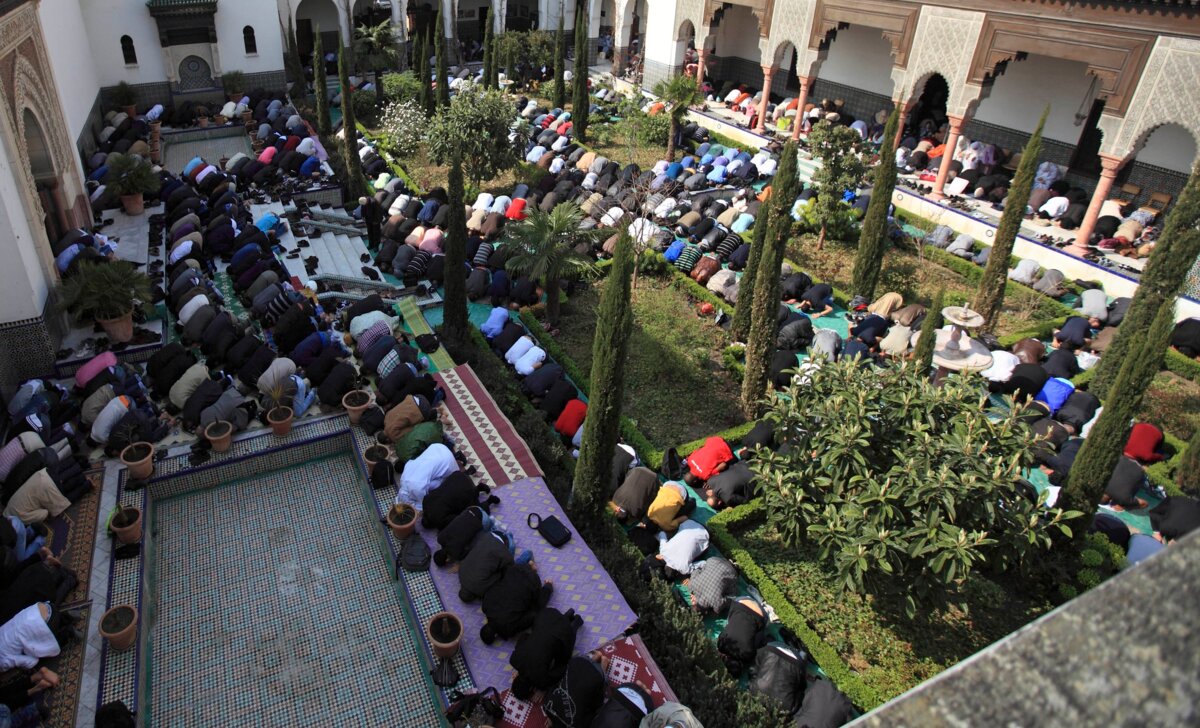
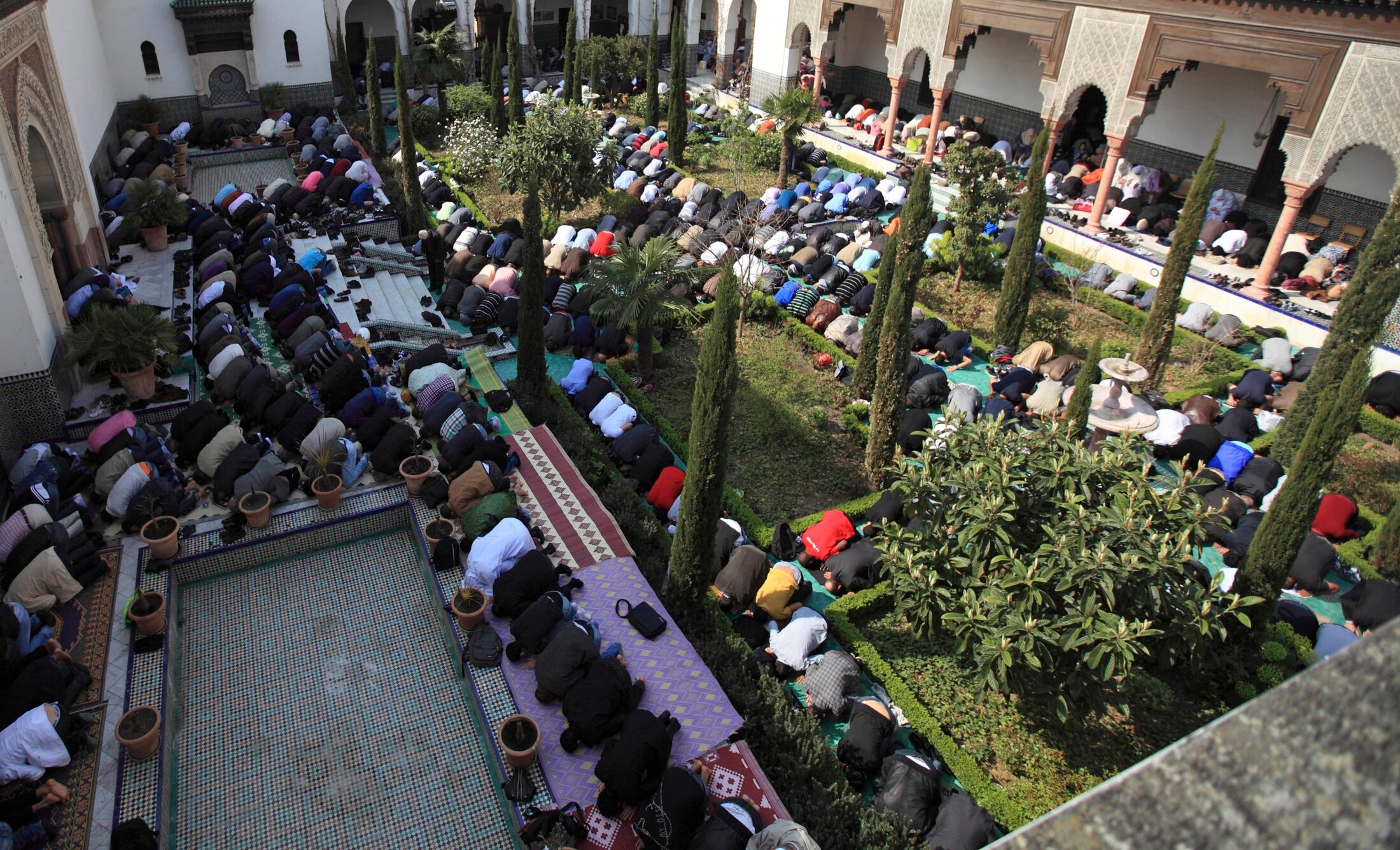
Currently the second religion in France, Islam has asserted itself only after overcoming many hurdles. Despite its ancestral roots - Paris' Grand Mosque was inaugurated in 1926 - Islam's "compatibility" with the values of the Republic is constantly questioned, notably because of its link to the history of immigration.
Now the results of a study on the religious practices of immigrants and of their French descendants entitled "Trajectories and Origins" shed some light on this peculiar relationship between Islam and the French Republic.
Are immigrants more religious than the rest of the population? Under what conditions do their children remain religious? Is a section of Muslim youth becoming more radicalised? If so, how can this be explained?
Enlargement : Illustration 1
Although Catholicism remains the majority religion in France, the study confirms Islam as the principal minority religion, alongside Protestantism, Judaism and Buddhism.
Extrapolating from the data collected (which concerned persons aged 18-60) the authors, Patrick Simon, a social demographer at the National Institute for Demographic Studies (INED) who carried out the study, and Vincent Tiberj, a political scientist at the Paris Institut of Political Studies, known as Science Po, estimate the number of Muslims in mainland France at 4.1 million out of a total population of 63.4 million. Based on scientific methods, this figure should allow the rebuttal of the many approximations and exaggerations that exist in the public arena. It also calls into question the estimate of five to six million Muslims given by the ministry of the interior which oversees religious affairs.
A first finding of the study is that immigrants are more likely to declare that they have a religion than the majority population (comprised of all those who are neither immigrants nor children of immigrants). Eighty-one per cent of first-generation immigrants stated they had a religion compared with 51 per cent of the majority population. Among immigrants, 43 per cent were Muslim, 26 per cent Catholics, 19 per cent without religion, four percent Protestants, three per cent Orthodox Christians, 2.5 per cent Buddhist and 0.5 per cent Jewish. Without the presence of immigrants, the prevalence of religious faith would have declined more rapidly.
The religious panorama varies greatly depending on origins. Among those immigrants from North Africa, Turkey and Africa's Sahel region who declared a religion, 90 per cent were Muslim. Immigrants from southern Europe, however, as well as those from overseas territories tended to be Catholic. "Since the mid-1970s, the countries supplying the bulk of migrants are no longer located in the sphere of Catholicism (...). Not only do immigrants come from countries in which Catholics are a minority or in practice just have a residual presence, but in these countries of origin, religion continues to pervade daily life and, for some of them, it occupies a position recognized by public institutions," the researchers say.
'For immigrants, religion helps define their identity'
This deep-rooted attitude to religion is also found in the second generation of immigrants, among whom Patrick Simon and Vincent Tiberj see a limited move towards secularisation. Among this population, only 23% consider themselves as having no religion. "If we follow assimilation theory, an adjustment [in the figures] towards the levels observed within the majority population would be expected," they note. Yet this move has not occurred. Within families, the "rate of loss"– the extent to which they move away from their original faith – is lower among Muslims than Catholics. Only nine per cent of children whose parents are Muslim say they have no religion while the figure rises to 25 per cent for those with Catholic parents. If the parental couple is mixed (in national origins or religion), the behaviour of the descendants is similar to members of the majority population.
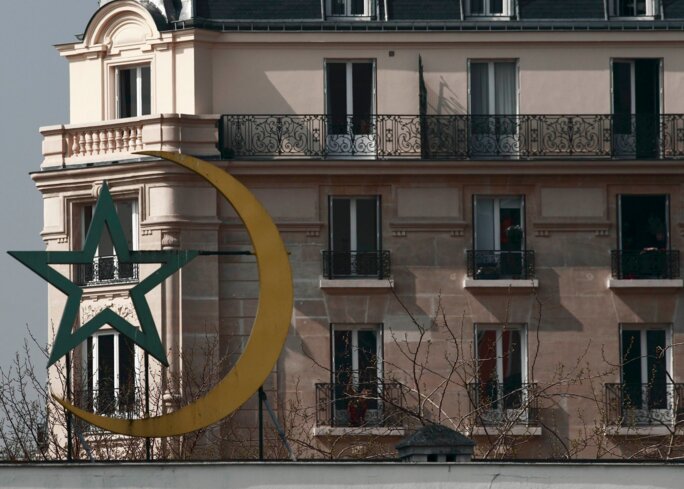
The study considers why the “rate of loss” should be lower in relation to Islam. "In a migration situation," suggests Patrick Simon, "religion, in addition to expressing a form of spirituality, plays a determining social and cultural role. It serves to define one's identity because it represents certain family values and, more broadly, the country of origin."
Enlargement : Illustration 2
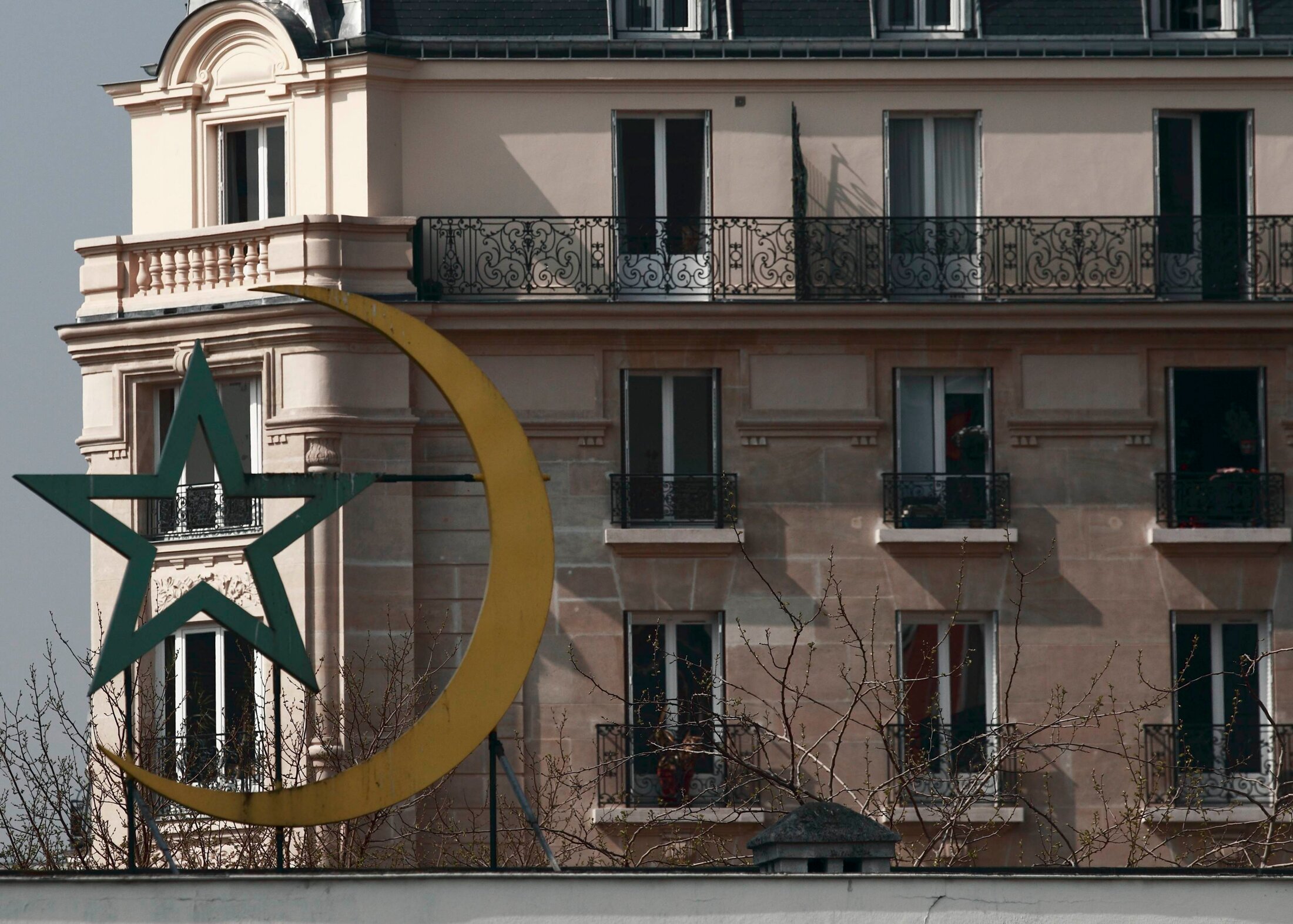
Religion ensures a link with the past and is thus a question of survival. In addition, the structure of French society is not as neutral in religious matters as it likes to claim. Banal for some, the signs of Catholicism that dominate social life (for example, six of the country's eleven public holidays are Catholic holy days, fish is systematically served on Friday in school canteens) lead religious minorities to assert themselves in a more visible manner. Finally, says Patrick Simon, for a Muslim renouncing one's religion is seen as a major and problematic decision, which restricts the number of those who abandon it.
The study also focuses on people's religious attachment in practice, especially among the young. In order to distinguish between social and cultural practice on the one hand and adhesion to a belief and the respect of its rituals on the other, the authors questioned respondents about how often they attend a religious establishment; about wearing religious symbols and following dietary restrictions. They acknowledge, though, that the importance attached to such customs varies from religion to religion. The researchers also asked respondents to pinpoint the importance of religion in their lives in order to construct a 'piety indicator'.They found that three quarters of Jews and Muslims show high levels of pietycompared with less than a quarter of Catholics.
Among descendants of immigrants from Southern Europe and South-East Asia, the level of religious belief drops sharply from one generation to the next. It falls less markedly for the children of parents from North Africa and Africa's Sahel region who still indicate high levels of piety – 55 per cent and 72 per cent respectively.
Only a fraction of Muslims are becoming more radicalised
Quelle forme prend cet attachement religieux, notamment pour les jeunes ? Pour distinguer ce qui relève d’une appartenance socioculturelle d’une adhésion à une croyance et au respect de ses rites, les auteurs ont questionné les enquêtés sur la fréquentation d’un lieu de culte, le port de signes religieux et le respect d’interdits alimentaires, tout en relevant que le poids de ces usages est inégal d’une religion à l’autre. Ils ont aussi demandé aux personnes de positionner l’intensité de la religion dans leur vie afin de construire un indicateur de religiosité. Ils constatent alors que les trois quarts des juifs et des musulmans déclarent une forte religiosité quand moins d’un quart des catholiques le font.
Other than country of origin and religious affiliation, it is the customs and practices of a religious family that have the major influence on a person's relationship to religion. So does being a woman, being young, lacking qualifications and being a blue-collar worker or an employee, all of which are factors associated with increased piety, no matter what the religion. Islam appears to be particularly age-sensitive. A renewal of religious piety can be seen between the ages of 17 and 25. In that age group, more than 80 per cent state strong beliefs. The rise in piety reflects the strong influence of the family in the transmission of values. The parents of immigrants to France after the 1970s were more religious than those that came before. There was therefore a general trend towards strengthening the place of religion within Muslim families which is in contrast to the continued secularisation within Catholic homes.
Enlargement : Illustration 3
A key question is whether, in people's attitudes towards faith, we are simply seeing a reproduction of family behaviour – the transmission of religious attitudes from one generation to another. Or if, on the contrary, what we are witnessing is a strengthening of religious practices with the spectre of the radicalisation of the youngest in the background. In other words, are religious views hardening, especially among the young?
This study finds that ten per cent of children raised in a Muslim family consider themselves more pious than their parents. More specifically, 12 per cent of Algerian descendants say they are in this situation, seven per cent of Moroccan and Tunisian descendants and nine per cent of sub-Saharan African descendants.
Some researchers, who talk about there being a generation gap, put forward a theory of what is called “re-Islamisation” among young Muslims. However, others see in these changes a "useof the Muslim religion" to counteract the stigmatisation caused by their origins or their educational difficulties.
"A hardening of religious sentiments involves only a small fraction of the Muslim population. It is proportionally much less significant than the shift towards secularisation, but it is more visible and more spectacular," notes Patrick Simon. He adds that having strong religious feelings covers a wider range of beliefs and actions than simply the fundamentalist or hard-line radical practices often associated with "Islamic excesses".
Neither the age of the people concerned nor the passing on of family customs are sufficient in themselves to explain this rise in piety. One explanation that is frequently put forward and which is gaining currency is the idea of a 'reactive identity', in which a person’s identity is forged as a response to a feeling of exclusion and stigmatisation. Indeed, in the responses to the questionnaire a high level of piety is in fact linked to the feeling of not being accepted as French, to having experienced discrimination, and to the type of area the person lives. Muslims are more likely than people from other faiths to say they have been discriminated against. Nearly one in two say they have experienced it at least once in their life, according to the study. Among the next generations of immigrants, the perception of differences in treatment is even stronger and more often associated with religion.
"Pushed to the sidelines and stigmatised, some youths have a tendency to focus on what sets them apart from social norms, in this case their religion. Rejection, in addition, creates a link between those who feel rejected, this can lead to a strengthening of their piety," explains Patrick Simon. He also admits, however, that there is an question mark over cause and effect when it comes to assessing religious sentiments in districts with a high concentration of immigrants. "Does living in a district in which the presence of Islam is strong strengthen religious practices? It facilitates it, certainly, and social pressure encourages it. But the inverse is also true. The very pious will choose to settle specifically in these districts because they will find there a more familiar environment, better suited to their practices," he says.
'Muslims react to being cast as a problem'
Considering the effects of these changes on the lifestyle of young Muslims, the study puts into context the received wisdom that they have become isolated or have withdrawn into their community. Even over half of the most pious say they have friendly relations with people of different religious backgrounds. But it nonetheless shows that "if the level of piety has no impact on the composition of a circle of friends for Catholics, it does have a significant impact for Muslims".
From the Twin Tower attacks of September 11th, 2001, to the recent accusation by a conservative politician – the new president of the right-wing UMP opposition party Jean-François Copé - that Muslims were preventing others from eating snacks during Ramadan, and including the debate on national identity, changes in the national and international political context are the final variables influencing the level of religious fervour shown by people. After the "Arabs" and the "North Africans," the "Muslims" are, more than ever, cast as a problem in the public arena. As the secular camp becomes more hard-line, Islam rallies around a rejection that is increasingly being felt, while real or imagined symbols of Islam (halal food, women in scarves, women in burqas) form the object of recurring controversies.
Comparing the results of this study with those obtained a little over fifteen years ago in a preceding study, the researchers attempt to evaluate the effects of the political context. They observe that the religious affiliation of descendants of immigrants from North Africa and Africa, and especially of women, is stronger among young people. The researchers see this as a result of the fact that the debate on religion has became politicised over the past twenty years. This has made Islam much more visible and has changed the way in which it is treated by society.
With the aim of putting things into perspective, the researchers note that the current fixation on Muslims recalls the experiences of earlier groups who preceded them. French Judaism was transformed by the migrations of Jewish communities from North Africa during decolonisation in the 1960s. Going further back to the early 20th century, Italian and Polish immigrants, although they were Catholic, were subjected to hostile acts on the part of the secular camp but also from their co-religionists who were disturbed by certain ways of practising their faith that were brought in from their countries of origin.
The findings of this study carry real weight because for the first time such questions were studied using a representative sample large enough to analyse the social status as well as geographic, cultural and religious origins of those taking part. Undertaken by the National Institute for Demographic Studies and the National Office of Statistics and Economic Studies (INSEE) and monitored by the National Commission for Data Processing and Liberty - France's watchdog on the use of digital data - the study aims to "fill the gaps" in public statistics regarding integration and the study of discrimination due to France's lack of data on religion (1). While some statistical studies do contain information regarding religion, such as the Study of Health and Social Protection and the Study on Family and Cross-generational Relations, none allows a detailed assessment of the situation faced by immigrants and their descendants in French society.
For this latest study, data was collected from September 2008 to February 2009 from 22,000 people living in mainland France. Responses were made on a voluntary basis and kept anonymous. The study established religious affiliation with a direct question - “Do you have a religion?” - followed by a question on the denomination if the answer was yes. The same questions were posed regarding the subject's mother and father. The importance of religion was then evaluated using a four-point scale ranging from "very important" to "unimportant". Questions on religious practices completed this part of the questionnaire.
----------------------------------
1: By law, the French state and its institutions keep no official statistics on religious adherence, ethnicity or political affiliation. Memories of French police rounding up Jews during the Nazi Occupation in World War II based on just such data left a deep-rooted fear that persists today.
---------------------------------------
English version: Patricia Brett
Editing by Michael Streeter