


A damning official report published at the weekend into the circumstances and legal handling of domestic homicide cases in France has prompted justice minister Nicole Belloubet to admit that “very clearly” the authorities are failing victims.
Belloubet was speaking in an interview published in French weekly Le JDD on Sunday, when her ministry also published online the findings of a report by its internal inspection department analysing all cases of domestic murder and homicide in 2015 and 2016 that have been definitively established by the justice system. The 88 cases involved sentences of aggravated murder and also the perpetration of violence unintentionally causing the death of a person.
The report found that 85 percent of the cases involved male perpetrators, and that 83 percent of the victims were female. In 33 of the 88 cases, the victims had previously lodged complaints against their killers with either the police, gendarmerie or the justice system. In the vast majority of cases, their deaths occurred during the separation of a couple or followed a decision to separate.
Unofficial estimates of the deaths of women in situations of domestic violence, as recorded by associations monitoring media coverage of such cases, are that 121 women were murdered in 2018, and that so far this year that number has risen to 135.
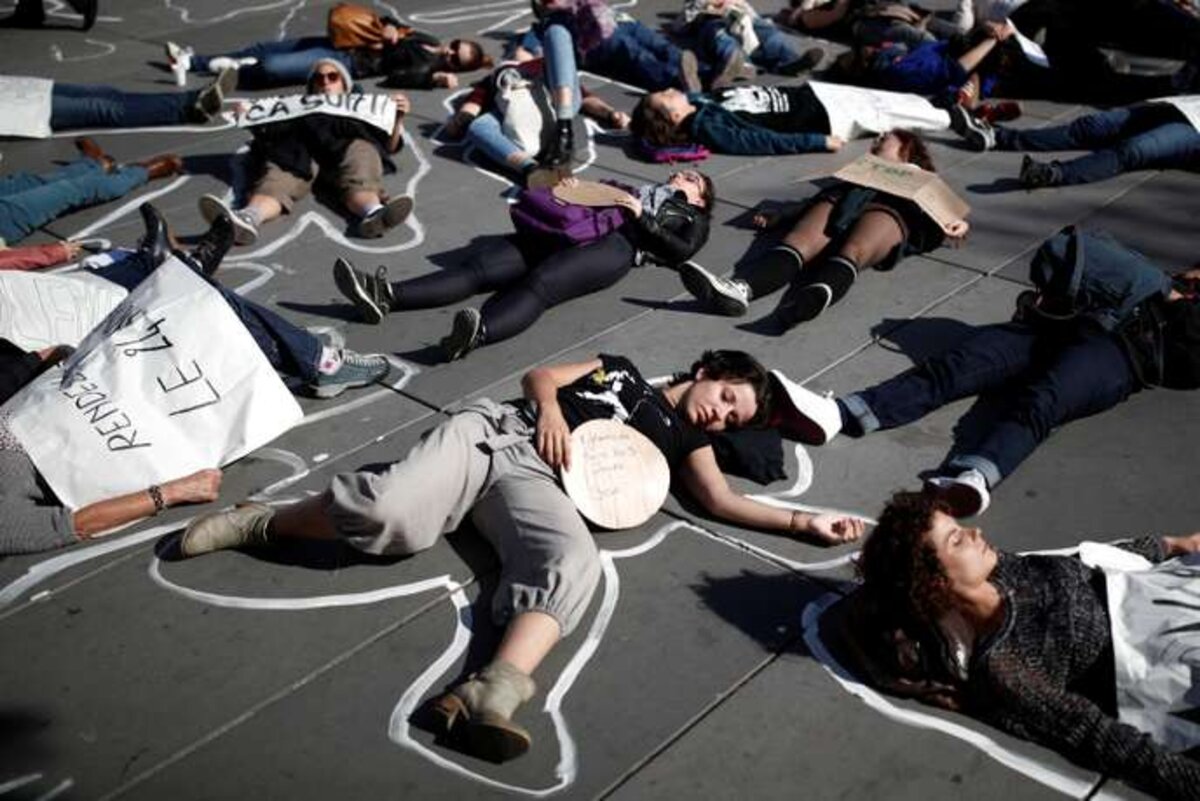
Enlargement : Illustration 1
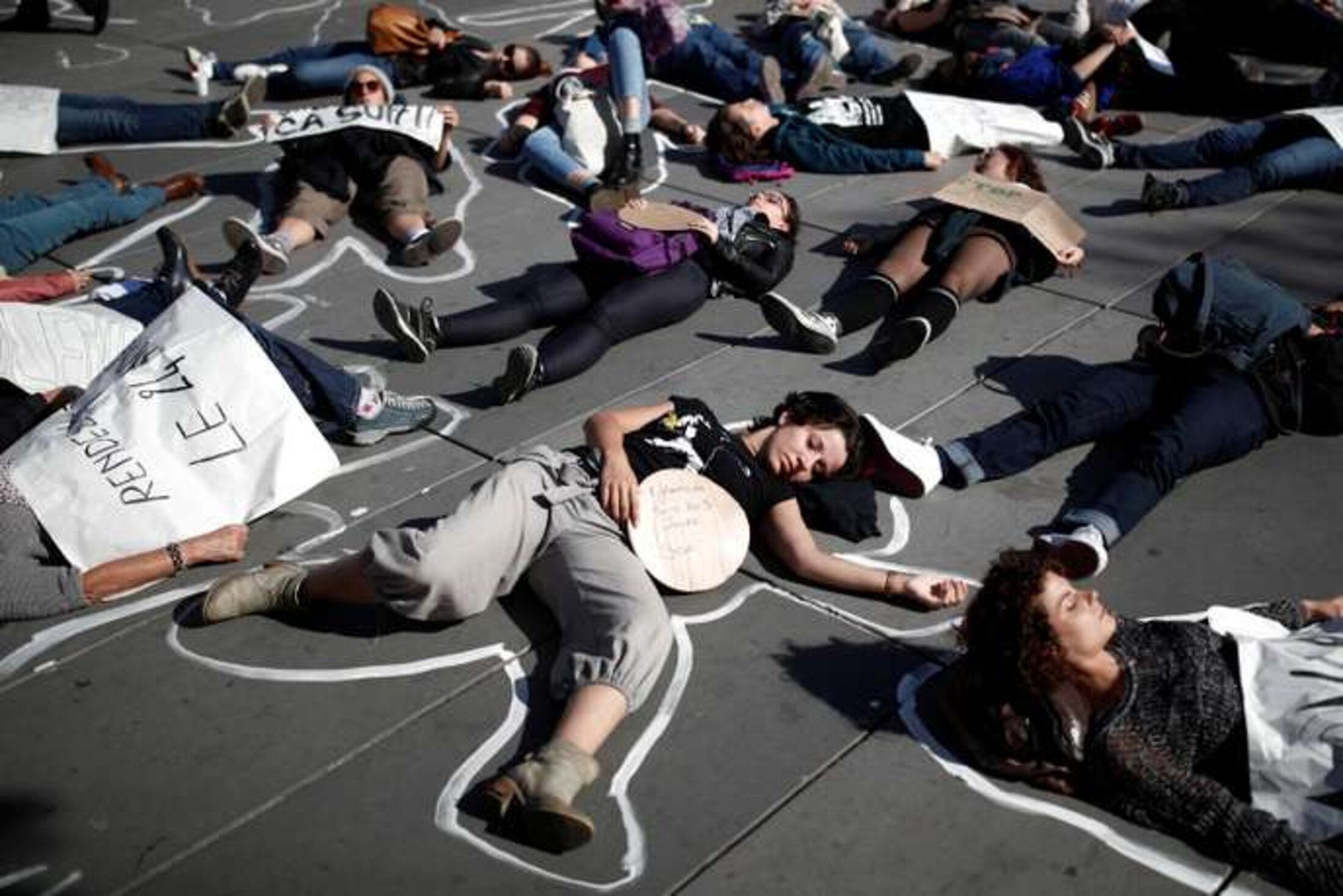
The justice ministry report has officially confirmed the failings which victims support groups have regularly denounced, namely that formal complaints of domestic violence are often not taken seriously enough by the police and the justice administration. The issue of the murders of women by their partners, what are called “féminicides”, has become the subject of major debate in France, notably due to the militant campaigns by feminist groups and other activists to raise public awareness and to place it on the political agenda.
In September the government launched a 12-week series of national consultations, with ten working groups that include victims support associations, police, magistrates and lawyers, to decide on urgent measures to address the problem. The report published Sunday comes a week before the consultations are due to draw to a close, on November 25th.
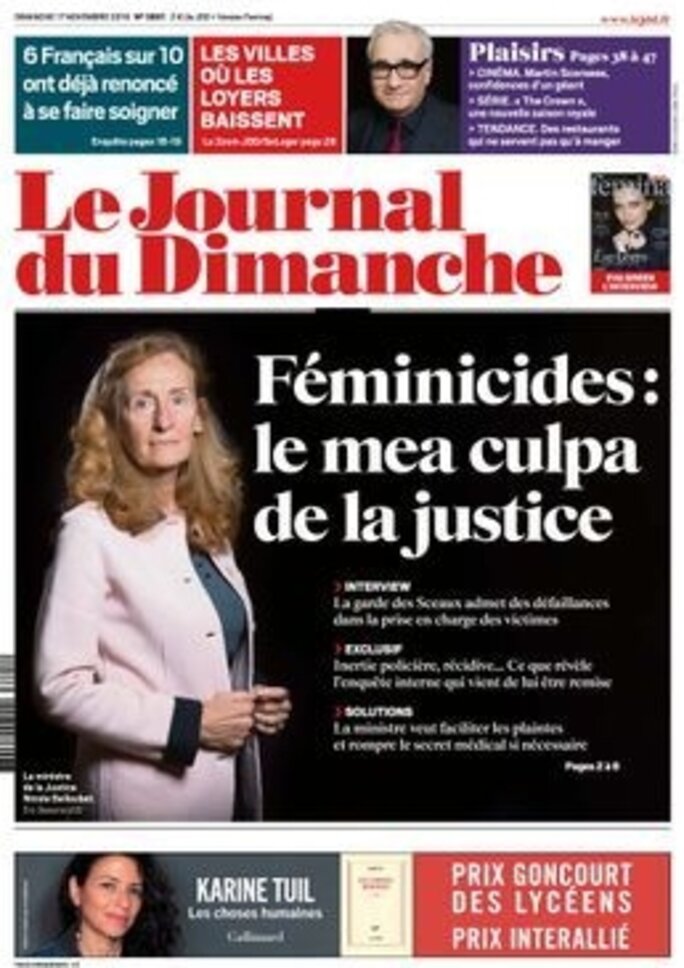
Commenting on the justice ministry report in her interview with Le JDD, (in French here), Belloubet spoke of “the difficulties and the malfunctioning” of the current official treatment of domestic violence. “Very clearly, things aren’t going well,” she said. “The legal chain is not satisfactory.”
Concerning third parties outside of the justice system, Belloubet cited as a model the procedures put in place by the public hospital in the town of Dax, south-west France, where women suspected of being victims of domestic violence who arrive pretending other reasons for their injuries receive special attention to encourage them to lodge a complaint. She said the hospital’s medical staff don not allow the patient to leave “without having contacted an association that immediately gives them an accompaniment”, adding, “the system is organised in such a way that there is no failing”.
“It is necessary to overstep medical confidentiality,” she said. “It calls upon the ethics of a doctor. If they see a woman is being beaten up, it would shock me that they would not speak out about it.”
Her ministry’s report noted that the sentences pronounced in tried and proven cases of murders from domestic violence “are longer than those pronounced on average by criminal courts for homicides committed outside of the context of domestic violence, and that these cases are on average processed through the French justice system, which is notoriously slow, quicker than others.
But its list of recognised failings is long, including the non-use of a system established in 2013 to allow a fast-track treatment of complaints of domestic violence. Instead, police and gendarmerie stations commonly invite what are known as “mains courantes” – which are signed notifications entered into a register – and “procès-verbaux de renseignements judiciaires” – statements also consigned to a register, neither of which has the legal weight of a formal complaint that is passed on to the public prosecution services, nor do they automatically prompt an investigation. In the 88 cases of domestic murderes reviewed over the years 2015 and 2016, those two notification procedures were used in 40 of them, and only 18 percent of these led to an investigation and, of those, 80 percent were subsequently closed on the basis of no case to anwser. Just one case resulted in a person being brought into custody for questioning.
The report found that on the rare occasions that the public prosecution services do open a preliminary investigation, “the victims are questioned, the perpetrators not systematically, and the witnesses and neighbours never”. The appreciation of cases, it noted, therefore appears “empirical, without a true tool for evaluation”.
“I am conscious of the difficulty for people who take down complaints in measuring the reality and degree of danger,” Belloubet told Le JDD. “That’s why they must be trained.” She said training on how to receive victims and to offer follow-up should be given both to the police and the courts. “We must put in place response prrocedures that leave no room for failure, anywhere. So that there is no feeling of impunity there must always be a legal response, even if of course it’s not always of the same level.”
On November 15th, Belloubet addressed a conference dedicated to the challenges for the justice system in face of cases of domestic, which was held at the Paris Appeals Court. “In ten years, close to 1,500 women are recorded to have perished, victims of their partners and sometimes our own failings,” she said, cited by the daily Le Monde. The court’s chief public prosecutor, François Molins, called for “all malfunctions” to be reviewed, and said it was necessary” to re-evaluate the pertinence of certain legal responses, including that of mediation which he said was “dangerous and has no sense in the domain of violence within a couple”. Despite that view, there are on average around 1,700 official mediation procedures each year in France in cases of domestic violence.
Meanwhile, the justice ministry report makes 24 precise recommendations, which include the “systematic” questioning of the person accused of violence; systematic electronic tagging of perpetrators who flout court orders to stay away from their spouse or partner; the systematic notification to victims when their aggressors leave prison; the establishment in each jurisdiction of a body dedicated to monitoring cases of domestic violence, and raising greater awareness among lawyers of options open to them in domestic violence cases; the introduction of a hotline for reporting “serious”, and not only “extreme” situations of danger; the temporary removal from the family home of the perpetrator of violence, and a requirement that they receive counselling by psychiatrists and specialists in the treatment of addiction and violence. The report also calls for the launch of a yearly national campaign to raise awareness of the issue of domestic violence.
The government is expected to announce draft legislation to reform the current police and justice procedures dealing with domestic violence following the conclusions of the national consultations which end next week.
-------------------------
- The French version of this report can be found here.