


The list of problems faced by the Swiss multinational Nestlé in the Vosges département or county in north-east France – home to its mineral water brands Vittel and Contrex - is continuing to grow. The state has recently withdrawn its support for a Nestlé-backed water pipeline project in the area, while a local councillor with family links to the group faces a trial over an alleged conflict of interests. Now Mediapart can reveal a fresh problem for the giant corporation with the news that consumer and environmental groups are taking legal action against it for extracting water from some boreholes without authorisation.
The associations claim that more than a billion litres of water has been pumped by the multinational without formal permission, part of which has then been sold under the Vittel and Contrex brands. Campaigners say some of this could instead have gone to local villages where water supplies are low.
The legal action was launched on Monday June 15th by environmental group France Nature Environnement (FNE), consumer group UFC-Que choisir Vosges and the local Association de Sauvegarde des Vallées et de Prévention des Pollutions (ASVPP). They accuse Nestlé of “exploiting boreholes and extracting water without authorisation in the communes of Contrexéville and Vittel”, the large villages from which the water brands take their name. This offence carries a maximum sentence of a year's imprisonment and a fine of 75,000 euros.
The legal action targets nine out of the 28 boreholes operated by Nestlé. This is one more that the eight boreholes which Nestlé recently acknowledged are “in the process of administrative regularisation”. This statement came after a television documentary on public broadcaster France 3 on May 13th 2020 which revealed some of the group's local practices. The multinational, which has hired a Parisian public relations firm that specialises in crisis communications to handle this issue, declined to comment to Mediapart.
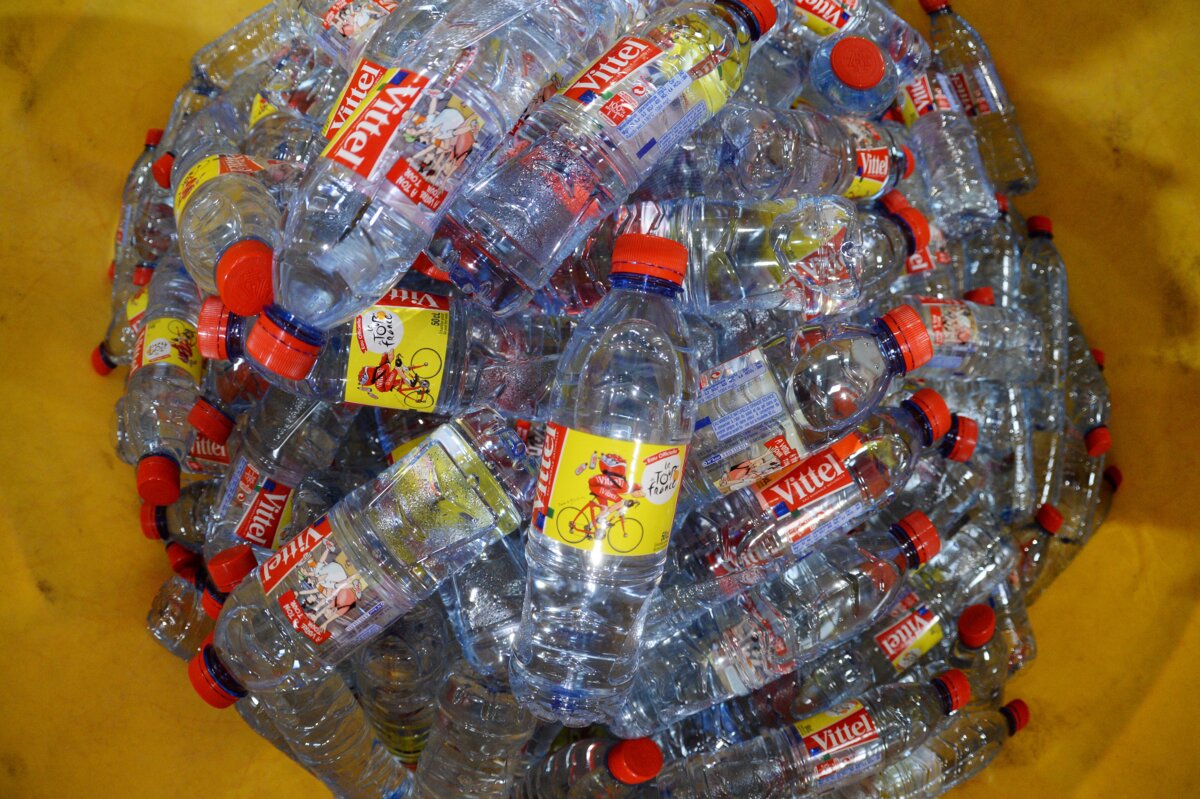
Enlargement : Illustration 1
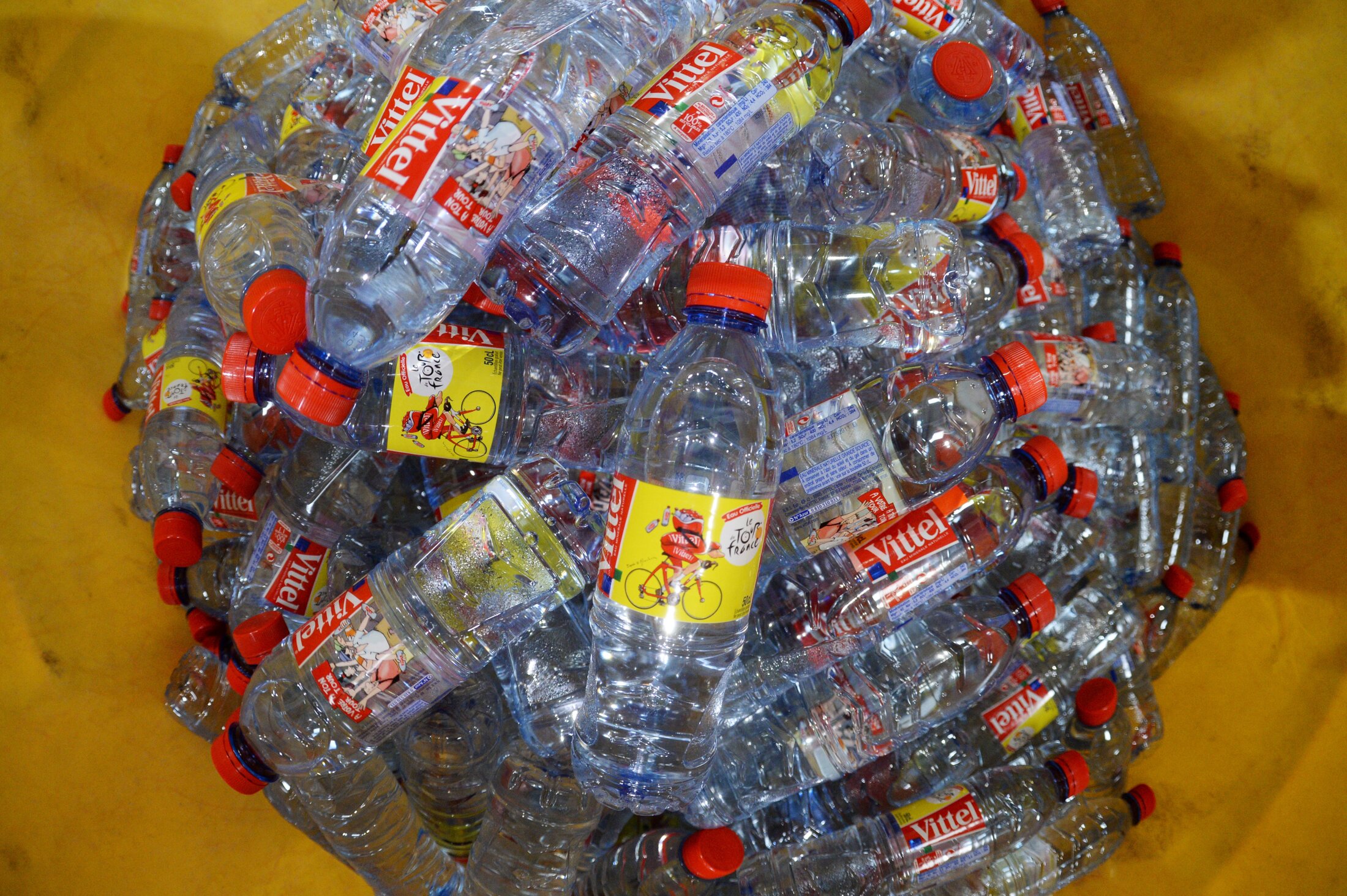
Mediapart has obtained a copy of the formal legal complaint, which states that these contentious nine Nestlé boreholes have never been given “any authorization to operate”. The environmental and consumer groups highlight an impact study carried out by the company Antea on the Swiss group's activities in the region in February 2019. It categorizes the nine boreholes in this way: “Operation for which a request for authorisation to extract is required.”
This technical document charts the damage caused by Nestlé on the fragile water resources in the region. The figures are startling. Just one of these unlawful boreholes, called 'Great Source', extracted more than 900,000 cubic metres of water without authorisation between 2013 and 2017 which was then bottled up and sold under the Contrex brand. Another borehole, called 'Grande Source Sud', had 600,000 cubic metres of water extracted between 2013 and 2017, which was marketed under the Vittel brand. In addition, hundreds of thousands of cubic metres of water were extracted by Nestlé each year from the seven other unauthorised boreholes, which was used for bottled water, spas or watering. That amounts to hundreds of millions of litres a year.
The prefecture or local state office in the Vosges has been aware of these unlawful boreholes for several years, as shown by a decree dating from November 2016. This administrative document, which the associations say is proof of the indulgent way the public authorities treat Nestlé, states that the Swiss company was asked to send “to the prefect, within a year of the decree being signed, a request for authorisation under article L214-3 of the Environment Code” to extract from the boreholes in question. Nearly four years later, the administrative procedure has still not been completed and the water is still flowing.
When questioned, the prefecture in the Vosges sought to play down the issue. “There is no scoop in the supposed revelations from Collectif Eaux 88 [editor's note, who revealed the existence of the decree and the fact that the procedure is still gong on]. The work to regularise the authorisations relating to the Nestlé Waters boreholes has been going on for a long time. It's a complex technical process as some authorisations were old. This process follows the steps set out in the regulatory procedure, which is based on impact studies validating the acceptability for the environment.”
These arguments are rejected by Jean-François Fleck, the head of Vosges Nature Environnement who are the co-sponsors of the legal action. “The length of time certain boreholes have been operated is not an excuse,” he said. “They should have been regularised or made the object of a request for authorisation to extract in 1993!”
As well as taking legal action, the associations want to demonstrate what they see as the bias of the public authorities when it comes to choosing between the local communities' need for water and the corporate needs of Nestlé. As an example they point to the management of the local water table known as Le Muschelkalk. This regional reservoir was earmarked as a replacement water source for local people back in 2013, to deal with the chronic shortages in the deep underwater sandstone water table known as the Grès du Trias Inférieur (GTI).
The water levels in the GTI have been falling since the 1970s, due both to a “particular hydro-geological context and a high degree of extraction”, according the French national geological service. In 2016, and against all expectation, the water at Le Muschelkalk was rejected as a replacement water source for nearby villages by the local water commission the Commission Locale de l’Eau (CLE), and this was when plans were hatched to build a pipeline to carry drinking water.
The official reason why the CLE and the prefecture excluded the use of the water at Le Muschelkalk was that the surface water there had too much mineral content, making it too expensive to extract and use. In addition, it was said that the communes first of all had to get prior agreement from Nestlé for their boreholes. However, a technical note from the prefecture dated March 2018, and seen by Mediapart, shows that some of these arguments put forward by the state were simply wrong. “Nestlé Water Supply Est has no exclusivity over the hydro-mineral sites of Vittel and Contrexéville, nor over authorisation to extract from them,” states the document, contradicting its own organisation.
However, the note did confirm the multinational's dominant position over the local water table. Nestlé “can ask the prefect to suspend the work” on any new borehole “until such time as it can depose a request for an extension of its protective perimeter boundaries and obtain it”, states the note. In other words, if the Swiss group does not like a perfectly legal borehole, it can get it suspended.
The reason that Nestlé has such dominance in the area is because the state has backed it over competing interests. In 2015, though public experts still officially advised against allowing villages short of water to use Le Muschelkalk water table, two Nestlé boreholes there were discreetly approved. Jean-François Fleck, president of Vosges Nature Environnement, says there appears to be a “strategy of an operational monopoly of this water table by Nestlé Waters with the complicity of the state”. The aim of this strategy is to preserve jobs at any price, in a département which already had one of the highest unemployment rates in the Grand Est region of north-east France before the coronavirus lockdown.
Now, as the row starts to intensify over the borehole authorisations that the state has granted Nestlé over the years, the prefecture in the Vosges is cautiously paving the way for local councils to use the water from Le Muschelkalk. “While the limestone aquifers of Le Muschelkalk potentially contains a large quantity of water, that water is not necessarily exploitable because of the varied nature of the aquifer (generally weak in productivity, with a mineral level which might be quite high),” said the prefecture, before admitting that this resource will be dealt with on a “case by case” basis.
Jean-François Fleck says that this change of approach by the prefecture over the use of water from Le Muschelkalk conceals a degree of hypocrisy. “The state acknowledges the potential of the aquifer with reserves which are not worth anything to Nestlé, to whom it has granted hundreds of thousands of cubic metres of drinking water in the Suriauville [editor's note, near Contrexéville] area alone. These are volumes of water that could easily be put into the local public pipeline network!” he said.
While a permanent solution for the region's water resources is still awaited, it looks like being a hot and dry summer in the Grand Est. In 2018 a total of 38 towns and villages - including Contrexéville and Vittel – were officially acknowledged by the local prefecture as being in a “state of natural disaster over damage due to the drought”. Water tankers were called in to bring water to the villages of Lignéville and Dombrot-le-Sec while the Swiss multinational was extracting drinking quality water right in front of their doors. At the peak of the drought Nestlé even gave residents in Lignéville “one bottle of water a day per person” so that they did not use too much of their running water.
-------------------------
If you have information of public interest you would like to pass on to Mediapart for investigation you can contact us at this email address: enquete@mediapart.fr. If you wish to send us documents for our scrutiny via our highly secure platform please go to https://www.frenchleaks.fr/ which is presented in both English and French.
-------------------------
- The French version of this article can be found here.
English version by Michael Streeter